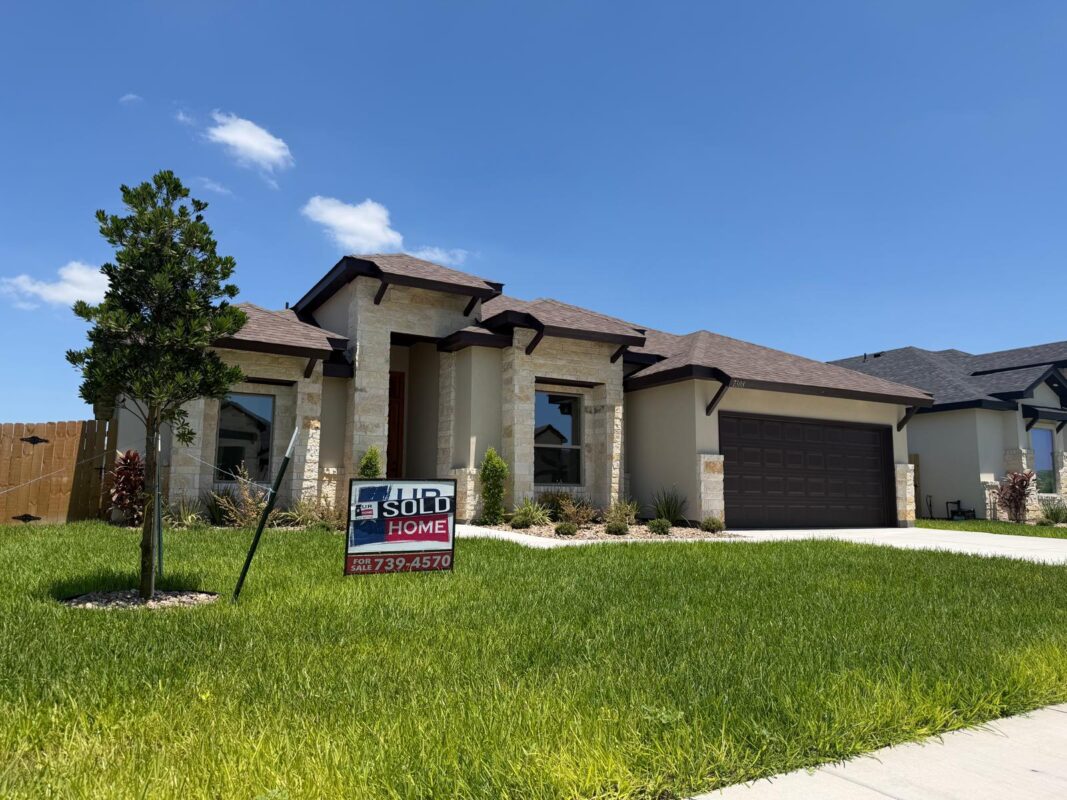
Hundreds of potential homebuyers are expected to tour a select group of homes for sale across the McAllen-Edinburg-Mission metro area in mid-July, where more than 3,100 single-family homes are currently on the market — the highest inventory level in decades.
The Rio Grande Valley Builders Association’s annual Parade of Homes takes place across two weekends, July 11-12 and July 18-19. The event will showcase 23 newly constructed homes, including several luxury builds.
While some of the more than 800 buyers signed up may be window shopping, there are always dozens of serious buyers looking for what’s possible, Johnny Vasquez, the executive officer of the Rio Grande Valley Builders Association, said.
The annual parade of homes is a generational event where potential buyers may not be ready to purchase a home this year, but they may come back in five or ten years, cash in hand.
“We’ve had people who brought their children to the parade of homes so they could get educated on different products, vehicles for purchasing a home, builders, and styles,” Vasquez said. “As wages rise, the people who may not be able to buy right now will be able to in the future; then you’re two years ahead. We don’t want a spike in growth [of new home construction]; we want steady growth.”
The McAllen metro area has more active listings than in the past two decades, with nearly 9 months of inventory on the market.
That means, at the current pace of average monthly home sales, it would take about 9 months for the existing stock to sell out if no more homes were put up for sale during that period.
But that’s almost never the case. Records show there are new listings almost every day.
Housing economists generally consider six months of inventory a balanced market, where neither buyers nor sellers have the upper hand.
Anything above that shifts negotiating power toward buyers, often leading to lower prices or seller concessions such as paying closing costs, including appliances, or buying down mortgage interest rates.
By comparison, inventory below six months favors sellers, as it did from 2020 through 2023, when homes routinely received multiple offers and sold quickly.
In May 2021, the McAllen metro reached its tightest housing market of the past decade, with about 757 active listings — or roughly 2.2 months of inventory. At the time, the average rate on a 30-year mortgage was about 3.1%, homes frequently sold above asking price, buyers often waived inspections, and competition was intense.
Today, mortgage rates are closer to 6.4%, down slightly from about 6.7% a year ago, but still more than double the historic lows that fueled the pandemic-era housing boom.
“At the 9-month range, you really start to see homes sitting out in the market. Then you get a lot of buyers asking questions, and they have choices, so they have the ability to negotiate,” Vasquez said. “But that kind of leaves a window where you also have investors coming in, looking at properties, that may have money on hand faster than the average home buyer. So you’re also competing with them. If you’re just an average home buyer who already lives here, and you’re looking to move up, it is tough to find something you’re going to be happy with. On the new construction side, it’s just about the same to buy a new home as it is to buy a used home.”
Over the past decade, the median sale price of a home increased 75% in the McAllen metro and 104% in the Brownsville-Harlingen metro.
By comparison, median household income increased 63% in the McAllen metro and 67% in the Brownsville metro over the same period, meaning wages have not kept pace with the cost of buying a home.
The price-to-income ratio also increased over the past decade. In the McAllen metro, it rose from about 4.12 in 2016 to 4.81 in 2026.
In the Brownsville metro, it increased from 4.88 to 5.13 over the same period, meaning home prices have grown farther out of reach relative to local incomes.
As a result, some buyers can no longer qualify for the mortgage they need to purchase the home they want.
Lenders primarily use a borrower’s debt-to-income ratio to determine whether they qualify for a home loan. While a Valley-wide debt-to-income average is not available, the region has long carried higher household debt burdens than many other communities.
“We’re definitely seeing movement. I think the main thing that we’ve heard was the affordability side of it. People looking for homes right now just cannot afford it. I’ve heard from our builders that they’re getting people coming through the door; they’re just not coming in qualified,” Vasquez said. “There’s a small segment of the market that is coming in from out of the area that are ready to buy. We’re seeing that in the half-million-and-up price range. That’s moving a lot better than the average price of about $280,000. That has been kind of stagnant.”
During the COVID-19 pandemic, relatives who inherited homes from family members who died during pandemic sold them at high prices. Last year, though many potential homebuyers were holding on to COVID-era interest rates for fear they wouldn’t be able to afford anything else, Valley realtor Myssie Cardenas-Barajas said.
“We started to see a lot of people invest money in fourplexes, the rental market, Airbnbs, vacation properties, ranches, and other investment properties. But we didn’t have a lot of single-family homes; they were afraid to sell their homes because a lot of them still had the 2% interest rate that they knew they could never get back,” Cardenas-Barajas said.
Last year, it was very difficult to get people to sell their homes, she said.
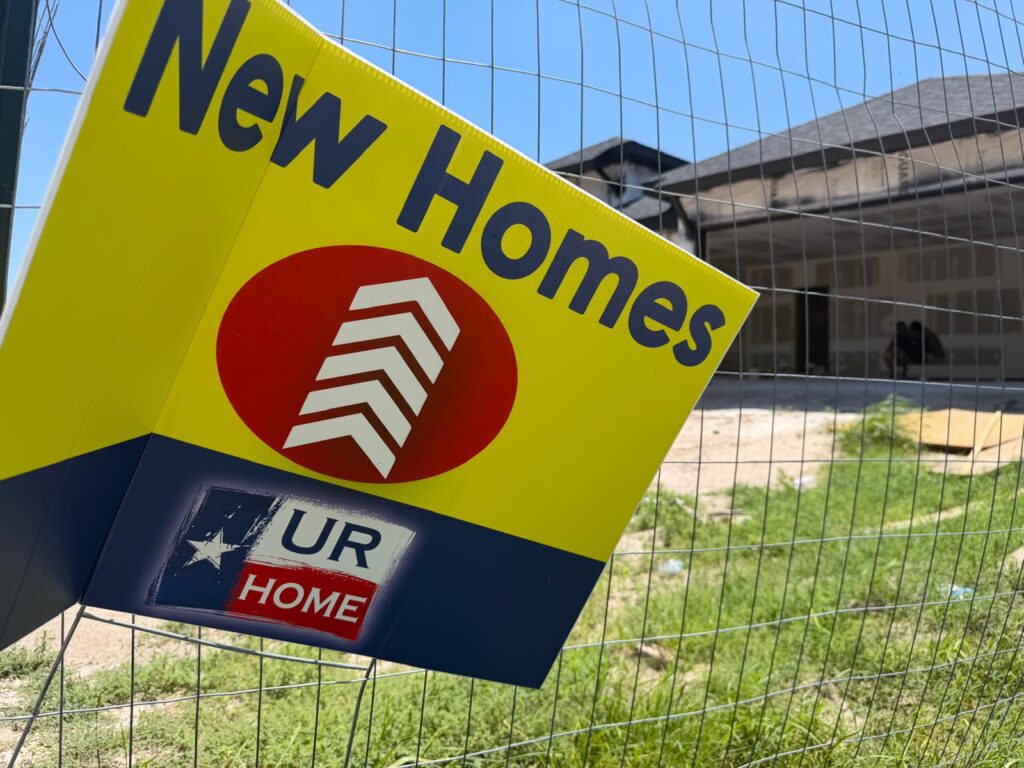
Photo Credit | Kristen Mosbrucker-Garza
“Now, a year later, we’re starting to see people say, ‘Oh my goodness, I cannot pay these taxes. It’s way too much for me. Not on the salary I’m making, so I need to get rid of this property,’” she said. “So we’re seeing a lot of people list their homes. And now the opposite is happening: we’re having difficulties finding qualified buyers. Since the interest rates have gone up, many people have spent their savings on rent, and they don’t have that down payment they would have had a year or two ago. We’re going from a seller’s market to a buyer’s market, but we have very few local buyers.”
It’s still unclear how much single-family home prices may decline or how quickly wages across the Valley may catch up.
There may also be growing demand for alternative housing options, such as townhomes in the Brownsville-Harlingen metro, as more workers move into construction and SpaceX-related industries, she said.
“The demand right now is needing a price point between $150,000 and $250,000 because our salaries down here are so low. But there’s no way a builder can build in that range anymore and make a profit,” she said. “So that’s the discouragement. We need to figure out something.”

Kristen Mosbrucker-Garza
Reporter
Kristen Mosbrucker-Garza is a versatile multimedia news reporter who lives and works along the Texas-Mexico border in Hidalgo County. Mosbrucker-Garza is a news reporter for the Rio Grande Valley Business Journal. During her career she's worked for the McAllen Monitor, San Antonio Business Journal, The Advocate Newspaper in Louisiana, Phoenix New Times, and public media outlets in Baltimore and Philadelphia.
Most Read
- SpaceX’s futuristic city of Starbase finalizes massive 7,100-acre annexation. Here’s what we know.
- SpaceX reschedules Starship’s first flight around the Earth
- How much water does SpaceX need to operate near Brownsville? Nearly 20x its current use
- Could apartment-to-condo conversion help make $100K homeownership in the McAllen metro more affordable? One investor says yes.
- Crunch Fitness is expanding and struggling in the Valley. Here’s why
Get the latest business news delivered to your inbox every morning for free.
Try 30 Days Free!
Get full access to award-winning journalism covering business, real estate, health care, economic trends, and the people shaping the Rio Grande Valley.
30 Days Free!
$9.95/month
Limited time offer
Subscription renews after your 30 day free trial at $9.95/mo.
Included Benefits
- Unlimited access to all articles
- Daily business news and analysis
- Subscriber-only content and features
Stories That Matter
- Construction begins on Saronic’s $3.2B Brownsville shipyard. Here’s what’s being built first
- Nearly $472M AI data center moves toward construction in Willacy County
- Tamaulipas is rethinking how it sells its cattle. A $44.5M project would keep more of the business at home
- Brownsville is changing its drainage fee. Businesses could pay more as the city looks to raise $6.2M a year
- Mission’s first Small Business Expo puts $25K on the line for local entrepreneurs
- Reynosa’s newest technical high school focuses on AI, semiconductors and bionics
- McCoy’s gives $10K, tools to launch Mid-Valley construction academy
- UT Health RGV performs new digestive procedure for first time in the Valley
- TSTC bets on advanced manufacturing to meet RGV’s industrial boom
- Pharr’s cross-border business push earns international recognition