By John Beckham, managing director of the North American Development Bank (NADBank)
With the passage of Proposition 4 earlier this month, Texas voters took an important step toward securing the state’s future water resources. The measure, which will dedicate $1 billion annually to the Texas Water Fund, is an overdue investment in the state’s aging infrastructure. While this commitment to preserving and protecting the state’s water is welcome, it’s only a down payment on a far greater challenge that’s been decades in the making.
According to Texas 2036, a respected public policy think tank, the state will require an estimated $154 billion in investments in water infrastructure over the next 50 years to sustain the “Texas miracle”, the story of booming cities, expanding industries, and families drawn to opportunity. Water is the quiet foundation of that success, but it’s under increasing strain from drought, rapid growth, and climate extremes. If we want Texas to keep thriving, we need more than new funding; we need a new level of cooperation.
That cooperation must come from all levels of government and the private sector. Local communities can’t shoulder this burden alone, and state agencies can’t fill every gap. Federal and international partners must also play a part. The only way to meet Texas’ water needs is through collaboration and smart, strategic investment.
One such partner ready to help is the North American Development Bank (NADBank), jointly owned by the United States and Mexico. With a recent capital boost from both countries, NADBank is well-positioned to co-finance projects with the Texas Water Development Board (TWDB), an agency with which it already shares a strong record of success delivering clean and drinking water projects across the Texas-Mexico border region.
Why start in the Valley? Because the crisis there can no longer be ignored.
By John Beckham, managing director of the North American Development Bank
This partnership brings real advantages. When NADBank helps finance border-area projects, it allows TWDB to stretch its resources further, freeing up state dollars to meet urgent needs in other fast-growing places like Austin, Dallas, Houston, and San Antonio, where surging populations are putting immense pressure on existing water supplies.
Beyond its regular lending and grant programs, NADBank’s new Water Resiliency Fund offers a uniquely promising and innovative tool. This Fund can finance up to 50% of the cost of water conservation or diversification projects. Its purpose is straightforward but powerful: to jump-start investment in infrastructure that helps communities use water more efficiently, diversify their sources, and strengthen their ability to withstand droughts and extreme weather.
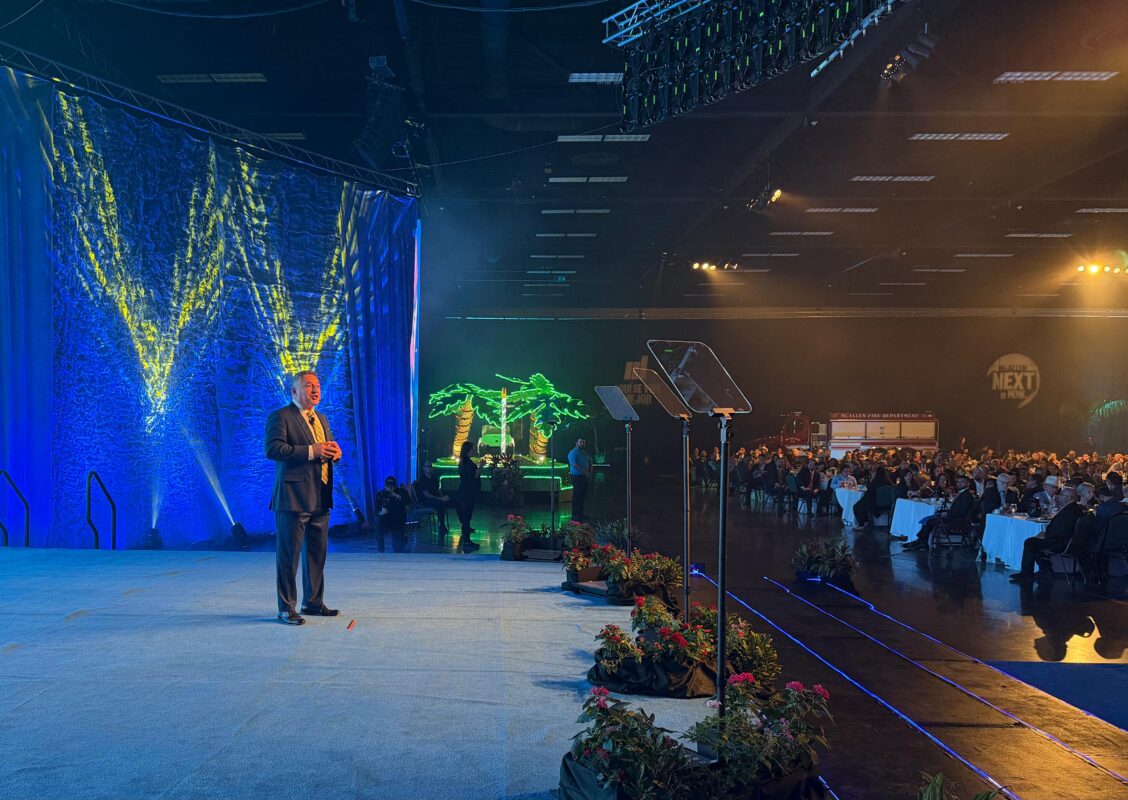
Two weeks ago in McAllen, during the Texas Water Foundation’s Rio Grande/Río Bravo Binational River Symposium, NADBank officially announced its first call for water conservation projects under this new fund, beginning with irrigation districts in the Lower Rio Grande Valley (LRGV).
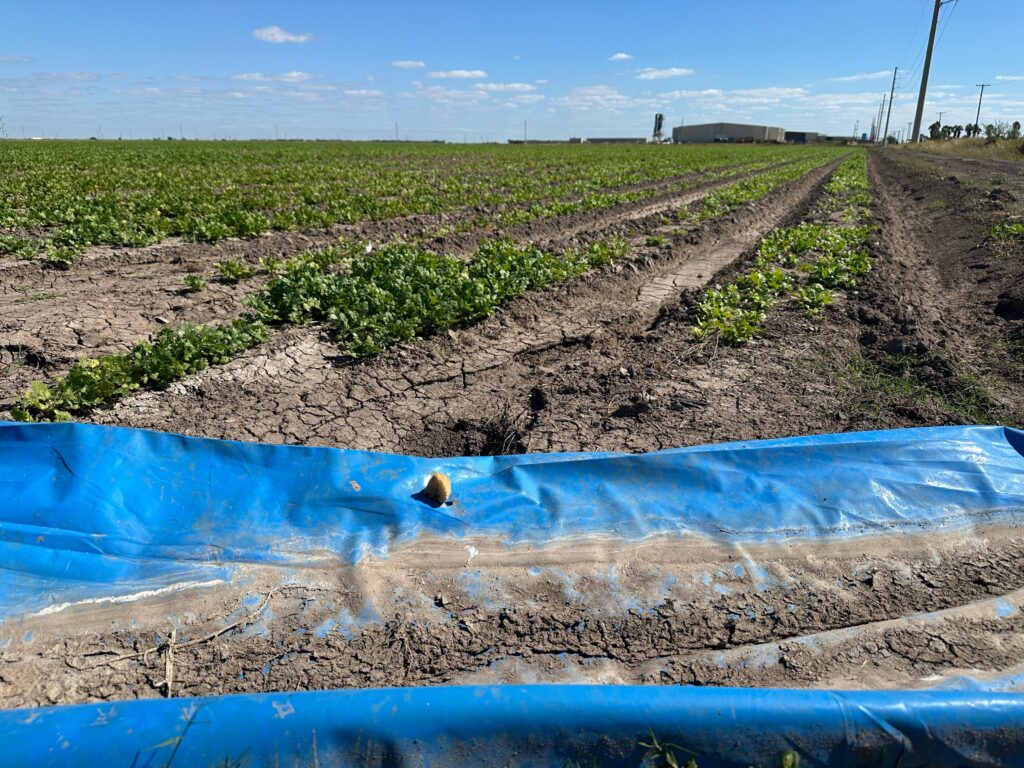
Photo Credit | Kristen Mosbrucker-Garza
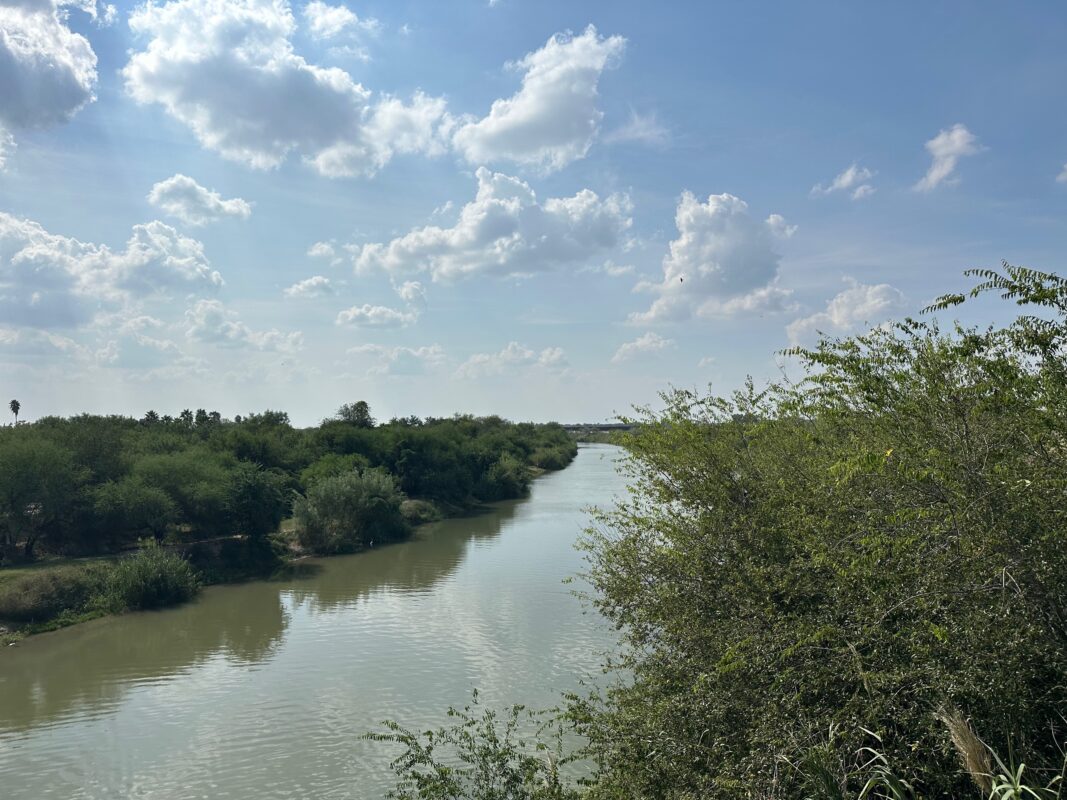
Why start in the Valley? Because the crisis there can no longer be ignored. Earlier this year, American Rivers, a national conservation non-profit working to safeguard U.S. rivers, ranked the Lower Rio Grande as the fifth most endangered river in the United States, citing severe drought and worsening water scarcity.
The numbers are stark: today, less than 20% of the river’s flow reaches the Gulf of Mexico. In 2024, both Cameron and Hidalgo Counties declared states of emergency as water levels in reservoirs plummeted. Across the river, in Reynosa and Matamoros, Mexican communities are facing the same hardship, an urgent reminder that shared water challenges demand binational attention and cooperation.
Many of these irrigation districts in the Valley provide the only source of raw water for municipal treatment plants that serve nearby communities. When those systems falter, families and businesses on both sides of the border feel the impact.
The good news is that Texas has the expertise, the institutions, and now, thanks to Proposition 4, foundational funding to make meaningful progress. What’s needed next is follow-through: turning that momentum into real projects that deliver measurable results. That means removing bureaucratic barriers, aligning priorities across local, state, and federal agencies, leveraging the private sector, and embracing innovation wherever it can make water go further.
If Texas wants to keep its promise of growth, opportunity, and resilience, water must remain at the top of the agenda. Sustaining the Texas miracle will take more than economic optimism. It will take bold investment, forward thinking, and a shared commitment to ensuring that every family, farmer, and business across the state has access to the most essential resource of all: water.
Most Read
- SpaceX is giving Brownsville $220M for water projects. In exchange, the city gave up zoning control of 444 acres near Starbase
- SpaceX seeks to take zoning control over nearly 450 acres from city of Brownsville as a ‘regional’ water deal takes shape
- Port of Brownsville could soon host Nodule City, a first-of-its-kind commercial deep-sea mining hub
- Cameron County is negotiating a $20M Fluidstack data center donation after Harlingen waffles on the same offer
- How much water does SpaceX need to operate near Brownsville? Nearly 20x its current use
Get the latest business news delivered to your inbox every morning for free.
Try 30 Days Free!
Get full access to award-winning journalism covering business, real estate, health care, economic trends, and the people shaping the Rio Grande Valley.
30 Days Free!
$9.95/month
Limited time offer
Subscription renews after your 30 day free trial at $9.95/mo.
Included Benefits
- Unlimited access to all articles
- Daily business news and analysis
- Subscriber-only content and features
Stories That Matter
- McAllen’s $204M water investment expects to seek construction bids in 2027
- Saronic lands Navy landing craft contract, first build at Brownsville’s Port Alpha
- The Rio Grande Valley’s tech industry is small but growing — meet some of the next-gen workforce
- Entrepreneurs enter Mission EDC’s ‘Shark Tank’ competition for $25K top prize
- Mission’s first Small Business Expo puts $25K on the line for local entrepreneurs
- Reynosa’s newest technical high school focuses on AI, semiconductors and bionics
- McCoy’s gives $10K, tools to launch Mid-Valley construction academy
- UT Health RGV performs new digestive procedure for first time in the Valley
- TSTC bets on advanced manufacturing to meet RGV’s industrial boom
- SpaceX reschedules Starship’s first flight around the Earth