Series intro: Across northern Tamaulipas, Mexico’s sorghum fields are drying up — and with them, the future of an industry that feeds both sides of the border.
The crisis deepened this week as farmers and transport drivers launched highway blockades across the region to protest insecurity, rising costs, and federal policies they say have left rural economies behind.
Once the state’s most profitable crop, sorghum is now caught in a perfect storm of low prices, drought, and disappearing government support.
This three-part RGV Business Journal series examines what’s at stake: how collapsing production is reshaping Mexico’s grain belt, the human toll on multigenerational farm families, and the stalled ethanol investment that could turn the crisis into an opportunity for cross-border energy growth.
REYNOSA — Northern Tamaulipas is facing its worst agricultural crisis in decades.
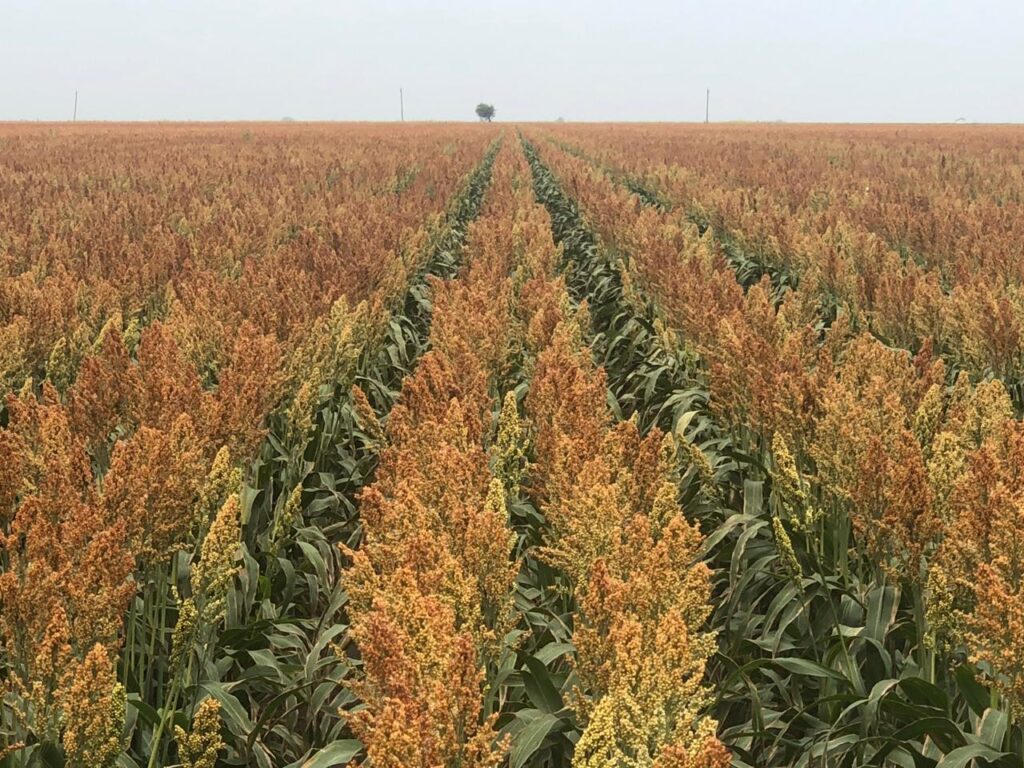
Sorghum, once the backbone of the region’s rural economy, has seen production cut in half as land goes unsown and farmers lose access to credit, water, and government support.
The crisis intensified this week as farmers and transport drivers launched coordinated highway blockades across northern Mexico, including in Reynosa, Río Bravo, and Nuevo Progreso.
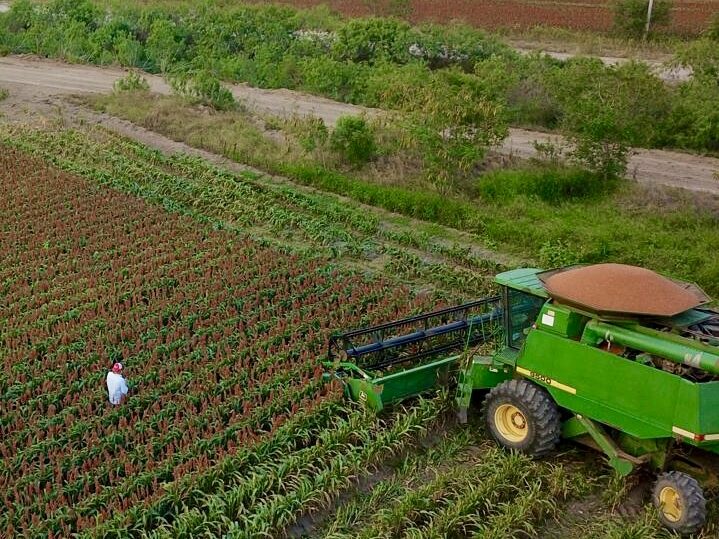
Courtesy of | José Luis Pérez Miranda
Operators cited insecurity, corruption in government procedures, rising fuel and input costs, and collapsing grain prices — pressures that mirror the conditions pushing Tamaulipas’ sorghum sector toward failure.
The blockades disrupted traffic near international bridges and strategic trade routes, underscoring the economic urgency rural producers describe.
Jorge Luis López Martínez, president of the National Union of Sorghum Producers of Mexico, said the crop’s decline has left thousands of growers unable to remain competitive or sustain their operations.
“Sorghum production is going through a severe economic crisis. All the programs that once helped balance trade disparities with the United States have disappeared,” López Martínez said.
See the RGV Business Journal’s data-driven breakdown of the blockades fueling this unrest.
Agriculture no longer a policy priority
Though sorghum is legally classified as a basic and strategic crop, López Martínez said it has been excluded from the federal support programs that still benefit other grains.

“Corn, beans, and wheat still receive some support for small producers. Sorghum gets nothing,” he said.
López Martínez was referring to assistance once provided through Apoyos y Servicios a la Comercialización Agropecuaria (ASERCA) — the federal agency that for decades administered price-guarantee and marketing-incentive programs for northern producers.
Those programs, however, were dissolved in 2019, when the federal government created Seguridad Alimentaria Mexicana (Segalmex), known in English as the Mexican Food Security Agency, to oversee food distribution and guaranteed-price programs.
But unlike ASERCA, Segalmex’s support shifted almost entirely to small producers in central and southern Mexico, leaving commercial grain farmers in the north — including sorghum growers in Tamaulipas — without access to previous competitiveness and price-support mechanisms.
And without those subsidies and price guarantees, the region’s agricultural base has eroded.
Thirty percent of farmland along the border went unsown last year, according to López Martínez.
Drought, water shortages in the Río Bravo irrigation districts, and high fuel costs have compounded the decline.
Production cut nearly in half
Northern Tamaulipas was once Mexico’s top sorghum producer.
In 1981, farmers harvested 2.1 million tons. Last year, they produced only 1.2 million — a drop of about 43%.
That decline now accounts for 30% of Mexico’s total supply loss, hitting the livestock industry hardest.
“Sorghum is feed for milk, meat, eggs, and poultry,” López Martínez said. “When domestic supply falls short, imports go up — and so do prices.”
When Mexico produces less sorghum, livestock producers are forced to buy imported grain to feed animals. That raises costs for farmers and, eventually, for consumers buying milk, meat, and eggs.
Unequal competition with U.S. producers
Trade liberalization — the reduction of tariffs and trade barriers between Mexico and the United States — has widened the gap between farmers on both sides of the border, López Martínez said.
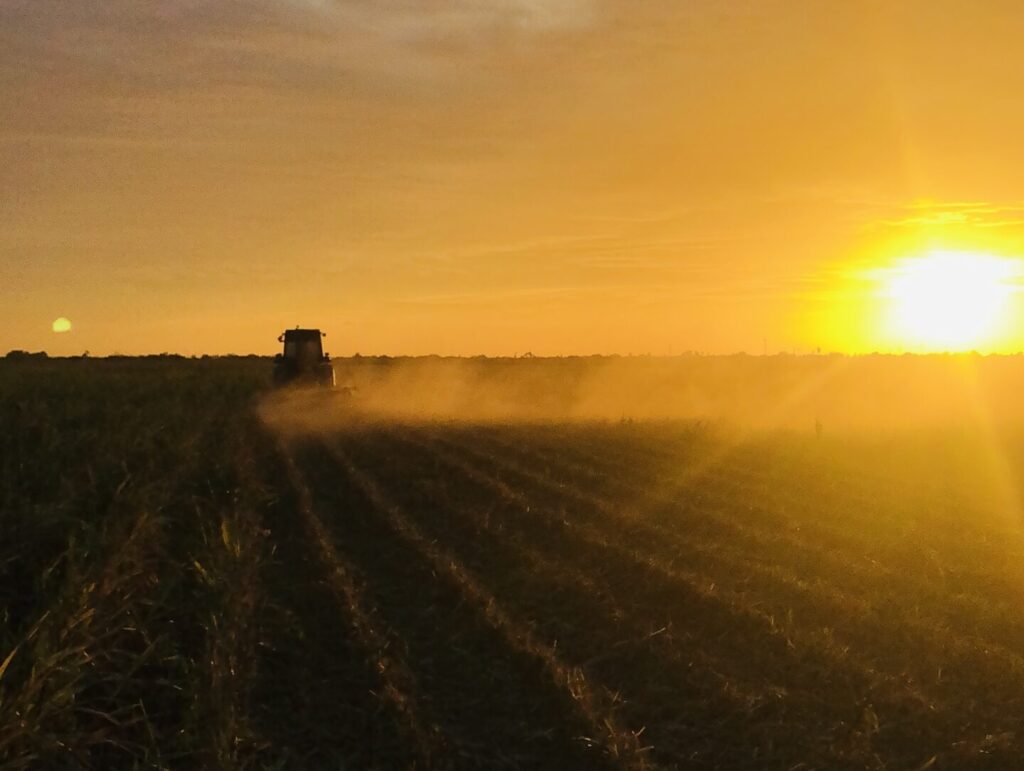
Courtesy of | José Luis Pérez Miranda.
Under open-market rules, Mexican producers must compete directly with heavily subsidized U.S. growers who face much lower costs.
That difference starts with energy: U.S. diesel costs about half the price.
In Texas, fuel sells for about $2.55 per gallon, compared with more than $5 per gallon in Mexico — or roughly 12 and 24 pesos per liter, respectively.
Cheaper fuel means lower production and transport costs for U.S. farmers — an advantage Mexico’s growers can’t match.
U.S. producers also receive direct support through the Farm Bill, while production-based incentives in Mexico have nearly disappeared.
“We can’t compete with the U.S. under current costs,” López Martínez said. “We’re not asking for welfare — we’re asking for fair rules to compete.”
Discontent in the countryside
Frustration is accelerating across northern Tamaulipas, where rural producers have joined the National Front for the Defense of Rural Mexico — a coalition that is currently leading protests across several northern states to demand fair prices and the return of federal support programs.
Farmers previously organized highway blockades in San Fernando, which is about 85 miles south of Brownsville; Río Bravo, located just across the international bridge from Donna; and La Ribereña, a farming stretch along Federal Highway 2 between Reynosa and Nuevo Laredo.
López Martínez, the union leader, said the movement is about survival, not politics.
“If this isn’t addressed, the countryside will continue to be abandoned,” he warned. “This is about the economic survival of thousands of rural families.”
A generation losing faith
Young producers such as José Luis Pérez Miranda of Valle Hermoso, a farming town between Matamoros and Río Bravo and about 25 miles south of Brownsville, say many have already turned away from sorghum.

Courtesy of | José Luis Pérez Miranda
“We can’t stop planting — we feed our people,” Pérez Miranda said. “But the northern countryside is being abandoned. It has no future.”
Prices have dropped nearly 50% in just the last four years. In 2021, sorghum sold for about $360 per ton, or 6,500 pesos. This year, it’s closer to $195 per ton, or 3,500 pesos.
Pérez Miranda’s family once farmed about 370 acres of sorghum, or 150 hectares. Today, most of that land sits idle. He now plants roughly 25 acres, or 10 hectares — less than 10% of what his family used to cultivate — and supplements his income by growing okra for export to Texas.
“We export fresh okra across the international bridges. Everything goes north — nothing stays here,” he said.
Credit and water run dry
Eutimio Palacios, an accountant-turned-farmer in Río Bravo, said access to financing has nearly vanished, and now water scarcity is making survival even harder.
“There is no agricultural credit. FIRA was the only institution lending to farmers, and now the requirements are so restrictive that almost no one qualifies,” he said about the Fideicomisos Instituidos en Relación con la Agricultura (FIRA), a federal trust fund that provides financing and guarantees for Mexico’s agricultural sector through commercial banks.

Courtesy of | Eutimio Palacios
Palacios is planting about 40% less sorghum than he once did, and his investment has fallen by about 70%.
He previously planted around 7,400 acres, or 3,000 hectares, but now cultivates roughly 4,450 acres, or 1,800 hectares.
His spending per planting cycle has dropped from about $2.8 million, or 50 million pesos, to around $850,000, or 15 million pesos.
Palacios said water has become his biggest obstacle.
Irrigation District 025, known in Spanish as Distrito de Riego 025 Bajo Río Bravo, covers the fertile plains between Río Bravo and Matamoros, one of Mexico’s largest grain-producing areas.
The district depends on water from the Río Bravo basin, which also supplies farmers and cities on both sides of the border under the 1944 U.S.–Mexico Water Treaty.
This year, it has no water allocation at all. Reservoirs are dry, and there is no insurance to cover crop losses.
“We don’t have a single drop of assigned irrigation water,” Palacios said. “Under these conditions, planning is impossible.”
Farming without profit can’t survive
Palacios said what farmers need is not direct aid but stability.
“If the government wants, it doesn’t have to give me a peso,” he said. “But it should support industry so they buy national grain instead of importing it.”
He paused, then added: “Agriculture is a business. It’s a vocation, yes — but also our livelihood. If it isn’t profitable, it disappears.”

Anayancy Ulloa
Reporter
Most Read
- SpaceX is giving Brownsville $220M for water projects. In exchange, the city gave up zoning control of 444 acres near Starbase
- SpaceX seeks to take zoning control over nearly 450 acres from city of Brownsville as a ‘regional’ water deal takes shape
- Port of Brownsville could soon host Nodule City, a first-of-its-kind commercial deep-sea mining hub
- Cameron County is negotiating a $20M Fluidstack data center donation after Harlingen waffles on the same offer
- How much water does SpaceX need to operate near Brownsville? Nearly 20x its current use
Get the latest business news delivered to your inbox every morning for free.
Try 30 Days Free!
Get full access to award-winning journalism covering business, real estate, health care, economic trends, and the people shaping the Rio Grande Valley.
30 Days Free!
$9.95/month
Limited time offer
Subscription renews after your 30 day free trial at $9.95/mo.
Included Benefits
- Unlimited access to all articles
- Daily business news and analysis
- Subscriber-only content and features
Stories That Matter
- McAllen’s $204M water investment expects to seek construction bids in 2027
- Saronic lands Navy landing craft contract, first build at Brownsville’s Port Alpha
- The Rio Grande Valley’s tech industry is small but growing — meet some of the next-gen workforce
- Entrepreneurs enter Mission EDC’s ‘Shark Tank’ competition for $25K top prize
- Mission’s first Small Business Expo puts $25K on the line for local entrepreneurs
- Reynosa’s newest technical high school focuses on AI, semiconductors and bionics
- McCoy’s gives $10K, tools to launch Mid-Valley construction academy
- UT Health RGV performs new digestive procedure for first time in the Valley
- TSTC bets on advanced manufacturing to meet RGV’s industrial boom
- SpaceX reschedules Starship’s first flight around the Earth