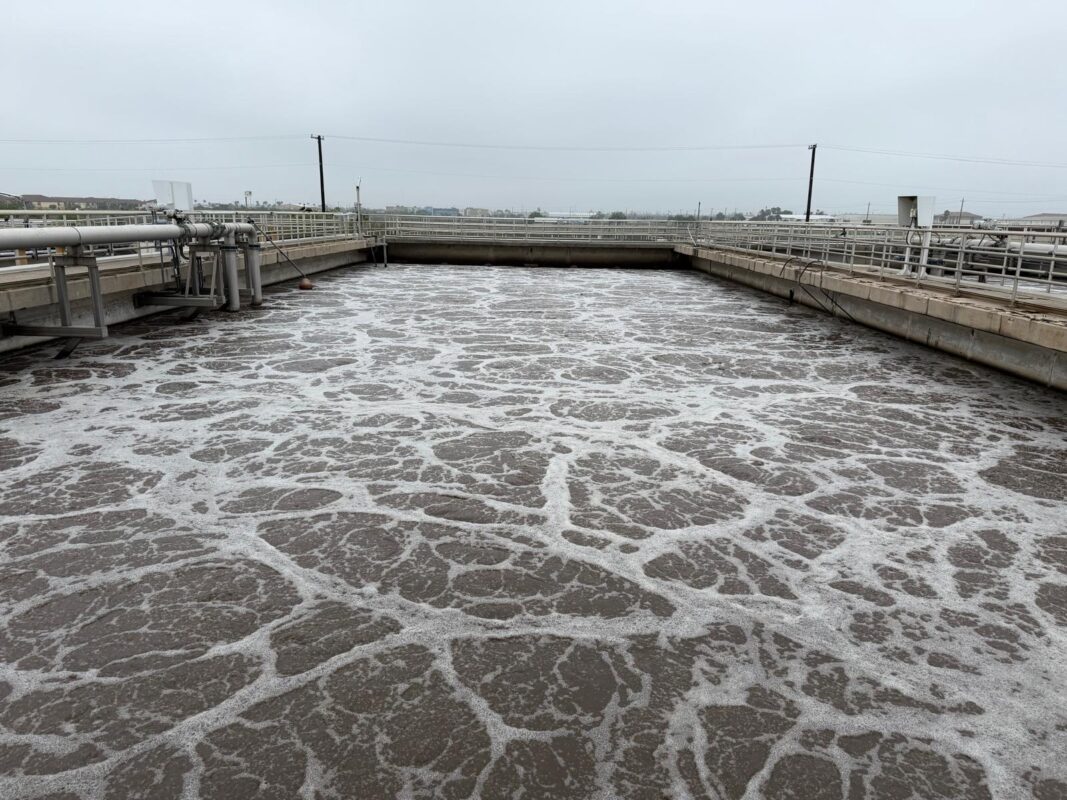
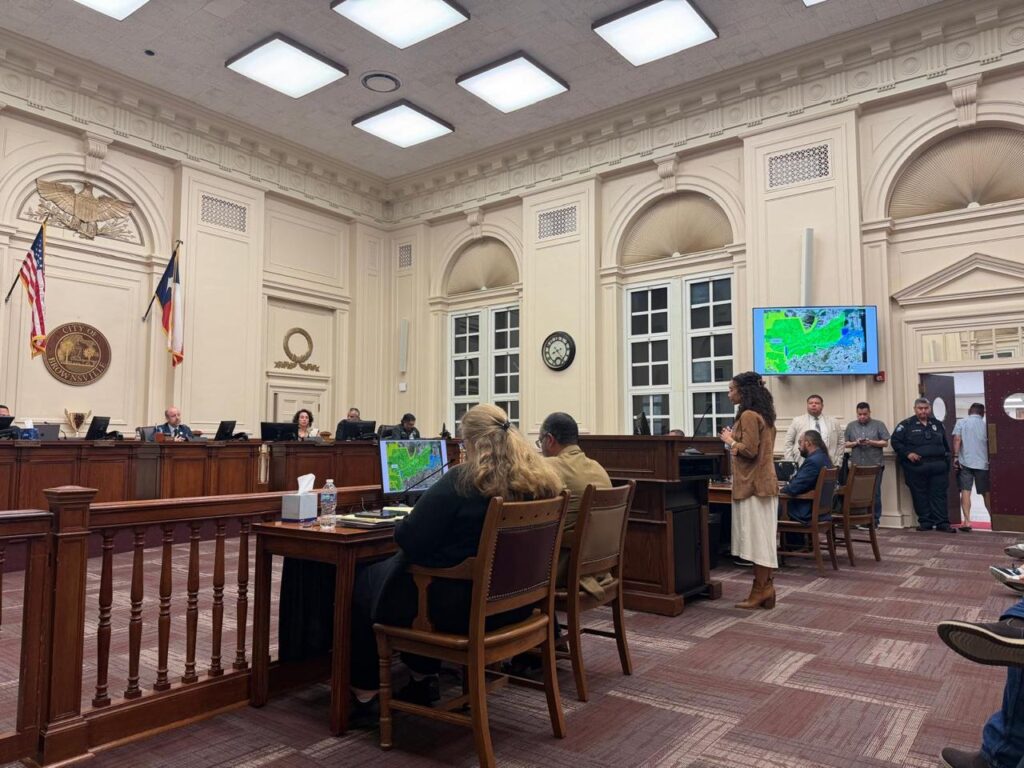
A Space Exploration Technologies Corp. executive told Brownsville City Commissioners this month that the company estimates it will need about 2 million gallons of potable water each day for its industrial operations and for Starbase residents.
That is 19.7 times what SpaceX purchased from the Brownsville Public Utilities Board in fiscal year 2025. And even with the utility company’s planned expansions, SpaceX alone would require about 4.7% of the municipal provider’s water supply, according to an analysis by the Rio Grande Valley Business Journal.
SpaceX is the unidentified industrial customer in the Brownsville Public Utilities Board’s annual financial report, a key document the municipality uses to prove it has a business model to repay any bond issuances and other purposes.
For the past decade, SpaceX has invested billions of dollars in the new city of Starbase, the rocket launch pad, a corporate office building, and manufacturing operations.
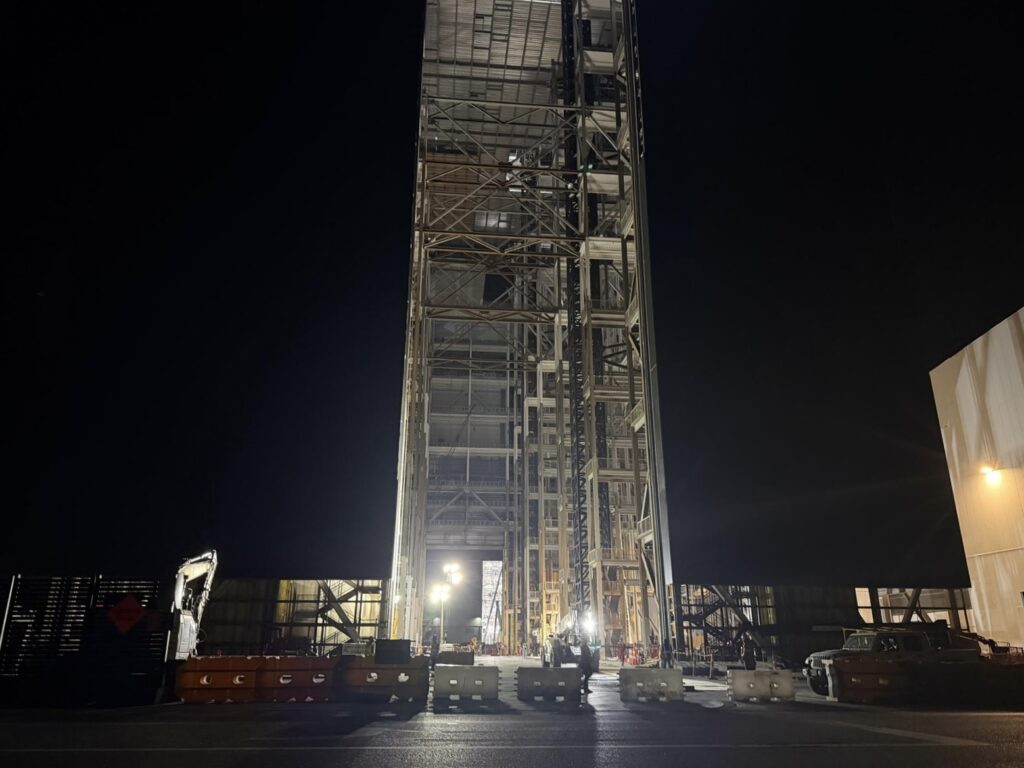
SpaceX is still building; crews are working into the night on a new construction project just north of Boca Chica Boulevard and south of the Port of Brownsville Shipping Channel.
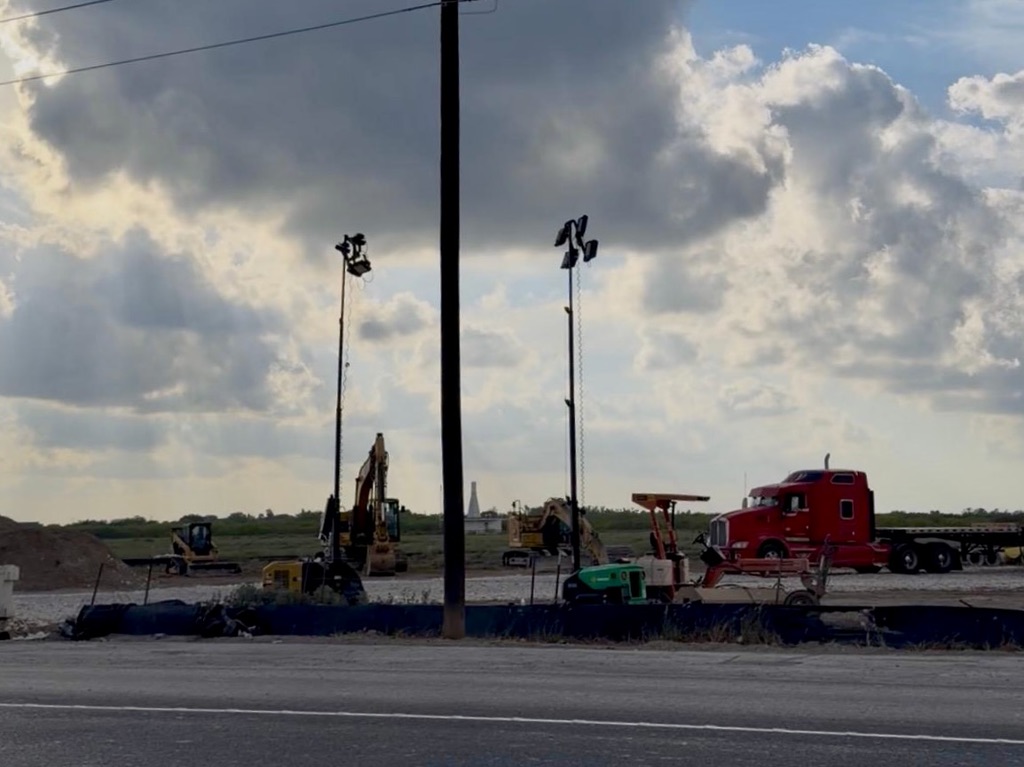
Whatever the company is building will require more water than it currently needs.
SpaceX purchased roughly 101,375 gallons per day, based on its 37 million gallons of water usage averaged over fiscal year 2025.
Its water demand has grown for years: SpaceX purchased 5 million gallons in 2022, 7.2 million in 2023, and 23.4 million gallons in 2024.
SpaceX is the fourth-largest water customer for the Brownsville Public Utilities Board by revenue, but it’s actually No. 8 out of 10 in water consumption in 2025.
But it paid $668,458 in fiscal 2025, down from $1.5 million in 2024 when it used less water — and it was not immediately clear why.
In one year, SpaceX already uses almost as much water as two major hospitals, though not combined. In 2025, Valley Regional Medical Center Brownsville used 35 million gallons and Valley Baptist Medical Center Brownsville used 38 million gallons.
But those hospitals pay less money for using about the same amount of water as SpaceX — about $137,564 and $129,927, respectively.
By comparison, the University of Texas Rio Grande Valley uses 45 million gallons per year, and Texas Southmost College uses 49 million gallons. Cameron County, which is also a customer, used 65 million gallons in 2025.
Those entities, too, use more water but pay less: $227,320 for Texas Southmost College, $227,320 for UTRGV, and $253,296 for Cameron County.
Rich Products Corporation, a manufacturer active in Brownsville, used 71 million gallons of water in 2025. It paid $249,472 for that water. Before Trico Technologies Corp, another manufacturer, shut down in Brownsville, the company also used 34 million gallons in fiscal 2024 and paid about $119,231.
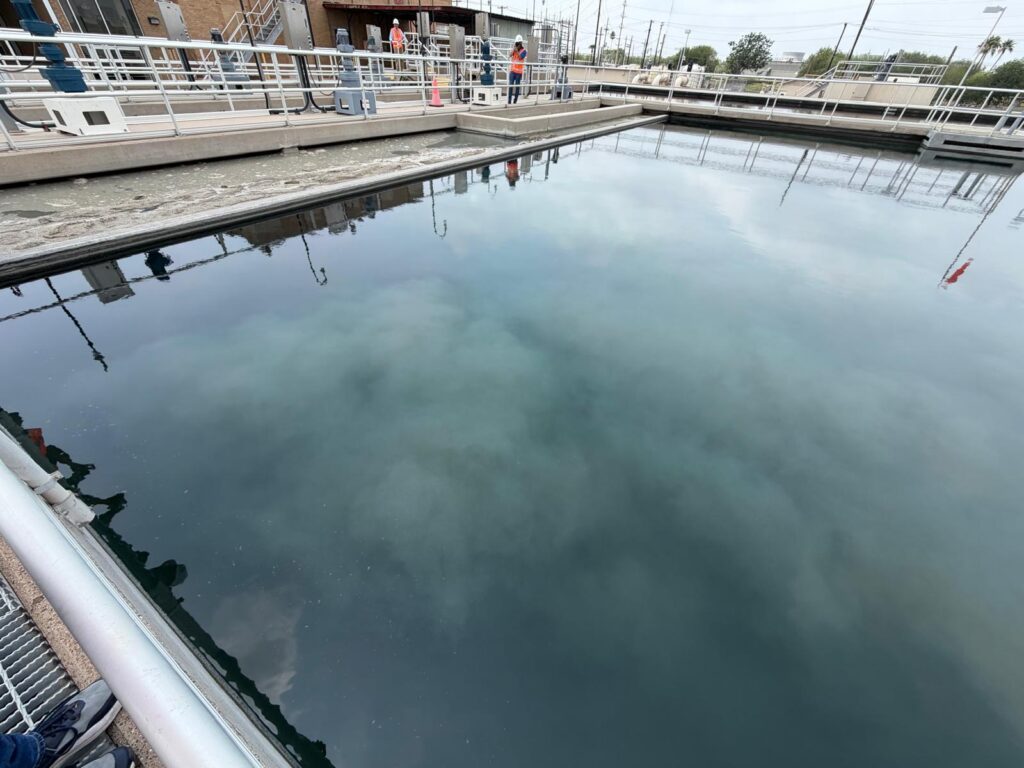
The Brownsville Independent School District used 138 million gallons of water in 2025 and paid $731,079.
The Brownsville Navigation District, which is the Port of Brownsville, also consumed 249 million gallons of water in 2025. Industrial customers at the port purchase water indirectly, totaling $751,439.
Brownsville also supplies rural customers through a contract with El Jardin Water Supply Corp., which consumed 327 million gallons of water in 2025 and paid $1.1 million.
But when SpaceX begins using 2 million gallons of water each day, it is projected to outpace the combined usage of all Port of Brownsville customers and El Jardin Water Supply Corp. if the port customers’ water usage remains steady.
That means a rural water supply company plus a deep water port is using less water than SpaceX would if its plans come to fruition — 577 million gallons of water per year compared to 740 million gallons.
Now, SpaceX recently made a landmark deal with the city of Brownsville to secure de-annexation permission and, in exchange for the swift decision, agreed to donate $220 million in six installments to the city for its existing water infrastructure expansion plans.
That changes the overall water supply calculus, but not the demand, which is also expected to increase by an unknown amount due to Saronic Technologies, the America First Refining project, and possibly Nodule City, a first-of-its-kind deep sea mining hub.
Initially, SpaceX had offered Brownsville a “contribution in aid of construction” or a CIAC, pronounced kayak, according to Tino Villarreal Jr., a Brownsville city commissioner. But at the last minute, SpaceX instead offered an MOU for the $220 million donation for water infrastructure, he said.
“Brownsville is facing serious questions about the future of its water supply. We were not interested in creating new water capacity infrastructure simply to turn around and promise it to one company,” Villarreal said in a recent self-produced podcast after canceling his town hall meeting when commissioners felt threatened by gunshots outside one of their homes. “The MOU does not allocate one additional gallon of water to SpaceX. It did not give them ownership of the new water capacity. What it did was create a framework for up to $220 million in private funding for qualifying water and wastewater infrastructure benefiting Brownsville and Cameron County.”
That’s what attorney Sheila McCorkle, SpaceX’s vice president of Starship Legal and Regulatory, told commissioners at the recent meeting.
“We are here to be here forever, and we want to invest in critical infrastructure that allows Brownsville to grow alongside of us,” McCorkle said.
The Brownsville Public Utilities Board was already planning an 8 million-gallon-per-day water reuse project that includes a 36-inch pipeline connecting the Robindale Wastewater Treatment Plant to the Resaca de la Guerra.
Plus, the Southmost Regional Water Authority, of which the Brownsville Public Utilities Board owns a slice, operates a brackish water desalination plant with capacity up to 7.5 million gallons of water each day. The Brownsville utility was already planning to expand the plant to 10 million gallons per day by drilling new wells into the aquifer. Tentative long-term plans included Brownsville’s goal to increase that to 20 million gallons per day of brackish desalination into potable water.
But cost has been the barrier.
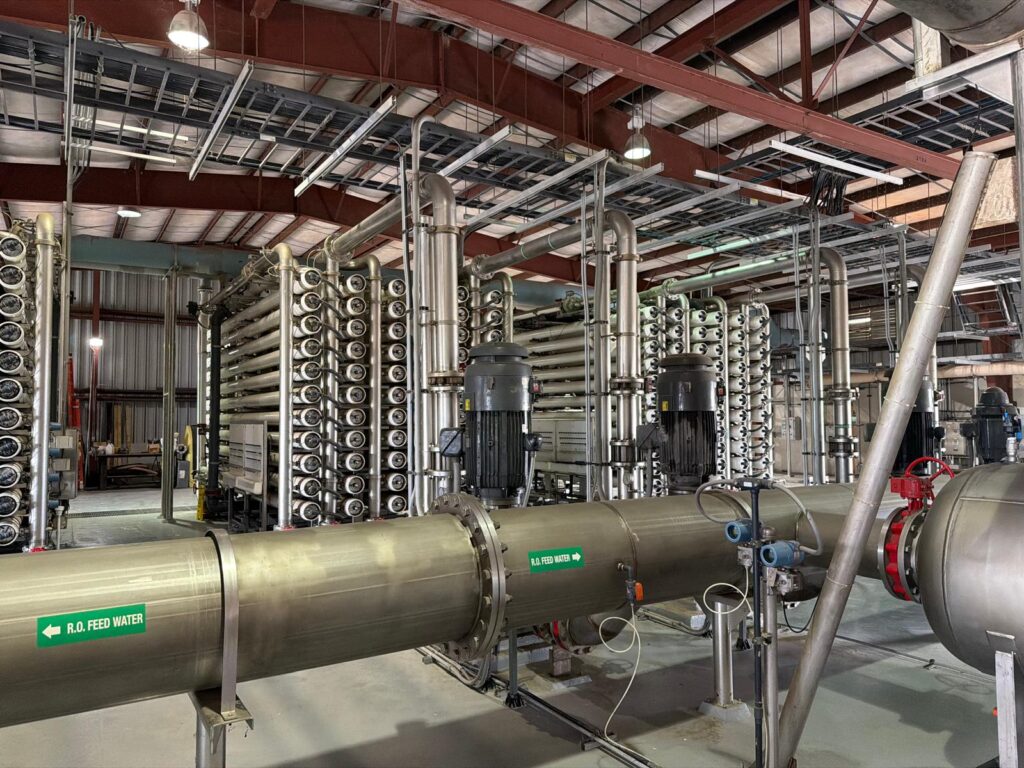
The brackish water desalination project, which would increase capacity from 7.5 million gallons per day to 10 million, would cost at least $46 million because it requires constructing at least two new wells. The 20 million gallons per day upgrade could cost $202 million because it would require 20 new water wells.
The wastewater reuse project did receive a $12.7 million grant from the Texas Water Development Board in February 2026 and is expected to be completed by 2030. But the total project cost is $40 million, so the Brownsville Public Utilities Board, a nonprofit organization, would need to take out a low-interest loan or seek other grants to fill the funding gap.
So the SpaceX donation would “save” each Brownsville ratepayer a $4,000 hike if the city moved forward with those expansion projects, which add 18 million additional gallons of water to the system.
Brownsville Public Utilities Board customers use about 22 million gallons of water per day in 2026.
The 8 million gallons per day wastewater reuse project, plus the brackish desalination plant expansion of 2.5 million gallons per day, plus the longer-term desal project of a 10 million gallons per day expansion, equals 20.5 million additional gallons of water to the network.
That means the new pool of potable water would be closer to 42.5 million gallons of water per day — and that’s what SpaceX would be drawing the 730 million gallons of water supply from, or about 4.7% of all potable water supply — if all the projects go to plan.

Kristen Mosbrucker-Garza
Reporter
Kristen Mosbrucker-Garza is a versatile multimedia news reporter who lives and works along the Texas-Mexico border in Hidalgo County. Mosbrucker-Garza is a news reporter for the Rio Grande Valley Business Journal. During her career she's worked for the McAllen Monitor, San Antonio Business Journal, The Advocate Newspaper in Louisiana, Phoenix New Times, and public media outlets in Baltimore and Philadelphia.
Most Read
- Is SpaceX quietly building a data center at Starbase? Job postings offer clues
- 25 Mexican businesses eye McAllen expansion after city pitches U.S. market entry program
- Starbase EDC may issue $3 billion in tax-exempt bonds to support SpaceX, records show
- Edinburg ISD rejects nearly $6M offer for prime land near La Sienna despite $15M budget deficit
- Developers begin $12M master-planned community near Rio Grande City
Get the latest business news delivered to your inbox every morning for free.
Try 30 Days Free!
Get full access to award-winning journalism covering business, real estate, health care, economic trends, and the people shaping the Rio Grande Valley.
30 Days Free!
$9.95/month
Limited time offer
Subscription renews after your 30 day free trial at $9.95/mo.
Included Benefits
- Unlimited access to all articles
- Daily business news and analysis
- Subscriber-only content and features
Stories That Matter
- Mission’s first Small Business Expo puts $25K on the line for local entrepreneurs
- Handel’s Ice Cream plans first Valley location
- TSTC to take manufacturing training directly to employers
- McCoy’s gives $10K, tools to launch Mid-Valley construction academy
- UT Health RGV performs new digestive procedure for first time in the Valley
- TSTC bets on advanced manufacturing to meet RGV’s industrial boom
- Pharr’s cross-border business push earns international recognition
- Brownsville eases drought restrictions after nearly three years as Rio Grande reservoir levels improve
- Texas A&M’s $53.5M McAllen research center will tackle water, food security and Valley health
- STC puts AI to work across 55 courses — from construction sites to car repair