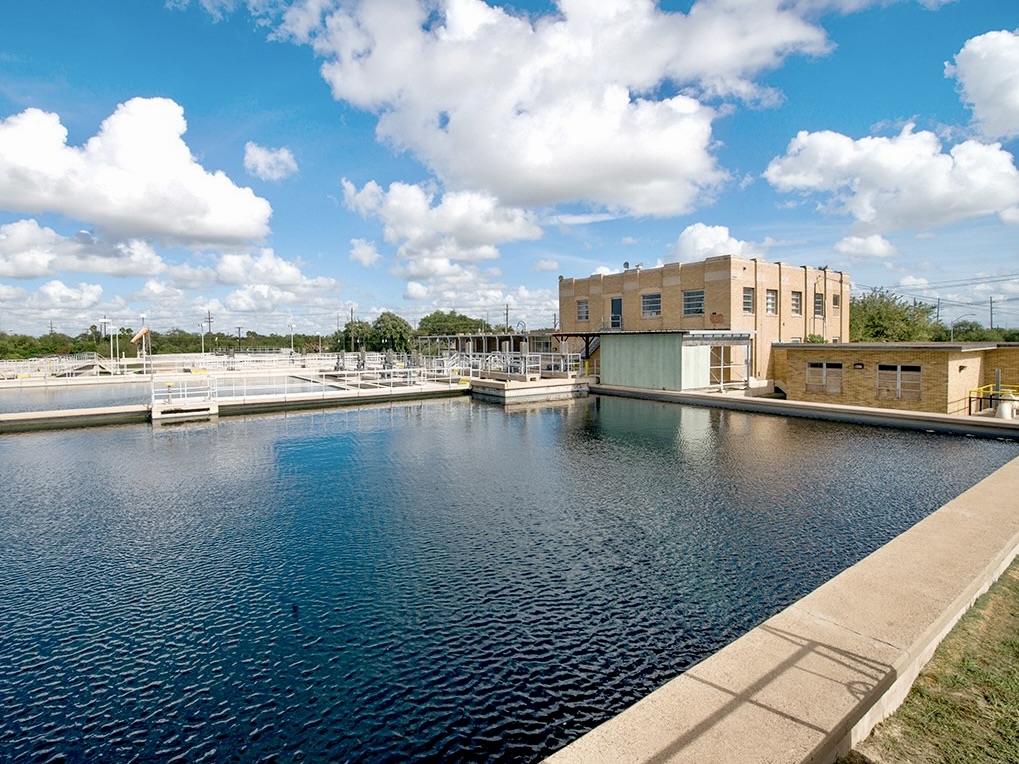
The America First Refining project is in line to become a major new customer of Brownsville Public Utilities, and its water demand is raising questions about the city’s capacity as drought conditions persist and residents and businesses are asked to cut back.
The proposed refinery, which would have a capacity to process about 164,300 barrels of oil each day, would rely on water from Brownsville’s share of the Rio Grande River and its desalination plant, which processes Cameron County groundwater.
But Brownsville, like the rest of the Rio Grande Valley, is experiencing an extensive drought, which is expected to worsen in the coming years.
Persistent drought conditions
On Friday, Brownsville asked residents and businesses to strictly follow Stage 2 water restrictions as extreme drought conditions persist.
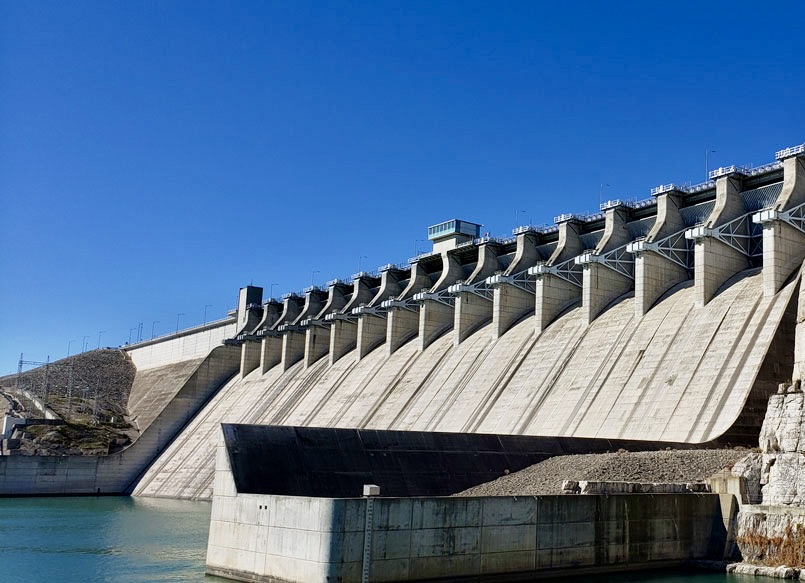
Those restrictions limit outdoor water use, including lawn watering schedules and daytime car washing, and have been in place since September 2023, when the Brownsville Public Utilities Board enacted them after water levels at the international reservoirs — Lake Amistad and Falcon Lake — dropped below 25%.
Courtesy of | International Boundary and Water Commission
That level slid even further in 2024 to a record low of 18%. If those reservoirs fell below 15%, Brownsville would enact Stage 3 measures, which include additional water conservation rules, particularly for landscaping.
A Stage 4 water emergency would prohibit all vehicle washing, landscaping, and some recreational water uses, such as filling swimming pools, but that stage does not correspond to reservoir levels and is described as a “significant lack of water supply.”
As of Friday, the combined Amistad and Falcon system was about 26.6% full.
The Amistad Reservoir was 32% full, up from 25% one year ago but down from 35% six months ago. That same day, Falcon reservoir was 20.4% full, up from 15.2% a year ago and 15.7% six months ago.
How much water could the refinery use?
America First Refining has not yet disclosed how much water it will need for a facility of its size, but an oil refinery in Corpus Christi operated by Citgo could offer some comparison.
America First Refining did not respond to a request for an interview.

In 2023, the Corpus Citgo refinery used 6.6 million cubic meters of water, according to the company’s environmental sustainability and governance report, the most recent data available. That converts to about 1.7 billion gallons of water each year, or 5,350 acre feet annually.
“That [water use] would probably be around the size of Weslaco,” said Carlos Rubinstein, principal of RSAH20 LLC, a water consultant, and former Brownsville city manager.
It also amounts to roughly 17% of Brownsville’s total annual water rights allocation, or the amount of water the city is allowed to draw each year from the Rio Grande system.
Understanding Brownsville’s water supply
Brownsville’s water supply is limited, shared, and tied to conditions far beyond the city’s control — from reservoir levels to international agreements with Mexico.
The Brownsville Public Utilities Board has water rights of 31,965 acre-feet each year, but how much it can actually use depends on how much water the Rio Grande River sends into the Falcon and Amistad reservoirs.
How that water is distributed is also different in the Rio Grande Valley than in the rest of Texas. That system came out of a legal fight after an irrigation district pumped water upstream before it could reach Brownsville. The judge in that case created a special system for the Valley in which municipal and industrial water users are given higher priority than irrigation water users.
That means cities like Brownsville are first in line during shortages — but only for the water that exists.
“It is not based on how much water is flowing in the river; it is based on how much water the U.S. owns at the international reservoirs,” Rubinstein said.
And those reservoirs must have at least 300,000-acre feet of water at the end of each month.
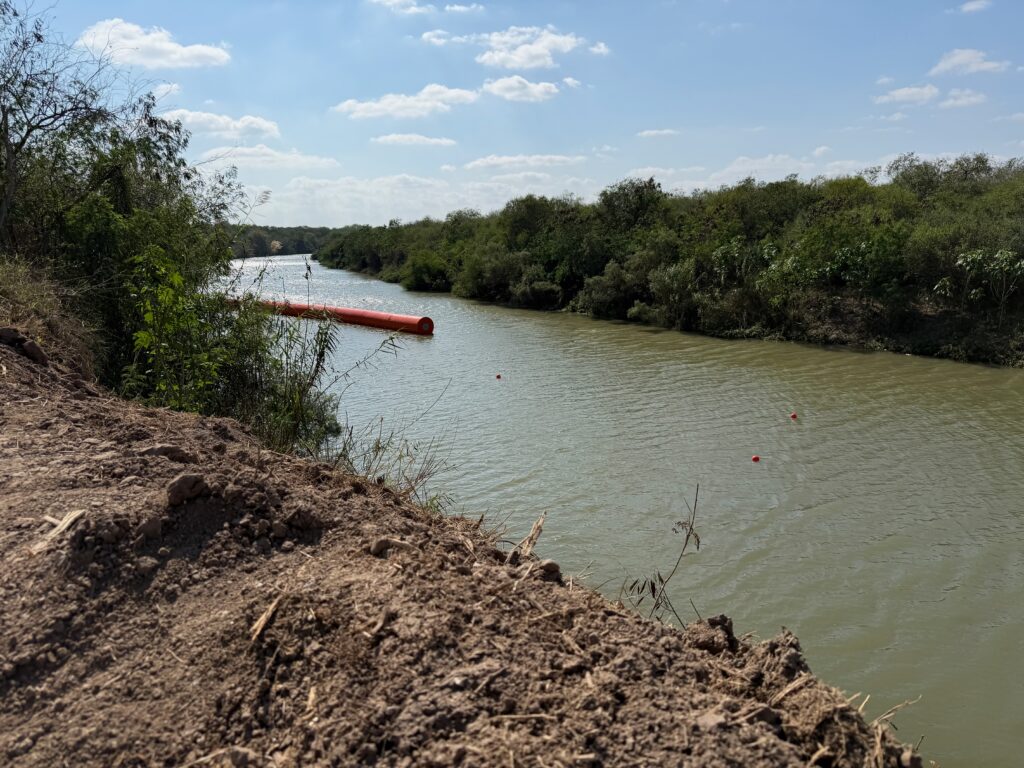
Photo Credit | Kristen Mosbrucker-Garza
But how much water is in those reservoirs also depends on how much Mexico delivers under a 1944 treaty that governs the Rio Grande.
Mexico currently owes the U.S. about 1.1 million acre-feet of water under the treaty. Late last year, it promised to release more water in response to pressure from President Donald Trump.
If there is any surplus water, or water from natural rainfall such as a tropical storm, Brownsville has an additional permit to capture up to 40,000-acre feet of water from the Rio Grande River.
But that’s not guaranteed — nor are there massive storage facilities to safely hold that much water for long periods of time, especially if there’s already flooding.
In the mid-2000s, Brownsville sought to build a dam on the Rio Grande to store 6,000 acre-feet out of the 40,000 acre-feet it can capture, but the project fell apart because Mexico refused to agree to the deal.
Current water use and future demand
Water use in Brownsville has remained below its annual allocation for more than a decade, but that margin could narrow as demand grows.
The proposed refinery alone could consume a large share of that remaining capacity.
Last year, Brownsville used 5.4 billion gallons of surface water and 2.3 billion gallons of processed groundwater out of its 10.4 billion-gallon allocation, or about 74%.
It was not immediately clear whether the city did not use its full allocation due to a lack of demand or a lack of water supply, as its allocation depends on reservoir levels.
The Brownsville Public Utilities Board did not respond to the request to comment for this story.
The new oil refinery would be expected to draw another 1.7 billion gallons each year, which means if water demand in Brownsville remains steady, the city would need 9.5 billion gallons to meet demand — moving it much closer to its 10.4 billion allocation. That figure, however, doesn’t include the surplus water the city could capture.
Infrastructure and growing demand
Brownsville is investing in its infrastructure, including expanding its brackish water desalination plant to 20 million gallons per day and a recycled water project to divert effluent back into the system.
Large water users requiring more than 1,000 acre feet are also required to submit water conservation plans through the Texas Commission on Environmental Quality, which the new refinery would be subject to when it’s built.
Demand for water continues to grow as more industrial development takes shape in Brownsville.
Between fiscal year 2019 and 2023, the Port of Brownsville saw a 6.2% increase in water customers and 7.2% increase in water consumption.

Brownsville also supplies water to the emerging city of Starbase and to the industrial rocket-building and launch complex operated by SpaceX near Boca Chica Beach. SpaceX uses upwards of 180,000 gallons of water during rocket launch preparations alone.
Brownsville Navigation Board Chairman Steve Guerra deflected concerns about industrial water use at the port, saying that the situation in Corpus Christi, which is projected to run out of water for industrial and municipal customers by May, is a different scenario.
“This commission has really taken on a task to make sure that we have the necessary water and necessary electricity for these projects,” Guerra said. “We are not Corpus. Water will not be an issue with these projects.”
How the Valley compares to Corpus Christi
Water use varies sharply between regions, particularly when comparing industrial demand in Corpus Christi and the Rio Grande Valley.
Lake Corpus Christi and Choke Canyon reservoirs, which supply Corpus Christi, have dropped below 5% capacity after five years of drought. Industrial customers there use between 50% to 60% of the water there.
In Nueces County, manufacturing used 45,411 acre-feet of water in 2020, compared with 74,908 acre-feet for municipal use — about 38% of the total.
That balance looks very different in Cameron County.
Manufacturing there used just 1,647 acre-feet, compared with 81,779 acre-feet for municipal use and 537,217 acre-feet for agriculture. That means manufacturing accounted for less than 1% of water use, while agriculture made up nearly 87%.
Still, some experts like Rubinstein argue that Corpus Christi is more diversified than the Valley in terms of water supplies.
“Corpus is in a pickle right now, no question. But to their credit, they diversified their sources of water, from the Nueces River, from the Colorado, and Lake Texana. Three different basins that they can rely on. The Valley has one basin – the Rio Grande,” he said. “Corpus is in worse shape today because nobody ever envisioned a significant drought impacting all three different basins all at the same time.”

Kristen Mosbrucker-Garza
Reporter
Kristen Mosbrucker-Garza is a versatile multimedia news reporter who lives and works along the Texas-Mexico border in Hidalgo County. Mosbrucker-Garza is a news reporter for the Rio Grande Valley Business Journal. During her career she's worked for the McAllen Monitor, San Antonio Business Journal, The Advocate Newspaper in Louisiana, Phoenix New Times, and public media outlets in Baltimore and Philadelphia.
Most Read
- SpaceX’s futuristic city of Starbase finalizes massive 7,100-acre annexation. Here’s what we know.
- SpaceX reschedules Starship’s first flight around the Earth
- How much water does SpaceX need to operate near Brownsville? Nearly 20x its current use
- Could apartment-to-condo conversion help make $100K homeownership in the McAllen metro more affordable? One investor says yes.
- Crunch Fitness is expanding and struggling in the Valley. Here’s why
Get the latest business news delivered to your inbox every morning for free.
Try 30 Days Free!
Get full access to award-winning journalism covering business, real estate, health care, economic trends, and the people shaping the Rio Grande Valley.
30 Days Free!
$9.95/month
Limited time offer
Subscription renews after your 30 day free trial at $9.95/mo.
Included Benefits
- Unlimited access to all articles
- Daily business news and analysis
- Subscriber-only content and features
Stories That Matter
- Brownsville is changing its drainage fee. Businesses could pay more as the city looks to raise $6.2M a year
- Tamaulipas is rethinking how it sells its cattle. A $44.5M project would keep more of the business at home
- Mission’s first Small Business Expo puts $25K on the line for local entrepreneurs
- Reynosa’s newest technical high school focuses on AI, semiconductors and bionics
- McCoy’s gives $10K, tools to launch Mid-Valley construction academy
- UT Health RGV performs new digestive procedure for first time in the Valley
- TSTC bets on advanced manufacturing to meet RGV’s industrial boom
- Pharr’s cross-border business push earns international recognition
- Brownsville eases drought restrictions after nearly three years as Rio Grande reservoir levels improve
- Texas A&M’s $53.5M McAllen research center will tackle water, food security and Valley health