Higher education leaders in the Rio Grande Valley joined forces with educators from northern Mexico to build a regional database that can be used to attract new industries.
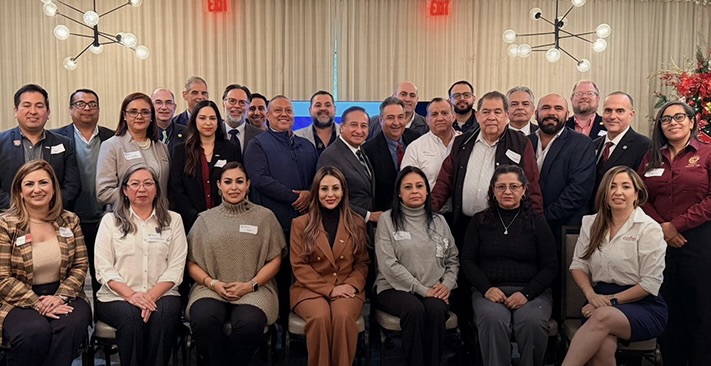
The Binational Higher Education Advisory Council, which spans seven counties in South Texas and 10 municipalities in northern Tamaulipas, Mexico, met Wednesday to discuss how to harvest information about available degrees and certifications. This is important data companies ask for when they assess the Rio South Texas Region for business expansions or new ventures, said Adam Gonzalez, CEO of the Council For South Texas Economic Progress (COSTEP), which established the council.
Branded as the Rio South Texas Region, the area includes both sides of the U.S.-Mexico border, a region Gonzalez said offers unique economic development opportunities.
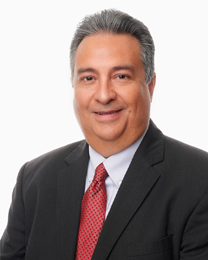
“We promote our infrastructure, we promote 19 bi-national bridges and nine airports on both sides (of the border) between Laredo and Brownsville,” he said. “The problem we run into, when we do economic development, is that interested companies are asking us, ‘What schools do you have? What curriculum do they have?’ And we run into the issue that we don’t know.”
That’s why COSTEP will create a database of these programs so that other economic development corporations, government entities, and universities can use it to attract investment in the region.
“They can find the right partner and the right educational system that they need for their manufacturing operation,” Gonzalez said about potential investors.
Richard Mesquias, vice president of external relations & workforce development at Texas Southmost College in Brownsville, said the database will allow companies to find the resources they need.
“One of the things I’ve run into with three different companies in the last two weeks, one company is an aviation company that I sat down with, there were so many things I couldn’t do for them,” Mesquias said. “I have many companies that I work with in Brownsville that I can’t meet their demand for workforce. I only have so much capacity.”
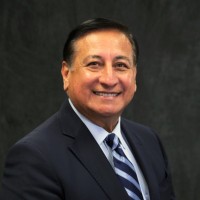
The centralized database will help bridge that gap, he said.
“Those data points will be great for those industries to be able to say, ‘Look at what we have over here,’” Mesquias said. “Because we have the workforce, we have the resources, and we have the people, but you really need to go to those colleges, technical schools, and universities to find them and fill the gap, otherwise we’re going to all fail.”
More than 30 higher-education representatives convened at Wednesday’s event, including Ernest “Ernie” Aliseda, COO & associate vice president of Texas A&M’s Higher Education Center at McAllen. He told the RGV Business Journal that he is constantly pursuing information on workforce needs to ensure his curriculum aligns with industry needs.
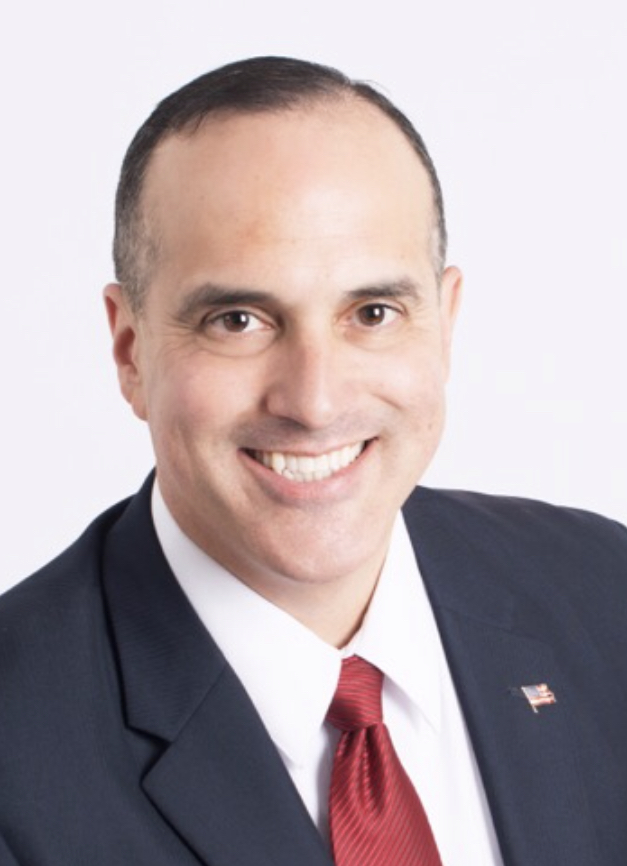
“Not a day goes by that I’m not reaching out to somebody to find out exactly what is needed here,” Aliseda said. “We don’t want to offer competitor degree programs; we want to offer programs where our students will graduate and get jobs. That’s our purpose.”
All representatives were asked to complete a 25-page questionnaire over the next three weeks so COSTEP can tally academic levels, degrees offered, campus locations, accreditations or certifications, specialization areas, continuing education courses, labs, workshop spaces, and so on. The process will be repeated every six months or at least once a year to keep the data fresh, Gonzalez said.
“COSTEP won’t own the data. It’s for everyone to use,” Gonzalez said. “We’re simply collaborating with the leadership in this room to try and make this happen. It’s the number one thing we’re asked, ‘What is your academic infrastructure like? What kind of programs, research, and roles are offered? And now we’ll be able to answer that.”

Alma Santos
Reporter
Alma Santos is a RGV native and a freelance writer for RGV Business Journal. Since the 90s, Alma has written for Reuters, The Monitor, Progress Times, Valley Town Crier and was a member of the press pool at the state capital in Austin, covering legislative sessions for news of interest to Valley residents.
Most Read
- SpaceX is giving Brownsville $220M for water projects. In exchange, the city gave up zoning control of 444 acres near Starbase
- SpaceX seeks to take zoning control over nearly 450 acres from city of Brownsville as a ‘regional’ water deal takes shape
- Port of Brownsville could soon host Nodule City, a first-of-its-kind commercial deep-sea mining hub
- Cameron County is negotiating a $20M Fluidstack data center donation after Harlingen waffles on the same offer
- How much water does SpaceX need to operate near Brownsville? Nearly 20x its current use
Get the latest business news delivered to your inbox every morning for free.
Try 30 Days Free!
Get full access to award-winning journalism covering business, real estate, health care, economic trends, and the people shaping the Rio Grande Valley.
30 Days Free!
$9.95/month
Limited time offer
Subscription renews after your 30 day free trial at $9.95/mo.
Included Benefits
- Unlimited access to all articles
- Daily business news and analysis
- Subscriber-only content and features
Stories That Matter
- McAllen’s $204M water investment expects to seek construction bids in 2027
- Saronic lands Navy landing craft contract, first build at Brownsville’s Port Alpha
- The Rio Grande Valley’s tech industry is small but growing — meet some of the next-gen workforce
- Entrepreneurs enter Mission EDC’s ‘Shark Tank’ competition for $25K top prize
- Mission’s first Small Business Expo puts $25K on the line for local entrepreneurs
- Reynosa’s newest technical high school focuses on AI, semiconductors and bionics
- McCoy’s gives $10K, tools to launch Mid-Valley construction academy
- UT Health RGV performs new digestive procedure for first time in the Valley
- TSTC bets on advanced manufacturing to meet RGV’s industrial boom
- SpaceX reschedules Starship’s first flight around the Earth