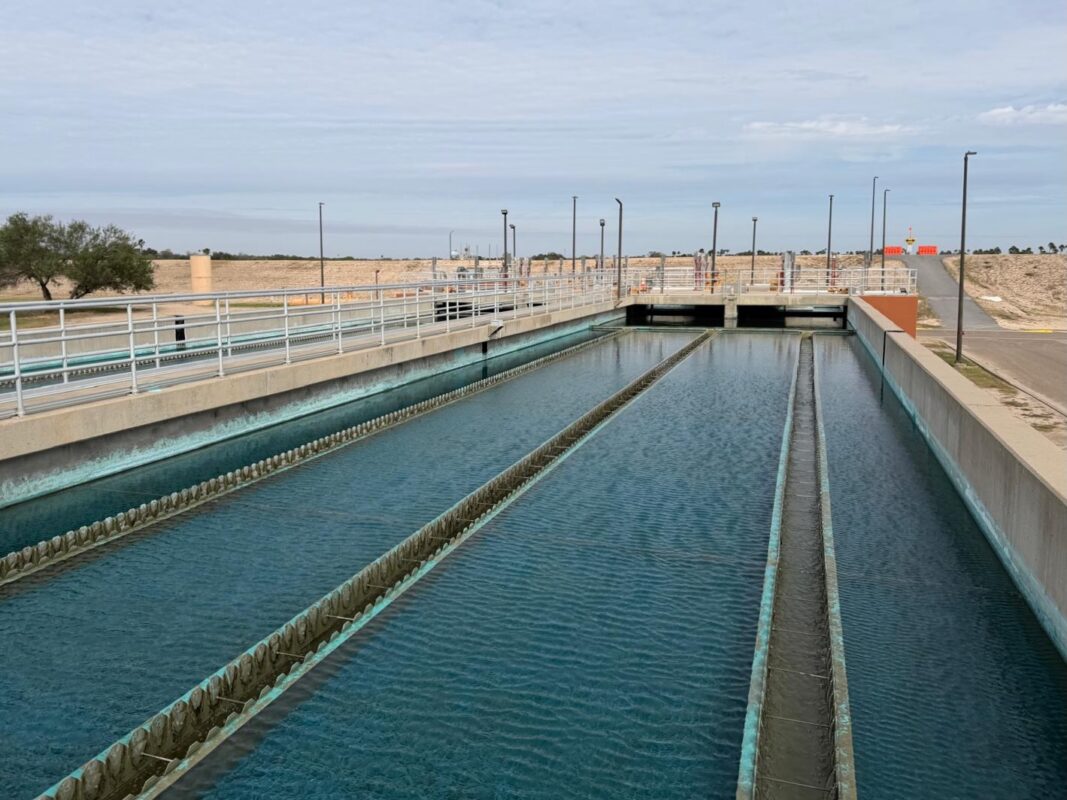
The city of McAllen’s big $204 million investment to diversify its drinking water portfolio from reliance on the Rio Grande River with a new brackish water desalination plant is moving forward with construction bids expected in early 2027.
“The river is not as reliable as it used to be,” Mark Vega, general manager of McAllen Public Utilities previously told the Rio Grande Valley Business Journal. “There’s plenty of groundwater, but it’s salty, so you have to treat that, and that’s a more expensive process than surface water treatment.”
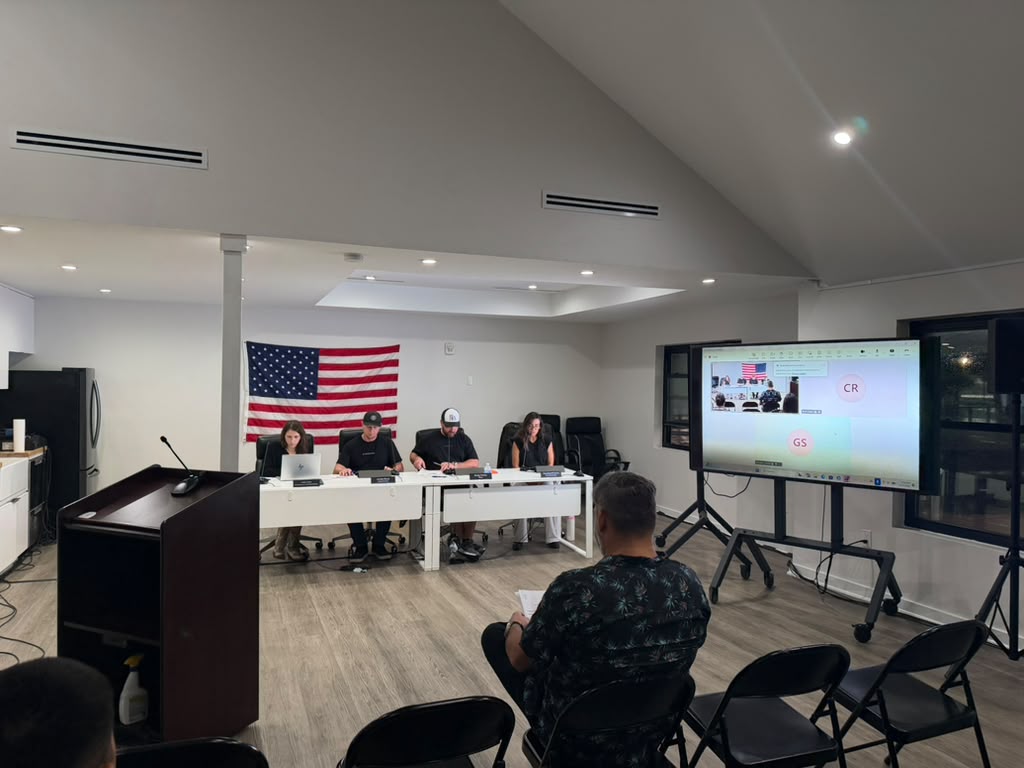
On Sept. 14 McAllen water utility leaders and independent consultants also told city leaders that the test wells discovered more available water underground than previously estimated over a 170-acre site.
“We had four test wells, the original assumption was to drill four test wells in order to determine the quality and volume of water that we could get from the groundwater,” said Sergio Espinoza, project manager for the Rio Grande Valley for Carollo Engineers. “After drilling at the site it was determined by the hydrogeologist that we can actually get more water.”
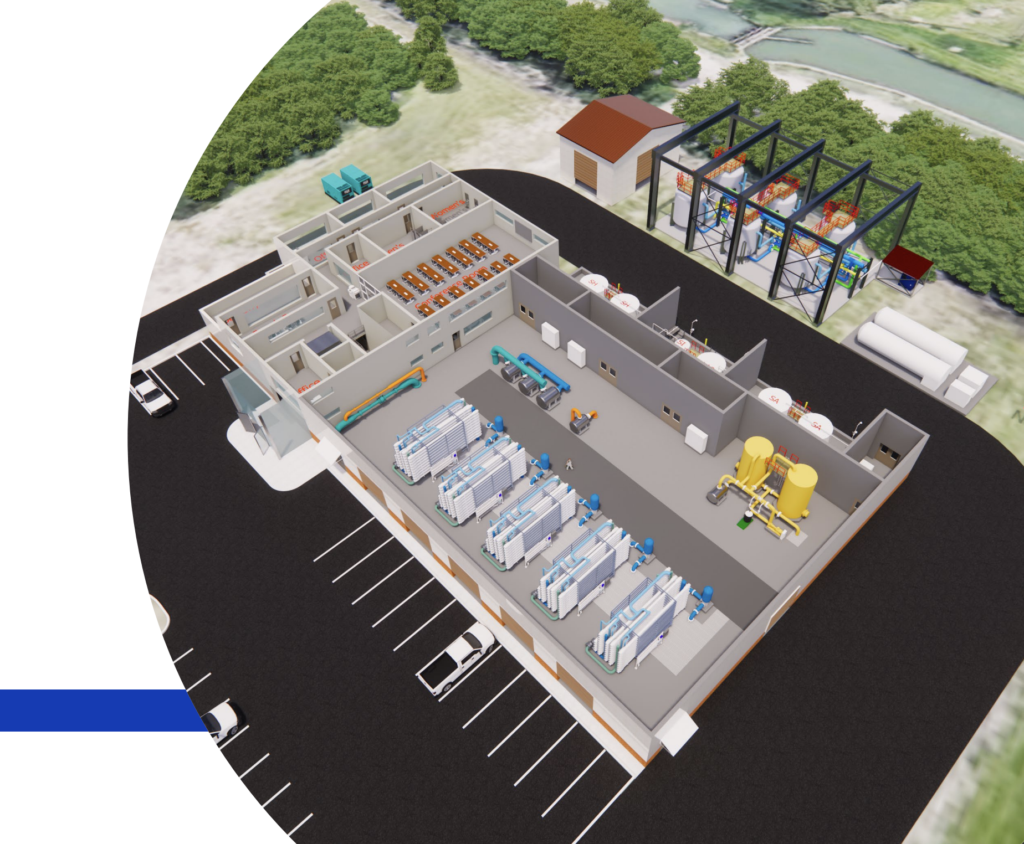
McAllen Public Utilities expected the new brackish water desalination plant with four test well sites capable of drawing 8 million gallons of water per day of salty groundwater with a 75% recovery rate to produce an additional 6 million gallons of potable water safe to drink.
The consultants recommended adding a fifth brackish well site with 13 different wells planning for 10 million gallons of groundwater with a 90% recovery rate to produce 9 million gallons of potable water.
The system is a reverse osmosis plant that relies on water from the aquifer on the city’s north side near North Bentsen Road and Auburn Avenue.
Contractors have already drilled four test wells and the project is expected to have 13 groundwater wells capable of producing 10 million gallons of brackish water per day with a 90% recovery rate – meaning the remaining brine would be injected back into the earth.
The project cost appeared to increase from a previously estimated $180 million to $204 million, records show.
The plan is to create four distinct bidding packages so more local businesses can have a chance to apply and win the work. For construction only, that would mean $35 million for raw water wells, $10 million for pipes, electrical and production wells, $121 million for the desalination plant plus $15 million for the deep saltwater injection wells – which will be deeper than the aquifer the brackish water would be coming from.
In July, California-based contractor Carollo with an office in McAllen submitted the city’s Texas Commission of Environmental Quality permit application for water discharge including a drainage ditch limited to 12,720 million gallons of water daily.
In October, contractors are starting the final design of the desal plant, designing the production wells, and applying for the saltwater injection well.
By January 2027, McAllen expects to have early results more state environmental permits, its first deep water well application and by February bid out the construction work to begin next year over four bid packages.
The current contractors in the design phase include Carollo, Houston-based Geostock Sandia, Austin-based RW Harden & Associates, Edinburg-based GDJ Engineering, McAllen-based Milnet Architectural Services, and Texas Infrastructure Development Group with a presence in San Antonio and McAllen.
TCEQ approvals for the desalination plant design is expected by December 2027 then bids for the desal plant construction project is expected in Feburary 2028. The city expects to award the desal plant construction contract by April 2028 and get final environmental approvals by June 2028.
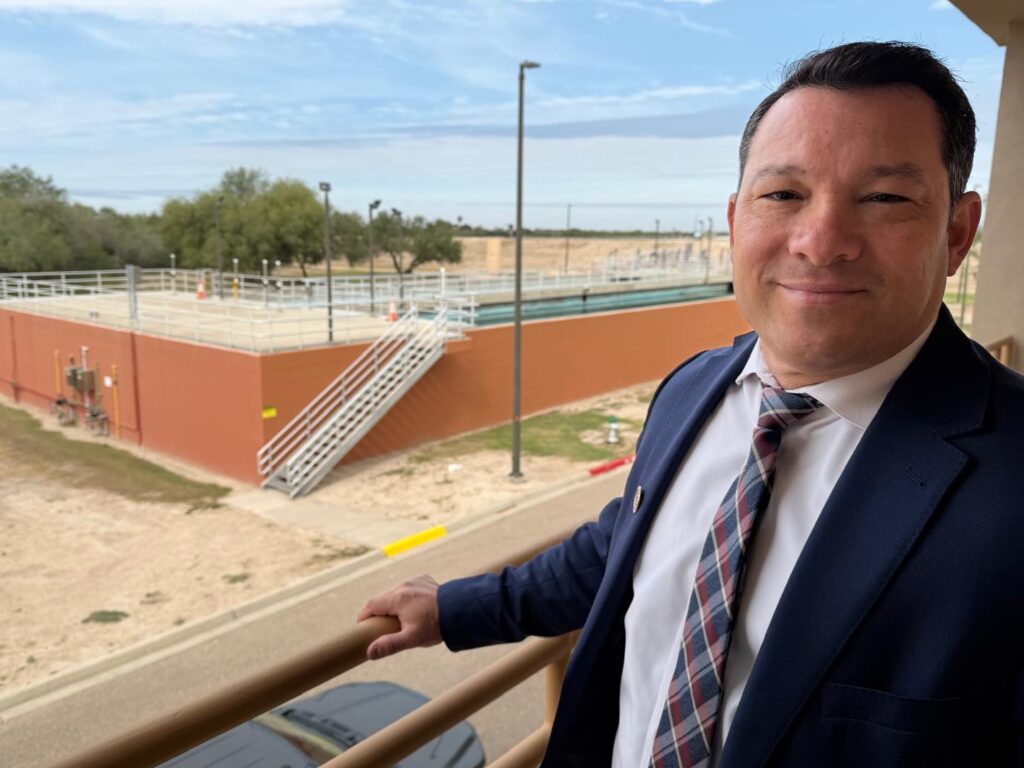
Photo Credit | Kristen Mosbrucker-Garza
Desal plant construction is expected to take about 36 months from April 2028, which means it will likely open by 2031.
That’s an important timeframe because the South Texas region which includes McAllen is expected to have a water supply shortfall by 2035 if it doesn’t develop new sources of water, according to a report by the Rio Grande Valley’s regional water plan. By 2070, the city would be short by 10,000-acre-feet per year without additional water sources.
In McAllen, the city already has the capacity to treat 63.7 million gallons of water each day between two water treatment plants. But on an average day, water demand is 23 million gallons per day – closer to 19 million gallons per day in the winter and 35 million gallons per day in the summer.
McAllen borrowed $198.4 million from the Texas Water Development Board for the project, and the city approved its first $30 million in bonds this fall. The city was also awarded $9.6 million from the U.S. Department of the Interior Bureau of Reclamation WaterSMART for the first phase of the McAllen Brackish Groundwater Treatment Facility. A second federal grant of up to $20 million could be available for engineering design, environmental assessment, and installation of the permanent wells.
McAllen also decided to raise water and sewer rates on customers starting in October 2025 to help pay for the improvement – a residential household using the average amount of water of 9,000 gallons, will pay $14 more a month.
The goal is to continue drilling groundwater wells in other parts of the city and, potentially, tap into the binational North American Development Bank’s Water Resiliency Fund for the Rio Grande Valley to pay for new well exploration.
“It’s an additional water source and most of our growth is in North McAllen,” Vega said. “We can vary the production at the north plant to meet the city’s demands all year long.”

Kristen Mosbrucker-Garza
Reporter
Kristen Mosbrucker-Garza is a versatile multimedia news reporter who lives and works along the Texas-Mexico border in Hidalgo County. Mosbrucker-Garza is a news reporter for the Rio Grande Valley Business Journal. During her career she's worked for the McAllen Monitor, San Antonio Business Journal, The Advocate Newspaper in Louisiana, Phoenix New Times, and public media outlets in Baltimore and Philadelphia.
Most Read
- Is SpaceX quietly building a data center at Starbase? Job postings offer clues
- 25 Mexican businesses eye McAllen expansion after city pitches U.S. market entry program
- Edinburg ISD rejects nearly $6M offer for prime land near La Sienna despite $15M budget deficit
- Developers begin $12M master-planned community near Rio Grande City
- 5×5 Brewing plots $2.5M comeback with new Edinburg brewpub near UTRGV
Get the latest business news delivered to your inbox every morning for free.
Try 30 Days Free!
Get full access to award-winning journalism covering business, real estate, health care, economic trends, and the people shaping the Rio Grande Valley.
30 Days Free!
$9.95/month
Limited time offer
Subscription renews after your 30 day free trial at $9.95/mo.
Included Benefits
- Unlimited access to all articles
- Daily business news and analysis
- Subscriber-only content and features
Stories That Matter
- Rio Grande Valley could add 109,500 residents by 2060, but not all counties are expected to grow
- UTRGV lands $2.2M to fight screwworms with drones, thermal imaging
- Day of the Dead generates $7.3M in Reynosa economic activity
- Weslaco opens new pathway to healthcare careers for 25 residents
- Downtown Weslaco bar Señor Barbas to close amid declining sales, staffing struggles
- Mission’s first Small Business Expo puts $25K on the line for local entrepreneurs
- McCoy’s gives $10K, tools to launch Mid-Valley construction academy
- UT Health RGV performs new digestive procedure for first time in the Valley
- TSTC bets on advanced manufacturing to meet RGV’s industrial boom
- Pharr’s cross-border business push earns international recognition