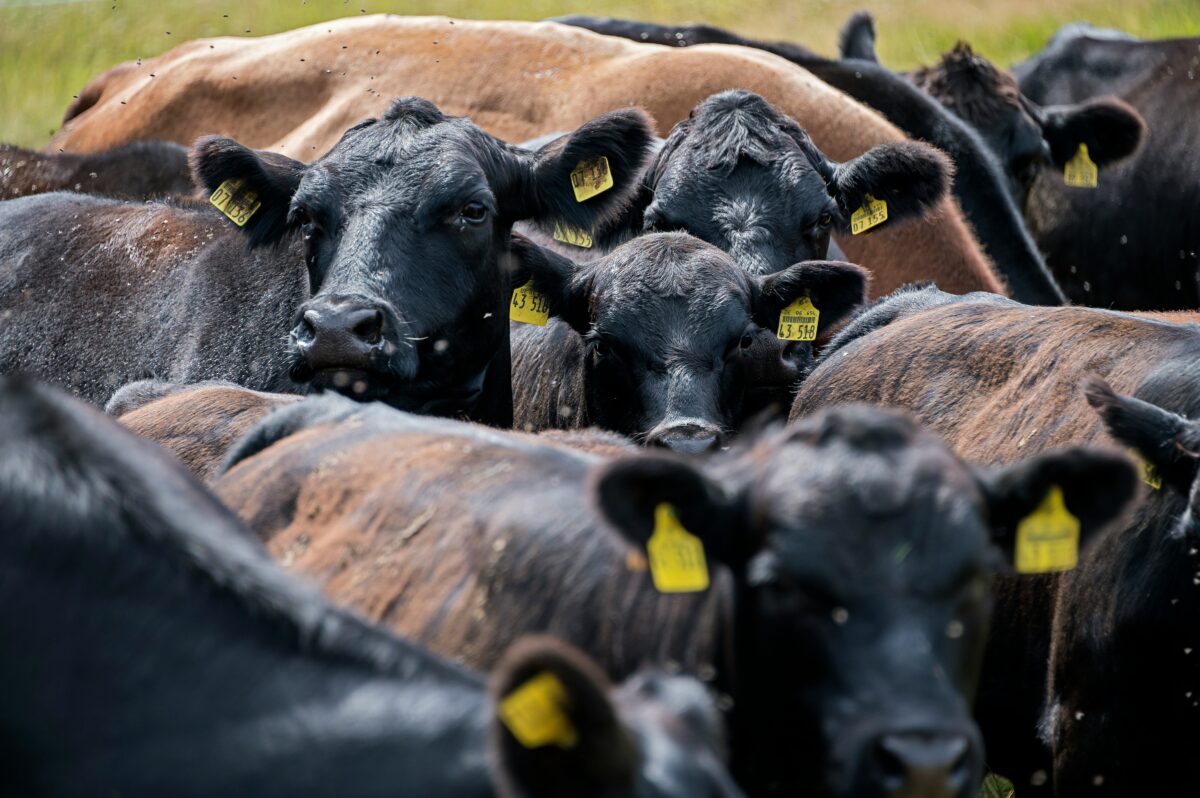
Local ranchers in Reynosa are preparing for what could become a cross-border trade issue if the pest advances north.
“If any suspicious larvae are detected, samples would be sent to Ciudad Victoria for analysis, because not all larvae correspond to screwworm,” José Heriberto Cantú López, president of the Reynosa Cattlemen’s Association, told the Rio Grande Valley Business Journal.
The association, which represents 107 members — about 80 of them active — has met with the Tamaulipas Secretariat of Rural Development to establish response protocols.
Some producers have begun administering ivermectin to cattle as a preventive measure.
“Ivermectin provides around 60 days of protection and helps reduce the risk of infestation in open wounds,” Cantú López said.
The preventive steps come as screwworm cases have been reported in southern Tamaulipas and other parts of Mexico, prompting heightened sanitary surveillance statewide.
For border producers, the issue is not only animal health.
It’s trade.
How quickly could exports be affected?
Mexico exports live cattle into the U.S. under federal inspection protocols overseen by the U.S. Department of Agriculture.
Under existing animal health agreements, livestock shipments must clear veterinary inspections and comply with sanitary certifications before crossing the border.
If screwworm cases were confirmed in northern Tamaulipas, federal authorities could increase inspections, tighten movement controls, or establish quarantine zones — steps that in past outbreaks have disrupted cattle flows.
That would not necessarily halt exports.
But it could slow them.
Additional inspections reduce throughput at border facilities. Delays increase holding costs. Transport schedules tighten. Cash flow is interrupted.
“It does affect the country at the national level because it halts exports to the United States, and that means there will be no foreign exchange revenue,” José Luis Pérez Miranda, a producer in Valle Hermoso, said.
No cases have been reported in Valle Hermoso, Miranda added.
“In this area, the screwworm problem has not occurred,” he said. “We have heard about it in San Luis Potosí and other states in central Mexico, but here we have not had any incidence of screwworm.”
The region’s relatively small cattle concentration — about five registered producers in Valle Hermoso — may reduce exposure, he said.
But trade impacts would not be confined to one municipality.
Drought compounds the risk
The livestock sector in Reynosa is already operating under strain.
“The drought has hit us hard and has forced many producers to feed cattle with silage and hay,” Cantú López said.
Despite dry conditions, he said no significant livestock losses have been reported and calf prices remain stable, with animals weighing between 400 and 440 pounds selling for roughly $2.72 per pound.
Still, insecurity and prolonged drought have led some producers to cease operations or fall out of official registries.
“We have producers who are no longer active in the Reynosa Cattlemen’s Association, who stopped paying dues and are no longer registered with SINIIGA,” Cantú López said, referring to Mexico’s National Livestock Individual Identification System.
The sector remains economically viable, but margins are tight.
An export slowdown layered on top of drought conditions would add pressure.
Surveillance intensifies statewide
The Tamaulipas Secretariat of Rural Development reported on Jan. 6 that preventive actions against cattle screwworm have been strengthened through informational sessions, producer training, and the free distribution of supplies to treat wounds in livestock.
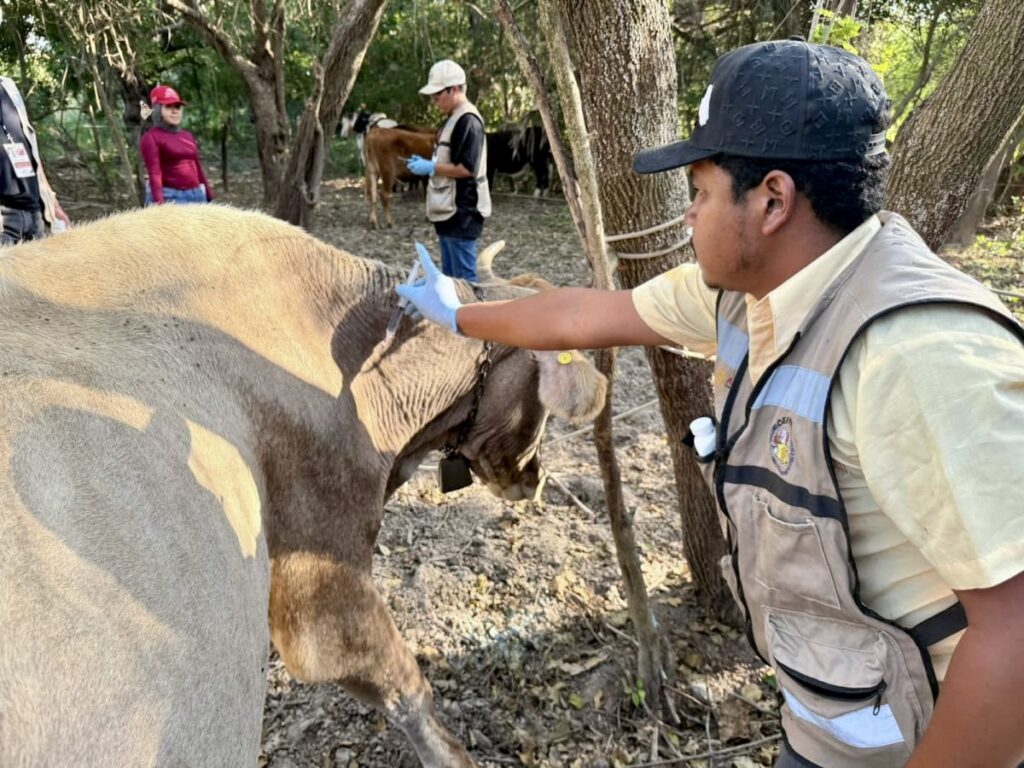
Photo Credit | Secretaría de Desarrollo Rural, Pesca y Acuacultura de Tamaulipas
The goal is containment.
Early detection reduces the need for broader movement restrictions.
For now, northern Tamaulipas remains free of confirmed cases.
But producers are acting before the situation escalates.
“We have already held discussions with the Secretariat of Rural Development to know how to act,” Cantú López said.
That preparation reflects an understanding shared on both sides of the border: the risk extends beyond livestock health.
If confirmed cases move north, the consequences would unfold through inspection checkpoints, certification systems, and export corridors — not just in pastures.
And in border economies where livestock represents both livelihood and liquidity, even a temporary slowdown can ripple quickly through ranches, trucking operations, and feedlots on both sides of the Rio Grande.

Anayancy Ulloa
Reporter
Anayancy Ulloa Luna is a contributor to the Rio Grande Valley Business Journal who hails from Reynosa in the Mexican state of Tamaulipas. Ulloa has a long history as a U.S.-Mexico region business expert in marketing, formerly the editorial director of Mexico Industry.
Most Read
- SpaceX’s futuristic city of Starbase finalizes massive 7,100-acre annexation. Here’s what we know.
- 25 Mexican businesses eye McAllen expansion after city pitches U.S. market entry program
- Australian company plans to build a $607M lithium refinery at the Port of Brownsville. It’s a big bet on America’s battery future
- Starbase cancels meeting to consider annexing 444 acres relinquished by Brownsville
- SpaceX reschedules Starship’s first flight around the Earth
Get the latest business news delivered to your inbox every morning for free.
Try 30 Days Free!
Get full access to award-winning journalism covering business, real estate, health care, economic trends, and the people shaping the Rio Grande Valley.
30 Days Free!
$9.95/month
Limited time offer
Subscription renews after your 30 day free trial at $9.95/mo.
Included Benefits
- Unlimited access to all articles
- Daily business news and analysis
- Subscriber-only content and features
Stories That Matter
- Dickey’s Barbecue Pit to open new McAllen location inside Cambria Hotel
- NADBank opens $300M financing pipeline for water, energy projects along the border
- Is SpaceX quietly building a data center at Starbase? Job postings offer clues
- Engineering firm Garver opens $5M Harlingen office, plans up to 50 new jobs
- Mission’s first Small Business Expo puts $25K on the line for local entrepreneurs
- McCoy’s gives $10K, tools to launch Mid-Valley construction academy
- UT Health RGV performs new digestive procedure for first time in the Valley
- TSTC bets on advanced manufacturing to meet RGV’s industrial boom
- Pharr’s cross-border business push earns international recognition
- Brownsville eases drought restrictions after nearly three years as Rio Grande reservoir levels improve