As new employers line up along the Port of Brownsville and in McAllen promising salaries well above the regional average, many workers are asking a simpler question about Rio Grande Valley wages: What does it actually take to make a living here?
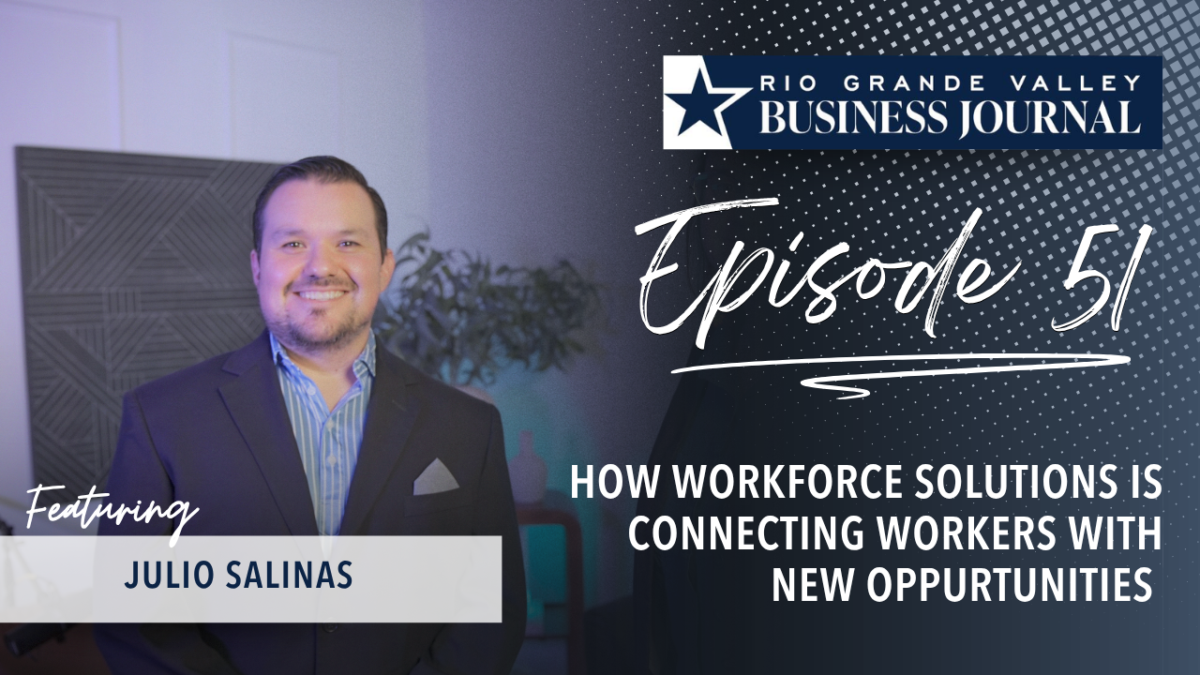
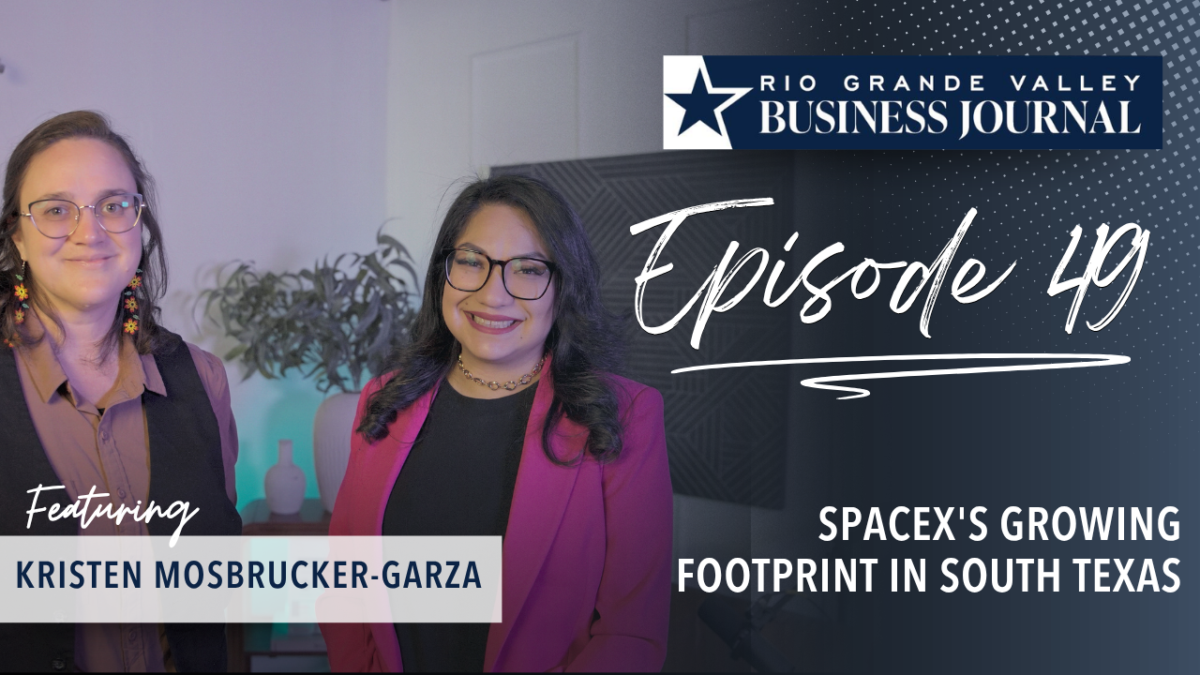
In this episode of of the Rio Grande Valley Business Journal podcast, reporter Kristen Mosbrucker-Garza sits down with Julio Salinas, communication specialist for Workforce Solutions Lower Rio Grande Valley, to kick off a miniseries on wages and workforce development. The board serves Hidalgo, Starr and Willacy counties.
Salinas said recent figures suggest a single person in the Valley needs to earn about $65,000 a year to get by, with little left over to save. A single room now rents for around $1,100 a month, he said, while many local annual salaries fall short of that benchmark.
The conversation covers why small cities are losing workers to fast-food chains, why some teachers are driving for Uber and Lyft on the side and why entry-level job postings that demand years of experience are discouraging young applicants. Salinas also explains how subsidized child care through the Texas Rising Star program fits into what his agency calls the “workforce ecosystem.”
For employers, Salinas outlines free services, including local labor market data, help writing job descriptions, customized training grants for small businesses and close to 200 hiring events a year. He also stresses a point the agency’s social media team repeats often: Workforce Solutions is not a staffing agency and does not do the hiring itself.
Mosbrucker-Garza and Salinas also discuss holiday hiring, recent H-1B visa changes, the Valley’s construction labor shortage and how long it may take for local wages to catch up with peer markets.
Listen to the full episode below.
The following is a rough, AI-generated transcript of a discussion between RGV Business Journal’s Kristen Mosbrucker-Garza and Julio Salinas, communication specialist for Workforce Solutions Lower Rio Grande Valley. Minor errors and misspellings may appear. For the full conversation, listen to the episode above or through your preferred podcast platform.
Kristen Mosbrucker-Garza: Welcome, y’all. This is Kristen Mosbrucker-Garza. I’m a news reporter here at the Rio Grande Valley Business Journal, and this is another episode of our series. I have a really special guest today, Julio Salinas with Workforce Solutions. Is it Hidalgo County?
Julio Salinas: No, it’s Workforce Solutions Lower Rio.
Kristen Mosbrucker-Garza: OK. Lower Rio, as in Lower Rio Grande Valley. So what’s your title and your coverage area?
Julio Salinas: I’m the communication specialist for our board area, and we cover Hidalgo, Starr and Willacy counties.
Kristen Mosbrucker-Garza: So three out of the four counties, because Cameron has its own workforce solutions, right?
Julio Salinas: Right. With the Texas Workforce Commission, there are about 28 boards in Texas. Ours is not by rank, but it’s number 23. That’s what we’re known as. So we cover those three counties here in the South region.
Kristen Mosbrucker-Garza: And number one in our hearts. Well, thank you so much for joining us. We really appreciate it. We wanted to do this as a little bit of a miniseries. We cover business and economic development, so we’re always talking with employers in the region, but sometimes I get a chance to go out to these career fairs or job fairs, look at job postings and talk to job seekers.
That’s actually where we met a couple of weeks ago. I wanted to do this miniseries because I think workforce development is becoming a really important conversation in our communities, both from the employee side and from the employer side. And I know you work with both populations.
So I wanted to get a better sense of things and kick this off. We’re going to focus today primarily on wages, because whenever I do these stories about workforce or about jobs — and we have had a lot of job announcements; to be clear, there has not been a slow news day in probably the past year — there’s just a lot to consume. A lot of things are changing in our communities. And whenever I post stories, I always hear from the public that they want to talk about pay. They want to talk about wages. So give us a sense of what the historical labor market has looked like, and the average wage for the Valley, before a lot of this new development really came into play.
Julio Salinas: In the past, the Valley had a very high poverty rate. I believe it was 30-some percent. But over the years, we’ve been doing more to combat all that, so right now we’re sitting at around 20% to 25%, more or less. And we’ve seen that trend over the past 20 years go along with the wage itself.
Texas’ minimum wage is still $7.25. But now the jobs require different skills, different skill sets. And a lot of these companies are also competing for the same workers with the same skills. So to stay competitive, the wages do have to come up.
Kristen Mosbrucker-Garza: For sure. And I think another piece of it is that because we’re on the border, we have such deep roots in agriculture. We have a lot of people who work under what are called H-2A visas. Whether someone’s parents or grandparents came through the Bracero program — where maybe there was naturalization to become citizens — or they worked in the fields or in the citrus industry, they really rooted themselves in the Valley.
Those H-2A visa workers still exist. People are still working in the fields in the Valley.
Julio Salinas: Yes. Workforce actually does have a program where people who are working seasonal jobs like those can qualify for training to do something else after the season is over — phlebotomy, or if they’re interested in CDL driving. They may qualify for free training assistance to increase their wage over time.
So those are different options that we give to our workforce, or to people looking for work. If they qualify, it’s free. The training is paid for, so there’s no loss, basically.
Kristen Mosbrucker-Garza: Oh, that’s interesting. So can you be on a visa, or do you have to be a legal resident or U.S. citizen to qualify?
Julio Salinas: There are eligibility requirements, of course. We’re a nonprofit. All the money comes from the state, the Texas Workforce Commission, and you are required to be a citizen of the United States or have the correct paperwork to qualify for these programs.
Kristen Mosbrucker-Garza: OK. So maybe someone who is still a farmworker, who grew up in the Valley. I see staffing posts all the time on Facebook of people still going up north to pick corn, but now you can pick corn for $22 an hour in Iowa. That seems like a pretty good wage.
Julio Salinas: Yeah. There’s one that always comes around every springtime. I think it’s A and E Foods. It’s basically a fishery in Alaska. They always come down to the Valley because we have great workers here in the Valley and they know that. They’ve been coming for the past several years, and they take about 50 to 100 people from the Valley to go clean fish.
They live on site. They make a pretty good wage. There are a lot of overtime hours, and basically everything you’re making over there, you’re bringing back, because you live on site and they feed you. I think the most you have to spend money on is maybe doing your laundry. Everything’s paid for, so some young people take advantage of that, come back and possibly pay for a semester of college the next fall.
Kristen Mosbrucker-Garza: And have those wages increased over time as well? Because one thing I have heard, even from municipalities — when you think about who the employer pool is here locally, we have a lot of small businesses who can’t always afford a lot of workers, or might be able to afford fewer workers at a higher wage.
But the vast majority of people in the Valley are actually employed by municipal government, or by the school districts and things like that. I was talking to, I think it was McAllen Public Utility, and one of their workers perceived the entry-level wage on the wastewater side to be less attractive than becoming a manager at Panda Express.
They actually lost a worker to that career trajectory. The worker was like, “Well, Panda Express is going to pay me a dollar an hour more than you are at the city.” And I feel like that’s kind of a new thing. People always said government jobs pay so well, or they have so much job security, or they have a pension.
But the ability for all these municipalities, which are pretty small, to attract and retain workers — they’re now competing with fast food and retail.
Julio Salinas: Yes. I see a lot of that. Our biggest job sectors here are health care, government and construction. Those are big zones here in the Valley. And there is that competition, depending on the skill level of the worker. But like you mentioned, if he’s going to get paid more at Panda Express, of course he’s going to jump ship.
People go where the money’s at. It also depends on convenience. If the job is closer to home, if the job is a bit easier, there’s less stress. And of course pay is the big issue. It makes sense to people to stop pursuing something when they see, “If I’m not going to grow here, then I might as well do what feeds me for now.”
Kristen Mosbrucker-Garza: Well, you see memes on the internet all the time of even white-collar corporate workers asking how much a general manager at Buc-ee’s makes. It’s well over $100,000, right? In all these different industries, I think a lot of people are reimagining what their career looks like, because there is more wage transparency.
And there are discussions about what a living wage is. We all know there’s the subminimum of $2.13 if you’re a tipped worker, and then there’s the federal minimum, which is our state minimum, of $7.25. But have y’all ever done studies about what a living wage would be with our cost of living — a minimum wage for this region where someone could afford an apartment or comfortably save up to buy a house?
Julio Salinas: Not the exact number, but I had seen some recent numbers that for a single person, you had to be making around $65,000 a year. And that’s basically scraping by — not necessarily being able to save, just living OK. And we do realize a lot of the actual annual salaries here are not around that area either.
So it’s getting tough, you could say, for a lot of people. That’s why they’ll go work somewhere else that’s less stressful, because many are already doing side gigs. There are teachers driving for Lyft and Uber. So they think, “Why am I stressing myself out at school all day if I’m still having to do the side gig and not getting paid enough?”
“Might as well do something I’m still going to get paid for, without the stress of dealing with other people’s kids. I could still supplement my income with a second gig.” And that’s also why people are getting burned out at their jobs. The reward is not worth it sometimes.
Kristen Mosbrucker-Garza: That’s interesting. And before we started recording, you had mentioned what some people would consider an entry-level job, where you’re working outside as a laborer or a landscaper. How much do those jobs pay these days?
Julio Salinas: We’re actually having a hiring event pretty soon with a landscaping company. They’re starting their people off at $16, and I believe $18 for those with a bit more experience. But then you compare that to a different company that’s also hiring for general labor in construction, and they’re only going to get paid maybe $10 to $11.
So you’re still working outside, you’re still working in the sun. Is it really worth it for $11 when you could be making $16? Now, I do realize that a lot of these people might not have the education level for certain jobs. That’s why they enjoy working outside, or that’s all they can get.
But it also comes down to convenience. Maybe transportation is not super reliable, and if a job is close to them, they’ll take it.
Kristen Mosbrucker-Garza: When I work with a potential employer, or an employer who’s interested in the market, something I’ve heard a lot when I ask about potential wages — when it’s not directly tied to an economic incentive or an average — is, “Hey, we’re actually doing a compensation study.”
Because our cost of living in the Valley is changing. The price of housing, the value of single-family homes, has gone up, what, 100%? I still remember when apartments were $450, for real. Does anyone else remember that?
Julio Salinas: A single room is like $1,100 right now, and that doesn’t include your utility bills or anything. So it’s double the price already. You’re paying that much more in rent, and you’re supposed to save for a house. I feel like there’s a big disconnect between our generations, with people saying, “Oh, you guys just don’t work hard enough” or whatever.
But it’s also what we’re getting paid. And most of the owners of these companies are in that older generation. So it’s got to start somewhere.
Kristen Mosbrucker-Garza: So what are the conversations you’re having with businesses? What do you offer them when they ask, “What should I be paying for this industry, this skill set?” Are there statewide or federal averages, or a prevailing wage, they can look to?
Julio Salinas: Yes. For any business that is looking to come here to the Valley, we can get labor market information, which includes how much people are getting paid around here for the type of jobs they have. Our team of business representatives can get all that information before they even make the choice to move here.
We actually work with a lot of EDCs to provide that information for the companies they’re scouting. And we’ve had success right now in McAllen with company name unclear coming pretty soon. We gave them all that information, and we also brought educational institutions together. South Texas College is going to be training their workforce.
It takes a village to get all these things moving. And I feel like it’s going to be a great change, because they’re also going to be paying high wages for the jobs that are opening up soon. That will force all the other businesses to compete for the same pool of workers.
Kristen Mosbrucker-Garza: Yeah, and I think they’re going to need a lot of engineers. I’ve spoken with a lot of folks who are getting engineering degrees, and it can be hard if you’re entering the workforce or you have limited experience. I’ve heard a lot, anecdotally, about the growing unemployment rate for college graduates.
Or the growing unemployment rate for people who are entering the workforce. And I wonder what could be happening that people are in that kind of situation. Is it that companies increasingly need people with a new minimum standard of experience because there is so much competition?
Julio Salinas: From what I see, some job postings say “beginner position” or “starting position,” but then they require three to four years of experience already. You’re like, “Wait, is it a beginning position or not?” So that’s confusing people. Sometimes I feel like people are just using ChatGPT for what the job is supposed to be like and posting that job description without actually looking through it.
And then people who apply get discouraged because they never get the call back. It could be a lot of factors. But also, are the opportunities available here? You mentioned engineers. Three of my cousins are engineers, and they’re all in Houston. They all moved away from the Valley.
That’s something we always talk about in our meetings: We produce a lot of great talent here, but the opportunities are not here yet for a lot of that talent to stay. It’s going to take some time. It’s not going to happen overnight. But I know we are trying to get there.
Kristen Mosbrucker-Garza: And are y’all able to work with employers on some of those job descriptions? Because I know there are some companies that might be in the startup realm, or new to the market, or building something next-generation, where they don’t have job descriptions yet for all of the roles.
Or maybe they’re building them on the fly. As part of my reporting, I actually saw a job description that wasn’t for an LNG, or liquefied natural gas, trader, but for a liquefied natural gas project manager.
And I don’t even know exactly what that would entail. It’s not like the LNG industry hasn’t existed for a long time. But how different would it be to work for an LNG department inside of a rocket manufacturer? That’s a very different role.
Julio Salinas: Yeah. For that type of position, I imagine it’s not going to be a very general job description. If it’s too general, that means somebody didn’t do their job. If it’s more specific, with terms that I don’t even recognize, that’s probably a good job description for it.
Other than that, I would just be confused by a posting like that. But employers can reach out to us to be listed. We use a system called WorkInTexas, part of the Workforce Commission. That’s where Texas jobs are posted for the whole state. We encourage employers to come to us if they need help joining the system or creating their job descriptions, because we can help them create the job postings, too.
So we’re giving them access to everybody who’s on that system. As far as job seekers go, anybody who has ever gone into the unemployment program is required to register in WorkInTexas. They are also required to go to job fairs, so they have to actively be seeking work to receive any benefits. And usually we have one of the highest rates, where within three months, the people who were on unemployment have already been hired somewhere else.
Kristen Mosbrucker-Garza: Oh, really? And in terms of available jobs, or the types of industries that have shortages, is it the normal ones you hear about, or has that changed at all? I’m thinking truck drivers, sometimes teachers, sometimes nurses, maybe some folks in HVAC. What does that picture look like?
Julio Salinas: We have a whole list of target occupations — what’s in demand in our area. That also means we have available training for anybody willing to get into those fields. Like you mentioned, HVAC is one. CDL drivers is one. We have accounting. We also have some teaching positions, like teacher’s aide, where people can go into those programs, get the training and possibly get hired after they graduate.
The shift usually happens — let’s say where we see unemployment for government positions — before summer, because that’s when teachers are renewing their contracts. It looks like there was a loss of jobs, but not necessarily. That’s just how the system records it before the contracts get renewed.
So we’ll see that uptick come up again after the fall starts, when those jobs get renewed. But a lot of the shortage right now is in construction.
Kristen Mosbrucker-Garza: We’ve had some really big announcements of new employers to the market that are willing to pay much higher wages than our average or some of our medians. What effect does that have on the market overall?
Julio Salinas: Again, it increases the competition, and the availability of jobs for job seekers. The only thing for us is to connect those job seekers with the right skills that these companies will be looking for, which is where we come in with the training programs. We also come in with our education partners to create those pathways and align the needs of the employers with the needs of the job seekers at the same time.
Kristen Mosbrucker-Garza: And what are some of the skill sets you’re hearing from employers that maybe are missing or underdeveloped in the market?
Julio Salinas: There are different levels to it. But let’s say a job seeker is a beginner, really starting their first job. A lot of the feedback we get from employers is that they’re not lacking the actual skills to do the job.
It’s more the soft skills: time management, communication skills, critical thinking skills. We suspect that might have something to do with the COVID-19 shutdowns. Everything went online for a while, and maybe that really affected how some students communicate with each other. Or it just depends on the type of job they’re doing at the moment.
We do notice that a lot of people nowadays are asking for remote or work-from-home opportunities, and we do have some great opportunities here in the Valley. We do a lot of recruitment together with the call centers that have opened up here — I know TTEC and Spectrum — and they’re always offering good opportunities for people who want to start working, especially if they’re bilingual.
That’s something you see a lot here in the Valley. They’re customer service roles, but they’re also well paid. And if it’s a work-from-home position, usually you have to start in the office, but I hear people move on and can actually work from home.
That’s great if you’re raising a family, because child care is another big thing here in the Valley. It’s a big cost for families. And a lot of the money we get from the Workforce Commission goes into child care development and child care programs.
Kristen Mosbrucker-Garza: Really?
Julio Salinas: Yes.
Kristen Mosbrucker-Garza: I remember, what, 15 or so years ago, a lot of our major employers were call centers. But it was a different model. It was those big, warehouse-like offices with open space. It was reshoring from different parts of Asia, like Malaysia, because they wanted English speakers.
And then also for the bilingualism. I remember it was maybe $10 an hour or so. How much can you make now in some of these call center jobs, with the potential to work from home?
Julio Salinas: I believe people are getting started off at $18-plus if they’re bilingual. And some of these companies offer great benefits, opportunities to move up and performance bonuses. Like I said, we do get people asking, and we can connect them with those types of positions.
It all goes back to — usually it’s moms who want to spend more time with the kids at home, and they could actually work on their own time. We look at the whole picture; we call it the workforce ecosystem, because we start with early childhood. We subsidize child care for parents who want to work.
Because of the wage, perhaps they’re not able to afford child care. So it’s either “I go to work” or “I stay home and take care of the child.” And if they’re not working, that’s also lost tax revenue that’s not being generated, and fewer people spending money.
So it’s a whole cycle, you could say. You have to take care of one thing to sort out everything else. And with child care, we’re not just offering someone to watch the kid. We have the Texas Rising Star program, where the child care centers have to be teaching the children something.
It’s like they’re going to class. They’re not just being taken care of; they’re learning. So in a sense, we’re also creating the workforce of tomorrow, today, by taking care of those children and allowing the parents to go to work.
Kristen Mosbrucker-Garza: That’s interesting. Has that program grown over time, or is there just as much funding as in previous years?
Julio Salinas: The funding stays around the same, but there is more demand. We do have a waitlist here in the Valley of people trying to get into the program. Unfortunately, like I said, right now we have the waitlist, and we want to serve more people. But the funds have to come from somewhere.
And unless we get that funding, that can’t happen.
Kristen Mosbrucker-Garza: You mentioned some workforce training programs as well. Explain those for the employee side and also the employer side, because my understanding is that they’re open not just to the biggest companies, but also to some of our small businesses, which are a lot of the employment creators in the Valley.
Julio Salinas: Yes. Employers, even small businesses, can meet with our business representative team, and they can get a customized solution. Let’s say you have a team in a warehouse and you need more people driving a forklift. We could apply for grants where somebody could teach them how to drive the forklift while they’re working for you and training at the same time. There are different requirements that have to be followed with each grant, but that’s one of them.
If it’s something to do with technology, perhaps software or computers, there’s also an opportunity for us to get some money and help train your workforce. There’s on-the-job training. There are different programs our team can help you set up to get you the workforce you need. And a lot of the time, you already have the workforce.
You just need to train them on the new thing you brought in, or a new technology that’s out there, and we can help with all that.
Kristen Mosbrucker-Garza: And how many job fairs do y’all host a year? How do employers get involved? I see the postings for the workforce side of it. But for businesses that are interested — maybe they’re hiring a bunch of folks, or they’re having trouble finding someone with a very specific skill set as they’re growing — what’s the process?
Julio Salinas: Our job fairs are general, and we always have 15-plus employers, so it’ll be a big event. But we also have personalized hiring events. Those could be at the company’s place, their plant, or at one of our offices. A lot of companies use our offices because we have the whole computer center there.
We have additional help for job seekers. Let’s say someone shows up the day of and needs a resume. They can meet with one of our representatives, get some job assistance, make a resume real quick and then go interview the same day with the company that’s doing the hiring. I’d say we do close to 200-plus events a year.
Kristen Mosbrucker-Garza: Really?
Julio Salinas: Yeah, and some are on repeat. They’ve been on repeat for the past couple of years. Border Patrol has been using our offices. The sheriff’s department, usually every Tuesday or Thursday, will have an event at one of the offices around the Valley looking for recruits. Again, the call centers use them a lot, TTEC and Spectrum. We’re having a big job fair this weekend at La Plaza Mall for seasonal jobs.
Over 20 different stores will be there. Those are perfect opportunities for students to get their feet wet — the first-job type of deal. Get that customer service experience. Learn about timekeeping, how to be responsible with money. My first job was in retail, at H-E-B.
From then on, it gives you a different sense of purpose. You build your character over time.
Kristen Mosbrucker-Garza: And professionalism, too. That you show up when you say you will.
Julio Salinas: Yeah, absolutely.
Kristen Mosbrucker-Garza: That’s really interesting. And I wonder, for people who say, “I can’t work in the Valley because the wages are too low. It’s not enough to support my family. When can I move back?” How long do you think it’s going to take before our median household income gets closer to some of our peer markets?
Julio Salinas: I always heard that the Valley is always 10 years behind when it comes to things. I come from a marketing background, and that’s what we would always say: Austin’s doing marketing things we hadn’t seen down here, then we start doing them, and by then they’re on to something else. Even with artificial intelligence, I believe we’re using it for the most basic things right now.
But it’s already coding software programs and whatnot, and we’re still just touching the tip of the iceberg. So as for the time frame, I would say hopefully within the next five to 10 years. But I’m hoping sooner.
Kristen Mosbrucker-Garza: And I think the other thing, as there’s so much discussion about wages, is that a lot of people are becoming content creators or entrepreneurs — small business owners or independents. That’s really popular right now. And a lot of people say it’s because the wages are so low.
I mean nationwide, not even particular to our market. And I think that also changes the equation for the employee. Then on the employer side, something I don’t hear as much in the discourse is that when you look at a salary pay band — which may be on a job description, though not every company includes one —
you usually need to add another $10,000 to $20,000 for what the employee costs the employer. You’re thinking of the benefits, any kind of recruiting costs, workers’ compensation insurance, things like that. So when a company is budgeting for however many employees it needs, or can afford based on its budget, it’s looking at that total cost number, whereas the employee is looking at, “What is my take-home pay?”
And I think sometimes those two don’t talk to each other.
Julio Salinas: Coming from communications, I’d say you’ve got to be transparent. What is it covering? What am I getting? There have to be expectations on both sides. Because if there’s not that understanding, that person is going to feel like he got played, basically. So if you’re transparent and upfront with people, you let them know, “This is what it’s for.”
Show them the breakdown. People like to see where their money is going, most of the time. I feel like that’s a really big issue: Be transparent, be upfront and honest. Depending on the job — in construction, for example — maybe it’s a safety certification that’s going to be paid for by the company.
Those classes cost money. And you’re getting that certification that you can take with you if you move to another job later on. It was paid for by this company; they did you a solid by paying for something you didn’t have to pay for. Or they gave you your materials, your hard hat, your safety boots. All that stuff also costs a lot of money.
So there are things you get to keep that aren’t part of your salary, but the company also put money up front to hire you in that sense.
Kristen Mosbrucker-Garza: In terms of total compensation, right? A total compensation package is not just your take-home pay. And I think historically a lot of companies have been interested in Texas because we don’t have a state income tax. We just have the federal income tax. So I think the strategy has been, “Well, our employees are able to take home more money.”
So historically, our wages haven’t had to be higher, because we haven’t had to account for a city tax and a state tax. We have more of a consumption tax concept, with the 8.25% sales tax, plus property taxes. And I think that’s another thing, because we have so much interest. I’m thinking of all the companies at the Port of Brownsville. There’s potentially going to be a refinery, a power plant, essentially a metal smelter, an autonomous vessel-building tech company.
And I think I’m even missing some of them. That’s five or six completely new companies to this market, all hiring. Oh, and then the LNG. And I saw there’s potentially going to be offshore LNG.
I think one of our contributors just wrote a story about that. So we have so many companies that are new to the market promising these jobs that are not $10-an-hour jobs. They’re not $20-an-hour jobs. These are $50,000 and up, closer to $70,000 to $90,000.
And for the cost of living in the Valley, that is a lot closer to what I think a lot of people would really be able to raise households with.
Julio Salinas: Yeah, definitely. And again, hopefully they hire from our community, because that’s the only way it’s going to help us. You can bring in outside talent, but that’s not going to do anything for the people in the Valley. And not just that — people might also have to start looking into being a bit more entrepreneurial, because if all those companies are hiring all those people, that means more money to be spent by the people working for those companies.
So it might be a good time to open a certain type of business in that area, just to serve all those people coming in and out.
Kristen Mosbrucker-Garza: Yeah, and I didn’t even mention the contractors and subcontractors. There was a lot of headline news about the sale of 444 acres, where SpaceX purchased land from 28 different private landowners. Well, they actually bought a thousand acres. They’re building on the northern portion of what they purchased right now. I honestly don’t know exactly what they’re building, but they’re building something right next to the port that is part of their spaceport.
Well, the 600-some acres on the south side are still within the Brownsville city limits, and they had told the Brownsville City Commission that’s actually for their contractors and subcontractors. If you go out there — I was just out there yesterday — you’ll see local companies like Mission-based 57 Concrete. You don’t just see their trucks out there.
They have an actual cement plant out there, and they have billboards saying they’re hiring CDL drivers. They have a bunch of brand-new trucks that I don’t think even have any mileage on their odometers. And clearly the price of cement is really, really high.
The demand for cement is really high out there because there’s so much building. So that’s a local subcontractor actively hiring people in what is a higher-wage industry here in the Valley.
Julio Salinas: Yes. We would see a lot of that, like you mentioned, where a lot of those construction companies will get those deals and those jobs. And again, it goes back into our data: Once the job is completed, we might see people go into unemployment again, but hopefully another job will come up.
The reason we had that stagnation in the data with construction jobs was that more jobs were popping up than the workforce was able to handle at the moment.
Kristen Mosbrucker-Garza: Oh, interesting.
Julio Salinas: With everything going on in the geopolitical climate, perhaps there were more jobs, but now jobs that were supposed to be completed within three months are going to be completed within a year. That means you’re not going to purchase as much material anymore, and that trickles down to other companies and subcontractors, like you mentioned.
That slowdown made us see a change in the numbers there, a little dip.
Kristen Mosbrucker-Garza: And I’m not sure to what scale we’ll see this, but the Trump administration announced — I think it was today, or it might have been yesterday — changes to H-1B visas. We talked about H-2 visas, which are more hotels and agriculture. H-1B visas, for folks who may not be very familiar, are for what’s considered a highly skilled person.
They might have a lot of technology industry experience or skill. They may be professors, they may be doctors. It really depends on their skill set. But the administration announced it is going to pull back on some of the H-1B visas and not renew H-1B visas for at least four or five companies.
Microsoft is one of them. I think Adobe was another, and then some of the India-based firms like Wipro and Infosys. I used to cover the tech industry, so I’ve written a lot about H-1B visas. But I think the concept is that they want to open up the market
to U.S.-born workers in those industries. So there might be some trickle-down in Texas. Honestly, the tech sector in the Valley is pretty small. Whenever I look at the data, it doesn’t really appear to be growing.
Julio Salinas: That’s the thing. They want to open up the market so people can possibly get into it, but it’s a specialized job. Not just anybody can jump in and start doing it. That’s where the disconnect comes from with that idea. Not everybody wants to do construction, either. When I was in high school, I don’t even remember having wood shop available.
So it’s not something we learned. I worked in construction for a little bit, and you would see the people framing and building the houses. It was a family construction company — the dad and his sons — and they would have a house up within a month. That’s a skill. I can’t hammer nails into wood to create something.
So it’s not going to happen overnight either. We opened up those floodgates to anybody who wants to work in there, but no one’s going to get hired if they don’t know how to do any of those things. So now we’re trying to play catch-up with everything that happened.
We do have contractors associations partnering with educational entities, trying to create programs to teach people how to do these things, so we can cover the bases, because we need more workers in construction right now. So we kind of did one thing without thinking about the repercussions.
Kristen Mosbrucker-Garza: And I think there’s also a question, with the record-high inflation — we’re actually not at 2022 levels, we’re still slightly below that, but it’s still a little bit high — and the price of diesel as well. I’m curious whether there’s going to be a holiday shopping hiring spree, because what is consumer sentiment right now?
Are we seeing soft recession indicators? It’s hard to gauge, I think.
Julio Salinas: With our mall hiring event, we’re seeing that certain retailers that usually participate are not this year.
Kristen Mosbrucker-Garza: Oh, really?
Julio Salinas: So there might be a shift in consumer spending attitudes. Maybe it’s shifting to things that are lower priced, so not all the shops felt like they had to hire extra help this time around.
People switch goods, I guess, from luxury to more basic, because the spending power is not there anymore.
Kristen Mosbrucker-Garza: Yeah, the value-added kind of stuff. And it would be interesting, too, on the delivery side. You usually see companies like Amazon, UPS and FedEx hiring around this time of year. This is a big hiring time.
Julio Salinas: For Prime Day, yeah.
Kristen Mosbrucker-Garza: It remains to be seen. But even a company like Amazon — the last time I lived in the Valley, we did not have a fulfillment center, and now we have at least two that I know of. And how much do they pay?
I think I had seen maybe $15 to $18 an hour or something like that.
Julio Salinas: I think so, yeah. It was pretty good.
Kristen Mosbrucker-Garza: And just the availability and diversity of companies that are now in the Valley. It’s not just, “Do I want to work for this particular company that pays $10, or the company across the street that pays $11?” The scale is changing, I think.
Julio Salinas: Yeah. I had even seen a report that people try to switch jobs every three years so they don’t become stagnant. But I don’t know if we have that luxury here in the Valley, depending on what you do.
Kristen Mosbrucker-Garza: I think our market might be a little too small for that.
Julio Salinas: Yeah. So it just depends. One tries to grow with their position. But a lot of the time, like you said, pay is a big factor in everything. And we need to start catching up to what people are getting paid in other areas.
Kristen Mosbrucker-Garza: For sure. Do you have any advice for job seekers or employers who are interested in continuing this conversation, or who want to get a better sense of what fair pay or a fair wage is in our communities?
Julio Salinas: Sure. We have all this data available to job seekers and employers alike. All you have to do is reach out to us and visit our offices. You can always email our team. Go to wfsolutions.org, which is our website. We have LMI there, the labor market information. You can sign up to receive that information every month.
Join our mailing list. Every month, once the labor market information is released by the government, we interpret it and put it together for our area. You can see who’s hiring, what types of jobs went down, what types of jobs are up and what training opportunities we have available. It’s like an overview, along with the events we have coming up over the month.
And always, job seekers, you can visit our offices any time, Monday through Friday. All the help is free. We’ll never charge you. Employers, too: To join a job fair, you don’t have to pay anything. We never charge anything to use our offices or join a job fair. All you have to do is connect with the team.
They’ll help you get into WorkInTexas if you’re not in WorkInTexas yet. Once you have a WorkInTexas ID, we can start posting your jobs in there, too. And you can always be part of our job fairs anywhere we have them across Hidalgo, Starr or Willacy County.
Kristen Mosbrucker-Garza: Awesome. Is there anything else you wanted to add that you think is important for people to know, or that you think I might be missing in all this?
Julio Salinas: Just again: Don’t be afraid to knock on our doors. We’re here to help you reach your dream career. We have training available for over 40 different occupations. You can also find the target occupations list on our website. All that information is under labor market information, target occupations.
We call it Workforce Intelligence; I think that’s the tab. All that information is there for you guys to look over, and you can also send us an email if you have any questions. We’re on social media, too. RGV Operation Get Hired is where we post all the hiring events and job fairs, on Facebook and Instagram. So you’ll never miss a hiring event if you’re actually looking for work.
Kristen Mosbrucker-Garza: I’m wondering who’s behind that Facebook account. It has a sense of urgency. It’s got a little bit of a sassy personality. Are you the voice of it?
Julio Salinas: There’s a couple of us.
Kristen Mosbrucker-Garza: OK.
Julio Salinas: We try to be nice about certain things. But I do have to reiterate that we are not a staffing agency. We do not hire directly. We just connect you to the employers that are hiring. We don’t ask the interview questions. We don’t have any part in the hiring process for them.
And a lot of people think we do, which —
Kristen Mosbrucker-Garza: Is really —
Julio Salinas: — brings a lot of heat sometimes. Like, “You guys never hire anybody.” We see all the comments, and it’s because we don’t do the hiring.
Kristen Mosbrucker-Garza: Right. You’re a facilitator.
Julio Salinas: Exactly. We just connect you to the opportunity, guys. We want to make that clear for the public and the job seekers: We’re not the ones hiring you, which is why it’s important to attend the events in person and talk to the hiring managers. They can answer all your questions about the job. We get a lot of questions like, “Oh, what’s the pay, and what are the hours like?”
Kristen Mosbrucker-Garza: And it’s like, you just don’t know.
Julio Salinas: Because all we get is the information on who’s going to hire and what the event is, and that’s about it. All the information you see on the flier is the same information we got.
Kristen Mosbrucker-Garza: OK. Well, sounds good, and now you have the details. Thanks so much for joining us. We really appreciate it. Stay tuned and subscribe to the Rio Grande Valley Business Journal. Have a great day, y’all.