Starbase, the Cameron County city that grew up around SpaceX’s Boca Chica launch site, is about a year and a half old. In that time it has grown from roughly 1,000 acres to about 8,000 through annexation, formed its own economic development corporation, started a school system and begun holding meetings in a former school building it now uses as city hall.
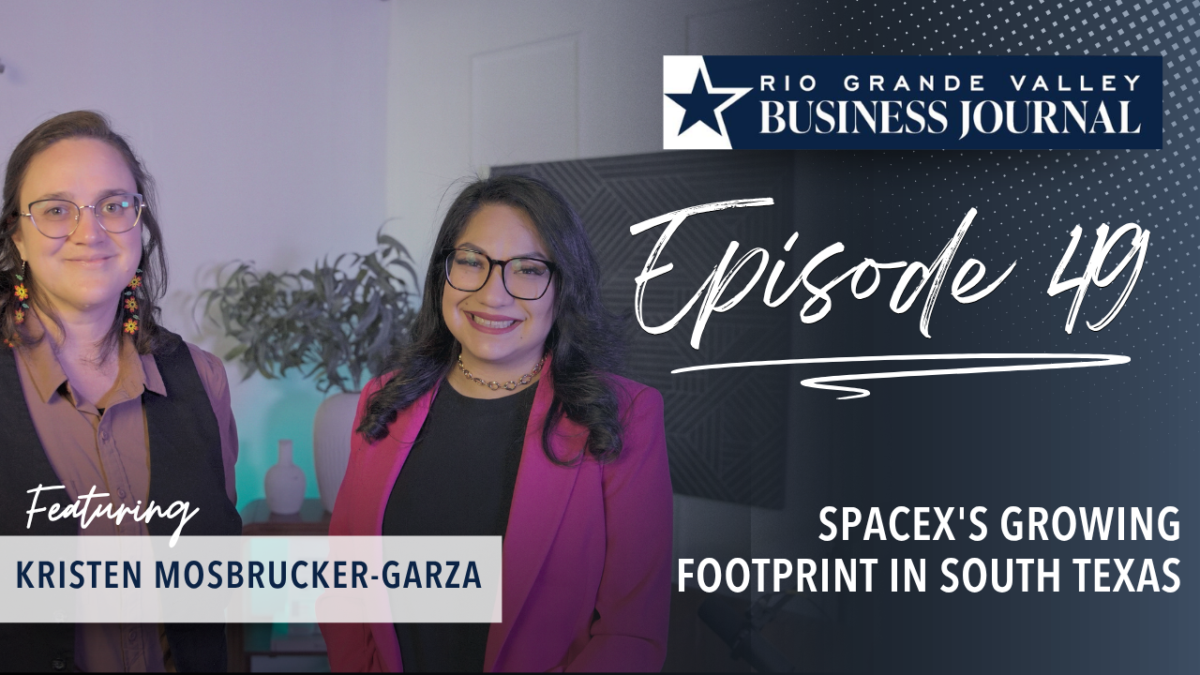
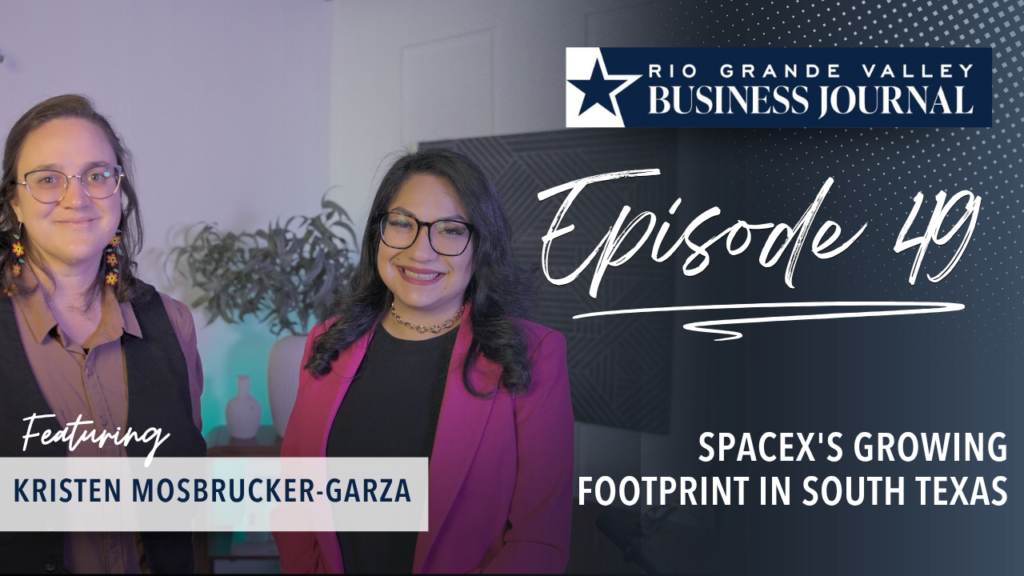
On this episide of the Rio Grande Valley Business Journal podcast, host Naxiely Lopez-Puente talks with reporter Kristen Mosbrucker-Garza, who has covered SpaceX and Starbase since the publication launched, about how quickly the city and the company are changing the region around them.
Mosbrucker-Garza walks through a string of recent deals.
The Starbase EDC, funded by bond application fees rather than sales taxes, has opened the tax-exempt municipal bond market to SpaceX, which she estimates could save the company about $30 million on $3 billion in construction financing.
Brownsville accepted a $220 million SpaceX donation for water infrastructure after a six-hour Saturday meeting, in exchange for disannexing 444 acres east of the city landfill.
Starbase also approved a 45-year development agreement for 166 acres near the test launch pad that applies the city building code but no zoning.
She explains how SpaceX bought Starr County water rights and converted them from irrigation to municipal use, moving them to the front of the line on the Rio Grande, and why that matters in a drought-stressed Valley.
The conversation turns to residents’ concerns as well.
About 70 property owners in Port Isabel, Laguna Vista and South Padre Island are part of a potential class-action lawsuit over damage they attribute to rocket launches, and a local insurance broker told Mosbrucker-Garza the industry is in new territory.
Other topics include The Launch Point, planned as Starbase’s first business open to the public; the Starpipe natural gas pipeline beneath the Brownsville Ship Channel; and what higher-wage jobs at SpaceX, the LNG terminals and other new employers could mean for Valley workers.
The full transcript is below.
The following is a rough, AI-generated transcript of a discussion between Host Naxiely Lopez-Puente and RGV Business Journal’s Kristen Mosbrucker-Garza. Minor errors and misspellings may appear. For the full conversation, listen to the episode above or through your preferred podcast platform.
Kristen Mosbrucker-Garza: It’s a brand-new city, and it is growing about as fast as SpaceX, essentially. I think the land use and the land development is just — it’s a little hard to keep up because it just keeps changing. Well, now there’s like 6,000 to 10,000 vehicles that are on that road every day. And TxDOT has approved the money to widen that road, actually, to a four-lane highway.
So if you go out there, you may not recognize it because it’s now a four-lane highway, and you’re starting to see a lot of infrastructure being built. The introduction of a lot of these jobs, whether it’s from SpaceX or LNG or even Saronic or the potential refinery or the potential power plant — even if they go to the lower scale of compensation, it is like two to five times the wage available in these communities.
* * *
Naxiely Lopez-Puente: Hi. Thank you for joining us on this episode of the Rio Grande Valley Business Journal podcast. I’m Naxiely Lopez-Puente, and today we have our colleague Kristen Mosbrucker-Garza. Kristen, welcome.
Kristen Mosbrucker-Garza: Thanks for having me. This is always fun.
Naxiely Lopez-Puente: All right. Well, today we’re going to be talking about SpaceX and Starbase — the company’s growing footprint in the Rio Grande Valley, what it means for our region and some of the questions surrounding that growth. So, Kristen, you have been here with us since before day one, and it’s been a year you’ve been covering this. Bring us up to speed: What is happening at Starbase?
Kristen Mosbrucker-Garza: Yeah. And so a lot of people know that SpaceX is active in the Rio Grande Valley. They know that they launch rockets from around Boca Chica Beach. Something that I think has pretty much been the newest development is really the growing city, right? That is the city of Starbase. A lot of people call it a company town, in part because it was created as a brainchild of Elon Musk, who is the founder of SpaceX.
But this was a completely new city. It was one of — I think the newest city in Texas to be incorporated. They have voters, they have property owners, and they’re really growing into themselves as a community. And they actually even have an economic development corporation. And so, for all intents and purposes, while they may have a pretty small population of full-time residents, they’re starting to look like a lot of other cities in the Valley.
Naxiely Lopez-Puente: Right. And so talk to us about those developments, right? Because like you mentioned, they now have an EDC, they have a city hall. They have plans for a new city hall, or they’re using a different building. Talk to us about that.
Kristen Mosbrucker-Garza: Yeah. So about a year ago, they were in transition, right? And so for folks who may not have ever been out there, if you go along Texas Highway 4, or Boca Chica Boulevard, not only is that roadway actually expanding — a lot of people may remember it as this two-lane highway for years and years and years.
Well, now there’s like 6,000 to 10,000 vehicles that are on that road every day. And TxDOT has approved the money to widen that road, actually, to a four-lane highway. So if you go out there, you may not recognize it because it’s now a four-lane highway, and you’re starting to see a lot of infrastructure being built.
It used to be real easy to get lost, because there’s the manufacturing site and there’s private security, and then there’s some gated residential communities, right? But there was no sign that said, like, come here for the commission meetings or come here for City Hall. But because they’re now putting together a police department and a fire department, they’re retrofitting some of the buildings more inside of their city center, and a building that was one of the original schools — because they even have a school system, very much like any other city.
And so it was called Ad Astra. And so on that north side, they are now building a much larger school with a football field, soccer fields, athletic fields. It’s like a, what, $10 million to $20 million campus. It’s a full-on educational campus.
And across from that was the original school site. And so they’ve been using that and even calling it now their city hall. Now, it doesn’t have the sign, right, that says Starbase City Hall. Maybe that will come down the road. But it’s very much become more of a hub for a lot of their meetings, both the EDC and the commission.
And, frankly, it’s a lot easier to get to. It’s not as far away from Brownsville. Instead of driving 20 miles all the way to almost the beach, now you drive maybe 10 miles into the city. And for a city that is so long — so physically long — and has a lot of entrances, not having to go through a gated community and things like that, I think, is a really big difference. Because one of the things is that they’re contracting and subcontracting with a lot of local businesses, right? Anything from doing surveys on a lot of the land to their accountants. All of these things that a city might need in terms of purchasing — they’re interacting with the public more than ever.
Naxiely Lopez-Puente: And the thing here is that there’s confusion about what is open to the public. You mentioned the gated community. Shed some light on that, because there’s definitely confusion about where people can go and where they can’t go.
Kristen Mosbrucker-Garza: Yes. And because it’s had so much attention, I think folks who either work for SpaceX or are subcontracting or contracting are very sensitive, right? And to be fair, it’s very much like a military base in that some of what they do is legitimately classified or potentially dangerous to the public.
You can’t be on that road, you can’t be on the beach when they’re launching rockets. It’s simply not safe. So there is a lot of security in that way. And I think because SpaceX owns a lot of the land, they have a lot of private property signs. But technically 99% of the roads — so anything from the highway to even the roads inside of the subdivisions that exist there — are public roads. And I think that’s part of the confusion: You can go all the way to the Rio Grande, actually, and to some of the rest on public roads. But sometimes the gates are open, sometimes they’re not.
It’s a little confusing. But I would say the vast majority of even the retailers — they may not have signs that they’re retailers, but the retailers that do exist there, the Real West development, for example — that’s a mixed-use development. It’s a walkable community. There’s some kind of restaurant happening over there, and a lot of that has been built now.
But you can tell that they’re not really open to the public. But something that’s changing that — and you’ll have to stay tuned for all the details — is that they will actually be. I’ve confirmed the first public retailer inside what is ostensibly the city of Starbase. It’s technically in Cameron County, but it’s very patchwork, where it will be city of Brownsville, Cameron County, Starbase, Cameron County, Starbase. So it’s inside the bubble of SpaceX.
And it’s actually going to be next to that brand-new school. So the land is, I believe, less than an acre. It’s a pretty small plot, and it’s one of the few pieces of land that is not owned by SpaceX themselves. It’s a separate group of investors. And because it’s in the county, obviously the landowner wants to coordinate with the city of Starbase, with their EDC, of course, and they want it to be conducive to that environment. But because of all those factors, it is going to be open to the public.
And I’m told that the landowner is really imaginative about what could be there, and really open to the right developer, in the sense that they’re not looking just to flip the land, right? It could be anything from a public coffee shop to a freestanding ER. It’s a really open concept, and I think it’s going to be really interesting what gets built there.
Because part of it is demand, right? You have so many cars — a fraction of those are probably going to go away once construction is done — but then you have so many people from out of town, so many visitors. And it really is like a retail desert, because there’s nothing around for the next 20 miles. You’re on the way to the beach. So it’s kind of like Port Isabel to a certain extent, and a little bit of South Padre Island.
And so there is no word on what exactly is going to be there, but it will be open to the public, whatever they end up building. So that’s going to be a really big difference. And I think it’s also going to be a bit of a respite, because it can be intimidating, right? No one wants to do the wrong thing. You’re curious and you want to see the rocket, or you want to see —
Naxiely Lopez-Puente: You also don’t want to get arrested.
Kristen Mosbrucker-Garza: Exactly. And maybe they’ll have some charging stations or some kind of public parking lot. I don’t know all their plans, but it’s a really unique development that I think people are going to notice and actually be able to engage with, and it’s going to be the first of its kind. It’s going to be called The Launch Point. That’s what it’s called.
Naxiely Lopez-Puente: Wow. And so when you were talking about this, you were talking about the patchwork of land, right? Some of it is Cameron County, some of it’s Starbase. There’s been a lot of talk recently about land and who owns it, and a lot of land changing hands. Walk us through that.
Kristen Mosbrucker-Garza: Yeah. So people may or may not know, but whether it’s some of Elon Musk’s subsidiary companies or affiliated companies or SpaceX themselves, they’re increasingly a pretty large landowner in Cameron County, whether inside of Starbase, outside of Starbase, even in Brownsville —
Naxiely Lopez-Puente: And South Padre Island now.
Kristen Mosbrucker-Garza: True. Yeah. Actually, 54 acres on South Padre Island, on the far north side. So for folks who have been to the island, if you know where Beach Access 5 and 6 are, and then where the road ends — well, technically you can keep driving to the Mansfield Cut — but about 2 miles or so north of where the road officially ends, SpaceX owns all the way inside of the dunes. So not the beach itself and not the bay itself, but in that middle space, 54 acres.
Naxiely Lopez-Puente: Which they got for a great deal.
Kristen Mosbrucker-Garza: Yes, this is true, too. So they got it out of a tax fire sale, essentially. They were not paying market price for that. Compared to what the market price is going for, for that much land on that part of the island — well over $1 million — I think they paid like $138,000 or something like that. Just a fraction of the price. And so we don’t know exactly what’s going to be built there, if anything is going to be built there. That’s also a pretty wide-open question.
Naxiely Lopez-Puente: But the big thing here is the second causeway, right? Is that land eventually going to be prime real estate because of that second causeway?
Kristen Mosbrucker-Garza: Yeah. I mean, TxDOT has also allocated the money — not as near term as the money for Highway 4, right? But they do have money for that second causeway that will take you between Holly Beach on the Cameron County mainland and the north side of South Padre Island. And I think there’s two routes, but they’re more or less in the same area, so north of the convention center. And there is a lot of privately owned land on north Padre Island. Some of it, yes, is owned by U.S. Fish and Wildlife. Some of it is protected. But the vast majority of it is privately held, by lots of different landowners, but also SpaceX.
But in terms of land closer to Boca Chica, SpaceX has done everything from the 700-acre land swap, right? So that was with the U.S. Fish and Wildlife Service, where they had land near Laguna Vista. So you’re on Highway 100 heading to Padre and Port Isabel — SpaceX had owned land up there, and they were like, hey, we’re developing so much with this spaceport at Boca Chica along Highway 4. Can we swap you 700 acres? Now, it did go through a court process. They were successful. And so that acreage has now been transferred over. I haven’t seen it transfer on the deeds yet.
Inside of that land swap — so Starbase is a very long city, right? It’s like 20 miles of land, and there’s kind of little parcels, and it’s right next to the Rio Grande as well. So it has very strange parcel sizes. But inside of that 700-acre land swap, just east and west of Massey Road — so they have the launch pad, which is near the beach, and then they have a test launch pad. The test launch pad is further inland, right, and it’s close to the Rio Grande.
And so nearby that test launch pad, there is 166 acres that’s owned by SpaceX that they got from the federal government swap, as well as a little bit of private land. And they are building something very massive there. I do not know exactly what they’re going to build, but this week, the city of Starbase approved a local development agreement with SpaceX for that 166 acres.
Its permits and applications will not be subject to open records requests. It will be a very large industrial development, is in general what I’ve been told. It’s technically in Cameron County, but that land agreement means that their permitting for any development will be in accordance with the city building code, but no zoning. So it’s in the county with no zoning. It’s also a 45-year deal. So this is locked in until 2071.
And I’m no expert, but I would think unless you’re really planning on making a major investment there, they wouldn’t have gone through all the trouble, right, to put together the deal, to say that it’s not being annexed. Because a lot of people, when they think of Starbase, they think of the massive annexation that we wrote about, right? They started this process like six or so months ago, only like a year and a half into being a city. They were only like 1,000 acres, and now they just wrapped up and finalized the annexation process. So their landmass is like 8,000 acres.
Naxiely Lopez-Puente: Wow. For such a young town. What is it, a year old?
Kristen Mosbrucker-Garza: Yeah, it’s like — I think it —
Naxiely Lopez-Puente: Was it last year? No?
Kristen Mosbrucker-Garza: Yeah. Well, I think it’s coming up on a year and a half or something. So it’s just a brand-new city, and it is growing about as fast as SpaceX, essentially, right? And I think the land use and the land development is just — it’s a little hard to keep up because it just keeps changing.
Naxiely Lopez-Puente: Every time you go out there, the pictures that you send — it’s insane how much it’s changing, how quickly it’s changing. And trying to keep up with it, I’m sure, has been challenging.
Kristen Mosbrucker-Garza: Yeah, no, it has. And I honestly don’t even get a chance to go to every single meeting, either. Sometimes, because of their timelines, they host meetings on Saturday mornings, right — their EDC and things like that. So I try my best to also kind of figure out what’s happening. Because the other thing is, the city of Starbase likes to share with the public what their strategy is and what their plans are. But the company of SpaceX — even though it’s publicly traded — is a company that is not super interested in sharing publicly beyond the facts about SpaceX or the rocket launches. In terms of the business of the company, they don’t really do interviews. They’re a little difficult to cover. And I’ve offered — I have plenty of questions for them. So —
Naxiely Lopez-Puente: If you’re listening —
Kristen Mosbrucker-Garza: Call me. I’d be happy to do an interview, or even join us on the podcast. But what you kind of have to do is follow what they do, right? And a lot of that is the documentation.
Naxiely Lopez-Puente: And are those lines blurred a little bit? Because, for example, the EDC is going out for bonds for SpaceX — $3 billion, I believe, is the number. So talk to us about that.
Kristen Mosbrucker-Garza: Yeah. So the Starbase board of commissioners is obviously made up of people who live in Starbase. And one of the reasons you would live in Starbase is because you work for SpaceX, right? And so the staff of the city obviously work for the city, but the commissioners work for SpaceX. Now, some of the EDC members work for SpaceX, but some of the EDC members also work for other companies — sometimes they’re spouses, right, of people who work for SpaceX. So it’s very insular in that sense. It really is a small number of potential voters. It’s a small community. And so I think their government kind of reflects that in a lot of ways.
Naxiely Lopez-Puente: Do you think that at any point it’ll become a town where people outside of SpaceX will want to be moving in there? And will they allow it?
Kristen Mosbrucker-Garza: It’s possible. I will say there are some people who are — they’re not subcontractors, but they’re in the tourism industry, right? So there’s a man who owns a ranch of sorts, and he offers a lot of tours and stuff to people from all over the world who want to experience SpaceX and Starbase. And he was actually at the city commission meeting last night, because he’s not employed by the company, right? He’s just a resident, and he lives out there full time. And I’ve talked to him before about how hard it is sometimes to get DoorDash or even food trucks to come out there long term.
And I think that’s another reason why that first public retailer is going to be a big deal, because I do think there are some people who are out there, whether they’re long-term Boca Chica area residents or some of the new residents like him. Because he actually asked them about flooding, because it has been raining nonstop for the past week. And he was like, hey, what’s your flood mitigation plan? Right? Because now they’re a city, and yes, they have to do all the environmental assessments and they have to comply with all these laws. But a lot of other cities in the Valley have drainage districts, right? And they have a tax structure for that.
And it wasn’t a doubling of their property tax rate, but they increased their property tax rate already, because they don’t collect sales taxes. That’s the other thing. So, getting back to your bond question, most EDCs in the Valley are funded by retail sales taxes. This EDC is financed through, essentially, bond application fees. So SpaceX paid, I think, $25,000 for the city of Starbase EDC to have access to the municipal bond market.
So a company like SpaceX obviously has access to corporate bonds. They can go out in the market. But the thing is, with interest rates, just like with a mortgage, they’re higher. And so borrowing money from a corporate bond is more expensive. Also, corporate bonds are taxable; municipal bonds are tax-exempt, right? So not only are they going to get the economic incentive of tax exemption for those municipal bonds, in exchange for all the jobs that they’re creating in that community and all the money that they’re investing — billions and billions of dollars — but the savings in the interest rate for a municipal tax-exempt bond is a couple percentage points. And when it’s $3 billion for construction, that’s like $30 million of savings.
And a city that size does not have the capacity to give a $30 million economic incentive otherwise, right? Because that’s essentially what that deal is. So for a city so small, they are making some really big moves. They are making some really landmark deals that you just don’t see in a lot of our other communities. And I kind of wonder if their strategy is something that we’ll see in other cities in our communities.
Naxiely Lopez-Puente: You mentioned landmark deal. There was recently the water vote for Brownsville. I believe Brownsville gave up 700 acres, right, for $220 million of water infrastructure.
Kristen Mosbrucker-Garza: Yeah. So it is a lot of information. So the 700 acres is from the federal government —
Naxiely Lopez-Puente: The swap. Right.
Kristen Mosbrucker-Garza: But the $220 million deal — OK, so this happened, I think, just a couple of weeks ago. It was the end of August, maybe early September. And it also happened really fast, right? Usually cities do not move at the speed of light. They are usually very slow processes. But SpaceX and Starbase — they move really quickly.
And so it ended up being a city of Brownsville commission meeting on a Saturday. It ended up being six hours long. And there was an ultimatum on the table. Officials from both the Starbase EDC and SpaceX were present. SpaceX made their pitch to the city publicly, and it was actually even a different pitch than what their attorneys had been working on earlier that week.
Naxiely Lopez-Puente: Oh, wow.
Kristen Mosbrucker-Garza: So initially, SpaceX and the city of Brownsville were going to do what’s called a CIAC, which is a contribution in aid of construction, kind of a deal where SpaceX was like, hey, we know water is such a precious resource. We know that water infrastructure is really important to the Valley. We want to be a mindful neighbor, because we know we’re going to use some of that water, right? Because every time they do a launch, they need water. Their city needs water. All this construction needs water, right? So they are increasingly quite a big water user.
So they initially were going to maybe give some money or offer some construction to Brownsville Public Utilities Board and SRWA, which is the Southmost Regional Water Authority. And they were going to say, hey, we want to help secure regional water sustainability into the future, right? We want to increase the capacity. And then they gave an ultimatum, and they said, we will donate $220 million to the city of Brownsville for its public utility arm today. But it was like a deal or no deal.
Naxiely Lopez-Puente: And it was a six-hour meeting, too.
Kristen Mosbrucker-Garza: And so they went into executive session twice. And they were like, OK, but what we need you to do is disconnect 444 acres that was privately owned by about 28 landowners that they had under contract to purchase. It was technically that 1,000 acres just east of the Brownsville landfill that connects, actually, to the Port of Brownsville, right? Because they work really closely with the port, and they have leases at the port.
And Brownsville commissioners were kind of like, whoa — an MOU that we just got after a pretty heated public session, with a lot of people having some very strong concerns about the transparency of this deal, about whether this was a good deal for their communities. There was a lot of intensity in that room. There were a lot of protesters.
And I think that the commission was like, well, losing 444 acres of land that does not have a lot of property tax value is not really going to do very much to our property tax rolls. It’s not a big hit to them financially. And the potential financial gain is not only retaining a company of the size and scale and investment of SpaceX, but also being offered a donation of essentially the money that they have been asking for for years — that they have been trying to raise, that they’ve been trying to cobble together with low-interest loans and grants and all these opportunities — in an effort to try to not increase the water rates on local people. Because anytime a utility like that makes a capital investment, anytime they go out for a loan — even with all this money available for water, they did have some grant funding.
And these projects — the $220 million worth of projects — were actually projects that they pitched to SpaceX, right? And they said, hey, this is already on our road map. This is already something that we want to build. It’s going to add 18 million gallons per day of water. And SpaceX said that they project that they’ll only need, at max, 2 million gallons per day at that time. So the volume of the increase of the water supply — even though they will be using more water, 20 times what they use now, right? I mean, it was really wild, because we saw something similar happen a week later. So we’re in unprecedented times.
Naxiely Lopez-Puente: Is this how it’s going to be? Companies with some deep pockets coming in here and saying, hey, deal or no deal, we’ll help you fund the water or the drainage, as was the case in Harlingen with a data center company, right, that was offering — what was it, $20 million?
Kristen Mosbrucker-Garza: Yeah.
Naxiely Lopez-Puente: In exchange for basically a permit approval, right? And Harlingen, unlike Brownsville, hesitated. And the next thing we know, the company is now dealing with Cameron County instead. So did Harlingen lose out on a $20 million opportunity there? And is that the way that we want our communities to be entering into these contracts or doing business? It’s a new way.
Kristen Mosbrucker-Garza: Yeah. I mean, some people might rephrase the donation as a community benefits agreement. These are more common up north — I know everywhere is up north compared to the Valley. So whenever a big investment comes in or a big developer comes in — so that’s what the data center had officially offered: that $20 million in Harlingen that they offered in exchange for a permit. It wasn’t even earmarked for anything. That city could have used it for anything. You build a recreation center, you build a public swimming pool. I mean, that particularly, I think, was unprecedented. But it’s called a community benefits agreement. It’s increasingly common. And that $220 million in Brownsville, some could argue, is a community benefits agreement, right? SpaceX saying, hey, we do want access to this, and we know that we are doing all this construction — kind of a pardon-our-dust concept.
Naxiely Lopez-Puente: But also they need water. And you just had a story about them securing some water rights from the Rio Grande.
Kristen Mosbrucker-Garza: It never stops.
Naxiely Lopez-Puente: It really doesn’t.
Kristen Mosbrucker-Garza: OK. So this was actually sent to me by a follower on social media. And when I first got it, I was like, I don’t know if this is true. Anyone who knows anything about Texas water policy — it is very complex, right? And so I always try to take my time when I do write about it.
But there are water rights in the Valley. Everyone gets a slice of the Rio Grande. But there is priority for different types of users, right? And a lot of these water rights — you can’t go to the store and buy water rights, right? You have to know somebody who knows somebody to buy these. To find your own water sources, it takes a bit of sleuthing, right? So, honestly, I don’t even know how they knew it was for sale, even.
But it’s out in Starr County, technically, and it dates back to the 1970s. And it ended up being expanded to irrigation for agriculture, for a ranch, for a notable local business — the Brand family, of Othal Brand, the former mayor of McAllen. I can’t remember the name of the company, but it was like Griffin & Brand or something like that. So they had owned this 200 acre-feet of water rights from the Rio Grande.
And the thing about it is that when you convert irrigation water — which is raw water; this is not potable water, this is not drinking water, this is water used to water crops — when you convert that from agricultural use to municipal use, which is a city or a commercial business or even industrial, it actually changes the priority. So right now, one of the reasons a lot of our farmers are not irrigating all of their crops is because we do have a lack of water. We are in a drought. We have a lot of water conservation efforts underway, but there probably needs to be more.
And so when they did that conversion, that 200-some acre-feet, which I think was over 100 million gallons a year, ended up being only 87 acre-feet per year. So we don’t know how much SpaceX paid for these water rights. We don’t know how they even knew it was for sale. But they actually bought it before they did the deal with Brownsville. Even though I wrote about it after, I didn’t know about it until after.
So whatever happens with Brownsville Public Utilities Board and SRWA — they’re obviously getting the bulk of their water from them. They’re going to buy it at whatever rate they use that water, right? But they converted this to municipal use. So now they’re at the front of the line, right? The reason you can have more irrigation water is because you’re at the back of the line. And so now they have this 87 acre-feet at the front of the line, directly from the Rio Grande.
And they don’t have to pipeline it from Starr County. So that’s the other complicated thing, because the water right is just a concept, right? And where you actually pump the water is based on where the pumping stations are. And so there’s a watermaster that exists in Harlingen. And we have a very special system here.
Naxiely Lopez-Puente: Different from the rest of the state.
Kristen Mosbrucker-Garza: Yes. And so during the city of Brownsville meeting, there was a very brave and valiant board member of the Southmost Regional Water Authority who attempted to educate a very upset public about Rio Grande Valley water policy, which is difficult to digest, right? It’s difficult to digest on a good day. But if you are having some really big emotions — and he really did sit with a lot of those people after the meeting. There were multiple board members there. Their chairman was there. And they were just like, listen, this is where we get our water from. And I think they really tried to explain. Because most people — why would you have to know, honestly? Most people don’t. They just pay their bills, right? And so they don’t think about a lot of this stuff because you don’t have to.
But for whatever reason, SpaceX wanted to go to the source, and they now have the water rights, and they can pump it from nearby them in Cameron County. And I don’t know if they have pumped it. That’s the other thing: When you have the water rights, it doesn’t necessarily mean that it has been used. It doesn’t mean it’s been tapped. Also, a lot of it depends on the level. So, like I said, there’s priority. As you go further down the river, you kind of get what’s left. And that’s why I think Brownsville is in such a unique situation, because they are technically the last user, even though they’re a municipal user. If there’s a drought all the way upriver — that’s one of the reasons why they have a brackish desal plant already.
Naxiely Lopez-Puente: Right.
Kristen Mosbrucker-Garza: Because they know that the river might stop flowing someday.
Naxiely Lopez-Puente: Right. Wow.
Kristen Mosbrucker-Garza: So there’s just a lot happening with SpaceX, and that’s kind of why we wanted to do this episode, because it’s so many pieces of land, so much construction. And I just drove past last night, and not only are they doing construction during the day, but they’re doing it at night, too. It’s all lit up. This is usually a very dark place. You can see the stars.
But it is all lit up, and it’s been lit up because they’re doing construction — just like the LNG terminals. And they’re building something; they’re doing the scaffolding of a very large building on the secondary road to the Port of Brownsville. They have a permit out to build a private trucking road. And it’s kind of amazing because —
Naxiely Lopez-Puente: The speed.
Kristen Mosbrucker-Garza: The speed. Because how long does it take, typically? We’re talking about the causeway, right? That’s 10 years down the road.
Naxiely Lopez-Puente: At least.
Kristen Mosbrucker-Garza: Exactly. And it’s a thing that people have been talking about for another, like, 10, 20, 30 years, right? And it’s just the idea that they put in the environmental permit to build this trucking road. I think what they need it for is that when they transfer from the testing launch pad to the actual launch pad or to the manufacturing facility, that road is very curvy, and a new road would be straight, essentially. And I think it’s because of the scale of what they’re transporting, because I think they transport the rockets lying down. And then the other thing is, because they’re reusable rockets, they’re also using Port of Brownsville port space to bring the rockets back.
Naxiely Lopez-Puente: We just had one return, right? Was it Flight 13? Just showed up a few days ago from the Indian Ocean.
Kristen Mosbrucker-Garza: Yeah. So I think people are starting to see more of the operation on the ground in our communities that I think was more conceptual about a year ago. And I think that’s really the biggest difference. I think people knew this was going to be a big deal. I think they knew it was going to reshape a lot of our communities. I think they knew it was going to hire a lot of people, that it was going to produce thousands of jobs, right? And they were going to be well-paying jobs. But sometimes it’s hard to see something until you see the physicality of it.
Naxiely Lopez-Puente: And they’re not just seeing it, though. They’re feeling it.
Kristen Mosbrucker-Garza: That’s also true.
Naxiely Lopez-Puente: And you really dug into this whole issue about insurance, and I want to get there really quickly. But I saw a video yesterday that popped up on my social media, and it was something like, this is what it’s like to live next to Elon Musk. And it was her home, right? Windows, and it looked like her backyard. And you could hear the rumble of a rocket, and you could physically see the windowpane shaking and vibrating, right? And so I’m not sure how far away this person lives from the launch site, but in any case, there have been a lot of concerns from our community about the effect, right, of launching these very powerful vehicles, if you will — spacecraft. And I know it’s kind of in its infancy when it comes to the insurance policy. So talk to us about that.
Kristen Mosbrucker-Garza: Yeah. I think it’s going to make a really big change. So when SpaceX first started, they had this concept. They knew they were going to do rockets into space. They knew they were going to do the reusable rockets, right? But the scale of the rocket is bigger than they had even initially anticipated.
And when I read through the lawsuit — so there’s a potential for a class-action lawsuit, but I think it’s like 70-some property owners right now in Port Isabel, Laguna Vista, South Padre Island. Because even though it’s next to Brownsville, it’s actually physically closer to those other communities. They’re only about 7 or so miles away from the city of Starbase and the SpaceX launch pad, whereas Brownsville is more like 20-some miles away, just because of how it’s situated.
So what the property owners are concerned about is what’s called a sonic boom. And so that is not just the vibration through the air, but also the physical ground shaking. And in Texas, we already have foundations that shift because of our soil, right? And in that area in particular, you already have a lot of extra insurance required, because there are hurricanes, right? There’s wind damage and storm damage. These are things that a lot of these homeowners are already insured to the hilt for, because they wouldn’t get a mortgage otherwise, unless they were cash buyers. So you’re having a lot of people in a wide variety of income levels, too. I think that’s an important thing: This is not just people with substandard homes who want money from a large company.
And the company does have a process as well, that if you have damage from SpaceX, they have a little insurance form that you can fill out and potentially get reimbursement. I think that concept is more for physical shrapnel. But I think what’s been happening is that insurance companies are saying, well, it’s not in your policy.
And when I talked to an insurance broker in the area, he was like, Kristen, this is totally new territory for the insurance industry, because this community has never had this before. It’s more powerful than ever. And the frequency of the rocket launches is going to be more than they previously anticipated, because they are a fast-growing company, they are a fast-moving company, and they make a lot of decisions that are bigger than the ones before. That’s just how they operate.
And so I think increasingly we’re going to see the insurance industry start to wrestle with: Does that mean premiums are going to go up? What happens with this class-action lawsuit? Is there going to be a big payout? Is it just going to end up in court? What’s going to happen to the property values of what everything is built on? Because the Brownsville-Harlingen MSA housing market is actually smaller than the McAllen-Edinburg-Mission housing market. There are fewer active homes for sale, even though it’s a hot market in some ways. It’s gotten a lot of attention and attraction, and the prices are higher. But in terms of scale, there’s not as many houses over there, right?
So I think there’s just a lot that’s going to shake out in the next six months to a year, as we see a lot of these promises come to fruition — good and bad — that we’re going to have to figure out: How do we live together in one Valley?
Naxiely Lopez-Puente: Wow. Very interesting. OK, so we spoke about water. We spoke about the physical effects of launching rockets. What about powering that whole operation? I know they are building a pipeline of — what is it, natural gas, I believe. So they want to make sure that they have the power and the water to do it. So what are their plans when it comes to power?
Kristen Mosbrucker-Garza: Yeah. Well, on the internet side, actually, they just came out with something this week, because one of SpaceX’s business lines is internet, right? A lot of what they’re launching right now is not yet people — it’s satellites. And so they just said 50% off or whatever for everyone in Cameron County, kind of like a good-neighbor deal, which includes a lot of people who live in Starbase.
And so they have the power, and now they have the water contract. Now, in terms of electricity, there are power lines that go out there, so they are connected to the grid. In terms of the natural gas, my general understanding — and it’s hard to say 100%, because they do change their plans — but as it stands now, they have always said they wanted liquefied natural gas liquefaction plants on their spaceport site. What they previously submitted to the federal government showed at least two liquefaction plants on the launch pad that’s next to the beach.
I’m not an expert, but I’m not sure how that would work with the launches, because that is essentially fuel. Is that OK to have so close? I mean, maybe it was more of a conceptual rendering. I don’t know. Or maybe it’s hardened with a special metal or something. So it’s possible —
Naxiely Lopez-Puente: One would hope.
Kristen Mosbrucker-Garza: Yeah — that they’re going to have essentially large fuel storage next to the launch pad. Maybe it wasn’t drawn to scale. But I get the sense — because I looked at the pipeline crossing. So right now there’s what’s called the Bay Runner pipeline. A lot of the oil and gas in Texas — it’s not that we don’t have drilling here. We do. But we don’t have nearly as much as other parts of Texas, right? So there’s something called the Bay Runner pipeline, and it’s going through the Harlingen area, kind of coming down across to the Brownsville area and to SpaceX.
There are also some pipelines that are fueling the LNG facilities as well — the other LNG terminals, so NextDecade and Texas LNG. NextDecade is by far much larger. It’s like a $30 billion, if not more, project that’s also being constructed 24 hours a day. I think they had some rain delays, but for the most part, they are really moving forward on that project. But a couple months ago, SpaceX put in a filing, or permit, for this thing called Starpipe. Everything is star-themed.
Naxiely Lopez-Puente: Right now. There’s a Starbase in Louisiana, too.
Kristen Mosbrucker-Garza: There is, right. So I looked at the pipeline route, because previously they had the pipeline going from the north side of the Port of Brownsville all the way to the beach area. But the pipeline route that I saw on the documents last night was actually closer to almost perpendicular. So instead of going all the way to the beach, it looked like it was just crossing a little bit of the channel and actually going closer to where that 444 acres is, which is just east of the Brownsville landfill.
And it’s not surprising, because that particular area, that south side of the Port of Brownsville, already has fuel tanks from other companies — I think it’s Sunoco and some other businesses — because the gasoline that’s sold here in the Rio Grande Valley is not manufactured here. It’s imported, typically from Corpus. So they have to have storage tanks of those fuels. So there’s already all these fuel terminals in that area on the south side, and that’s where this Starpipe is going to cross over. And the Port of Brownsville is actually going to earn about $1 million as a fee for SpaceX to be able to go underneath the shipping channel, because they just dredged that shipping channel —
Naxiely Lopez-Puente: Right.
Kristen Mosbrucker-Garza: It’s deeper than it ever was. And it’s going to be another construction project that we’re going to see happen. And so it kind of looks like, as it stands now, it didn’t show any further pipeline than the crossing in the port area. Now, it’s possible they are going to continue that pipeline to the beach area, but it’s possible that they’ll build those liquefaction plants there.
So for people who aren’t familiar, liquefaction refers to when you’re supercooling and compressing natural gas into LNG. So natural gas is obviously less condensed; it travels through the pipeline. And then when you liquefy it, you’re compressing it — typically for export, but also for storage. You can store a lot. The thing is that you supercool the petroleum product, and you can fit a lot in these liquefaction terminals, or trains, is what they’re called.
One of the things about SpaceX is that they need a lot of infrastructure, right? And so, as we were saying, they need power and water and even natural gas, right? So there’s a natural gas pipeline that is being permitted. It’s going through the process. They’re going to go underneath the Brownsville Ship Channel. They’ll pay about $1 million in fees to the Port of Brownsville to do that.
And when I was looking at some of the maps of the pipeline alignment, as it’s called — historically, it looked like they were going to put those LNG liquefaction terminals closer to the beach, but it kind of looks like they might actually put them closer to the Brownsville landfill. And that would be another really big piece of infrastructure. There’s already two LNG sites. SpaceX would be the third for LNG. And then I think — was it José who wrote about a floating LNG in Matamoros? So we are just increasingly becoming an epicenter.
Naxiely Lopez-Puente: Right. We’re really homing in on that energy industry. What does that mean for jobs here? I know there’s a lot of construction jobs, right? But what’s the benefit to the Valley of having these big corporations here?
Kristen Mosbrucker-Garza: So I actually just spoke with some folks at the Workforce Commission. There’s been a lot of effort to try and make sure that people who are born and bred in the Rio Grande Valley have the skills that they need to really compete in the marketplace for a lot of these jobs, whether they are something really niche, like an LNG trader, or maybe something a little bit more general, like a welder, right?
And the introduction of a lot of these jobs, whether it’s from SpaceX or LNG or even Saronic or the potential refinery or the potential power plant — even if they go to the lower scale of compensation, it is like two to five times the wage available in these communities, right? In Cameron County, the median household income, I think, is like, what, $50,000? That means two adults making $30,000. And now you look at some of the entry-level wages for just one person in that two-person household at some of these bigger companies — it’s closer to like $50,000 to $70,000 to even $90,000 for one person. So that is just miles apart. And as we look at our labor market and we look at some of our historical wages, this is really changing the market.
Yes, our cost of living is going up. It has gone up for lots of other reasons, right? But the potential earning income for people who have maybe worked in other markets, like Houston, is really an opportunity. And then even on the subcontracting and contracting side, I’ve seen people come back to the Valley from working in other markets, basically saying, now I have the opportunity to use my skills, to use my degree, to use my experience for some of these companies. And I’m not taking a giant pay cut, right? I’m not taking a 50% pay cut. I still might be taking a 20% pay cut, but it’s really starting to become closer to some of the peer markets when it comes to wages.
I think that we’re really entering a lot of uncharted territory, from — yes — a lot of growth, a lot of construction, a lot of economic development, a lot of jobs, and a lot of stretch on resources, right, on kind of the flip side of it. And a lot of communities, I think, wanting to be more active in a lot of this decision-making. But in terms of what might be coming in the next six months to a year for a city like Starbase and a company like SpaceX, honestly, I don’t quite know.
Naxiely Lopez-Puente: But we’re going to find out.
Kristen Mosbrucker-Garza: Yeah. No, we are. And I think it’s going to be very fast-paced, and we’ll just have to see what they end up building.
Naxiely Lopez-Puente: Right. Well, Kristen, thank you so much for sharing all of your expertise with us. You are somebody who is hitting the road, on the ground, and just bringing so much knowledge to a very important topic for our community. So for those of you at home, at work and in your cars, make sure to subscribe. Read these articles. It’s important what’s happening here in our community. And I’m just really glad that we have someone like you helping us cover it.
Kristen Mosbrucker-Garza: For sure. Thank you so much.
Naxiely Lopez-Puente: All right, we’ll see you next week.