A new nonprofit organization wants to help South Texas compete for advanced manufacturing growth by strengthening workforce pipelines, recruiting companies, and increasing international site visits to the Rio Grande Valley.
The South Texas Advanced Manufacturing Partnership (STAMP) is an Austin-based organization that includes board members and advisors with deep ties across the Rio Grande Valley, and they have deep roots in manufacturing, academia and industry site selection.
The goal, leaders told the Rio Grande Valley Business Journal, is to collaborate with all the economic development organizations, from EDCs to industry associations, to build the advanced manufacturing workforce pipeline and recruit companies to expand across South Texas.
In the coming months, STAMP expects to seek funding to run the organization and help finance travel for international companies conducting site visits in Texas so that they include not just major cities but also a stop in the Valley.
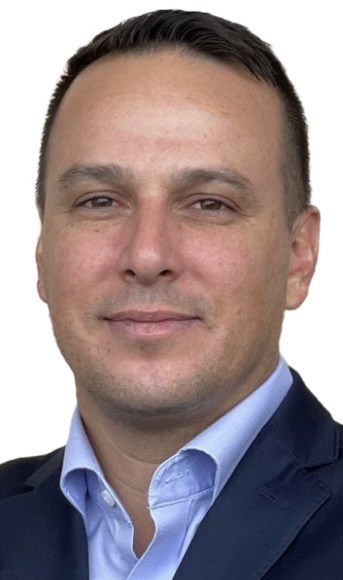
Sean Herrity, the director of investment attraction and strategy for STAMP, already works closely with international companies seeking to expand into the U.S. market as a consultant. He helps companies with “soft landing” and potentially raising capital — if needed. Herrity has lived across Europe for the past two decades and spent much of his time in Germany as a consultant.
“I wanted to use that apparatus as a way to hunt and harvest opportunities that could be a good fit for South Texas and the Rio Grande Valley, specifically dedicated to technologies and companies with a specialization in advanced manufacturing,” Herrity said.
But visibility is a challenge.
“What I often find is that a lot of international delegations coming to Texas go through the major metropolitan areas and airport hubs: Houston, Austin, Dallas-Fort Worth,” he said. “But I’d like to also showcase other areas of Texas that maybe don’t receive initial attention, but have fantastic opportunities for growth and development over the next 20 years.”
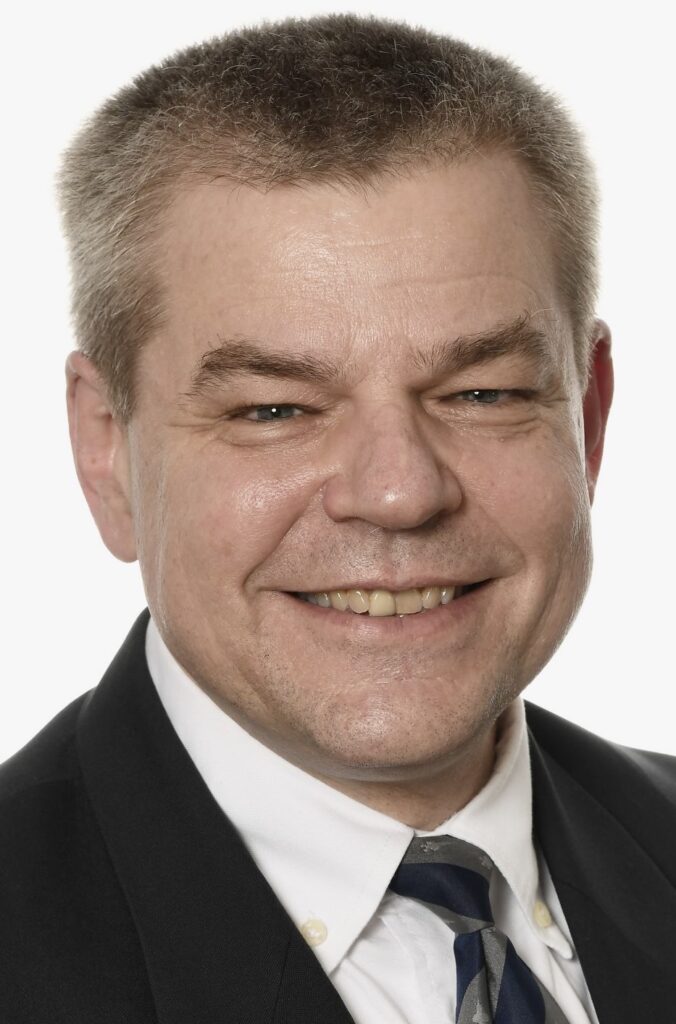
Thomas Kurfess, the executive director of the Georgia Tech Manufacturing Institute, serves as the STAMP board president, while Jianzhi James Li, the director of the University of Texas Rio Grande Valley Institute for Advanced Manufacturing, serves as treasurer.Both organizations are part of America Makes, a national manufacturing innovation institute focused on technologies such as industrial 3D printing, workforce development and strengthening U.S. manufacturing competitiveness.
Rolando A. González Barrón is the senior advisor and entrepreneur in residence at STAMP. He is a native of Matamoros, Tamaulipas and a Brownsville resident. González Barrón is also a former president of the National Council of the Maquiladora and Export Manufacturing Industry, or INDEX. His companies employ more than 1,300 workers.
Beatrize Valenzuela serves as board secretary and STEM advisor. She is a STEM specialist for the GEAR UP: Pathways to the Future! grant at Region One Education Service Center in South Texas.
Ross Guieb is another senior advisor. He is the executive director for the George H.W. Bush Combat Development Complex at the Texas A&M University RELLIS Campus in Bryan, Texas.

STAMP’s executive team includes Angela Pack-Zia, who serves as director of programs. She has extensive experience in manufacturing, including work with semiconductors.
U.S. manufacturing jobs have declined from about 17.1 million in 1996 to 12.5 million in 2026. In Texas, there were more than 1 million jobs in the sector thirty years ago, now it’s closer to 974,500 jobs statewide.
Manufacturing in the Rio Grande Valley three decades ago once supported 26,200 jobs; that number has since declined to 13,400 between Brownsville and McAllen in March 2026, Bureau of Labor Statistics data show.
Still, Valley manufacturing jobs have seen spurts of a rebound in 2008, 2020 and 2023, data shows. As of March, there were more manufacturing jobs in the McAllen-Edinburg-Mission metro, with 7,300 workers, than in the Brownsville-Harlingen metro, which had 6,100 jobs.
The data isn’t a perfect reflection of the total labor market because manufacturing sector jobs are sometimes lumped into other employment categories, including information or technology and sometimes construction.
The most high-profile manufacturer in South Texas is Space Exploration Technologies Corp., or SpaceX, which is building re-usable rockets and satellites near Boca Chica Beach in the newly minted city of Starbase.
SpaceX, owned by billionaire Elon Musk, is slated to launch its initial public offering on the stock exchange, which means some existing executives could significantly cash-out in the coming months.
The goal of STAMP is to help keep the deal pipeline flowing by encouraging more site visits to the Valley and encouraging the Texas Triangle to morph into a diamond, which would be more inclusive of South Texas.
“The acronym STAMP goes in line with the sort of manufacturing anchor point — or kind of leaving an impression on the region. I think we can work with institutions in the Rio Grande Valley to have a paradigm shift of the traditional Texas Triangle into more of a Texas diamond,” Herrity said. “We’re dedicated to being a workforce development and economic development vehicle. We’re not trying to replace or compete against any other organization.”
Not all industries are suitable to attract to the Valley, leaders say, but here’s the target sectors: aerospace, aviation and defense, automotive, shipbuilding, consumer electronics, AI-driven automation, value-added agricultural products, energy production, metallurgy and composite material production, water, and infrastructure.
“For foreign companies looking to invest, especially if they’re going into manufacturing, are there customers nearby?” Herrity said. “That could be cross-border into Mexico, but also feeding the entire transportation and logistics networks.”
On the talent side, there’s about 4 million workers across the binational border region. The area still requires some equilibrium of enough corporate or startup jobs for the educated employees compared to a pipeline of students — whether they are welding or working with robots on an assembly line.
“Does the talent need to come first or does the company? I think what we’ll continue to see happen is that first people are going to enter the workforce or scale-up and want to see where the opportunities are,” Herrity said.
Corporations are increasingly investing in workforce development programs and weighing in on educational programming so the workforce is better equipped when they graduate, he said.
“It’s important to companies because they can get new hires immediately onto the production floor behind machines,” he said.
Increasingly, the qualified workforce is the sticky factor that encourages companies to remain, especially when 10-year tax abatements expire or other economic development incentives run out, Herrity said.
“The worst situation would be that you land a company based on just tax benefits and then in 10 years they move on because that tax window is now expired,” he said. “I think you can set up anchor points to accentuate that community involvement and engagement through company internship, workforce development programs and training across verticals.”

Kristen Mosbrucker-Garza
Reporter
Kristen Mosbrucker-Garza is a versatile multimedia news reporter who lives and works along the Texas-Mexico border in Hidalgo County. Mosbrucker-Garza is a news reporter for the Rio Grande Valley Business Journal. During her career she's worked for the McAllen Monitor, San Antonio Business Journal, The Advocate Newspaper in Louisiana, Phoenix New Times, and public media outlets in Baltimore and Philadelphia.
Most Read
- How much water does SpaceX need to operate near Brownsville? Nearly 20x its current use
- Could apartment-to-condo conversion help make $100K homeownership in the McAllen metro more affordable? One investor says yes.
- SpaceX’s futuristic city of Starbase finalizes massive 7,100-acre annexation. Here’s what we know.
- Cameron County is negotiating a $20M Fluidstack data center donation after Harlingen waffles on the same offer
- Fluidstack breaks ground on $4 billion Cameron County AI data center
Get the latest business news delivered to your inbox every morning for free.
Try 30 Days Free!
Get full access to award-winning journalism covering business, real estate, health care, economic trends, and the people shaping the Rio Grande Valley.
30 Days Free!
$9.95/month
Limited time offer
Subscription renews after your 30 day free trial at $9.95/mo.
Included Benefits
- Unlimited access to all articles
- Daily business news and analysis
- Subscriber-only content and features
Stories That Matter
- What we know about Zoho Corporation and what could be built at its 1,000-acre campus
- SpaceX bought some water rights from the Rio Grande River. Here’s what we know.
- Foreign-Trade Zone No. 12 expands into Willacy County
- Mission’s first Small Business Expo puts $25K on the line for local entrepreneurs
- Reynosa’s newest technical high school focuses on AI, semiconductors and bionics
- McCoy’s gives $10K, tools to launch Mid-Valley construction academy
- UT Health RGV performs new digestive procedure for first time in the Valley
- TSTC bets on advanced manufacturing to meet RGV’s industrial boom
- Pharr’s cross-border business push earns international recognition
- Brownsville eases drought restrictions after nearly three years as Rio Grande reservoir levels improve