The city of Brownsville was on track to gain a mid-sized data center in an old Walmart in recent weeks, but the property owner/developer has since changed plans.
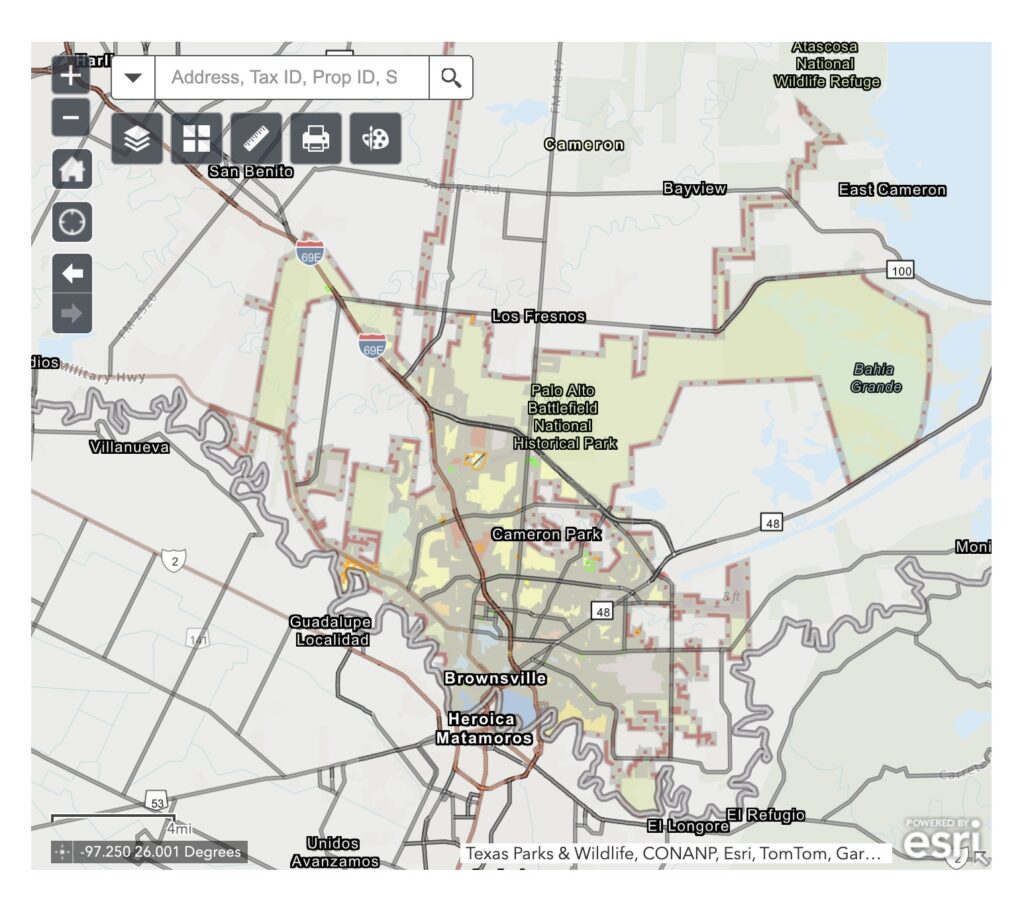
City leaders are now in the process of changing their zoning code, which would force any future data center projects to be located only in heavy-use industrial areas within city limits — of which there are few. The Port of Brownsville, which is considered a heavy-use industrial area, sits in Cameron County and outside city limits.
“At the end of the day, AI is not going away. These [data center] developments will be going somewhere. This could be a way to receive them, and we’ll receive some sort of benefit also. We need to understand what the future is for us,” Brownsville Mayor John Cowen said.
Brownsville is proposing to restrict the size of the data center, require closed-loop cooling, and address other considerations, such as ensuring there’s sufficient power capacity on an annual basis.
“It’s an important conversation. There is a scenario where there is a win-win for the community,” Cowen said. “Data centers bring a lot of taxable value to [the property tax rolls], and that helps keep [residential] taxes low; they don’t use a lot of city services besides potentially on the power [and water] side and ensuring that there’s proper infrastructure on the grid. But the state [of Texas] is going to implement a lot of those [infrastructure] protections. We’re going to take our time.”
But in this process, the city is also halting the zoning process for several other types of “nuisance businesses” or those which have drawn ire from the local neighborhood.
That includes event centers, poker lounges, self-storage companies and quick lube oil change shops — all with different zoning considerations under review.
This matters because Brownsville is seeing a lot of interest from developers and, in some cases, creative uses are being proposed that don’t have clear guidelines yet, officials told the Rio Grande Valley Business Journal in a series of news interviews.
The data center moratorium could start as soon as October 1 — which can be extended by another 90 days — so “we have 180 days to really pause things,” Cowen said.
The previously proposed data center, applied for by the landowner Randr Ventures LLC, whose principals hail from Austin, was meant as a pitch to entice a data center operator to move in. There was never a ground-up data center end-user as part of the process, as is the situation in Harlingen, officials said.
Randr Ventures is owned by Mohamed Ryad Bakalem and Rafael Chacon of Olmito, Texas, records show.
The property sits along Ruben Torres Boulevard and E 14th Street, which turns into South Padre Island Highway, or Texas Highway 48.
There is one notable heavy industrial use zoning area along South Padre Island near North Central Avenue where the railroad tracks run to the Port of Brownsville, which is within city limits. That’s where several trucking and logistics companies operate, including some manufacturers, mostly in industrial parks.
That site sits just north of the Brownsville South Padre Island International Airport too, which is typically the location for heavy industrial sites with access to rail, air and Interstates like I-69 East nearby.
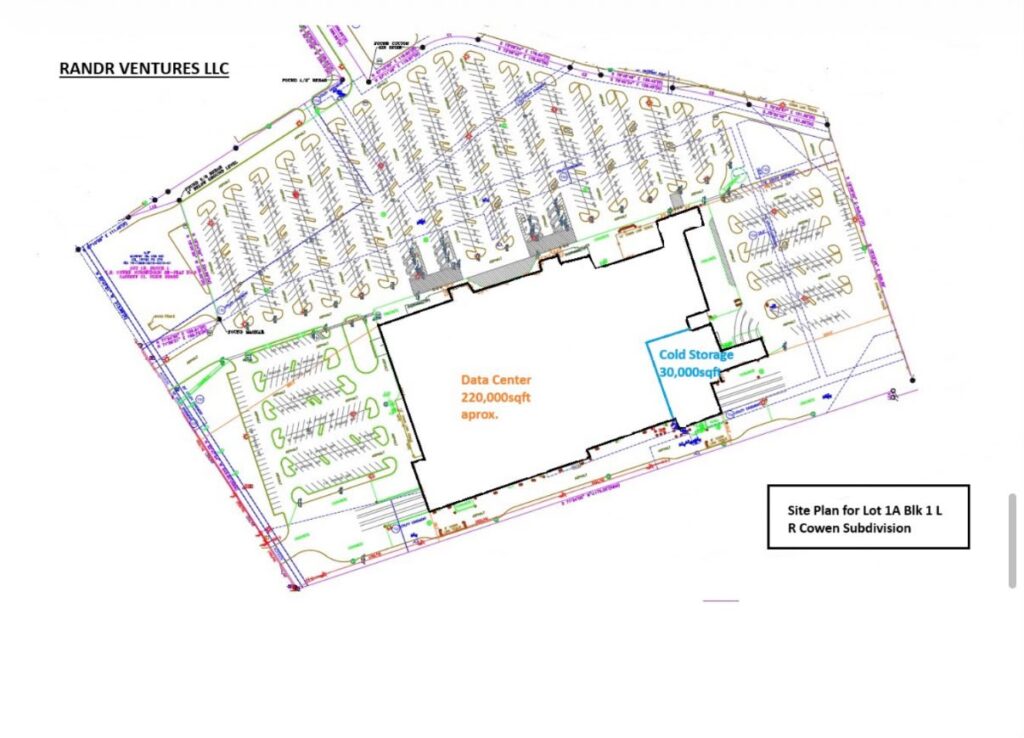
The previous plans for the data center were for a 32-acre lot with a 265,000-square-foot former retail store near the Port of Brownsville and Brownsville South Padre Island International Airport.
Letters exchanged this summer between RANDR Ventures LLC and Brownsville officials show the proposed project was designed as a 20-megawatt data center inside the existing 265,000-square-foot building rather than a new facility.
The company sought a Specific Use Permit to convert the former Walmart at 7480 Padre Island Highway into the data center, describing the project as an adaptive reuse of the structure.
In July correspondence with the city, RANDR said the 20-megawatt figure represented the facility’s peak electrical demand — the maximum amount of power it could draw at any given time — rather than its typical daily consumption, which it said would generally be lower.
The company also proposed a dry, closed-loop cooling system to minimize water use, pledged to meet city noise and lighting standards, and said the project could generate an estimated $9 million annually in electricity revenue for the Brownsville Public Utilities Board while creating construction and skilled operations jobs.
RANDR also proposed developing a roughly 35,000-square-foot food bank on the property and said it would provide additional engineering details, including confirmation of electrical capacity from BPUB, as the project moved through the permitting process.
The developer was seeking a “light industrial” zoning designation — as much of Brownsville has that zoning designation — but city planners say data centers are not considered light industrial. Instead, they are heavy industrial.
“We want to follow [the Brownsville Public Utilities Board’s] lead,” said Daniel Leal, director of planning and redevelopment. “We don’t know their long-range [capacity] plans. So we started asking that particular developer, ‘you figure out and provide to us a letter from the PUB that there is capacity,’ and that’s where the [application] process stopped.”
The property has been listed for sale or lease by Coldwell Banker Commercial Rio Grande Valley, which estimates that the total population within a 5-mile radius of the property is about 130,400, with an average household income of $63,661.
The property has a deed restriction lasting another 15 years at the site imposed by Walmart on the developers — a common practice in the retail sector — which means the site cannot become a competitor retailer. Instead, it was purchased and used since 2018 as a detention center for unaccompanied child asylum seekers until it was shut down in late 2025.
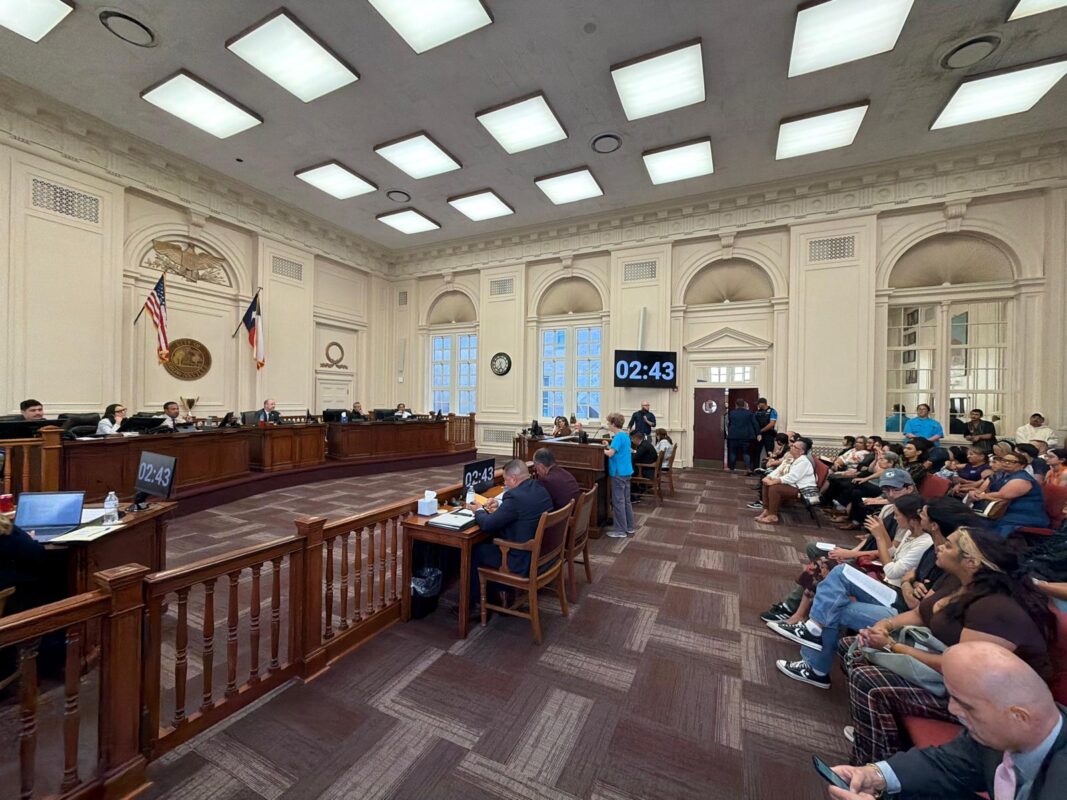
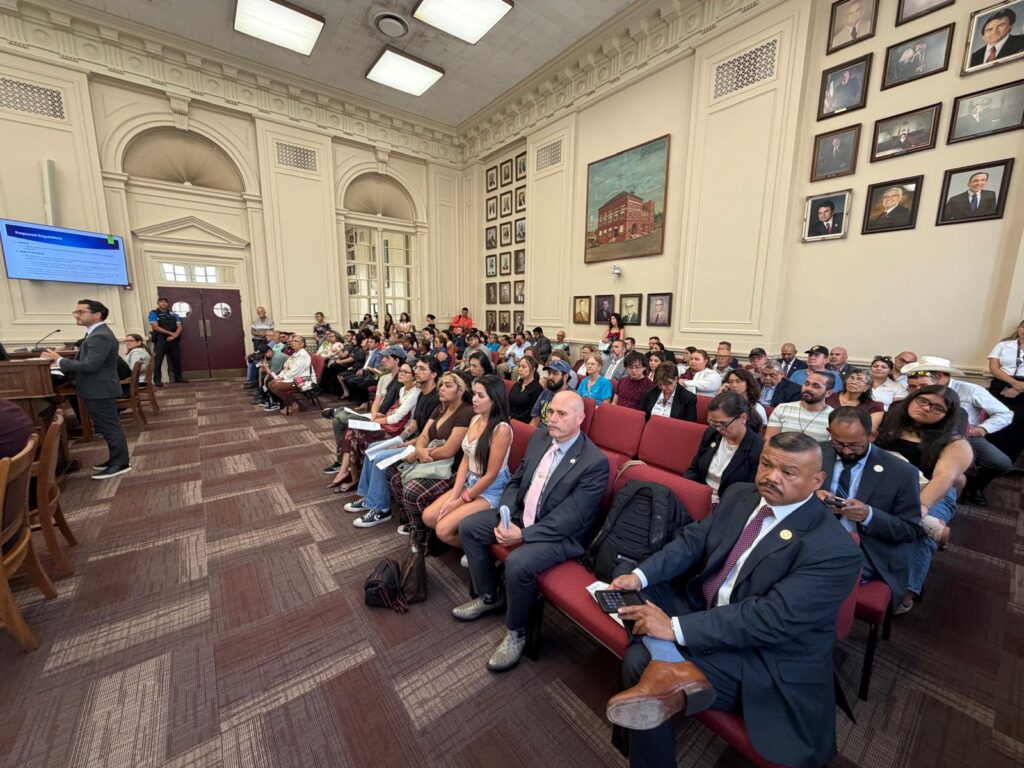
Hundreds of residents came out to speak about data centers during a city commission meeting on Tuesday, all of whom criticized the concept as a quality-of-life issue.
“I have been here my entire life. I left to get my degrees, and I came back because I want to start my life here. And the [natural] environment is the reason why I left Austin and came back here,” Jacqueline Morales, an attorney in Brownsville, said. “And it’s heartbreaking to see [the environmental landscape] go away. We’re seeing Saronic, we’re seeing SpaceX; it’s all related, LNG. There are [legal] repercussions for the way these [data center projects] are handled. You need to tread carefully. You have to think about future generations; it’s unfair to make decisions now and leave the burden for future generations to deal with.”
Morales mentioned that some Texas cities and counties have been sued in court for their decisions about data centers.
There’s also been pushback from local residents over a proposed data center in Cameron County, just outside the city of Harlingen. City leaders there issued a moratorium on data centers, but the move does not affect the county property. Harlingen Water Works, in particular, inked a deal with Eneus, the data center developer, for millions of gallons of reclaimed water for the project.
In Brownsville, the Brownsville Public Utilities Board would be responsible for providing electricity and water for any proposed data center.
It was not immediately clear whether the utility has planned for an uptick in water and electricity use — two resources data centers need in order to operate.
Data centers usually use diesel generators as backup power in the event of a storm or outage. Brownsville has also invested in extending its fiber internet infrastructure in recent years, something that data centers require as well.
As the city and county invest in infrastructure, from power redundancy to sufficient water capacity, those same investments will draw interest from businesses. It’s one reason why San Antonio has long become a mecca for data centers: it’s far enough away from the coastal hurricane risk, has a municipal power and water provider, and sufficient inexpensive land for development.
“Look at the yards of any house near Brownsville. The city is not on the border by the sea for no reason,” Veronique Medrano, a singer and songwriter in Brownsville, said. “We don’t want to be on the border by the data center. Brownsville does not have the necessary infrastructure to handle an extra load of water and electrical usage that it requires with a data center.”

Kristen Mosbrucker-Garza
Reporter
Kristen Mosbrucker-Garza is a versatile multimedia news reporter who lives and works along the Texas-Mexico border in Hidalgo County. Mosbrucker-Garza is a news reporter for the Rio Grande Valley Business Journal. During her career she's worked for the McAllen Monitor, San Antonio Business Journal, The Advocate Newspaper in Louisiana, Phoenix New Times, and public media outlets in Baltimore and Philadelphia.
Most Read
- SpaceX is giving Brownsville $220M for water projects. In exchange, the city gave up zoning control of 444 acres near Starbase
- SpaceX seeks to take zoning control over nearly 450 acres from city of Brownsville as a ‘regional’ water deal takes shape
- Port of Brownsville could soon host Nodule City, a first-of-its-kind commercial deep-sea mining hub
- How much water does SpaceX need to operate near Brownsville? Nearly 20x its current use
- Cameron County is negotiating a $20M Fluidstack data center donation after Harlingen waffles on the same offer
Get the latest business news delivered to your inbox every morning for free.
Try 30 Days Free!
Get full access to award-winning journalism covering business, real estate, health care, economic trends, and the people shaping the Rio Grande Valley.
30 Days Free!
$9.95/month
Limited time offer
Subscription renews after your 30 day free trial at $9.95/mo.
Included Benefits
- Unlimited access to all articles
- Daily business news and analysis
- Subscriber-only content and features
Stories That Matter
- 5 things to know about manufacturing along the South Texas-Mexico border
- Mission’s first Small Business Expo puts $25K on the line for local entrepreneurs
- Reynosa’s newest technical high school focuses on AI, semiconductors and bionics
- McCoy’s gives $10K, tools to launch Mid-Valley construction academy
- UT Health RGV performs new digestive procedure for first time in the Valley
- TSTC bets on advanced manufacturing to meet RGV’s industrial boom
- Pharr’s cross-border business push earns international recognition
- Brownsville eases drought restrictions after nearly three years as Rio Grande reservoir levels improve
- Texas A&M’s $53.5M McAllen research center will tackle water, food security and Valley health
- McAllen’s $204M water investment expects to seek construction bids in 2027