If you’ve been to a hotel in the Rio Grande Valley in the last few years, you’ve likely noticed that lots of your fellow guests aren’t families on vacation or businesspeople traveling for work.
Instead of Hawaiian shirts or suits, many of the guests at Valley hotels are wearing fatigues or uniforms, and have been for years.
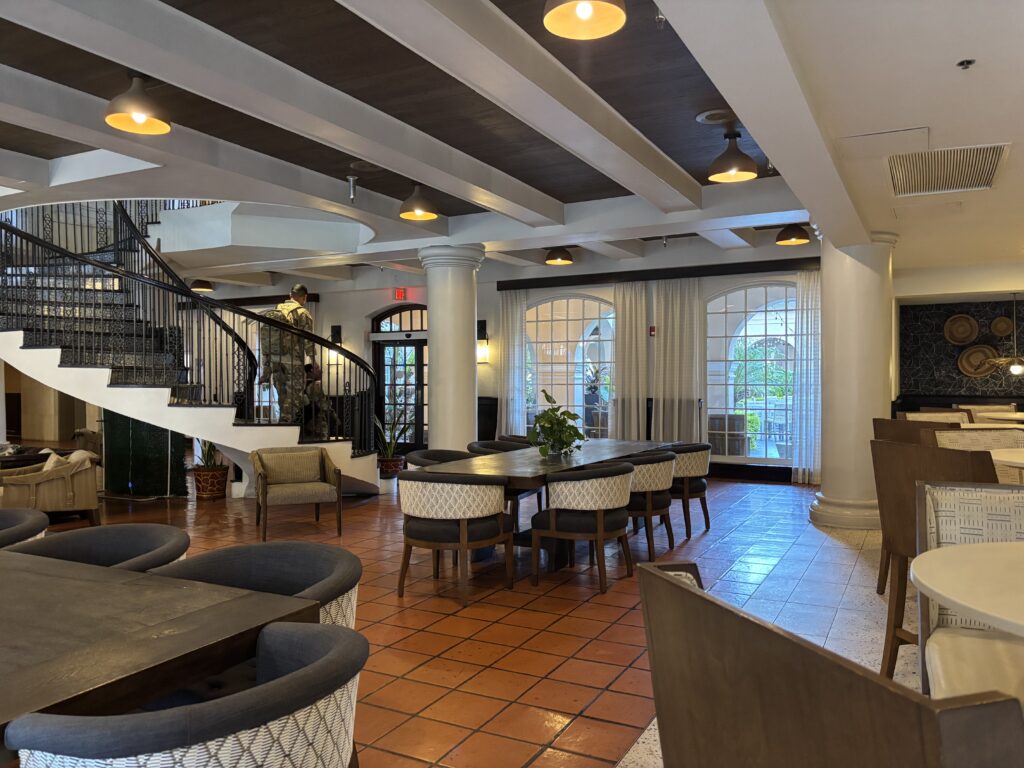
Photo Credit | Matt Wilson
Law enforcement or military personnel make up a significant portion of guests at local hotels as part of border security operations.
It’s not easy to put a firm number on the percentage of Valley hotel rooms being used by government employees, but industry experts agree that the number is high — some say between 30 and 60% at non-extended-stay locations, depending on the hotel and its location.
Extended-stay hotels, experts say, rent an even higher percentage of rooms to governmental entities.
Hershal Patel, a McAllen resident who owns and operates several hotels in Hidalgo and Cameron counties with his family, says government contracts for rooms have been a significant factor in the local industry since about 2017.
He estimated that the government rented more than half of the rooms at limited-service hotels — ones with maybe a bar but not a full restaurant — during the summer.
“And that’s substantial,” he said. “Some hotels, especially the extended-stay products, are seeing probably all their rooms taken up by the government. Seventy to 80%, if not the entire hotel. Some hotels are OK with that.”
After the presidential election last year, Patel said, those hotels switched from primarily state employees to federal employees.
“There was a little bit of a quick — I want to call it as if our heart skipped a beat — thing when one day we were having conversations with state agencies saying they were gonna terminate their long-term commitments and leave, so we were nervous for a day or two, and then boom. In comes the federal [government],” he said. “And they said they’d like to extend and expand their room blocks at the hotels.”
Patel described the industry as a whole in the Valley — undergirded by those governmental entities — as strong, though he’s concerned about slimmer times in the near future.
Governmental spending roots
Renting hotel rooms to governmental entities is nothing new in the Valley.
In 1916, the U.S. sent 12,000 soldiers to the Valley because of unrest on the border.
The deployment sparked a business boom, including in the hotel industry.
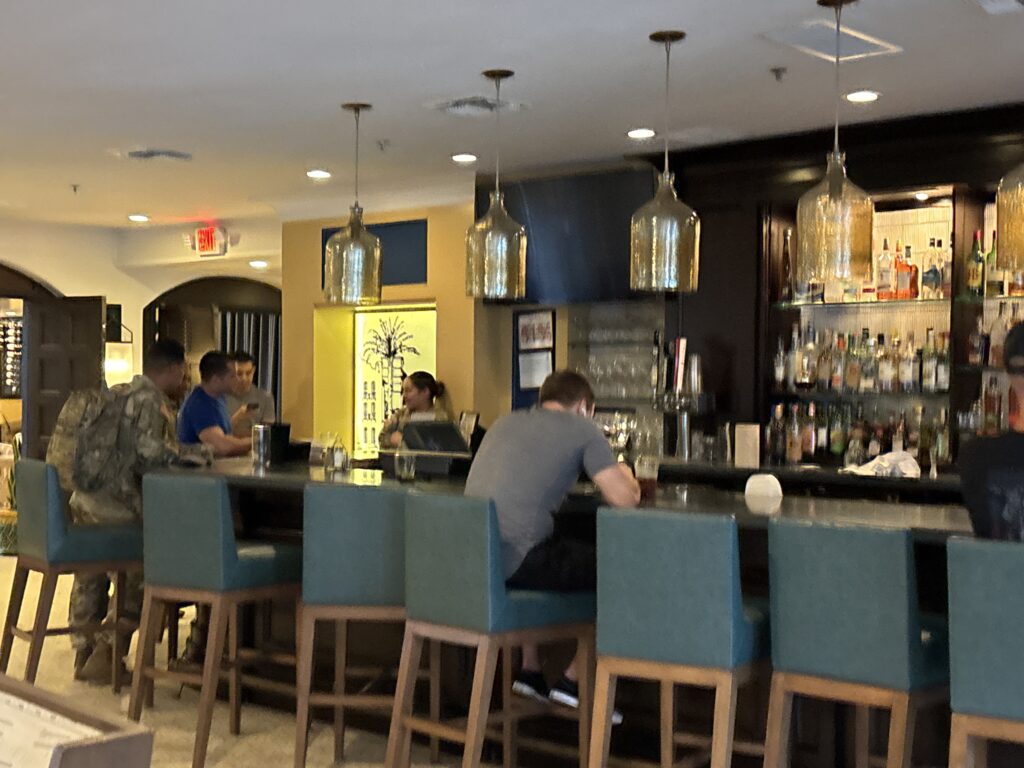
Photo Credit | Matt Wilson
Casa De Palmas — one of the region’s most recognizable hotels — was built as a result of that boom.
Business has been booming along the border because of state and federal deployments over the past decade as well.
A 2016 media investigation found that the Texas National Guard spent $62 million on border deployment costs over a two-year period. More than $10 million was used to pay for hotel rooms.
Governmental spending has since continued to have a significant impact.
That spending, however, isn’t guaranteed.
“But if the political situation changes, some of that can just go away overnight,” Patel said.
Even if the political situation remains the same, that hotel spending could be diminished.
Last May, the Texas National Guard opened a new 80-acre base on the border in Eagle Pass with the capacity to house at least 1,800 troops who had previously been staying in less permanent accommodations — like hotels.
Drawbacks to a good thing
There’s a drawback to governmental spending — even if it stays strong.
Governmental entities in Texas can levy a hotel occupancy tax on hotel guests, funds that are ultimately supposed to be used to promote tourism and support the hotel industry.
But governmental entities renting rooms can be exempt from those taxes.
According to the McAllen Chamber of Commerce, lodging tax receipts in August stood at $403,335, down 13.25% from last year.
“The decline signals reduced hotel occupancy, likely influenced by fewer business travelers or cross-border tourists,” the chamber said in a newsletter.
That kind of spending, from corporate and leisure travelers from the United States and Mexico, is the sort of reliable spending that local hoteliers are really interested in having.
Governmental spending, Patel said, doesn’t do a lot to stimulate it.
“They’re not paying into that [hotel occupancy tax] fund, and that’s less money paid into our convention and visitors bureaus and destination marketing organizations,” he said. “[Those] organizations are charged with promoting their respective cities as destinations for tourism.”
The same political forces that spurred governmental hotel spending may have actually disincentivized more traditional spending.
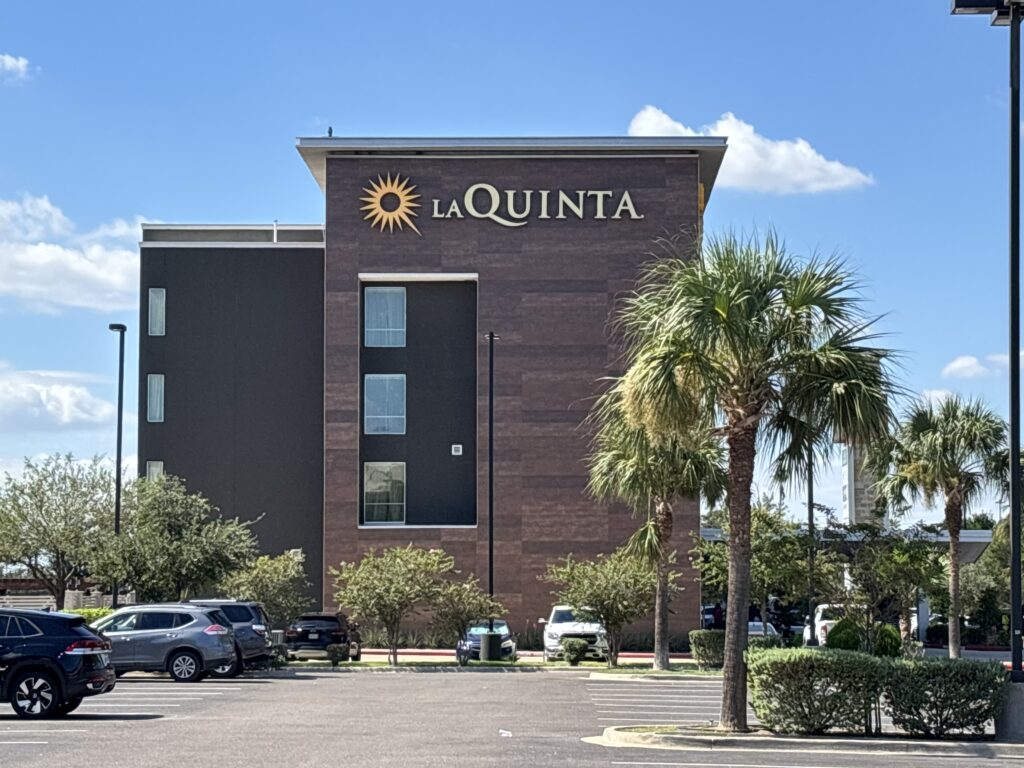
Photo Credit | Matt Wilson
Omar Guevara, who’s managed a number of Valley hotels and currently works for Pharr-based Ocean Gate Hospitality Group, said in September that marketing is a big issue for local hotels.
Guests have concerns that the border isn’t safe, he said.
“That image puts a negative on our region,” Guevara said. “I think it started with the cartels, everybody thinking that the cartels were just waiting in the parking lots and waiting to assault you or something. So that image, to corporate America, I think hurts us.”
Boom and bust cycles are just part of the business locally, Guevara said, but he’s noticed a drop in corporate travel, and he thinks the Valley’s hotel industry has overbuilt.
“Because we’ve looked good for so long that it looks good on paper and it looks good to banks and it looks good to folks that want to invest in hotels,” he said. “But you have to come in with that understanding that if anything were to happen to that peso in Mexico, if it were to devalue and the dollar were to gain on it, we would see that go down as well.”
Stable tourism attractions
So how does the Valley hotel industry build up that stable, reliable non-governmental travel?
It’s easier said than done.
South Padre Island, the Valley’s hottest tourist destination, reported strong occupancy numbers this summer.
But South Padre Island has a beach.
Other cities don’t.
Still, other Valley cities do have amenities to attract visitors, things like shopping and restaurants and municipal events, along with marquee attractions like the University of Texas Rio Grande Valley’s new football program in Edinburg.
McAllen, in particular, has invested heavily in bids to make itself a destination city.
It’s investing almost $52 million to redevelop Quinta Mazatlán, and just last week, it announced a $230 million investment into a mixed-use development at the heart of the city. City officials billed it as a way to put McAllen on par with other Texas cities that thrive on tourism.
Still, some hoteliers are skeptical about McAllen ever becoming a destination city.
One hotelier who wasn’t authorized to speak publicly about the issue said flat out that he doesn’t think the city will ever be one.
McAllen is a place you go to because you have to, they said, not because you want to watch a Christmas parade.
Guevara didn’t necessarily disagree.
“No one wakes up and says, ‘Hey, let me go spend Labor Day in McAllen, Texas,’” he said.
That doesn’t mean those attractions are fruitless, Guevara said. He described them as ways to capitalize on travel — sort of force multipliers.
Someone might only be in town on business or to shop or visit family, he said, but marketing events like McAllen’s Holiday Parade or destinations like the Gladys Porter Zoo and the beach can prompt travelers to extend their stays or bring friends and family along.
Good experiences can spur repeat travel.
“That’s the snowball effect that we truly need to create,” Guevara said.
Patel agrees that capitalizing on those amenities is important, and he’s more bullish about attracting sustainable inland tourism than some of his peers.
He pointed to high-quality restaurants in the area and other attractions.
“I think McAllen has the capacity to fill up every hotel, not only in town but in the surrounding communities,” Patel said.

Matt Wilson
Reporter
Most Read
- SpaceX is giving Brownsville $220M for water projects. In exchange, the city gave up zoning control of 444 acres near Starbase
- SpaceX seeks to take zoning control over nearly 450 acres from city of Brownsville as a ‘regional’ water deal takes shape
- Port of Brownsville could soon host Nodule City, a first-of-its-kind commercial deep-sea mining hub
- Cameron County is negotiating a $20M Fluidstack data center donation after Harlingen waffles on the same offer
- How much water does SpaceX need to operate near Brownsville? Nearly 20x its current use
Get the latest business news delivered to your inbox every morning for free.
Try 30 Days Free!
Get full access to award-winning journalism covering business, real estate, health care, economic trends, and the people shaping the Rio Grande Valley.
30 Days Free!
$9.95/month
Limited time offer
Subscription renews after your 30 day free trial at $9.95/mo.
Included Benefits
- Unlimited access to all articles
- Daily business news and analysis
- Subscriber-only content and features
Stories That Matter
- McAllen’s $204M water investment expects to seek construction bids in 2027
- Saronic lands Navy landing craft contract, first build at Brownsville’s Port Alpha
- The Rio Grande Valley’s tech industry is small but growing — meet some of the next-gen workforce
- Entrepreneurs enter Mission EDC’s ‘Shark Tank’ competition for $25K top prize
- Mission’s first Small Business Expo puts $25K on the line for local entrepreneurs
- Reynosa’s newest technical high school focuses on AI, semiconductors and bionics
- McCoy’s gives $10K, tools to launch Mid-Valley construction academy
- UT Health RGV performs new digestive procedure for first time in the Valley
- TSTC bets on advanced manufacturing to meet RGV’s industrial boom
- SpaceX reschedules Starship’s first flight around the Earth