Mexico’s minimum wage will rise again on Jan. 1, delivering higher earnings for millions of workers and pushing wages in the Northern Border Free Trade Zone closer to U.S. regional benchmarks. But business leaders along the border say the increase also adds new pressures at a time when operating costs are already rising.
President Claudia Sheinbaum announced that the general minimum wage will climb from 278 pesos to 315 or about $16.40 to $18.50 per day. The increase is expected to benefit an estimated 8.5 million workers.
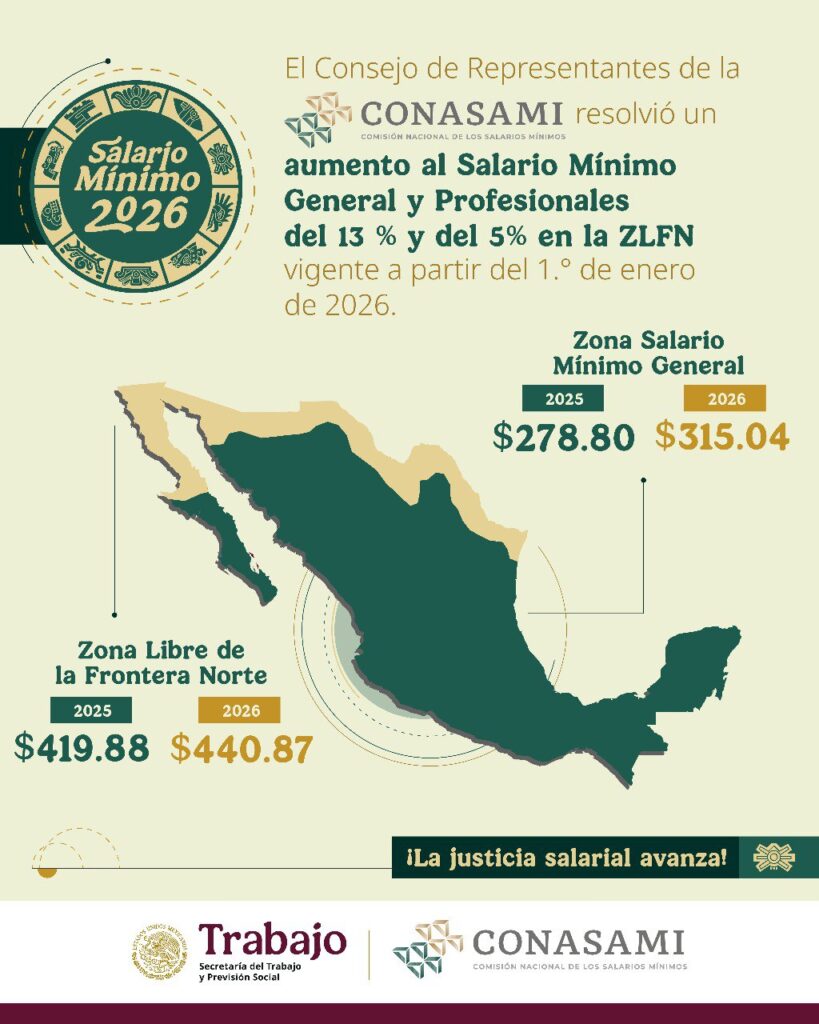
In the border zone, where different federal wage rules apply, the daily minimum will rise from 419 pesos to 440, or about $24.70 to $25.90. With the change, the monthly minimum wage throughout most of the nation will be 9,582 pesos, or about $563. In the border region, that wage will be about 13,409 pesos, or about $789, per month.
The wage adjustment follows negotiations between the business sector, labor unions, and the federal government. Data from Comisión Nacional de los Salarios Mínimos (CONASAMI), or Mexico’s National Minimum Wage Commission, and Banxico show Mexico’s minimum wage has tripled since 2018 and risen about 130% in real buying power.
Analysts say the minimum wage is now getting close to 70% of the national average salary, which makes it more expensive for businesses to hire. If productivity and investment don’t keep up, they warn this could slow the creation of new formal jobs. The data also show wages catching up to typical income levels, especially along the northern border.
Border labor leaders call process lawful, collaborative
For Alberto Lara, labor leader and state legislator in Reynosa, the agreement follows the formal model intended by federal law.
“Companies, unions, and government officials met through CONASAMI and reached a national agreement to determine the increase,” Lara said. “Based on that, negotiations begin at a company level to establish additional contractual benefits for workers.”
Manufacturing sees a manageable increase, but more pressure coming
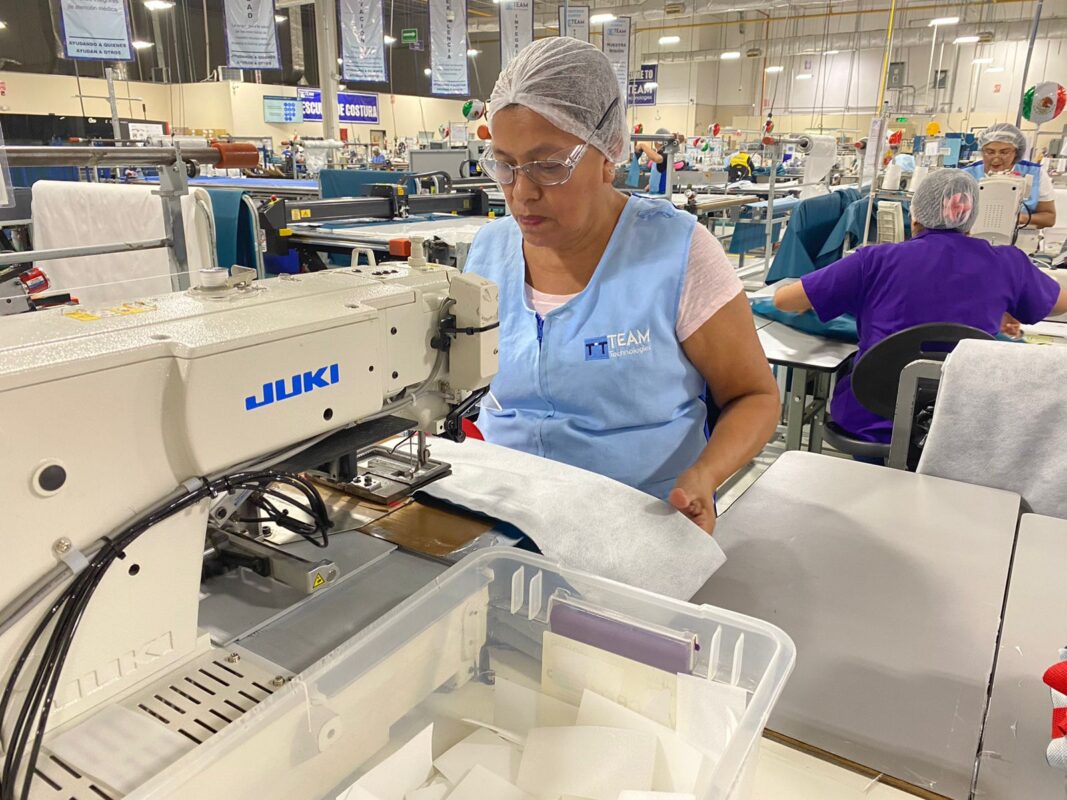
In Reynosa’s manufacturing sector, human resources officials say the 2026 adjustment is more moderate than anticipated.
“The 5% increase to the minimum wage is positive and much more realistic for the situation in Mexico and specifically in our region. We were all expecting 12%,” said Héctor Reyes, human resources manager at Season Group MX, which employs 250 workers.
Reyes said a larger challenge looms in 2027, when Mexico’s 40-hour workweek takes effect.
“It will give us time to adjust schedules and be creative in implementing additional shifts to meet our customers’ demands,” he said.
Small businesses report growing pressure
For small and medium-sized businesses, the increase adds to existing compliance costs and tax obligations, said Gerardo García Flores, a labor attorney and consultant in Reynosa.
“Employers end up either raising prices, cutting staff, or making fewer people do more work,” García said. “Many businesses are no longer talking about growing — just surviving.”
He said automation is becoming more common as companies look for ways to control payroll expenses.
Trucking companies warn margins are stretched thin
Cross-border trucking firms also expect tighter margins heading into 2026. A trucking company owner who asked not to be named for fear of business repercussions said the higher wage will boost his tax burden without raising freight rates.
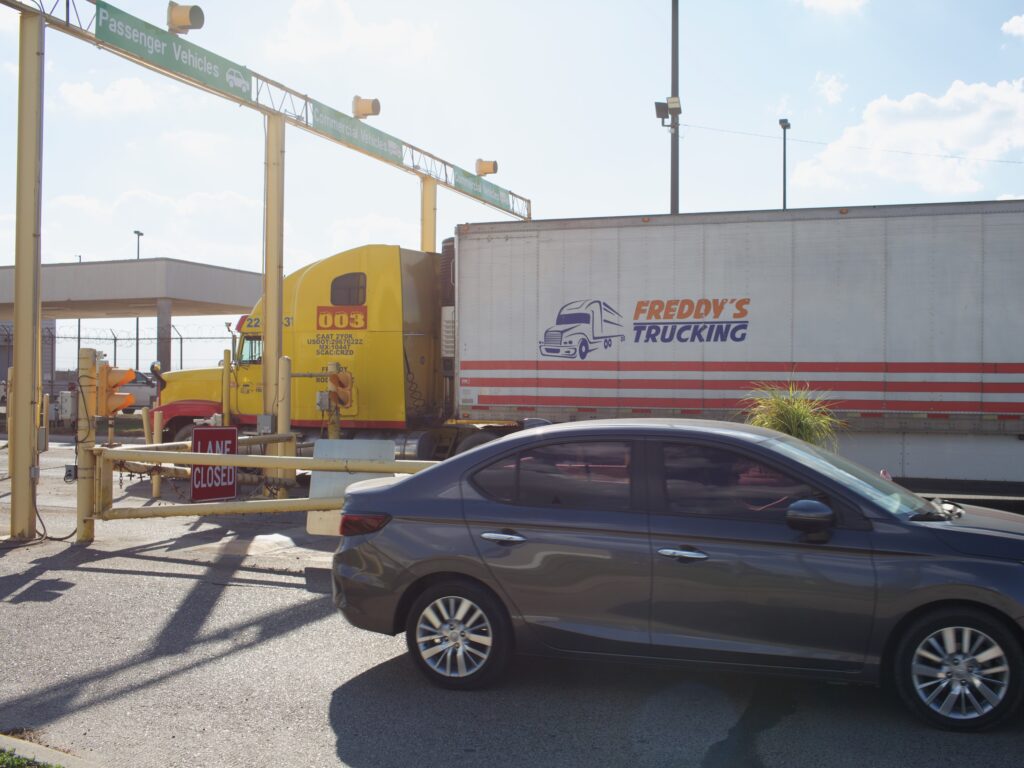
Photo Credit | Kristen Mosbrucker-Garza
“I will pay much more in taxes because the minimum wage goes up, but my client won’t pay me more,” he said. “The only way to stay afloat is by cutting costs — and that means fewer jobs.”
The owner said fixed expenses — diesel, tolls, maintenance, and social security payments — already leave “minimal profits.”
“Many small transport companies are already on the edge and won’t make it another year,” he warned.

Anayancy Ulloa
Reporter
Most Read
- How much water does SpaceX need to operate near Brownsville? Nearly 20x its current use
- Could apartment-to-condo conversion help make $100K homeownership in the McAllen metro more affordable? One investor says yes.
- SpaceX’s futuristic city of Starbase finalizes massive 7,100-acre annexation. Here’s what we know.
- Cameron County is negotiating a $20M Fluidstack data center donation after Harlingen waffles on the same offer
- Fluidstack breaks ground on $4 billion Cameron County AI data center
Get the latest business news delivered to your inbox every morning for free.
Try 30 Days Free!
Get full access to award-winning journalism covering business, real estate, health care, economic trends, and the people shaping the Rio Grande Valley.
30 Days Free!
$9.95/month
Limited time offer
Subscription renews after your 30 day free trial at $9.95/mo.
Included Benefits
- Unlimited access to all articles
- Daily business news and analysis
- Subscriber-only content and features
Stories That Matter
- What we know about Zoho Corporation and what could be built at its 1,000-acre campus
- SpaceX bought some water rights from the Rio Grande River. Here’s what we know.
- Foreign-Trade Zone No. 12 expands into Willacy County
- Mission’s first Small Business Expo puts $25K on the line for local entrepreneurs
- Reynosa’s newest technical high school focuses on AI, semiconductors and bionics
- McCoy’s gives $10K, tools to launch Mid-Valley construction academy
- UT Health RGV performs new digestive procedure for first time in the Valley
- TSTC bets on advanced manufacturing to meet RGV’s industrial boom
- Pharr’s cross-border business push earns international recognition
- Brownsville eases drought restrictions after nearly three years as Rio Grande reservoir levels improve