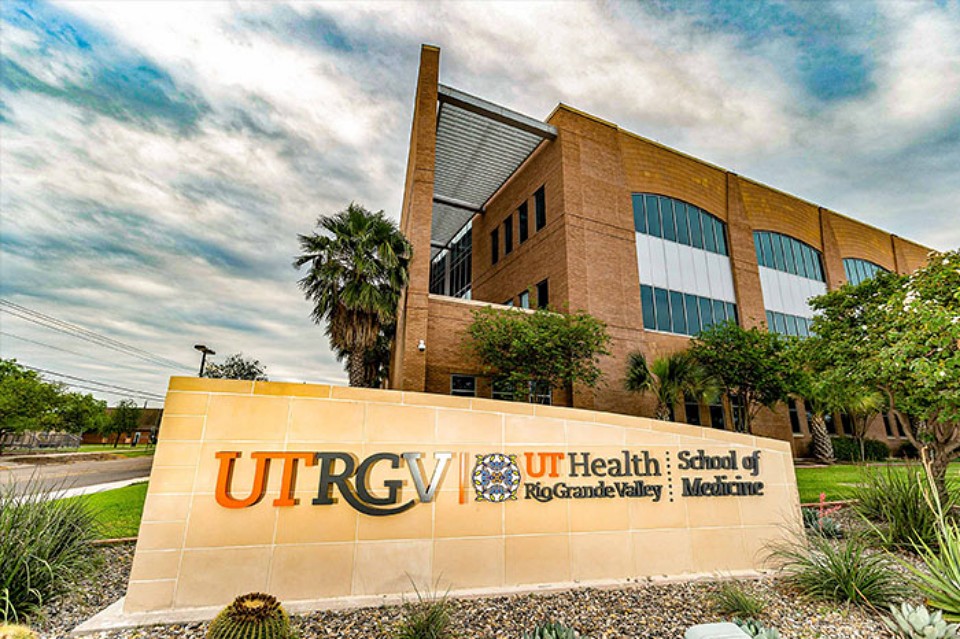
During a commencement ceremony in May 2020, University of Texas System Regent Dr. Nolan Perez told the first 39 graduates of the UTRGV School of Medicine that they represented something significant.
Those graduates, Perez said, were more than just doctors or scholars: he called them the “literal embodiment of a dream come to fruition,” the end result of boatloads of funding capital and decades worth of striving for a medical school in the Valley.
“UTRGV and its school of medicine have forever changed the landscape of education and health care in the Valley,” Perez said. “And the impact will be felt for generations.”
The number of UTRGV graduate medical education alumni — the doctors who will make that impact — has climbed steadily since then.
It currently sits at 449, about half of whom chose to stay in Texas to practice or pursue additional education.
Of those, 136 students chose to remain in the Valley to practice, freshly minted doctors filling in gaps in an area with a severe shortage of doctors.
According to the state, that shortage is only expected to get worse over the next few years.
The Texas Department of State Health Services says the Valley already had a critical shortage of physicians specializing in anesthesiology, family medicine, pediatrics, and psychology.
Those shortages will likely increase through 2032, the department says, when the Valley is estimated to lack over 900 doctors in those four fields alone.
UTRGV’s med school graduates may not be a silver bullet solution for that problem, but they will help to ameliorate it as the school draws more aspiring physicians to the area and allows pursuing a medical education to Valley natives who may otherwise not have had one.
Finding their purpose
One doctor who had no plans to stay in the Valley is David Ortiz, a Weslaco native who graduated in UTRGV’s third medical school class.
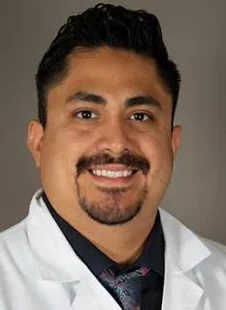
Ortiz had a somewhat untraditional path to medicine. He wasn’t going to go to college originally, but ultimately decided to because he wanted to keep seeing his girlfriend at the time. That didn’t work out — they broke up the day before he left for Texas A&M to start as an undergrad freshman — and Ortiz found himself enrolled in a university with basically no plan but a bit of an aptitude for biology.
A former teacher eventually told Ortiz he oughta be a doctor, which, it turned out, made sense.
He did well on his MCAT and planned to head upstate or out of state. A fluke, however, led Ortiz to UTRGV: he wound up applying late, and UTRGV opened its application cycle late. He was one of the last interviews.
“They sold me on the mission statement,” Ortiz said. “They reminded me of how foolish it was to try to go away. They wanted to help the region. They sold it on the sheer presence of the medical school making a difference, and it really has.”
There were ups and downs to being a student in a brand new medical school, Ortiz said. He described it as more limited than some other schools but close-knit, the kind of place where people really relied on each other.
Ortiz graduated in 2022 and now practices as a family medicine physician with WellMed in Brownsville. He says he’s seen the med school’s graduates living out the mission statement that first attracted him to UTRGV.
Thinking about it, Ortiz pauses for a moment, then rattles off the names of four other classmates practicing in the Valley. He estimates they’ll see maybe an average of 1,000 patients a year apiece.
“So I mean let’s say we end up maxing out at 5,000 patients, us alone, that we will see,” he says. “That may not seem like much, but for me, a thousand Medicare patients in a city that is quite sick and has a high health care spending compared to GDP. That impact on the patients, their lives will improve.”
Building a stronger future
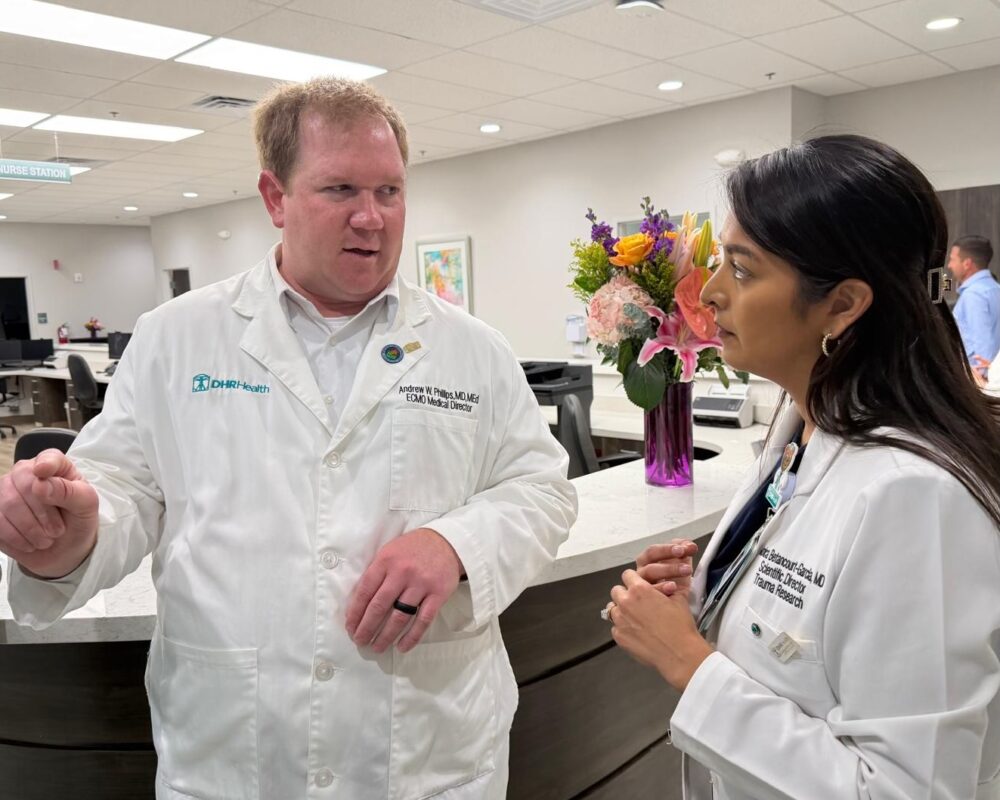
Hector Trejo, an Edinburg native who graduated from UTRGV’s medical school just this year and is an internal medicine resident at DHR Health, said he also feels the likelihood of Valley natives going through the program and sticking around is high.
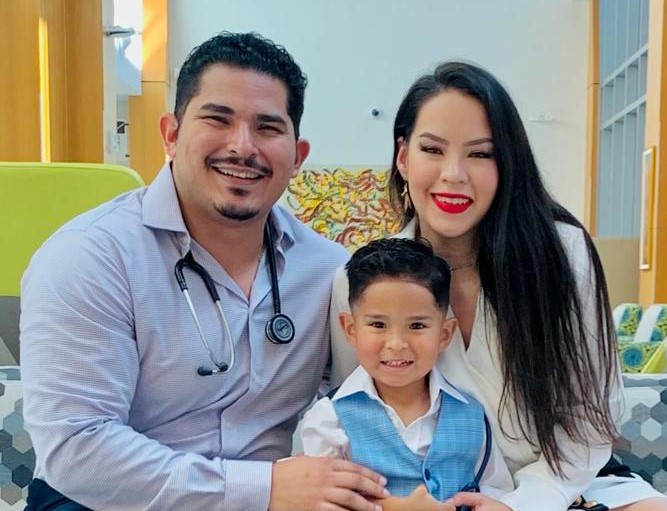
Courtesy of | UTRGV
“I think as the medical school grows with its research and clinical training sites, it’s going to attract a lot of students to stay here and train here and realize that all the training that they would need to become competent doctors is here and that they would flourish,” he said. “I think as the medical school grows that way, we will certainly have more retention as the years go on.”
Those homegrown doctors, Trejo said, will do more for the Valley than just boost the number of doctors locally.
They’ll also be more informed doctors, he said, better equipped to serve a community they’re familiar with.
“It increases the access to culturally competent care is what I would say,” Trejo said. “So that’s a big plus as well. So, for example, in my experience, my particular situation, I find it a lot easier to care for individuals that are from here, because I know them. I can relate to their upbringing, relate to what their habits are, and it just makes me a better doctor.”

Matt Wilson
Reporter
Most Read
- SpaceX is giving Brownsville $220M for water projects. In exchange, the city gave up zoning control of 444 acres near Starbase
- SpaceX seeks to take zoning control over nearly 450 acres from city of Brownsville as a ‘regional’ water deal takes shape
- Port of Brownsville could soon host Nodule City, a first-of-its-kind commercial deep-sea mining hub
- Cameron County is negotiating a $20M Fluidstack data center donation after Harlingen waffles on the same offer
- How much water does SpaceX need to operate near Brownsville? Nearly 20x its current use
Get the latest business news delivered to your inbox every morning for free.
Try 30 Days Free!
Get full access to award-winning journalism covering business, real estate, health care, economic trends, and the people shaping the Rio Grande Valley.
30 Days Free!
$9.95/month
Limited time offer
Subscription renews after your 30 day free trial at $9.95/mo.
Included Benefits
- Unlimited access to all articles
- Daily business news and analysis
- Subscriber-only content and features
Stories That Matter
- McAllen’s $204M water investment expects to seek construction bids in 2027
- Saronic lands Navy landing craft contract, first build at Brownsville’s Port Alpha
- The Rio Grande Valley’s tech industry is small but growing — meet some of the next-gen workforce
- Entrepreneurs enter Mission EDC’s ‘Shark Tank’ competition for $25K top prize
- Mission’s first Small Business Expo puts $25K on the line for local entrepreneurs
- Reynosa’s newest technical high school focuses on AI, semiconductors and bionics
- McCoy’s gives $10K, tools to launch Mid-Valley construction academy
- UT Health RGV performs new digestive procedure for first time in the Valley
- TSTC bets on advanced manufacturing to meet RGV’s industrial boom
- SpaceX reschedules Starship’s first flight around the Earth