Fluidstack has begun construction on the first $4 billion phase of its massive artificial intelligence data center campus in Cameron County, moving forward with a project that has drawn scrutiny over its potential demands on the region’s power, water and infrastructure.
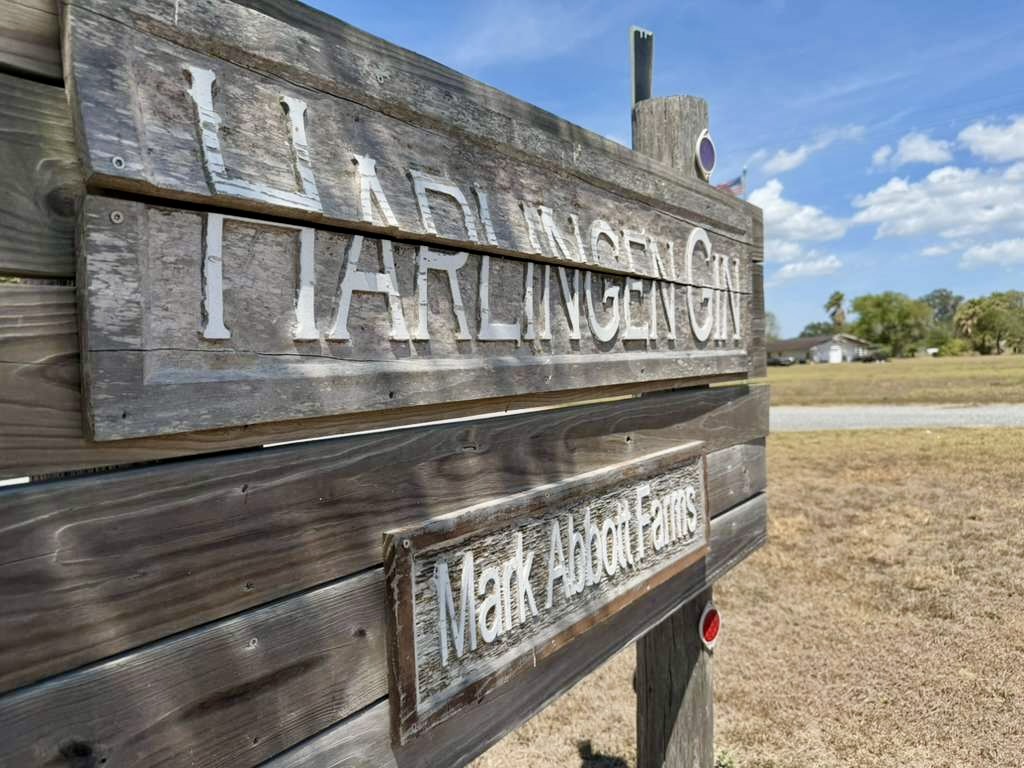
The company announced Thursday that construction has started on the more than 1,100-acre site east of Valley International Airport and west of the Port of Harlingen, near Rio Hondo. Fluidstack said the first phase is expected to create more than 2,500 construction jobs and several hundred permanent jobs.
The announcement comes after Fluidstack recently offered $27 million toward infrastructure and drainage improvements in Harlingen as local officials raised questions about the sprawling project’s potential impact on water, electricity and surrounding communities.
Fluidstack, which builds computing infrastructure for artificial intelligence companies and other customers, is emphasizing that it plans to pay its own infrastructure and energy costs and is not seeking local property tax abatements or county incentives.
“We pay our own way: our energy, our infrastructure, our water, and full local property taxes, and we build to the Governor’s standards from day one,” Kate Franko, Fluidstack’s head of public affairs, said in a news release Thursday.
The company said the campus was designed to comply with requirements established by Gov. Greg Abbott, the Public Utility Commission of Texas, the Electric Reliability Council of Texas and Cameron County’s recently adopted resolution governing data center development.
County permit allows site work to move forward
Cameron County officials said they issued Fluidstack a worksite development permit allowing site preparation to move forward, including land clearing and grading, utility installation, roads, parking areas and stormwater infrastructure.
The permit does not yet authorize construction of the data center buildings themselves, which will require additional county permits.
As part of the permitting process, Fluidstack agreed to voluntarily comply with Cameron County’s safeguards for large data centers and directives issued by Abbott addressing issues including power-grid reliability, water use, drainage and public infrastructure.
Cameron County also said it is not providing a tax abatement for the project.
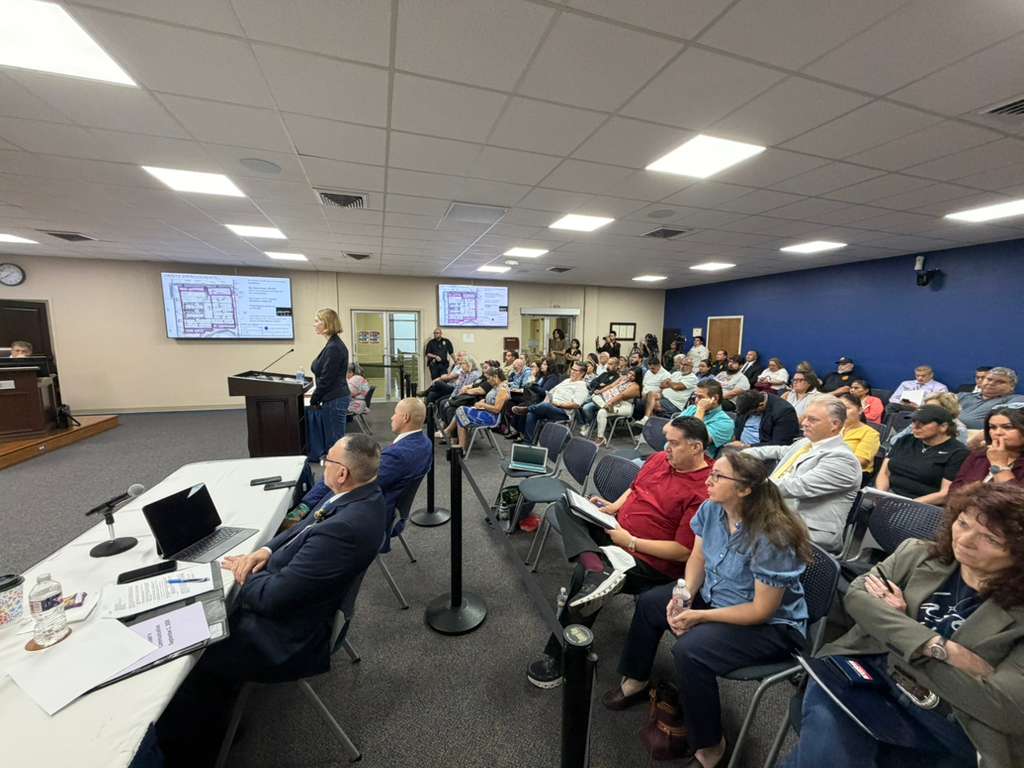
Harlingen raises concerns over new drainage plan
Harlingen Mayor Norma Sepulveda said Wednesday that Fluidstack is moving forward with an alternative drainage plan through Cameron County, effectively removing Harlingen from negotiations over the data center’s drainage.
The city had been considering allowing Fluidstack to connect to a Harlingen-owned drainage ditch as part of a proposal that included about $7 million in drainage improvements and a separate $20 million investment in Harlingen infrastructure.
Sepulveda said she has now been informed that the $20 million would instead go to Cameron County as part of the alternative arrangement.
Her biggest concern, she said, is what happens to the drainage improvements that had been proposed for Harlingen, including additional detention and widening of the existing ditch.
During a Sept. 2 City Commission presentation, city officials were told those improvements could have helped prevent flooding experienced at Valley International Airport during the March 2025 floods, Sepulveda said.
With Fluidstack now pursuing another drainage option, Sepulveda said she wants to know whether those improvements will still be built and what the change could mean for the airport and surrounding properties during future heavy rainfall.
She also said Cameron County had not communicated with her about the alternative arrangement while Harlingen was publicly considering Fluidstack’s proposal.
“What I care about now is making sure Harlingen is not left with the drainage consequences while someone else receives the benefit,” Sepulveda said.
Fluidstack addresses water, power concerns
Water and electricity have emerged as two of the biggest questions surrounding the rapid growth of data centers in Texas, particularly as AI computing facilities can require enormous amounts of power.
Fluidstack said its Cameron County campus will participate in state audit requirements intended to protect grid reliability and will pay for its own energy and infrastructure rather than passing those costs on to the community.
For cooling, the company said it will use a closed-loop system supplied by the East Rio Hondo Water Supply Corp., rather than a municipal water system.
Fluidstack said the system will use a tank holding less water than an Olympic-sized swimming pool. The water would initially fill the cooling system and then be continuously recycled.
The company previously told local officials that water demand would be considerably higher during construction than once the data center is operating.
Fluidstack also committed to a 60-decibel sound limit at the property line once the campus is operational, with berms and trees intended to reduce noise beyond the property.
No local tax breaks
Fluidstack said it has neither requested nor received local property tax abatements or Cameron County incentives for the project.
Instead, the company said the development will add millions of dollars annually to the local property tax base for schools and county services. The announcement did not provide a specific estimate of the project’s annual property tax payments.
Cameron County Commissioner David A. Garza, whose precinct includes the project site, said the company’s approach helped win his support.
“They are investing in and paying for their own energy and infrastructure, ensuring those costs do not fall on our residents,” Garza said. “They will also pay their full share of local taxes, while maintaining extremely low water usage — an especially important consideration for our region.”
State Sen. Adam Hinojosa, whose district includes Cameron County, has pushed for tougher standards for data center development as concerns about their demands on Texas infrastructure have grown.
“Data centers looking to come into Texas should strengthen the communities they enter, not drain the resources those communities depend on,” Hinojosa said.
He said Fluidstack’s commitments to secure its own power and water resources and work with local leaders represented the type of development he wants to see in the region.
“Their commitment to securing their own power and water resources, working closely with local leaders, and investing in good paying jobs is the kind of responsible growth we can get behind in the Rio Grande Valley,” Hinojosa said.

More than 2,500 construction jobs
Fluidstack said it plans to hire locally “wherever possible,” particularly for construction, electrical and skilled-trades work. Some of the permanent operations jobs will not require a four-year college degree, according to the company.
The company did not disclose how many of the more than 2,500 construction jobs would be filled locally or provide an exact number, salary range or hiring timeline for the permanent positions.
Fluidstack is also developing community-benefit commitments with local leaders, although details have not yet been finalized.
The start of construction represents a major step for one of the largest proposed data center developments in the Rio Grande Valley and puts a concrete price tag on its initial buildout: $4 billion for the first phase alone.
Fluidstack’s announcement does not disclose the expected cost of the full campus, how many phases are planned or when the first phase is expected to begin operating.

RGV Business Journal Staff
Staff
Most Read
- 25 Mexican businesses eye McAllen expansion after city pitches U.S. market entry program
- SpaceX’s futuristic city of Starbase finalizes massive 7,100-acre annexation. Here’s what we know.
- McAllen metro keeps selling more homes as Brownsville-Harlingen market sees 17% drop through August
- Rio Grande LNG moves closer to getting even bigger at Port of Brownsville
- Is SpaceX quietly building a data center at Starbase? Job postings offer clues
Get the latest business news delivered to your inbox every morning for free.
Try 30 Days Free!
Get full access to award-winning journalism covering business, real estate, health care, economic trends, and the people shaping the Rio Grande Valley.
30 Days Free!
$9.95/month
Limited time offer
Subscription renews after your 30 day free trial at $9.95/mo.
Included Benefits
- Unlimited access to all articles
- Daily business news and analysis
- Subscriber-only content and features
Stories That Matter
- Mission’s first Small Business Expo puts $25K on the line for local entrepreneurs
- McCoy’s gives $10K, tools to launch Mid-Valley construction academy
- UT Health RGV performs new digestive procedure for first time in the Valley
- TSTC bets on advanced manufacturing to meet RGV’s industrial boom
- Pharr’s cross-border business push earns international recognition
- Brownsville eases drought restrictions after nearly three years as Rio Grande reservoir levels improve
- Texas A&M’s $53.5M McAllen research center will tackle water, food security and Valley health
- STC puts AI to work across 55 courses — from construction sites to car repair
- Mission manufacturer Tekna Impact expands production, plans to grow workforce by more than 50%
- 7 Brew Coffee plans $1.25M drive-thru in McAllen