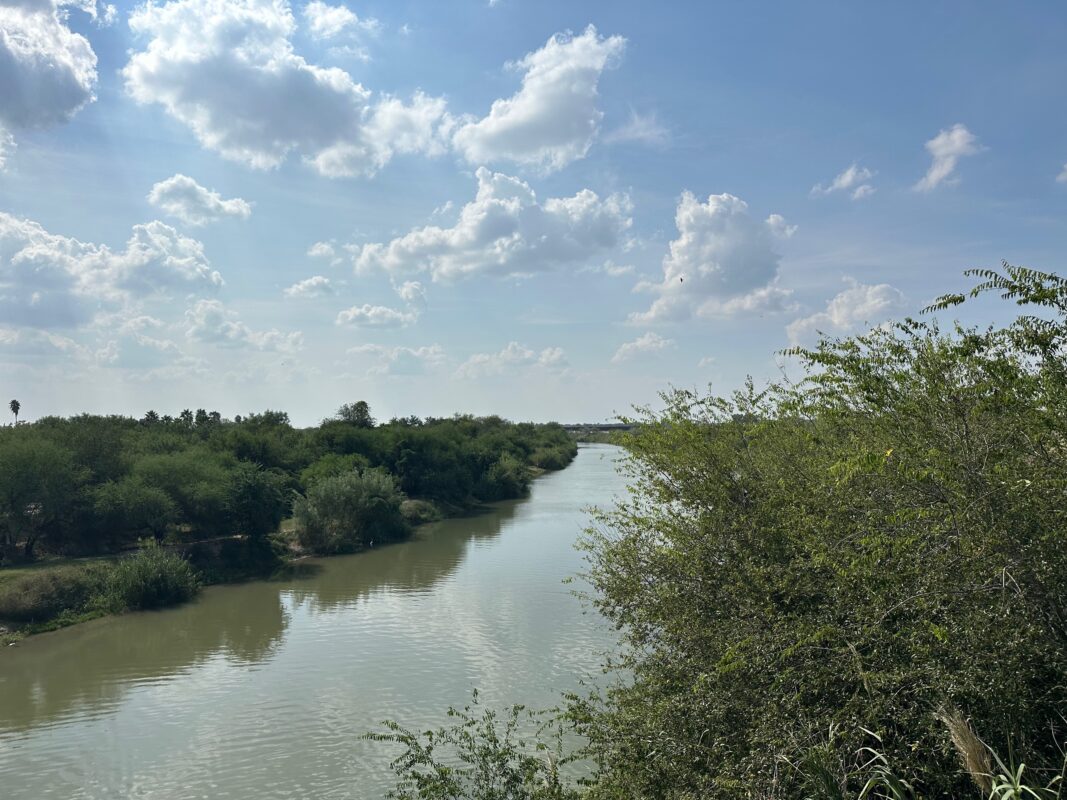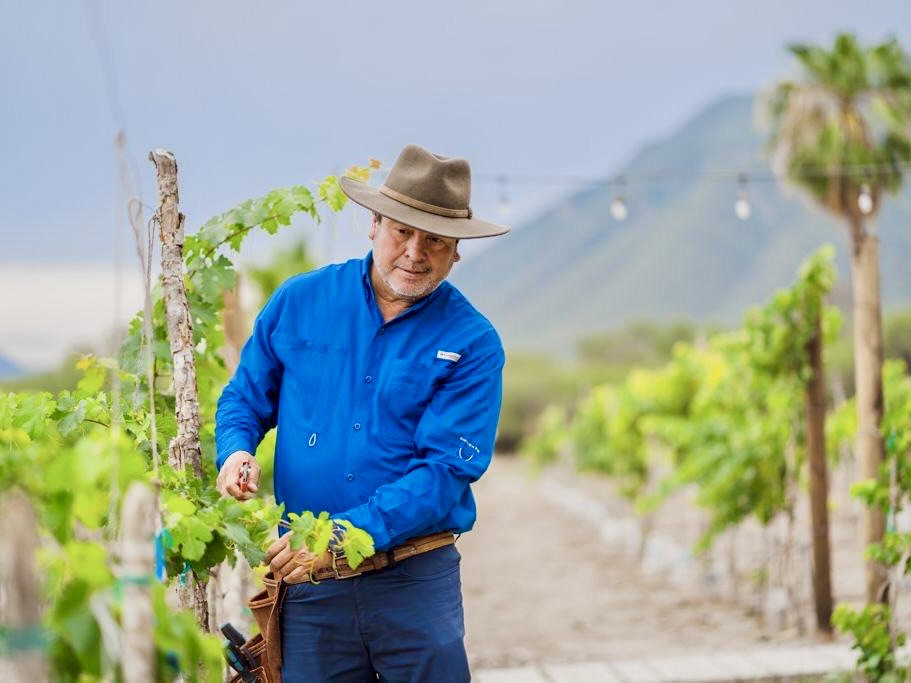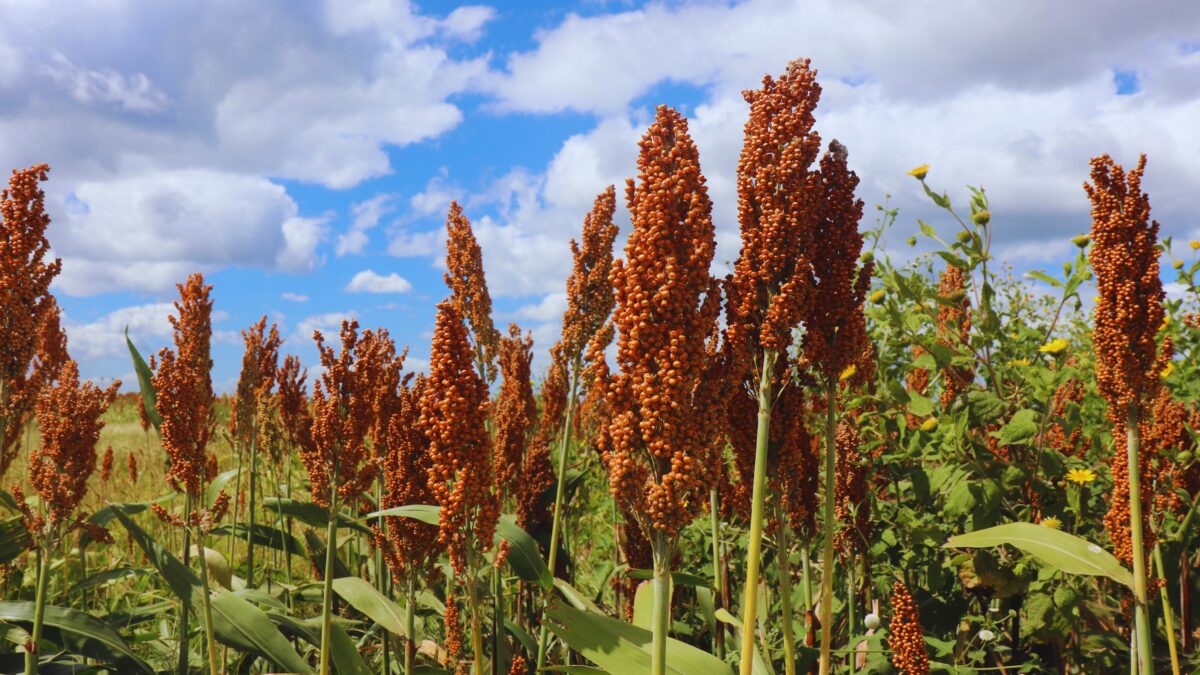
Part 3 series intro: A nearly finished plant in Valle Hermoso, Mexico — less than 40 minutes from Brownsville — was built to turn sorghum into clean fuel and give Tamaulipas farmers the stable market they’ve lost.
Instead, a federal rule that prevents ethanol from entering Mexico’s gasoline supply has left the $15 million project idle.
This final story in our three-part series examines how a stalled clean-energy plant is deepening the grain crisis across the Northern Mexico–South Texas border region.
Read Part 1, which documents falling sorghum prices and the rising costs squeezing the agricultural community.
Read Part 2, which follows a fourth-generation farmer facing the harshest season he’s seen.
The series also connects to our recent reporting on the highway blockades in northern Tamaulipas, which shut down key trade corridors leading to Rio Grande Valley international bridges and underscored how strained the region’s farm sector has become.
Just across the border from the Rio Grande Valley, a sorghum-based ethanol plant in Valle Hermoso, Mexico, was built with a clear purpose: give farmers a stable buyer for their grain and anchor new clean-fuel investment in a region that urgently needs economic lifelines.
But the plant cannot open.
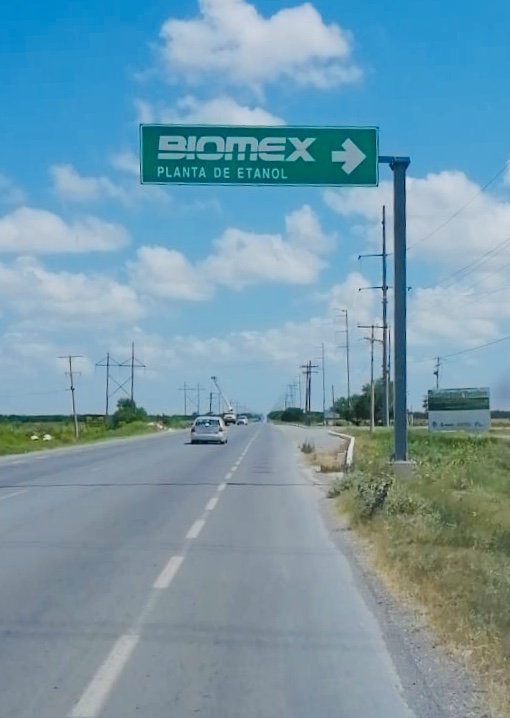
Courtesy of | Biomex
Not because it lacks equipment, financing, or permits — all of those are in place — but because a single national fuel regulation in Mexico still limits how much ethanol can be blended into gasoline.
That cap is set so low that Mexican fuel suppliers cannot use the standard ethanol blend used in the United States, leaving the Valle Hermoso plant with no legal market to sell into.
The facility sits less than 40 minutes from the Brownsville border crossing, in the same region where Mexican sorghum growers have seen prices collapse, water allocations vanish, and federal support programs disappear.
Many farmers viewed the plant as the project that could finally link their crop to a reliable, long-term buyer.
Instead, it stands frozen — a symbol of how federal decisions in Mexico continue to shape economic opportunities along the border.
A rule that shuts out ethanol — and stalls a cross-border industry
The plant’s biggest obstacle is Mexico’s national fuel standard, known as NOM-016. The rule allows gasoline to contain only 5.8% ethanol, far below the 10% blend commonly used in the United States.
For the average consumer, the difference may sound small, but the impact is significant.

A 5.8% limit makes it impractical for Mexican fuel suppliers to use ethanol at all. The limit is so low, that fuel companies can’t make regular gasoline using that small amount of ethanol, so they have to use other, more expensive petroleum additives instead.
That means fuel suppliers in Mexico have no practical way to buy or blend ethanol, even if domestic producers are ready to supply it.
“It is a technical barrier,” said Benito Gabriel López Martínez, a representative of Bioenergéticos Mexicanos (Biomex), the company behind the project. “Until Mexico allows the same blend the United States uses, the ethanol industry cannot move forward.”
Put simply, the Valle Hermoso plant can make ethanol — but Mexico’s own fuel rules prevent it from ever reaching the country’s gasoline supply.
A multimillion-dollar plant built and waiting at the border
What makes the situation more striking is how much investment is already on the ground.
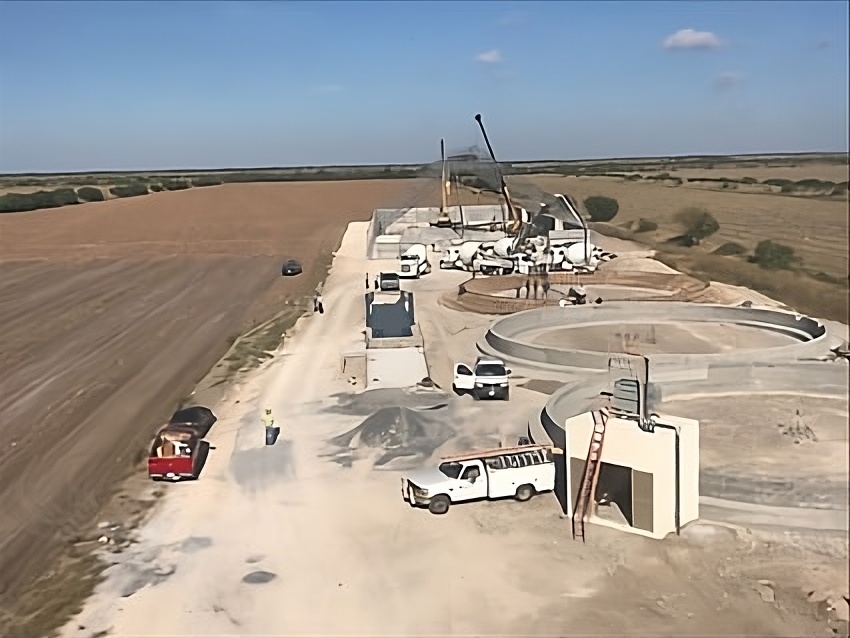
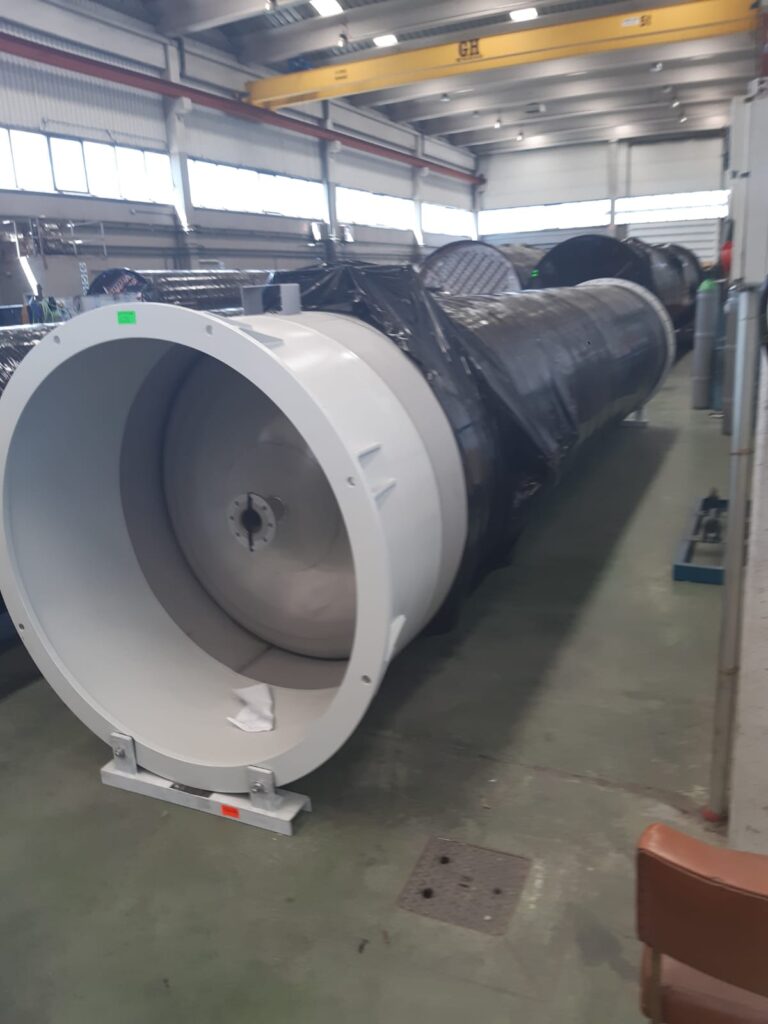
The Valle Hermoso facility is not an idea on paper. Civil works and foundations are complete. Storage structures, water access, natural-gas connections, and high-voltage power lines are already installed on the site.

Courtesy of | Biomex
The plant was designed to produce more than 122 million liters of ethanol per year — roughly 32 million gallons. At standard U.S. fuel-consumption rates, that is enough to power an estimated 64,000 cars for a full year, illustrating the scale of production the facility was built for.
It was also designed to produce distillers’ grains — a common livestock feed — as a co-product of ethanol production.
Company documents show Biomex holds long-term production permits and is in the process of renewing them under Mexico’s updated Biofuels Law. López Martínez said the project could generate 1,500 construction jobs and 600 permanent positions once operational.
“We are ready to…operate,” he said. “The only thing missing is regulatory will.”
The plant’s location — about 36 miles from the Port of Brownsville — offers direct access to U.S. buyers. Mexico, meanwhile, continues importing ethanol that could be produced in Tamaulipas.
Why ethanol matters for sorghum — and for the region
For grain producers in northern Tamaulipas, the ethanol plant represents more than a clean-fuel project. It represents a market that no longer exists.
Sorghum was once the backbone of the region’s agriculture, but prices have dropped nearly 50% since 2021. Many growers have cut planting or abandoned land because there is no reliable buyer, and no federal program has replaced the support lost in recent years.
Ethanol gives sorghum a purpose: it turns grain into fuel. And in areas like Valle Hermoso, Matamoros, Río Bravo, and San Fernando, that would mean steady purchasing, local jobs, and enough economic activity to keep rural towns afloat.
“The plant was not created as a business venture,” Jorge Luis López Martínez, an engineer and president of the National Union of Sorghum Producers in Mexico, said. “It was created to add value to a regional crop. But government decisions have blocked it every step of the way.”
Farmers say ethanol is the only realistic path to rebuild demand for sorghum without subsidies.
Mexico’s energy policy moves in the opposite direction
While the United States, Europe, and much of Latin America rely on ethanol as a cleaner, renewable gasoline additive, Mexico still depends heavily on MTBE, a petroleum-based compound that the U.S. Environmental Protection Agency links to groundwater contamination.
Developers argue that Mexico’s continued reliance on MTBE — despite global trends moving away from it — keeps the country out of step with international clean-fuel standards and cuts rural regions out of an energy transition already underway across North America.
“It makes no sense for Mexico to import ethanol while blocking ethanol that could be produced here,” López Martínez said.
A binational opportunity on hold
Courtesy of | Biomex
Because of its location between Valle Hermoso, Matamoros, and the Rio Grande Valley, the plant was designed to serve two markets:
Mexico, if NOM-016 were updated to allow ethanol blending at the same level used by its North American trade partners, and the U.S., where ethanol and livestock-feed co-products have strong demand.
But without a change to Mexico’s federal rule, the plant cannot sign supply contracts, secure financing, or open its doors.
“We’re not asking for subsidies,” López Martínez said. “We want clear rules. If NOM-016 is corrected, the ethanol industry can finally move forward.”
The bottom line
The Valle Hermoso ethanol plant — built in Mexico but tied economically to the Rio Grande Valley — was meant to connect farmers, clean-fuel production, and cross-border trade.
Instead, it sits idle.
Not because of market conditions.
Not because of financing.
But because one federal rule prevents Mexican gasoline suppliers from using the product it was built to make.
And as sorghum farmers on both sides of the border endure their steepest downturn in decades, the future of the project — and the jobs and stability it promised — remains uncertain.

Anayancy Ulloa
Reporter
Anayancy Ulloa Luna is a contributor to the Rio Grande Valley Business Journal who hails from Reynosa in the Mexican state of Tamaulipas. Ulloa has a long history as a U.S.-Mexico region business expert in marketing, formerly the editorial director of Mexico Industry.
Most Read
- SpaceX’s futuristic city of Starbase finalizes massive 7,100-acre annexation. Here’s what we know.
- 25 Mexican businesses eye McAllen expansion after city pitches U.S. market entry program
- Australian company plans to build a $607M lithium refinery at the Port of Brownsville. It’s a big bet on America’s battery future
- Starbase cancels meeting to consider annexing 444 acres relinquished by Brownsville
- SpaceX reschedules Starship’s first flight around the Earth
Get the latest business news delivered to your inbox every morning for free.
Try 30 Days Free!
Get full access to award-winning journalism covering business, real estate, health care, economic trends, and the people shaping the Rio Grande Valley.
30 Days Free!
$9.95/month
Limited time offer
Subscription renews after your 30 day free trial at $9.95/mo.
Included Benefits
- Unlimited access to all articles
- Daily business news and analysis
- Subscriber-only content and features
Stories That Matter
- Dickey’s Barbecue Pit to open new McAllen location inside Cambria Hotel
- NADBank opens $300M financing pipeline for water, energy projects along the border
- Is SpaceX quietly building a data center at Starbase? Job postings offer clues
- Engineering firm Garver opens $5M Harlingen office, plans up to 50 new jobs
- Mission’s first Small Business Expo puts $25K on the line for local entrepreneurs
- McCoy’s gives $10K, tools to launch Mid-Valley construction academy
- UT Health RGV performs new digestive procedure for first time in the Valley
- TSTC bets on advanced manufacturing to meet RGV’s industrial boom
- Pharr’s cross-border business push earns international recognition
- Brownsville eases drought restrictions after nearly three years as Rio Grande reservoir levels improve