The detection of Mexican fruit flies in two places in the Rio Grande Valley last month prompted quarantines for over 1,000 acres of South Texas commercial citrus orchards.
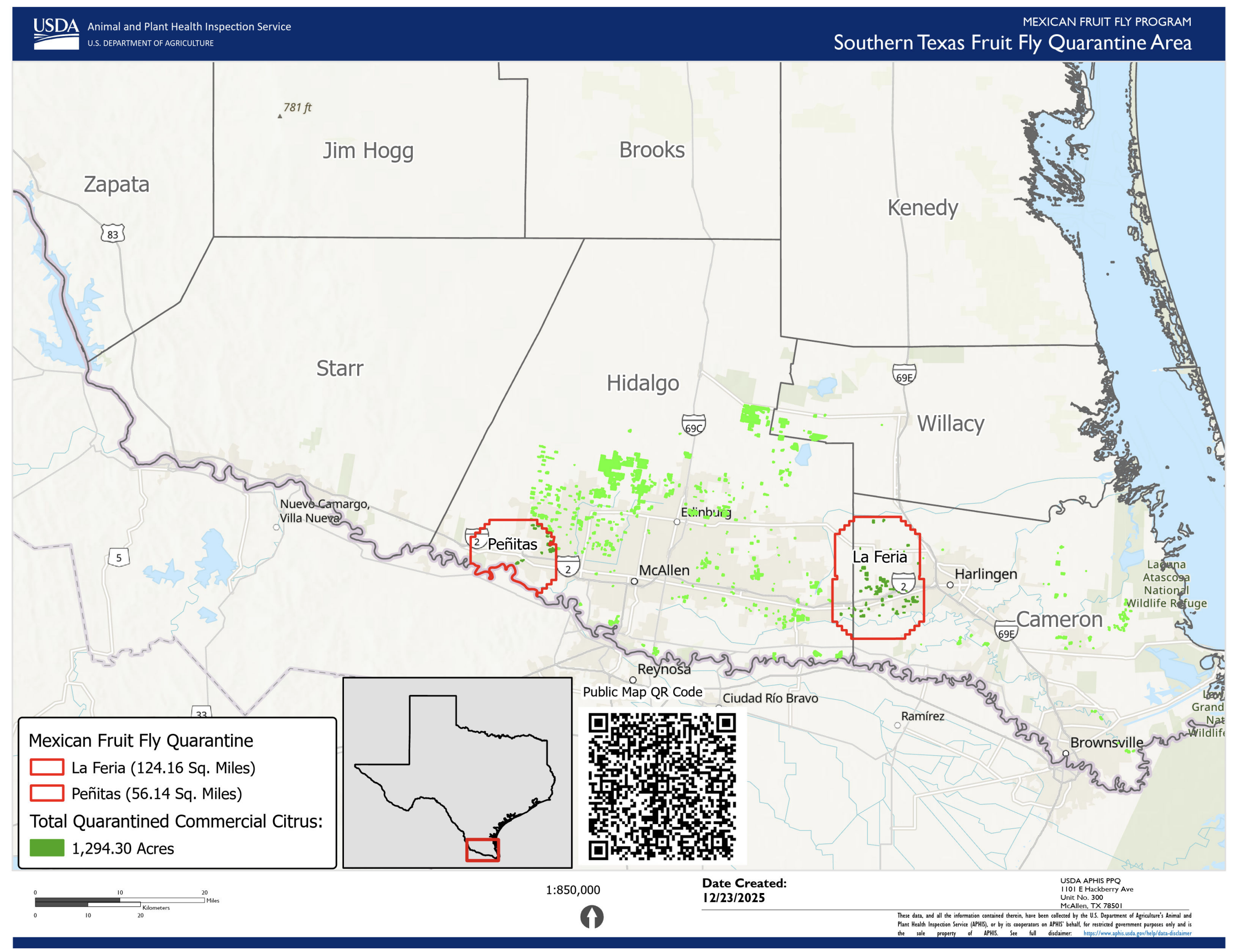
The U.S. Department of Agriculture’s Animal Plant Health Inspection Service and the Texas Department of Agriculture established a quarantine in La Feria after the detection of one Mexican fruit fly larva in a grapefruit collected in a commercial grove there on Dec. 3.
The detection of another larva in sour orange collected on a residential property in Peñitas triggered another quarantine zone there.
The Peñitas quarantine now encompasses about 53.2 square miles that contain almost 224 acres of commercial citrus, while the La Feria quarantine encompasses about 124.2 square miles and almost 971 acres of commercial citrus.
First detected along the U.S.-Mexico border in the early 1950s, Mexican fruit fly — commonly called “Mexfly” — has spurred quarantines in South Texas for decades.
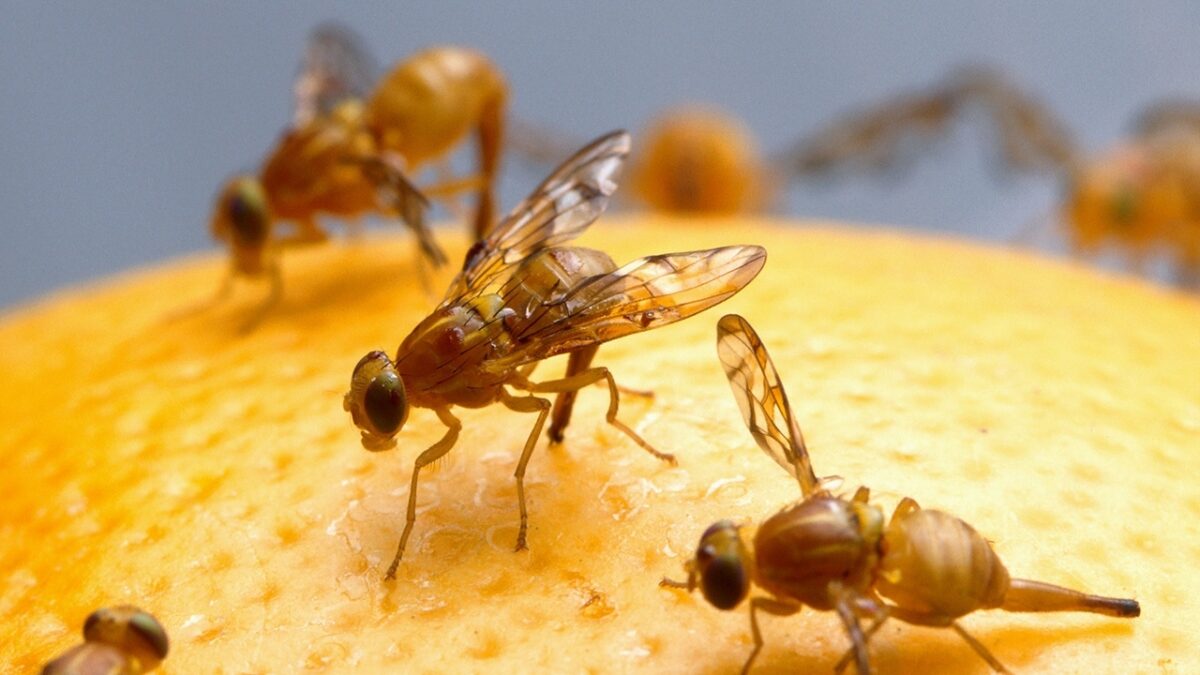
Female fruit flies lay eggs in ripening fruit that hatch into larvae and eat citrus, causing it to rot.
The USDA has estimated the five-year economic impact of an established Mexfly population at $1.44 billion.
Local citrus industry leaders have described commercial efforts to mitigate infestations as thorough and effective, but say residential plants pose a risk.
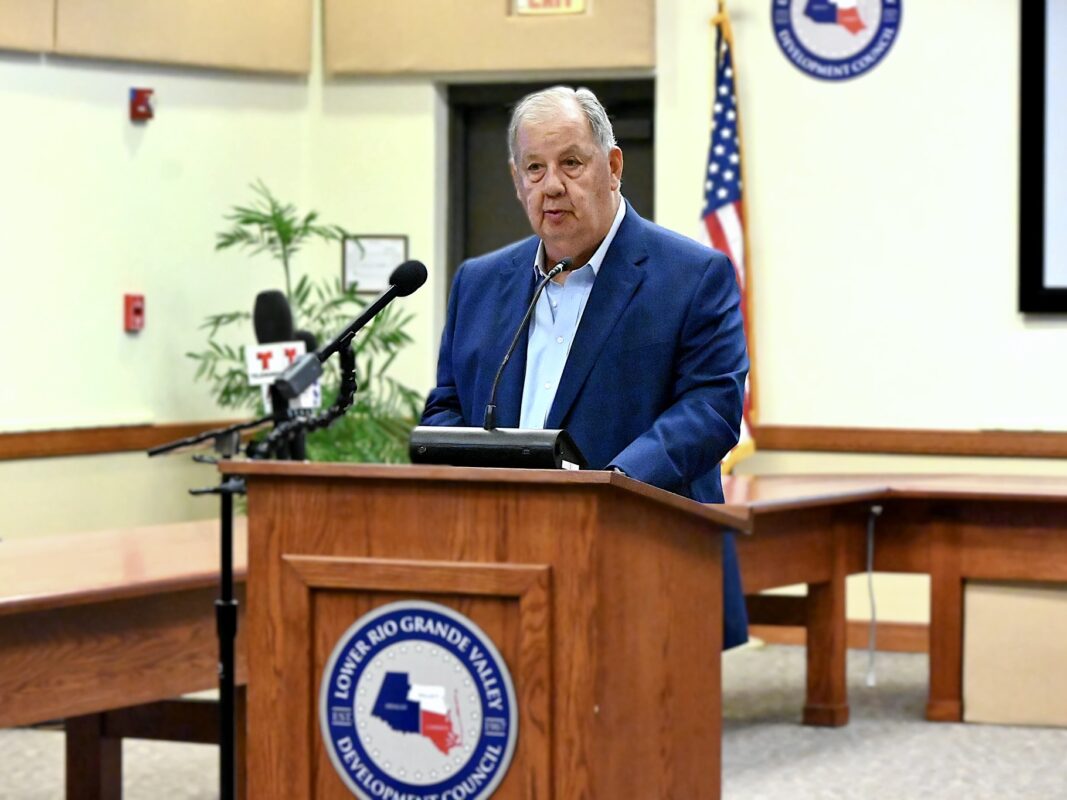
“Dooryard properties left untreated continue to be a problem for the commercial industry,” Dale Murden, Texas Citrus Mutual President, said.
According to the USDA, citrus in quarantine areas should be removed as soon as possible as it ripens and shouldn’t be left lying on the ground.
That fruit shouldn’t be moved or mailed from residential citrus trees in the quarantine area, and unused fruit should be double-bagged and disposed of in the trash, though never composted.
Citrus in a quarantine zone can be consumed or processed at the property of origin.
Murden said he expects Mexfly to continue posing an added financial burden to Valley growers, a burden that’s increasingly the norm.
“Unfortunately, it’s not new,” he said. “We seem to have one somewhere every year now. Growers are now doing bait sprays year-round, adding several hundred dollars an acre to already expensive grove care costs.”
Joe Metz farms 65 acres of the groves in the Peñitas quarantine.
Metz was just about done harvesting when the government announced the quarantine. He’s had to leave part of his crop unharvested for the better part of a month, a delay Metz took in stride.
“Nothing goes smooth all the time,” he chuckled.
It’s Metz’s first quarantine, but he says other than the delay, he expects the impact on his crop to be nonexistent. He doesn’t anticipate spraying requirements to cost him any more money.
“It’s gonna cost me the same amount of money as if I’d just kept spraying,” he said. “So that’s just part of it.”
Metz anticipated being allowed to finish harvesting this week.
Earlier in 2025, shifting quarantine zones in South Texas spanned three counties and encompassed over 800 square miles of land.
Though not all of that land included commercial citrus, thousands of acres of it did.
Authorities announced the removal of the last of those quarantines on Dec. 2, the day before detecting the larva that began new quarantines.

Matt Wilson
Reporter
Most Read
- SpaceX is giving Brownsville $220M for water projects. In exchange, the city gave up zoning control of 444 acres near Starbase
- SpaceX seeks to take zoning control over nearly 450 acres from city of Brownsville as a ‘regional’ water deal takes shape
- Port of Brownsville could soon host Nodule City, a first-of-its-kind commercial deep-sea mining hub
- Cameron County is negotiating a $20M Fluidstack data center donation after Harlingen waffles on the same offer
- How much water does SpaceX need to operate near Brownsville? Nearly 20x its current use
Get the latest business news delivered to your inbox every morning for free.
Try 30 Days Free!
Get full access to award-winning journalism covering business, real estate, health care, economic trends, and the people shaping the Rio Grande Valley.
30 Days Free!
$9.95/month
Limited time offer
Subscription renews after your 30 day free trial at $9.95/mo.
Included Benefits
- Unlimited access to all articles
- Daily business news and analysis
- Subscriber-only content and features
Stories That Matter
- McAllen’s $204M water investment expects to seek construction bids in 2027
- Saronic lands Navy landing craft contract, first build at Brownsville’s Port Alpha
- The Rio Grande Valley’s tech industry is small but growing — meet some of the next-gen workforce
- Entrepreneurs enter Mission EDC’s ‘Shark Tank’ competition for $25K top prize
- Mission’s first Small Business Expo puts $25K on the line for local entrepreneurs
- Reynosa’s newest technical high school focuses on AI, semiconductors and bionics
- McCoy’s gives $10K, tools to launch Mid-Valley construction academy
- UT Health RGV performs new digestive procedure for first time in the Valley
- TSTC bets on advanced manufacturing to meet RGV’s industrial boom
- SpaceX reschedules Starship’s first flight around the Earth