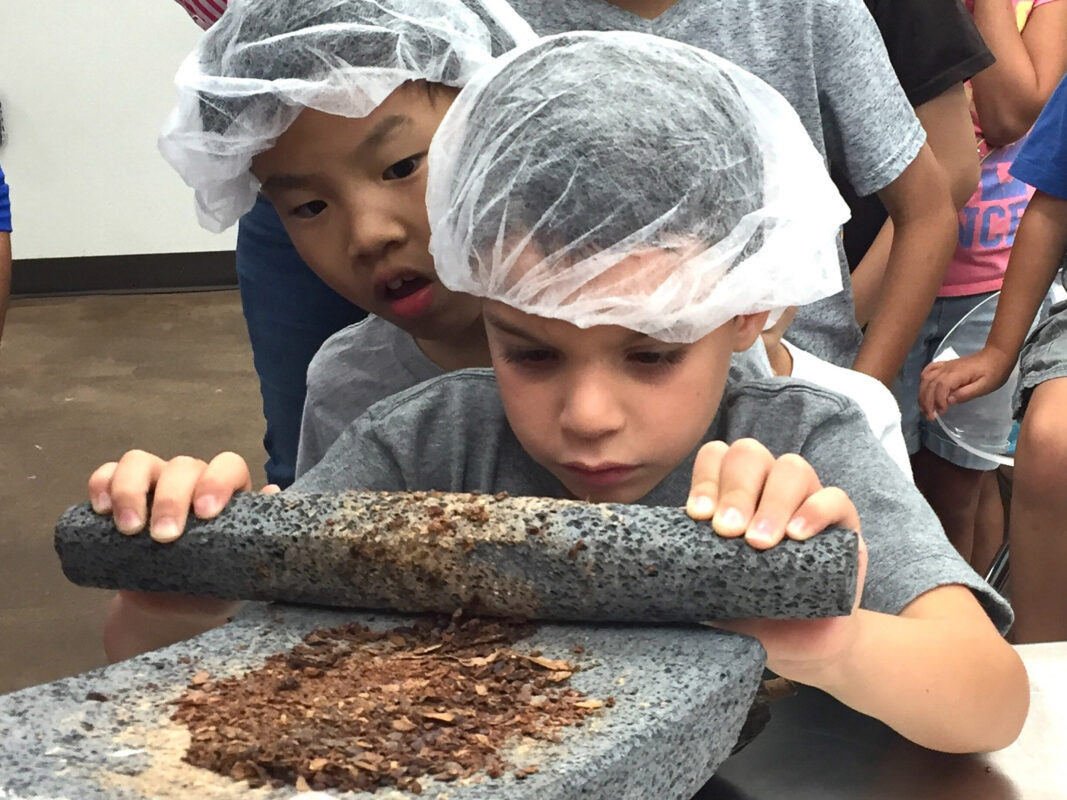
Visitors to Mozna Chocolate don’t just watch chocolate being made — they make it themselves.
At the Hidalgo-based bean-to-bar chocolate factory, guided tours take guests through each stage of production, from roasting and grinding to tempering and molding cacao sourced from around the world. The experience ends with visitors creating, packaging, and taking home their own custom chocolate bars.
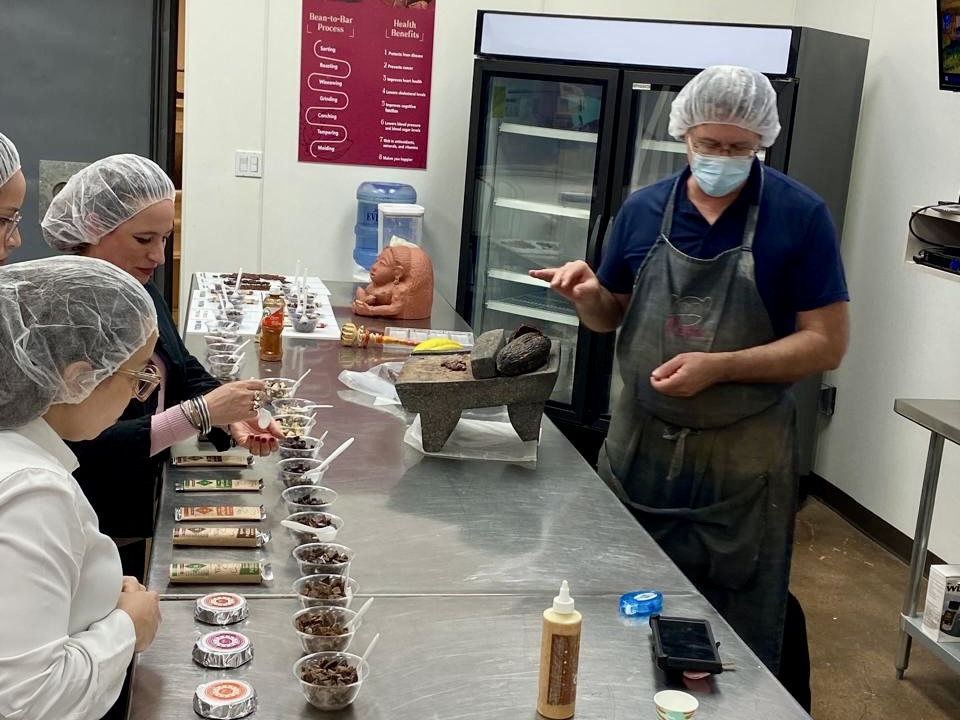
Photo Credit | Anayancy Ulloa
“This is the moment when everyone decides what kind of chocolate they want. You choose it, you create it,” said María Luisa, a member of the production team.
Behind the hands-on experience is a specialty food manufacturer founded in 2015 by Anthony Matulewicz and a business partner, built around producing dark chocolate that highlights the natural flavor of cacao without added sugar, preservatives, or oils.
“Our goal is to respect the real flavor of cacao, which varies depending on the country it comes from. Each origin has its own unique touch. We don’t add sugar; the sweetness comes from the topping,” explained Daniel Williams, part of the production team, during a guided tour.
Mozna produces 70% cacao chocolate bars using beans sourced directly from farmers in Mexico, Colombia, Venezuela, Tanzania, India, and Vietnam, combining global sourcing with local, fully artisanal production in Hidalgo.
Global sourcing, local production
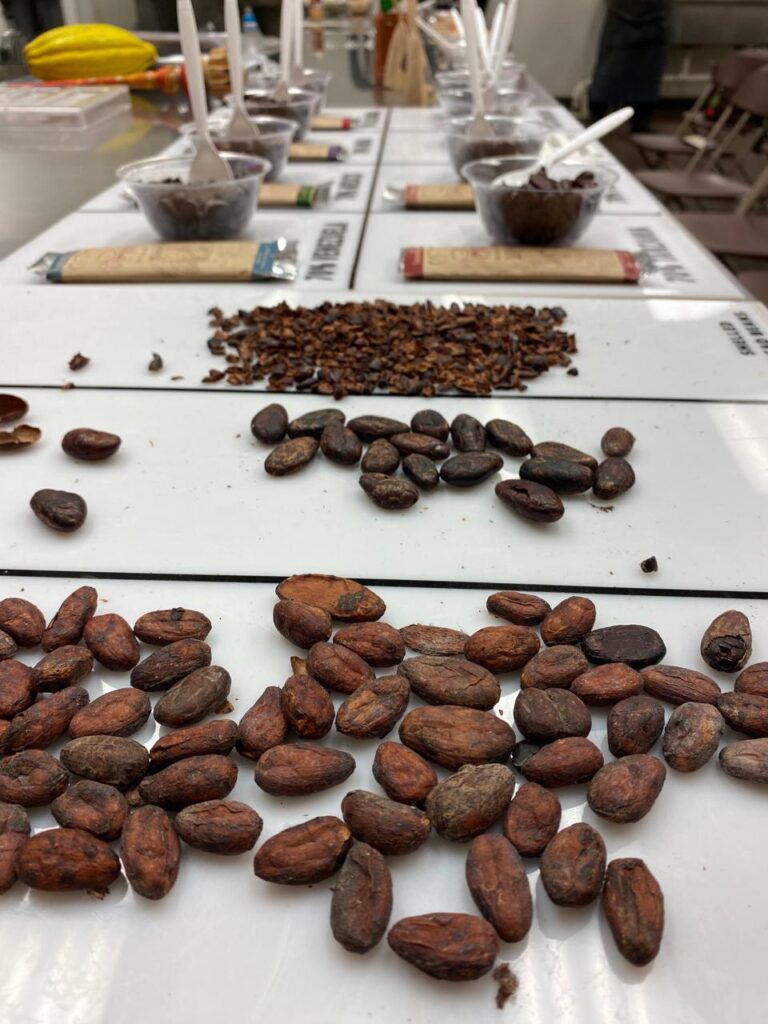
Photo Credit | Anayancy Ulloa
Mozna sources cacao directly from farmers in each country, resulting in chocolate bars with distinct flavor profiles tied to origin.
“Each region has its own character, aroma, and history,” Williams said.
The production process remains fully artisanal. Cacao beans are roasted at temperatures between 200 and 280 degrees before being ground in a stone mill — one of the factory’s most prized pieces of equipment for its age and craftsmanship. The chocolate is then transferred to a tempering machine that maintains ideal temperatures, producing the smooth texture and shine associated with high-quality chocolate.
Among Mozna’s most popular bars are those topped with coconut, pecans, peanuts, almonds, pumpkin seeds, oats, and amaranth. One of the company’s unexpected bestsellers blends dark chocolate with Tajín chili powder.
Expanding product lines
In addition to its signature sugar-free bars, Mozna produces keto protein bars aimed at consumers seeking lower-carb options. These bars are made without oils, salt, or added sweeteners.
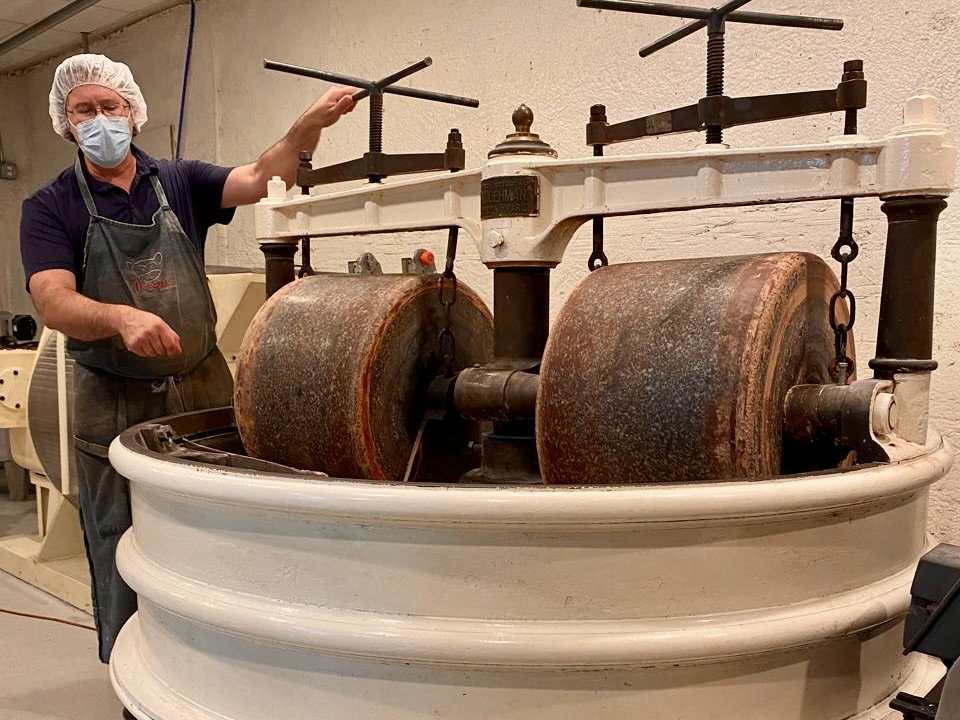
Photo Credit | Anayancy Ulloa
“From the beginning of production to packaging, I can make around 80 bars a day; it’s an elaborate process,” Williams said. Bars with toppings allow production to increase to about 200 pieces per day.
Mozna also produces traditional Mexican-style chocolate tablets designed for hot beverages. The tablets dissolve in water or milk to create a thick, aromatic drink and are offered in almond, cinnamon, and orange flavors.
Custom chocolate designs have become another part of the business, ranging from corporate gifts to themed products for special occasions.
“We can make anything the customer asks for,” María Luisa said while presenting holiday-themed chocolates, including Santa-shaped figures packaged in ornament-style containers.
From manufacturing to experience
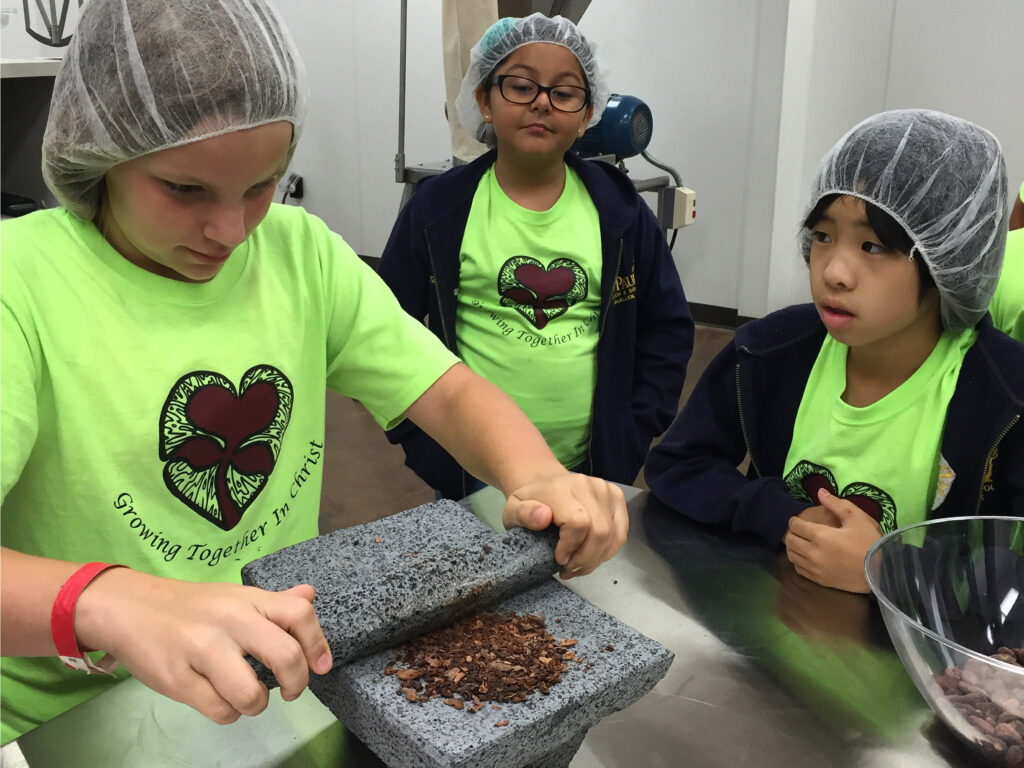
Mozna’s guided tours allow visitors to see, smell, and experience each step of the chocolate-making process. Guests observe roasting, grinding, tempering, and molding before selecting molds and toppings to create their own bars.
Courtesy of | Monza Chocolate
After about 20 minutes of refrigeration, visitors unmold and package their finished chocolate.
“From bean to bar — and made with your own hands,” Williams said.
Mozna sells directly to the public and distributes its products through local markets while continuing to expand its catalog of personalized items, health-focused products, and hands-on experiences.
The factory has increasingly attracted tourists, school groups, and local residents, adding a small-scale manufacturing and culinary tourism draw to Hidalgo as the company continues to refine its artisanal business model.

Anayancy Ulloa
Reporter
Most Read
- SpaceX is giving Brownsville $220M for water projects. In exchange, the city gave up zoning control of 444 acres near Starbase
- SpaceX seeks to take zoning control over nearly 450 acres from city of Brownsville as a ‘regional’ water deal takes shape
- Port of Brownsville could soon host Nodule City, a first-of-its-kind commercial deep-sea mining hub
- How much water does SpaceX need to operate near Brownsville? Nearly 20x its current use
- Cameron County is negotiating a $20M Fluidstack data center donation after Harlingen waffles on the same offer
Get the latest business news delivered to your inbox every morning for free.
Try 30 Days Free!
Get full access to award-winning journalism covering business, real estate, health care, economic trends, and the people shaping the Rio Grande Valley.
30 Days Free!
$9.95/month
Limited time offer
Subscription renews after your 30 day free trial at $9.95/mo.
Included Benefits
- Unlimited access to all articles
- Daily business news and analysis
- Subscriber-only content and features
Stories That Matter
- 5 things to know about manufacturing along the South Texas-Mexico border
- Mission’s first Small Business Expo puts $25K on the line for local entrepreneurs
- Reynosa’s newest technical high school focuses on AI, semiconductors and bionics
- McCoy’s gives $10K, tools to launch Mid-Valley construction academy
- UT Health RGV performs new digestive procedure for first time in the Valley
- TSTC bets on advanced manufacturing to meet RGV’s industrial boom
- Pharr’s cross-border business push earns international recognition
- Brownsville eases drought restrictions after nearly three years as Rio Grande reservoir levels improve
- Texas A&M’s $53.5M McAllen research center will tackle water, food security and Valley health
- McAllen’s $204M water investment expects to seek construction bids in 2027