Buying and selling property across the U.S.–Mexico border is no longer just about relationships or access to capital. Industry leaders say success increasingly depends on training, ethics, and following the rules in both countries.
The shift does not reflect new laws, but stricter adherence to existing regulations as cross-border transactions grow more complex and receive greater scrutiny from lenders, attorneys, and licensed real estate professionals.
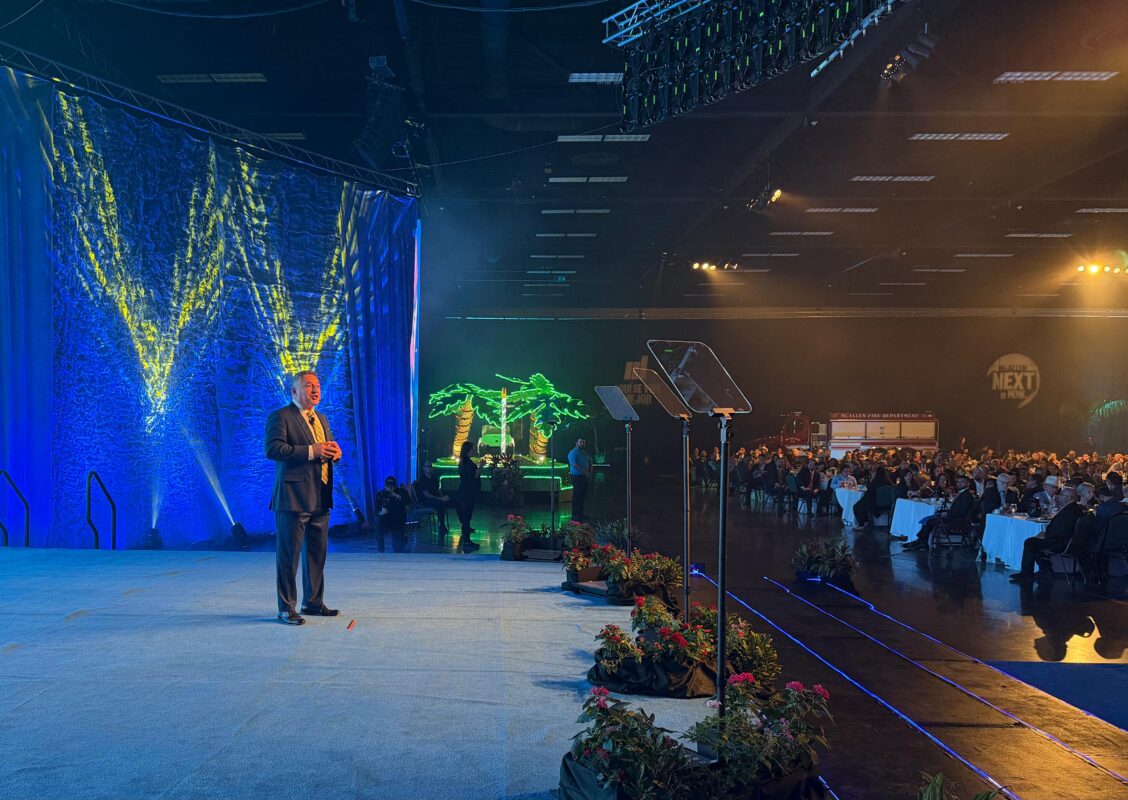
That message was reinforced during a recent forum hosted by the Mexican Association of Real Estate Professionals, known in Spanish by its acronym AMPI, in Reynosa, where real estate professionals discussed how cross-border transactions are becoming more structured as investment between the bordering countries continues to grow.

“We share the code of ethics and the way of doing international business with certified professionals,” said Esteban Flores, a realtor with more than two decades of experience and director of Effective Real Estate, a brokerage that operates in South Padre Island and McAllen.
Flores said collaboration between AMPI and the National Association of Realtors has allowed professionals on both sides of the border to share education, methods, and ethical standards, giving buyers and investors clearer expectations when deals involve two different legal systems.
What agents can and can’t do across the border
One of the most common sources of confusion in cross-border real estate, Flores said, involves licensing and legal authority.
Mexican real estate agents may participate in Texas transactions through referral agreements with licensed realtors and may share commissions. However, they cannot operate directly in the U.S. without a license or an established company.
That structure helps keep transactions legal and organized, particularly for investors who may be unfamiliar with U.S. real estate rules.
Flores said a realtor’s role in cross-border deals often goes beyond finding property. Agents help guide clients through the process and connect them with attorneys, lenders, builders, and property managers so transactions are handled correctly from start to finish.
Why training matters more now
The growing emphasis on education is supported by research from Sabino Franco Reyes, vice president of the AMPI Reynosa Chapter.

In his study, “Continuous Training and Education as a Key Factor for the Professionalization of the Real Estate Sector in Mexico (2020–2030),” Franco found that trained agents are better equipped to manage paperwork, timelines, and coordination among all parties involved in a transaction.
The study frames training as a long-term shift in how Mexico’s real estate sector operates, particularly as cross-border activity increases.
Without training or a clear process, the study found, transactions are more likely to face delays, mistakes, and disputes — problems that become more common when deals cross national borders.
Trade and nearshoring continue to drive demand
Flores said cross-border trade, logistics, tourism, and nearshoring remain key drivers of real estate activity tied to warehouses, industrial space, and related development in border regions and major markets.
At the same time, he said real estate moves in cycles.
Housing inventory that was once tight has increased, and industrial developments are adjusting as supply and demand shift.
“It’s important to understand how asset classes move,” he said. “Many say that retail follows rooftops.”
Flores said the message for both new and experienced professionals is straightforward: preparation and discipline matter.
“It’s not a get-rich-quick business,” he said. “You have to know how to manage yourself emotionally and financially.”

Anayancy Ulloa
Reporter
Most Read
- SpaceX is giving Brownsville $220M for water projects. In exchange, the city gave up zoning control of 444 acres near Starbase
- SpaceX seeks to take zoning control over nearly 450 acres from city of Brownsville as a ‘regional’ water deal takes shape
- Port of Brownsville could soon host Nodule City, a first-of-its-kind commercial deep-sea mining hub
- Cameron County is negotiating a $20M Fluidstack data center donation after Harlingen waffles on the same offer
- How much water does SpaceX need to operate near Brownsville? Nearly 20x its current use
Get the latest business news delivered to your inbox every morning for free.
Try 30 Days Free!
Get full access to award-winning journalism covering business, real estate, health care, economic trends, and the people shaping the Rio Grande Valley.
30 Days Free!
$9.95/month
Limited time offer
Subscription renews after your 30 day free trial at $9.95/mo.
Included Benefits
- Unlimited access to all articles
- Daily business news and analysis
- Subscriber-only content and features
Stories That Matter
- McAllen’s $204M water investment expects to seek construction bids in 2027
- Saronic lands Navy landing craft contract, first build at Brownsville’s Port Alpha
- The Rio Grande Valley’s tech industry is small but growing — meet some of the next-gen workforce
- Entrepreneurs enter Mission EDC’s ‘Shark Tank’ competition for $25K top prize
- Mission’s first Small Business Expo puts $25K on the line for local entrepreneurs
- Reynosa’s newest technical high school focuses on AI, semiconductors and bionics
- McCoy’s gives $10K, tools to launch Mid-Valley construction academy
- UT Health RGV performs new digestive procedure for first time in the Valley
- TSTC bets on advanced manufacturing to meet RGV’s industrial boom
- SpaceX reschedules Starship’s first flight around the Earth