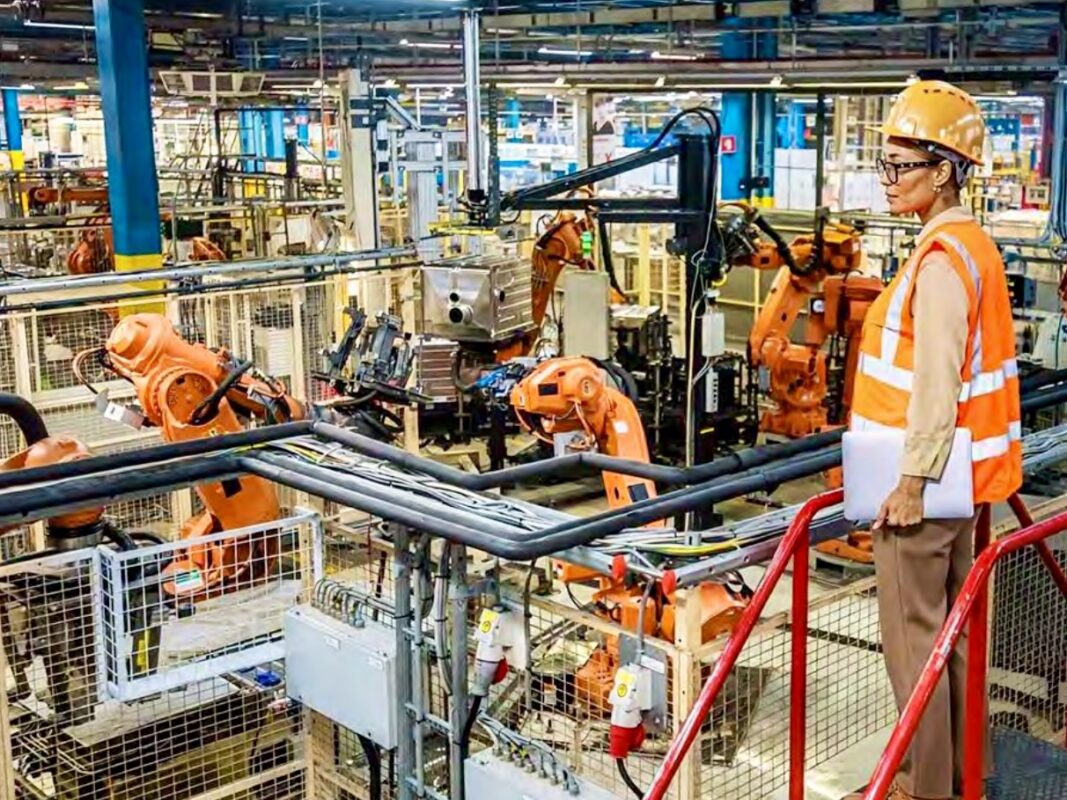
Una empresa manufacturera de Reynosa está utilizando inteligencia artificial para fabricar los equipos que alimentan y refrigeran los enormes centros de datos necesarios para el funcionamiento de la IA.
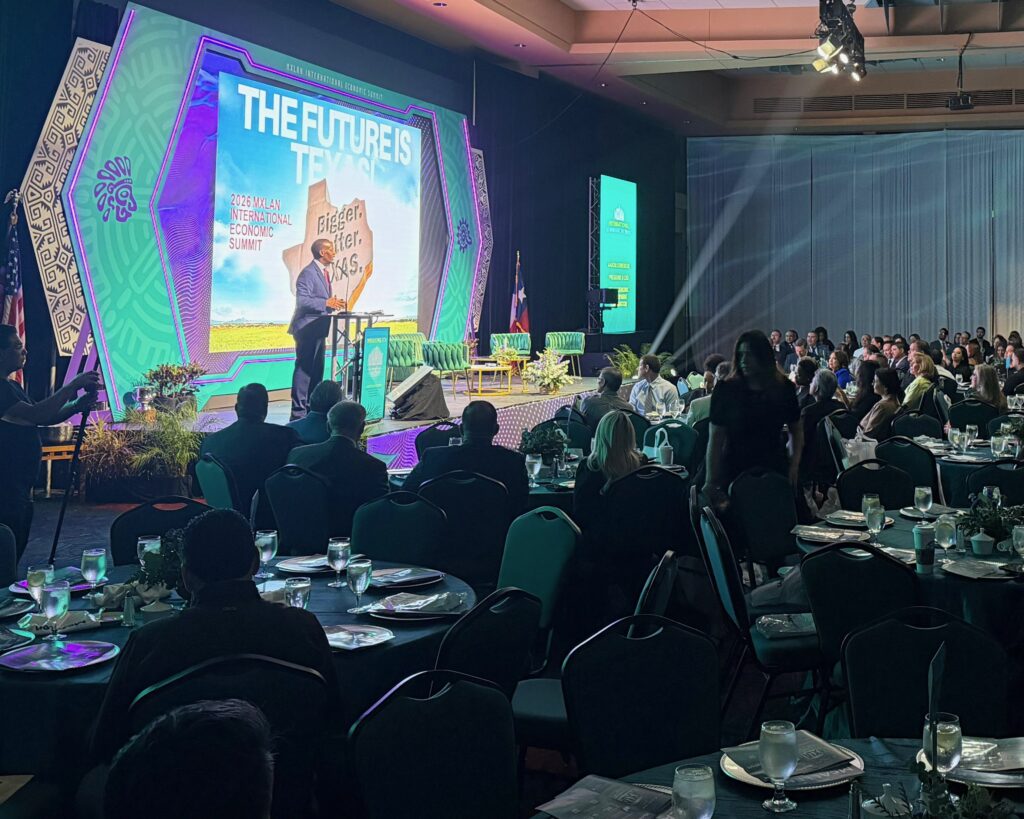
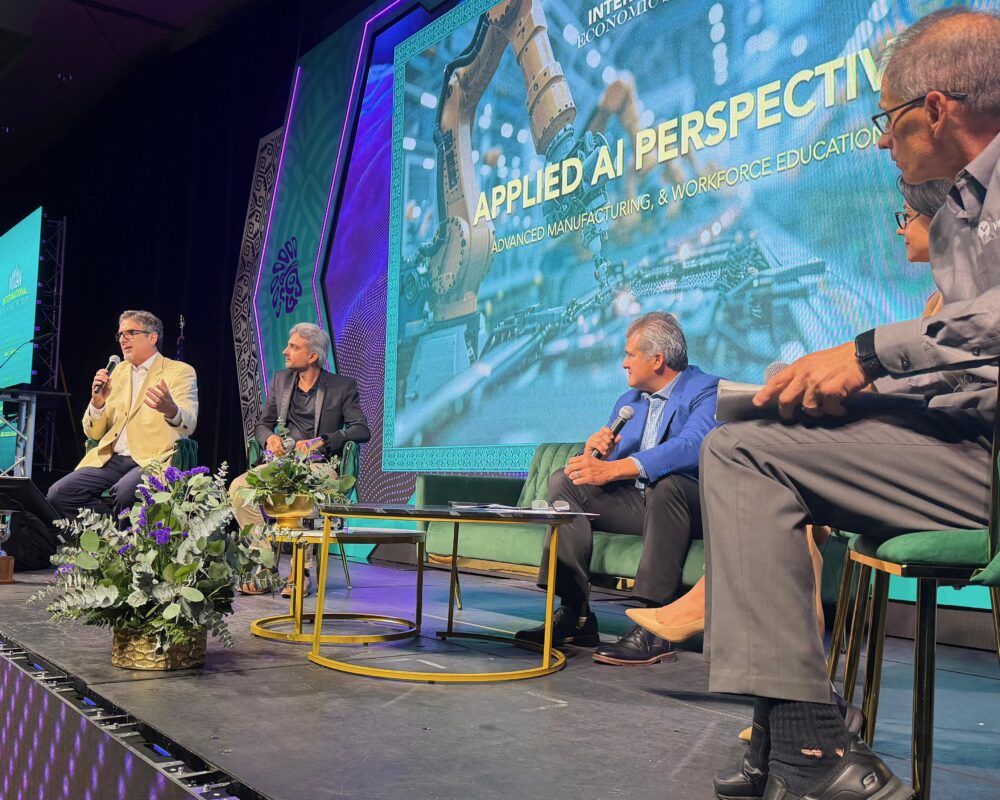
foto | Kristen Mosbrucker-Garza
Es solo un ejemplo de cómo las empresas de toda la región binacional están aprovechando cada vez más esta tecnología, según afirmaron el viernes los ejecutivos de las empresas durante la Cumbre Económica MXLAN celebrada en McAllen.
Vertiv, una maquiladora de Reynosa que fabrica equipos de alimentación y refrigeración para centros de datos, utiliza la inteligencia artificial para reducir los errores en los procesos manuales, según explicó Patrick Cerroni, gerente general y de planta de Vertiv.
En algunos casos, los humanos trabajan junto a los robots, dijo.
“Contamos con muchos operadores que realizan ensamblaje manual, por lo que utilizamos inteligencia artificial para medir cómo un operador coloca un tornillo. ¿Están utilizando los ángulos correctos?”, dijo Cerroni. “Utilizamos muchos robots y cobots que realmente prueban las unidades. Te dirán si hay algún problema con la unidad y dónde está el problema.”
Y la rapidez es cada vez más importante para fabricantes como Vertiv, que suministran equipos para centros de datos a gran escala.
La empresa ha observado un aumento en la demanda de sus componentes electrónicos, entre los que se incluyen sistemas de alimentación ininterrumpida, tecnología de gestión térmica o de enfriamiento, y otras herramientas clave para la infraestructura crítica que mantienen en funcionamiento a los centros de datos.
“Nuestros principales clientes son todas las empresas de hiperescala, es decir, quienes están desarrollando la inteligencia artificial”, dijo Cerroni. “Nuestra planta genera calor. El centro de datos se calienta mucho, por lo que necesitan enfriarlo.”
La empresa también fabrica productos que se encargan de toda la energía eléctrica de los centros.
«Estamos observando un crecimiento significativo», dijo el general y gerente de planta.
Alps Alpine, otro fabricante con sede en Reynosa y operaciones en McAllen, utiliza inteligencia artificial para acelerar la producción y reducir las tareas administrativas de los empleados. La empresa fabrica sensores, interruptores, dispositivos de comunicación inalámbrica, semiconductores y dispositivos de control múltiple.
“Lo que hemos descubierto con la IA es que se encarga de gran parte de las tareas rutinarias: revisa las listas de materiales, proporciona los planos, genera impresiones automáticas y agiliza mucho la implementación de los procedimientos estándar en toda la planta”, afirmó Bob Anderson, vicepresidente de la cadena de suministro de Alps Alpine, durante la cumbre.
En el sector de la salud, otra industria importante del Valle, se ha producido un cambio hacia el uso de la inteligencia artificial para tareas rutinarias, con el fin de permitir que los trabajadores se concentren en la experiencia del paciente; sin embargo, esto se ha dado principalmente en el ámbito administrativo de la empresa.
“Aunque hay mucho revuelo en torno a la inteligencia artificial y lo que es capaz de hacer, todavía no la vemos mucho en el ámbito clínico”, dijo la Dra. Maya Yiadom, médica de urgencias y profesora asociada de la Universidad de Stanford. «Gran parte de los avances que hemos logrado se han dado en las operaciones de apoyo, además de en las mejoras administrativas».

foto | Kristen Mosbrucker-Garza
Por ejemplo, los hospitales están utilizando la inteligencia artificial para estimar las horas del día de mayor afluencia en la sala de emergencias y están organizando el personal del centro para hacer frente a posibles picos de demanda.
“De esa manera, cuando vengas a nuestro servicio de urgencias, no tendrás que esperar mucho tiempo y no tendrás que preocuparte por si hay suficientes recursos para que puedas recibir la atención que necesitas”, dijo Yiadom.
Esa cautela es común en el sector, afirmó Lance Ames, director ejecutivo de South Texas Health System Edinburg.
“Antes de delegar toda nuestra atención a pie de cama a robots o algoritmos, queremos asegurarnos de que sea seguro”, dijo Ames. “En realidad, se utiliza como una herramienta para apoyar a nuestros profesionales de la salud a pie de cama”.
South Texas Health System anuncia en vallas publicitarias de todo el Valle el tiempo promedio de espera en la sala de emergencias.
«Por lo general, tarda menos de cinco minutos, y lo sé porque hemos podido utilizar herramientas que ayudan a que nuestros procesos sean más fluidos, lo cual es un beneficio para todos».
El sistema hospitalario también utiliza la inteligencia artificial para verificar y alertar a los profesionales de la salud cuando se recetan varios medicamentos a los pacientes, lo que les permite estar al tanto de cualquier posible interacción entre medicamentos.
“Contamos con notificaciones y alertas automáticas que aparecen en el sistema médico electrónico para que los médicos, el equipo de enfermería y todos puedan verlas”, dijo Ames.
En las próximas semanas, está previsto que se implemente un agente de IA de Humanate en un consultorio médico de Weslaco. El director general de la startup, Carlos Rodríguez, explica que su agente de IA se utiliza para contactar a los pacientes con el fin de recabar su historial médico o para mantener conversaciones sobre procedimientos de rutina.
“Cuando se nos ocurrió esta tecnología por primera vez, nos preocupaba la población de la tercera edad. A la gente mayor le encanta; el hecho de que puedan hablar contigo y que veas al avatar; ella habla 100 idiomas y lee tu expresión facial”, dijo Rodríguez sobre el agente de inteligencia artificial que se utilizará en la recepción para registrar a los pacientes. «Si estás confundido, ella puede hacerte preguntas. Está cambiando la forma en que se atiende a los pacientes».

Kristen Mosbrucker-Garza
Reportero
Kristen Mosbrucker-Garza es una versátil reportera multimedia que vive y trabaja en la frontera entre Texas y México, en el condado de Hidalgo. Mosbrucker-Garza es reportera del Rio Grande Valley Business Journal. A lo largo de su carrera, ha trabajado para el McAllen Monitor, el San Antonio Business Journal, el periódico The Advocate de Luisiana, el Phoenix New Times y medios de comunicación públicos en Baltimore y Filadelfia.
Lo más leído
- La ciudad futurista Starbase de SpaceX culmina una anexión masiva de 7,100 acres. Esto es lo que sabemos.
- SpaceX reprograma el primer vuelo de Starship alrededor de la Tierra
- ¿Cuánta agua necesita SpaceX para operar cerca de Brownsville? Casi 20 veces su consumo actual
- ¿Podría la conversión de departamentos en condominios ayudar a que la compra de una vivienda de 100 mil dólares en el área metropolitana de McAllen sea más accesible? Un inversionista dice que sí.
- El área metropolitana de McAllen sigue vendiendo más viviendas, mientras que el mercado de Brownsville-Harlingen registra una caída del 17 % hasta agosto
Recibe las últimas noticias empresariales en tu bandeja de entrada cada mañana, gratis.
¡Pruébalo gratis durante 30 días!
Disfruta de acceso completo a un periodismo galardonado que abarca temas como los negocios, el sector inmobiliario, la sanidad, las tendencias económicas y las personas que dan forma al Valle del Río Grande.
¡30 días gratis!
$9.95/month
Oferta por tiempo limitado
La suscripción se renueva tras el periodo de prueba gratuito de 30 días por 9,95 $ al mes.
Prestaciones incluidas
- Acceso ilimitado a todos los artículos
- Noticias y análisis diarios sobre el mundo empresarial
- Contenidos y funciones exclusivos para suscriptores
Historias que importan
- La recaudación del impuesto sobre las ventas en el Valle ha aumentado un 5,7 %. ¿Podría estar contribuyendo a ello un peso más fuerte?
- Las empresas de Mission pueden solicitar hasta 15 000 dólares en subvenciones este mes
- Pharr duplica la capacidad de su puente a medida que los centros de datos y los productos agrícolas impulsan una nueva demanda comercial
- T-Mobile planea ampliar su red de Internet por fibra óptica en Mercedes
- Un poco de MySpace, un poco de AOL: los habitantes del Valle contribuyen al crecimiento de una nueva plataforma de redes sociales
- Brownsville va a modificar su tarifa de drenaje. Las empresas podrían tener que pagar más, ya que la ciudad busca recaudar 6.2 millones de dólares al año
- Los líderes de Starbase aprobaron un contrato de arrendamiento de 45 años con SpaceX por 166 acres, pero lo que se construirá allí sigue siendo un misterio
- NADBank abre una línea de financiamiento de 300 millones de dólares para proyectos de agua y energía a lo largo de la frontera
- Frost Bank está invirtiendo en Harlingen, un laboratorio de cemento que se instalará en Brownsville, los departamentos de la ciudad de Hidalgo y las nuevas oficinas de Terra-Gen
- Es posible que se esté gestando otro proyecto de GNL en la frontera del sur de Texas; esta vez, en Matamoros