La construcción residencial en el Valle del Río Grande se encuentra bajo presión, ya que los constructores se enfrentan a un aumento de los costes, a interrupciones en la mano de obra y a la incertidumbre política, factores que están transformando el mercado inmobiliario local.
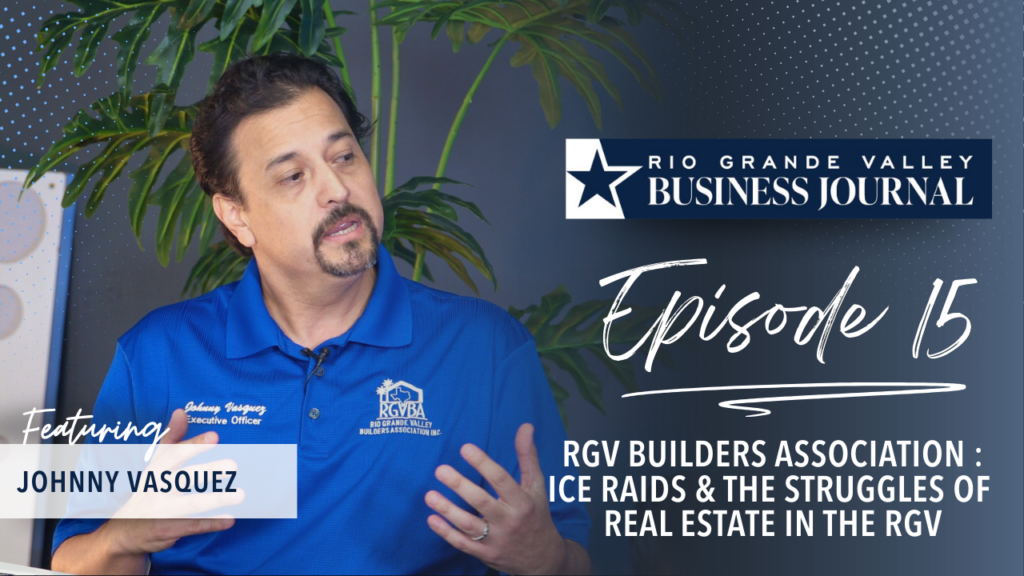
Johnny Vásquez, director ejecutivo de la Asociación de Constructores del Valle del Río Grande, afirmó que la actividad constructora se ha ralentizado en los últimos meses, a pesar de que la región sigue atrayendo a nuevos residentes e inversiones. Según él, los constructores están tratando de equilibrar la demanda con el aumento de los precios del suelo, los costes de los materiales vinculados a los aranceles, las redadas de inmigración y los requisitos normativos que pueden añadir miles de dólares al precio de una vivienda.
A pesar de esos retos, Vásquez afirmó que el Valle sigue siendo relativamente asequible y está bien posicionado para un crecimiento a largo plazo, citando la estabilización de los tipos de interés, el parque inmobiliario existente y la continua migración hacia Texas. Señaló que la capacidad de la región para ofrecer viviendas será fundamental para mantener el impulso económico.
La disponibilidad de mano de obra sigue siendo una preocupación fundamental. Vásquez advirtió de que una inestabilidad laboral prolongada podría limitar la oferta de vivienda y frenar la trayectoria de crecimiento del Valle.
En el podcast que se incluye a continuación, Vásquez analiza la situación de la construcción residencial en los condados de Hidalgo y Starr, y explica por qué los constructores afirman que es cada vez más urgente encontrar soluciones en materia de mano de obra permanente e inmigración.
Temas que tratamos:
• La ralentización del sector de la construcción en el RGV: cuáles son las causas•
Oferta inmobiliaria y tipos de interés: por qué es un mercado favorable para
los compradores• Asequibilidad: aranceles, normativa, redadas del ICE y presiones
sobre los costes• Precios del suelo y tendencias de
crecimiento• Repercusiones en la mano de obra y soluciones
políticas• Qué cambiaría la Ley
de Dignidad• Cómo obtener más información sobre el evento de la RGVBA y la afiliación
The following is an AI-generated transcript of the Podcast with Johnny Vasquez, executive officer for the Rio Grande Valley Builders Association.
There may be minor mistakes in the transcript. Please refer to the link above or listen on your favorite podcast provider.
Intro:
Johnny Vasquez: It’s all about just finding out what you can afford. There is someone out there that would be willing to build in your price range. I think that’s the competitive side of what the Valley is offering. There’s so many people out there that can work with you. Let’s just say 10 years down the line, industry dries up. There’s nobody moving here.
The economy’s depressed already. I’d rather deal with it now. This is where we live now. We live in the here and now. We don’t live in 30 years from now. But the decisions we make today will affect us in 30 years.
Podcast:
Naxi Lopez-Puente: Hi, and thank you for joining us on this episode of the Rio Grande Valley Business Journal podcast. I’m Naxi Lopez-Puente. Today we’ll be discussing the state of construction here in the Rio Grande Valley. Joining us today is Johnny Vasquez. He is the executive officer for the Rio Grande Valley Builders Association.
Naxi Lopez-Puente: Johnny, there’s a lot of Rio Grande Valley.
Johnny Vasquez: There is. Happy to be here, too. We’ve been here for almost 60 years — not myself, but the association. It’s been around for a while, so thank you for having us.
Naxi Lopez-Puente: Of course. So tell us about this association. Who do you represent?
Johnny Vasquez: So I’m pleased to represent over 100 members. We are comprised of builders, developers, title companies, mortgage companies, banks, realtors — everything that encompasses the homebuilding industry. Like I said, we’ve been around for almost 60 years, and you can imagine a lot of work’s been done to move the building industry forward. As an association, that really helps our industry’s voice be amplified throughout the region and throughout the country as well.
Johnny Vasquez: So I’m fortunate enough to be a part of this association. I started about 20-plus years ago as a member.
Naxi Lopez-Puente: Wow.
Johnny Vasquez: Yeah, it was amazing. I was a very young man at the time, and I got a chance to see the inner workings of the association and also what goes into construction development. So fast forward 20 years, I’m now here as the executive officer and proudly supporting our builders and the building industry as a whole.
Johnny Vasquez: So I’m really excited to be a part of it.
Naxi Lopez-Puente: Wonderful. All right, well, let’s dig in. What is the state of construction here in the Rio Grande Valley? I know we have a lot to cover — everything from immigration raids to the cost of goods to tariffs to high inventory. So, how would you describe the state of the industry when it comes to residential homes?
Naxi Lopez-Puente: And first, we should say that your association represents two counties, right? Hidalgo and Starr County.
Johnny Vasquez: Yeah, most definitely. There’s a lot of mixed reviews throughout the building community. You also have the realtors’ perspective right now with all of the action that’s going on. We understand that construction is at a slowdown right now. I think that hasn’t been a surprise for people that have been following the news — national, local, and state — and unfortunately there’s not a lot that can be done at this time.
Johnny Vasquez: We are working through the proper channels with our representatives to push some legislation forward that’s going to be a permanent solution for the situation here. But to answer your question: Construction — there are still contracts being signed, there are still people moving to the Valley, which is great. Several people moving to Texas — hundreds of people moving to Texas on the daily — and the Rio Grande Valley is still primed.
Johnny Vasquez: There’s a lot of room to grow. There is a tremendous amount of resources here. There is plenty of land. And so we’re not seeing a specific slowdown if we’re thinking long term.
Naxi Lopez-Puente: And you mentioned that a lot of people are moving to the Rio Grande Valley. We actually just published an article today saying that both the Brownsville and McAllen metros were on U-Haul’s radar — U-Haul compiles data on where people are moving — and both metros are among the nation’s highest places where people are moving to. Is that something that we’re seeing?
Johnny Vasquez: We heard that earlier this year. We were at an update in D.C. U-Haul data is exactly right. How do you track people moving across the country? People coming from the West, the left, the right — wherever — they’re coming to Texas. Texas is a great state to live in. We have a lot to offer, especially here in the Rio Grande Valley.
Johnny Vasquez: We have ports of entry. We have a ship channel. We have space. We can get anywhere in the world. The Valley has really grown. I’m born and raised here. I’ve watched it grow. I’ve watched the expressway expand many times over.
Johnny Vasquez: Unfortunately, there is this time in construction history — in just the last 20 years there have been a few slowdowns for different reasons — and this one is slowed down because of the workforce and because some legislation hasn’t been passed, in my opinion, in time.
Naxi Lopez-Puente: All right. Let’s talk about inventory right now. My understanding is that there are more homes out there that are already built than buyers.
Johnny Vasquez: That’s a really good question. There is inventory. There’s also new-construction inventory that’s out there.
Naxi Lopez-Puente: It’s a buyer’s market, right?
Johnny Vasquez: Buyer’s market right now. I think with rates that have dropped or stabilized — there was some uncertainty going into the end of the year — and now that the rates have stabilized, I think you see a resurgence of people that are really just going to make that jump.
Johnny Vasquez: As a home builders association, that’s what we do. We promote homebuilding. We want builders to build homes. We want people to live in homes. It’s important that people have a place to live because we want people to invest here in the Valley.
Johnny Vasquez: You buy a home here, you’re going to probably buy cars here. You’re definitely going to buy food here. The more starts we have, the more rooftops we have, the more people can invest in this community. And that’s what we want.
Naxi Lopez-Puente: Now let’s talk about affordability. Being able to afford a home — especially for people in my generation, older millennials — it’s getting difficult if you don’t have a nest egg saved up. Talk to us about affordability in the Rio Grande Valley. We used to see a lot of homes under $200,000. That’s no longer the case.
Naxi Lopez-Puente: Compared to national averages — and even the rest of the state, like Austin — we’re still affordable when you compare us to that market. But cost of living, salary, wages — all of that plays a part.
Naxi Lopez-Puente: Talk to me about that.
Johnny Vasquez: You hit it on the head. Affordability — a lot of things that impact that right now are tariffs. We know that the cost of goods are going up depending on what you put in the home. It could be anywhere from 20% to 30% on certain items. One of the things we see also is regulation.
Johnny Vasquez: That’s a touchy subject because you’re talking about making a home that’s suitable for someone to live in for many years. You want to make it safe and comfortable. Sometimes regulations will hurt the building industry. For example: There’s possible code coming that is going to require dimmers in every single room of the home.
Naxi Lopez-Puente: At the state level, or what level?
Johnny Vasquez: It would be adopted by the state and then eventually through the cities. That could potentially add several thousand dollars to the price of the home. Every time you raise the price of the home $1,000, you price out thousands of people. If most of that is because of regulation, that could be a problem.
Johnny Vasquez: On top of that, you have tariffs. If you’re increasing prices on lumber or windows or whatever is being imported, that’s going to affect the price.
Johnny Vasquez: To your point: You mentioned $200,000. There are homes here in the Valley that you can find for $200,000. Most definitely. You’re going to have to do some search and digging. There may be some builders out there that build in that price range.
Johnny Vasquez: It’s all about finding out what you can afford. Get prequalified. There is someone out there that would be willing to build in your price range. That’s the competitive side of what the Valley is offering.
Naxi Lopez-Puente: We heard today, too, that the price of land has gone up significantly since COVID. Is that a trend you agree with? And why would COVID have that effect on the price of land?
Johnny Vasquez: Everything trends up. When you talk about land: The faster the Valley grows, the more infrastructure is needed across the region. Pricing goes back to regulation — how much drainage do you need in a community? A lot of that goes into expansion. We have to pay more to expand more.
Johnny Vasquez: We can’t go backwards and say we want prices from the 1990s or 2000. New technology has come out — things that make life easier — but of course it’s going to cost.
Johnny Vasquez: We also see pricing going up when industry moves into the area. Look at Austin: as soon as big tech comes in, prices go through the roof. We’ve had some of that — especially if you look into Cameron County. Companies come in and immediately start to develop, and that drives up prices right away.
Johnny Vasquez: If you want to live in that place, you’re going to have to pay whatever the cost is.
Naxi Lopez-Puente: So is it harder now for builders to make a profit?
Johnny Vasquez: Right now, I would say yes. If there’s no construction, there’s no profit. But if things are priced correctly — if suppliers are working with builders — this is a team effort. That’s why the association is powerful: Our members can talk to each other, voice their needs, voice their concerns, and not be in a silo.
Johnny Vasquez: You can be upset about construction prices or material prices by yourself, but if you have no one to share that with and no real solutions, then you’re talking to yourself. We encourage our builder members and our associate members to have those tough conversations.
Johnny Vasquez: Eventually, like anything else, things level off and prices get back to normal — the new normal. We want to encourage people not to give up on homeownership.
Johnny Vasquez: We don’t want forever renters. Nothing wrong with renting — if you have to rent, great. If you’re going to be here for a season, great. But if you’re going to set down roots, start a family, invest in a business, you definitely want a piece of property to call your own.
Naxi Lopez-Puente: We heard today at an economic outlook event for the builders association that focuses on Cameron and, I believe, Willacy that there’s so much inventory that some builders are turning subdivisions into rentals instead of selling. Is that something we’re seeing here in Hidalgo as well?
Johnny Vasquez: Yeah, we’re seeing that also. Rentals are needed — let’s be honest. The more people that come and need quick housing, rental is the way to go.
Johnny Vasquez: There are several fourplexes or multifamily units out there on the ground right now for investors to buy and for people to rent. It’s a necessity.
Johnny Vasquez: As far as how much we need, the market has to determine that. If we bring certain tech companies into the area, people may move right away — or rent for a few months or a year. It’s a necessity.
Johnny Vasquez: And this is America — you can pivot. If your product is not selling, rent it. If it’s not renting and you want to sell it, sell it. I applaud them for that.
Naxi Lopez-Puente: Circling back to the association and those tough conversations: Give me three of the top topics you guys are focused on right now.
Johnny Vasquez: Since last June, we’ve been focused on the ICE situation — the ICE raids. It has escalated and gotten to a point where you see the stress on the construction community. Usually during the end of the year, there is a slowdown — people take time off — but since last summer, it’s just been hot.
Johnny Vasquez: We have been working with our representatives. We were in D.C. the week that the ICE raids started. We have an annual fly-in with the National Association of Home Builders, which we’re part of as a federation.
Johnny Vasquez: Unfortunately it wasn’t a big topic nationally because it had just started and only a few regions were being affected — Texas, Louisiana, and I believe Arizona. But we had an opportunity to be right there and talk with our representatives.
Johnny Vasquez: We talked with Representative Gonzalez, Representative Monica De La Cruz, and Representative Henry Cuellar and their staffs. They were very friendly, very helpful. We shared with them right away: What can be done for immigration reform?
Johnny Vasquez: There has been legislation proposed — the Dignity Act — that we were exploring. Thankfully, the National Association of Home Builders has endorsed it.
Naxi Lopez-Puente: A quicker response, right? Because passing immigration reform — we’ve been talking about this for decades.
Johnny Vasquez: We’re excited to support it along with NAHB. We applaud Representative De La Cruz, who recently signed on. We had been sharing details on the Dignity Act with her office, and she signed on to that.
Naxi Lopez-Puente: For those who don’t know what the Dignity Act is — I know it has a lot of ins and outs — but how would it affect or benefit the construction industry?
Johnny Vasquez: The Dignity Act has been around for a few years, but it was reintroduced by Representative Salazar from Florida and a bipartisan partner — I believe Veronica Escobar from El Paso. It’s comprehensive immigration reform. How would it help the construction industry? It would give a legal work status — a legal work permit — for construction and other industries as well.
Johnny Vasquez: That would be the immediate injection: a way for people to be here legally and avoid the problems we’re having right now. We’re short on workers.
Naxi Lopez-Puente: For a long time the narrative was immigrants are taking Americans’ jobs. Now with all of these raids, how do you see that issue?
Johnny Vasquez: That rhetoric is on both sides: They don’t want to do the job; they do want the job. Great — the jobs are there, they need to be filled. If it’s Americans, great. If it’s immigrants, great.
Johnny Vasquez: As an association, we’re for the rule of law. We want legal immigration. We want legal pathways for people to come here, contribute, and become part of the experience.
Johnny Vasquez: Workforce development programs take time. Someone going into the trades isn’t going to come right out and know exactly what to do. There’s a learning curve — training and education.
Johnny Vasquez: We support programs in high schools. We’ve done scholarships with some schools here in Edinburg — they have a great trades program.
Naxi Lopez-Puente: Do people want to go into construction? It’s a difficult job.
Johnny Vasquez: There’s a lot of money to be made in the trades. I talked to a gentleman in the electric space — he said there’s so much money to be made. Those jobs are there for anyone — men, women, young ladies — whoever wants to take them.
Johnny Vasquez: We’re always going to need electric, mechanical, plumbing. We support workforce development. We want immigration reform. The hard part is getting Congress to act.
Johnny Vasquez: This bill — the Dignity Act — is ready to be discussed and debated. It has border security in it for those concerned with the border, technology, faster processing, and a workforce development program for Americans.
Johnny Vasquez: The focus is to help the already overburdened and underserved construction industry — also hospitality and agriculture.
Johnny Vasquez: If you can, call your representative and tell them you want to support the Dignity Act.
Naxi Lopez-Puente: Critics say these raids are affecting the industry in South Texas and it’s the builders’ or subcontractors’ fault for hiring people without legal status. How do you respond to that?
Johnny Vasquez: Those questions come up. Our builders want the best for the community — they’re helping grow the community by building homes. The National Association of Home Builders has told members: We need to be E-Verify. Our members do that, and we strongly encourage it.
Johnny Vasquez: Subcontractors are also encouraged to do that, but some are not our members. Through the Dignity Act, E-Verify would be mandatory for companies to verify employment.
Naxi Lopez-Puente: Let’s talk about the raids. We saw it kick off in June. What’s the ebb and flow? Has it been the same intensity? Has it slowed down? Paint a picture for our audience.
Johnny Vasquez: The videos are out there. The stories are out there. In terms of intensity, I couldn’t tell you exactly how many are happening every day. I was on the ICE website — I know there’s been hundreds of raids and thousands of people arrested.
Johnny Vasquez: Here in the Valley, there was quite a bit reported. Despite the intensity, we need relief. We’ve gone through the proper channels and now we’re waiting for something to happen.
Johnny Vasquez: We don’t want executive orders because those are temporary. We want a permanent solution that will help home builders in this region, across the state, and across the country.
Naxi Lopez-Puente: We had DHS Secretary Kristi Noem here yesterday, and a journalist asked about the economic impact. It was dismissed. How do we reach them?
Johnny Vasquez: I can’t speak for the secretary. DHS is doing their job. We’re for the rule of law. What we’re up against is something that’s going to run its course.
Johnny Vasquez: I prepared our membership recently to say: There’s no end in sight. The administration has three more years. President Trump has been clear — if he’s going to do something, it’s going to get done. We’re going through the proper channels and petitioning members of Congress.
Johnny Vasquez: We’re not going to do violence. There’s no need. There is a need for our association to stand up and be heard. We have a membership luncheon at the end of the month.
Naxi Lopez-Puente: Tell us about it. Invite everybody.
Johnny Vasquez: We’d love for everyone to attend. This is work we’ve been doing for the last six months with members of Congress. We’ve invited Representative Monica De La Cruz. We’re also hosting Sam Gilbert from the National Association of Home Builders — an expert in immigration reform and workforce development.
Johnny Vasquez: This is a big deal for us: to have that conversation and hold members of Congress accountable. We want to be that bridge and a trusted resource.
Johnny Vasquez: We’re excited about the Dignity Act as a long-term solution.
Naxi Lopez-Puente: What are the chances it’ll become law?
Johnny Vasquez: I don’t know. But we’re going to continue to push. Right now, we need a permanent solution.
Naxi Lopez-Puente: If this trend continues for another year or two or three, where does that leave the Rio Grande Valley when it comes to construction?
Johnny Vasquez: If you don’t have homes for people to move into — and thankfully we have some inventory — but if we run out of homes, we stop the inflow of people moving to the region.
Johnny Vasquez: I don’t want to go there. I’d rather deal with it now. We live in the here and now. But the decisions we make today will affect us in 30 years.
Johnny Vasquez: I joke sometimes: Amazon figured it out. Chick-fil-A figured it out to get people in and out and get you what you want. The government should work the same way. They work for us, so we have the power to petition our government.
Johnny Vasquez: Thankfully, we have members of Congress who have opened their doors to us.
Naxi Lopez-Puente: It seems Congresswoman De La Cruz has been open to listening to the construction industry, even if it parts ways with party lines.
Johnny Vasquez: The Dignity Act is bipartisan. It benefits everyone. It’s not going to cost taxpayers anything — it’s funded by the people seeking to be in the program.
Johnny Vasquez: Representative De La Cruz has signed on, and we’re excited. We applaud her for that because she’s hearing from our membership.
Johnny Vasquez: We’re excited to host her on Jan. 28 and have a focused conversation on solutions.
Naxi Lopez-Puente: Where can people find more information about the event? Where can they sign up?
Johnny Vasquez: RGVBA.org — that’s RGVBA.org. You can also call the office line at 956-686-2932. We’d love to host you. Members first, but if you’re interested in joining, call or visit the website and we’ll talk about the benefits.
Naxi Lopez-Puente: Anything else you’d like to add?
Johnny Vasquez: We went through a lot. I appreciate the time and thank you for doing this. This is very important to us and the construction industry. We’re excited to be part of potentially historic legislation. We were there on the ground in D.C. sharing it with our representatives as it was happening.
Johnny Vasquez: For me, it’s full circle. Twenty years ago I was a young man getting into the business — now being part of the change we hope to see soon. I appreciate the opportunity to share that.
Naxi Lopez-Puente: Of course. Thank you so much for sharing all of that with our audience. And for those of you at home or at work, thank you for tuning in, and we’ll see you next week.