Editor’s note: The Rio Grande Valley Business Journal recently examined the state of the Valley’s residential construction industry as immigration raids disrupt workforces, delay projects, and increase financial pressure across the housing system.
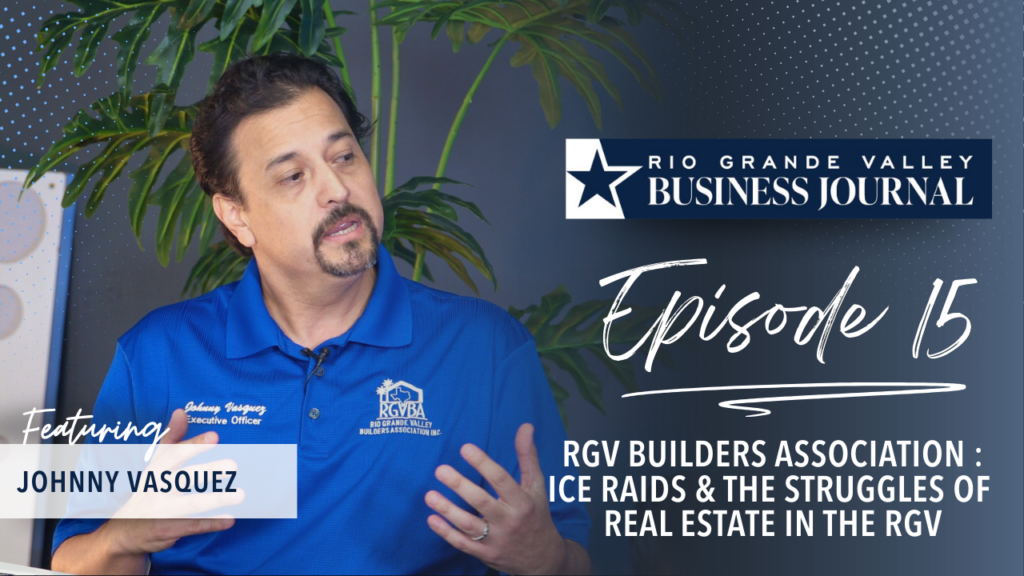
The following is based on the Journal’s two new podcast episodes featuring Mario Guerrero, CEO of the South Texas Builders Association, and Jonathan Vasquez, executive officer of the Rio Grande Valley Builders Association.
Despite a difference of opinion between the organizations, both agree that immigration raids, rising costs, and tighter lending are affecting builders, lenders, and the Valley’s long-term housing supply.
Watch the full podcast episodes:
• Mario Guerrero, CEO, South Texas Builders Association
• Jonathan Vasquez, executive officer, Rio Grande Valley Builders Association
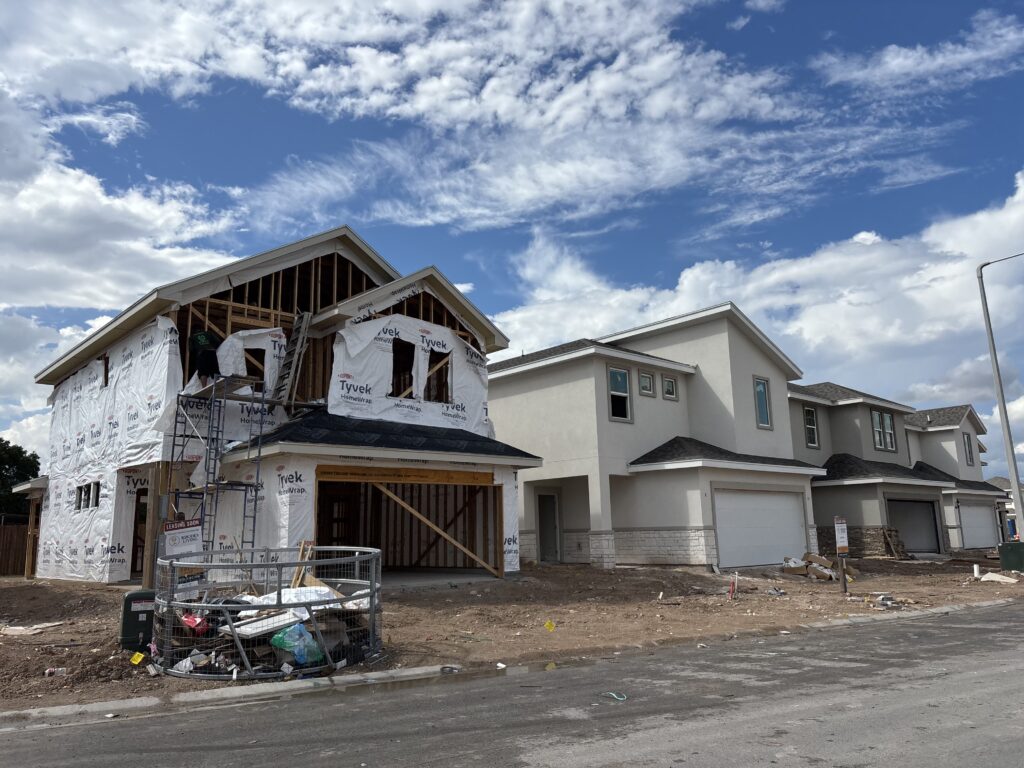
Photo Credit | Matt Wilson
The Rio Grande Valley’s residential construction industry is under mounting pressure as labor shortages, immigration enforcement, rising costs, and tighter lending converge — all as the region’s two main builder associations operate separately following a recent organizational split.
Leaders of both groups say immigration raids have intensified workforce disruptions since mid-2025.
Both warn that delays are cascading through construction timelines, financing, and housing availability. And both argue the long-term consequences extend beyond builders to banks, buyers, and the broader Valley economy.
Where they differ is strategy — and how to publicly confront enforcement practices.
The South Texas Builders Association, formed during the COVID-19 era amid extreme material price volatility, has taken a public stance against immigration enforcement at construction sites, with CEO Mario Guerrero saying his organization was the first in South Texas to raise concerns about the economic impact of raids.
The Rio Grande Valley Builders Association, a nearly 60-year-old organization representing builders, lenders, developers, and related firms, says it is focused on long-term legislative solutions and compliance, emphasizing what executive officer Jonathan Vasquez described as support for “the rule of law” and legal pathways for workers.
Together, the two perspectives frame an industry under strain.
Construction delays and financial ripple effects
Both leaders described how workforce disruptions are extending build times — and how those delays ripple through financing and housing supply.

Guerrero detailed what happens when immigration enforcement removes workers mid-project.
“I saw a video of ICE enforcement showing up to a concrete pour and taking all the concrete workers in the middle of a concrete pour,” Guerrero said. “Do you understand the level of loss there?”
He described sunk costs when concrete hardens, rebar must be removed, and inspections must be repeated.
“The construction company was already in the hole $15,000,” Guerrero said. “Then they have to come in another $15,000 just to try and do the same steps again.”
Guerrero said most Valley construction relies on short-term construction loans, meaning delays increase interest costs and default risk.
“If there’s a default on a loan and it’s a cycle that continues, what’s gonna happen to the bank?” he said. “The economy is going to suffer.”
Vasquez framed the impact as cumulative rather than catastrophic, but acknowledged similar delays across the region.
“If a house would take four to five months, now it’s taking seven to eight months,” Vasquez said. “That’s because of the workforce.”
Inventory is high — but financing is tighter
Both associations acknowledged that the Valley is currently experiencing elevated housing inventory, creating a buyer’s market in many areas.
“There is inventory,” Vasquez said. “There’s also new construction inventory that’s out there.”
Guerrero said some builders are renting homes originally intended for sale to offset rising interest costs tied to construction loans.
“If there’s a builder that’s paying $2,000 in interest every month and nobody’s buying the house, you have to rent it,” Guerrero said.
Vasquez described the shift as market flexibility rather than distress.
“This is America,” he said. “You can pivot. If your product is not selling, rent it.”
Both leaders said banks have grown more cautious about financing new subdivisions as build times lengthen and risk increases.
“The bank has to protect its own interest,” Guerrero said. “They’re already seeing that projects are taking longer than most.”
Affordability pressures extend beyond immigration
While immigration enforcement has become the most visible pressure point, both leaders said it’s only one factor contributing to broader housing affordability challenges in the Valley.
Vasquez pointed to tariffs and regulations as compounding costs for builders and buyers.
“Tariffs could increase certain items 20 to 30%,” he said. “Every time you raise the price of a home $1,000, you price out thousands of people.”
He cited proposed building code changes — such as mandatory dimmer switches — as examples of incremental costs that can add thousands of dollars to the price of a home.
Guerrero pointed to land scarcity as a longer-term constraint shaping development patterns across the region.
“They’re not making any more land,” Guerrero said. “Everything is going to move out because everybody wants to live in the city.”
Both leaders said median home prices in the Valley generally range between $230,000 and $270,000, depending on the county.
Immigration reform: different paths, shared urgency
On immigration policy, the two associations differ in approach but share urgency.
Vasquez said the Rio Grande Valley Builders Association is backing the bipartisan Dignity Act, which would create legal work authorization for undocumented workers and mandate E-Verify compliance.
“The immediate injection would be legal work status,” Vasquez said. “It would give people a way to be here legally and avoid all the problems we’re having right now.”
Guerrero said enforcement practices — not just immigration law — are the immediate concern for builders trying to keep projects moving.
“There’s a better way to do this than going to worksites and terrorizing communities,” Guerrero said.
He emphasized he is not calling for non-enforcement.
“I’m not saying not to do your job,” Guerrero said. “What I’m saying is you’re causing harm to the economy.”
A housing system under pressure
Despite their organizational split, both leaders warned that prolonged disruption could reshape the Valley’s growth trajectory.
“If we stop building homes, we stop people moving here,” Vasquez said. “The decisions we make today will affect us in 30 years.”
Guerrero described the current moment as a convergence of pressures already weighing on the industry.
“We already had a shortage of labor,” he said. “Now tariffs, interest rates, and immigration enforcement are all hitting at once.”
For now, the Valley’s builders remain active but cautious, navigating a housing market shaped by workforce availability, financing conditions, and policy decisions far beyond any single jobsite.

RGV Business Journal Staff
Personal
Lo más leído
- La ciudad futurista Starbase de SpaceX culmina una anexión masiva de 7,100 acres. Esto es lo que sabemos.
- SpaceX reprograma el primer vuelo de Starship alrededor de la Tierra
- ¿Cuánta agua necesita SpaceX para operar cerca de Brownsville? Casi 20 veces su consumo actual
- ¿Podría la conversión de departamentos en condominios ayudar a que la compra de una vivienda de 100 mil dólares en el área metropolitana de McAllen sea más accesible? Un inversionista dice que sí.
- El área metropolitana de McAllen sigue vendiendo más viviendas, mientras que el mercado de Brownsville-Harlingen registra una caída del 17 % hasta agosto
Recibe las últimas noticias empresariales en tu bandeja de entrada cada mañana, gratis.
¡Pruébalo gratis durante 30 días!
Disfruta de acceso completo a un periodismo galardonado que abarca temas como los negocios, el sector inmobiliario, la sanidad, las tendencias económicas y las personas que dan forma al Valle del Río Grande.
¡30 días gratis!
$9.95/month
Oferta por tiempo limitado
La suscripción se renueva tras el periodo de prueba gratuito de 30 días por 9,95 $ al mes.
Prestaciones incluidas
- Acceso ilimitado a todos los artículos
- Noticias y análisis diarios sobre el mundo empresarial
- Contenidos y funciones exclusivos para suscriptores
Historias que importan
- La recaudación del impuesto sobre las ventas en el Valle ha aumentado un 5,7 %. ¿Podría estar contribuyendo a ello un peso más fuerte?
- Las empresas de Mission pueden solicitar hasta 15 000 dólares en subvenciones este mes
- Pharr duplica la capacidad de su puente a medida que los centros de datos y los productos agrícolas impulsan una nueva demanda comercial
- T-Mobile planea ampliar su red de Internet por fibra óptica en Mercedes
- Un poco de MySpace, un poco de AOL: los habitantes del Valle contribuyen al crecimiento de una nueva plataforma de redes sociales
- Brownsville va a modificar su tarifa de drenaje. Las empresas podrían tener que pagar más, ya que la ciudad busca recaudar 6.2 millones de dólares al año
- Los líderes de Starbase aprobaron un contrato de arrendamiento de 45 años con SpaceX por 166 acres, pero lo que se construirá allí sigue siendo un misterio
- NADBank abre una línea de financiamiento de 300 millones de dólares para proyectos de agua y energía a lo largo de la frontera
- Frost Bank está invirtiendo en Harlingen, un laboratorio de cemento que se instalará en Brownsville, los departamentos de la ciudad de Hidalgo y las nuevas oficinas de Terra-Gen
- Es posible que se esté gestando otro proyecto de GNL en la frontera del sur de Texas; esta vez, en Matamoros