
Advocacy groups estimate that hospitals in Texas are projected to collectively lose $27 million a day in Medicaid funding under a new regime implemented by the President Donald Trump Administration.
That estimate is based on the federal government’s decision to withhold from Texas roughly $9.8 billion over the next year across three key programs, the majority of which stem from the Comprehensive Hospital Reimbursement Program, according to a recent report by the Texas Tribune.
The importance of Medicaid coverage for healthcare providers, from hospitals to family clinics and specialists across the Rio Grande Valley, is a key part of the local economy. Further disruption to the system could have trickle-down effects.
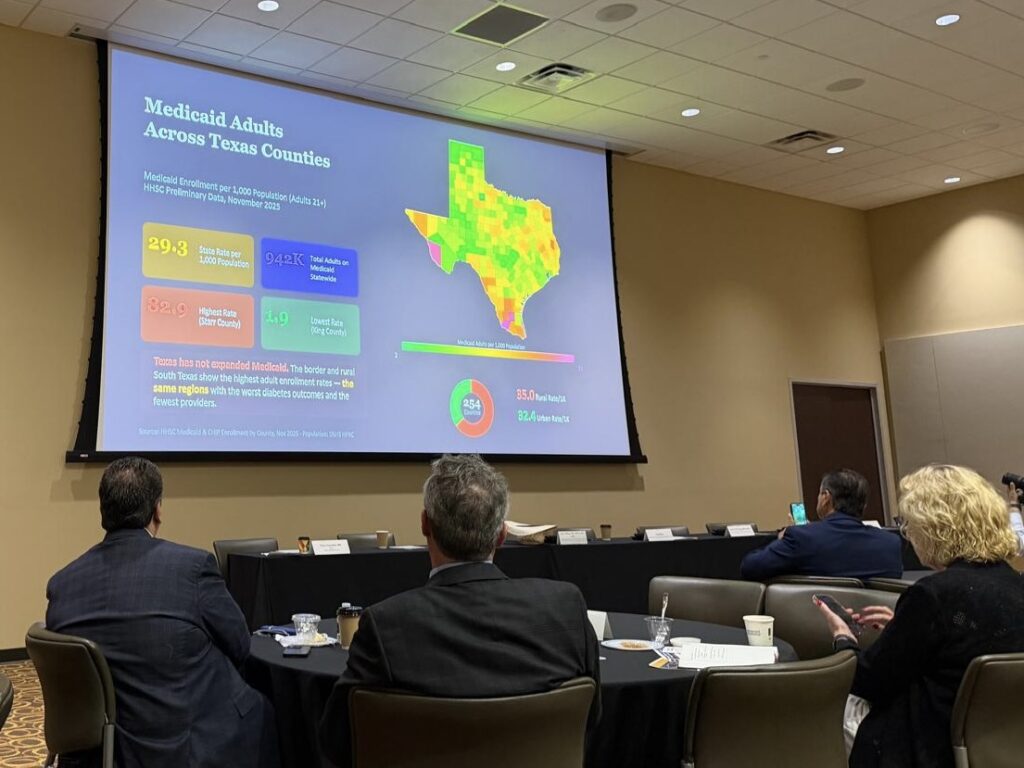
Despite the $1.4 billion the federal government allocated to Texas for rural health transformation, that investment amounts to less money per rural individual compared to other states, and it does not replace the cuts to the Medicaid reimbursement system, according to calculations from Dr. Adrian Billings, a professor of rural health at Texas Tech University Health Sciences Center.
“The border in rural South Texas show our highest adult enrollment rates in Medicaid, and these same regions have the worse diabetes outcomes, as well as the fewest providers,” Billings, who is also a rural doctor in Alpine Texas, said. “On the border, Medicaid and CHIP [enrollment] is double the state average. These children and these families depend upon Medicaid, and without this coverage, there is a risk factor for developing diabetes in the future. Even though these counties are where our food, fiber and fuel for our state and our nation are being produced, a quarter of our children are at times going to sleep hungry. This impacts their ability to get a good education.”
Beyond that, advocates said during a recent event in Edinburg, there’s a knowledge gap about who exactly is a recipient of Medicaid in Texas today.
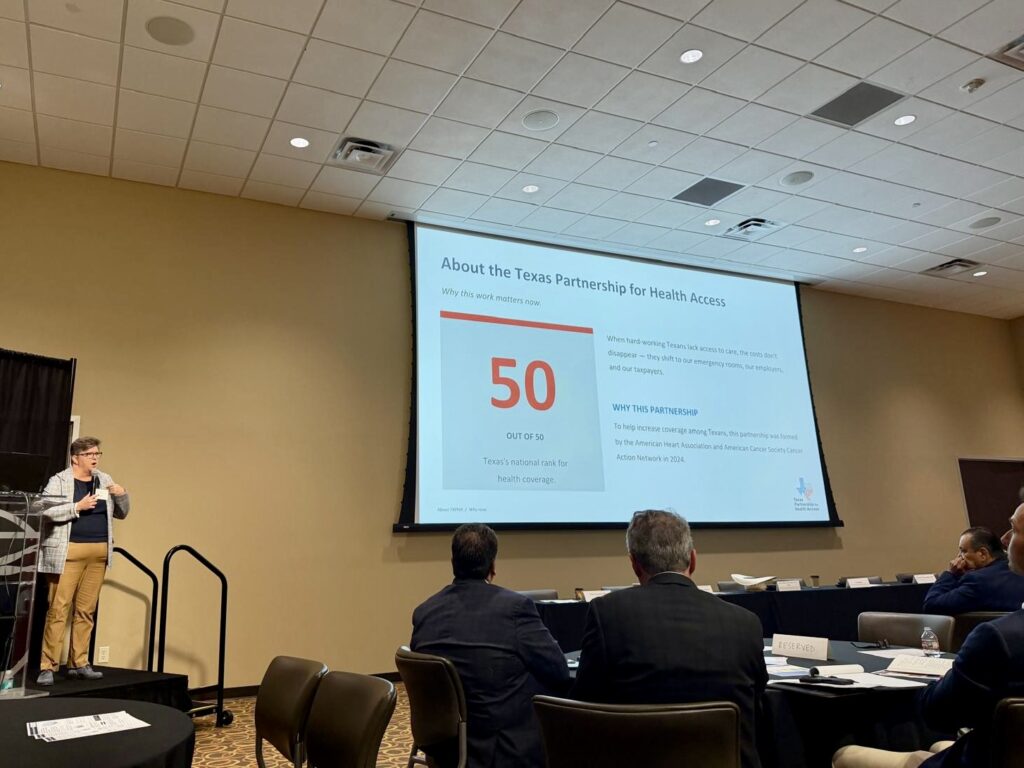
“A lot of folks really don’t quite understand that in Texas, the only way as an adult you can get [Medicaid], is if you’re a pregnant woman or if you’re disabled,” said Lisa Madry, a consultant in El Paso who leads the Texas Partnership for Health Access, a nonprofit funded by the American Heart Association and American Cancer Society Network.
Madry spoke about Medicaid during a recent Texas Medical Association Border Health Caucus meeting in Edinburg. The nonprofit regularly hosts meetings and is launching a campaign to reduce the state’s uninsured rate, starting in the Rio Grande Valley.
In January 2026, 97,807 individuals in Cameron County were on Medicaid, including 67,000 children, according to state records. In Hidalgo County, 211,944 individuals were on Medicaid, including 152,094 children. In Starr County, 18,958 individuals were on Medicaid, 12,000 of whom were children; in Willacy County, 4,398 people were on Medicaid, about 2,900 of whom were children.
“If you’re just someone who’s not making a lot of money, you’re struggling. There are a few little exceptions where you could get temporary [Medicaid] coverage in an emergency situation, but that’s basically it,” Madry said. “For adults, there’s no public access to any kind of healthcare available to anyone in Texas unless you’re getting it through your employer, basically at that point you’re going to have to find coverage through the [Affordable Care Act] marketplace or an individual plan that you go out and get and then you’re going to have to pay [the whole cost of the premium] for it.”
In Texas, roughly 19% of all residents are uninsured compared to the national average of 9.8%. One major reason: Texas did not expand Medicaid after the federal Affordable Care Act was passed.
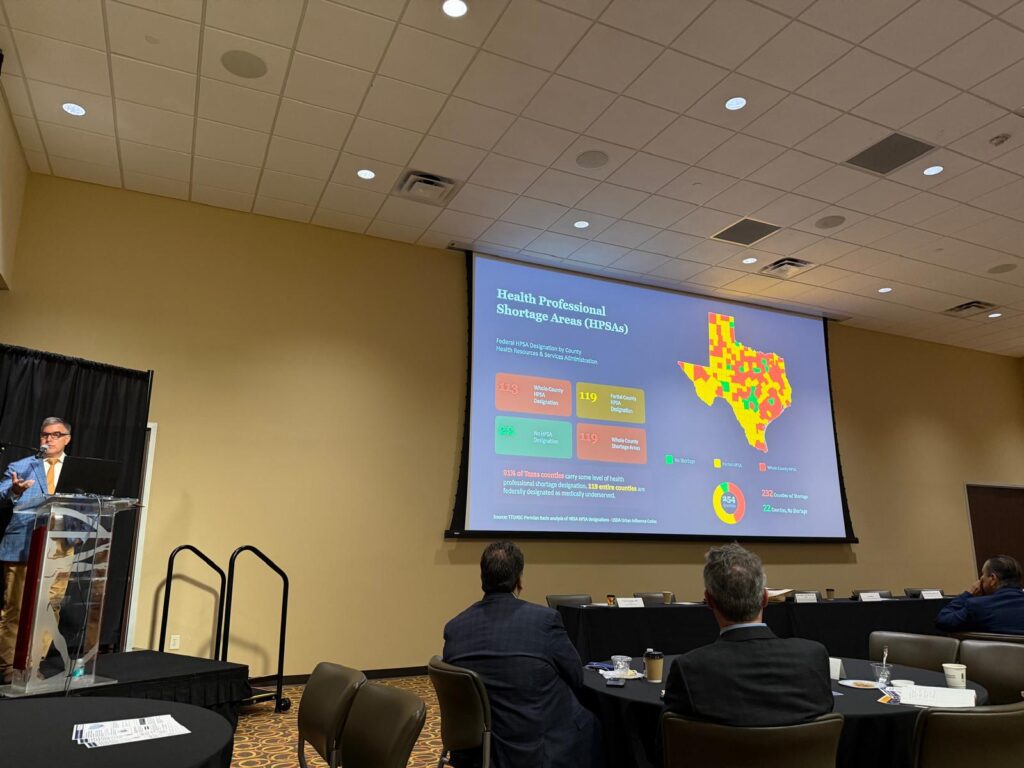
Roughly 28% of residents overall in Hidalgo County lack any health insurance. Nearly 26% lack it in Cameron County, almost 29% in Starr County, and nearly 24% are uninsured in Willacy County. In Presidio County, about 33% of residents are uninsured. By comparison, about 17% lack it in Nueces County, 16% in Bexar County, 20% in Harris County, 21% in Dallas County and 12% in Travis County.

Kristen Mosbrucker-Garza
Reporter
Kristen Mosbrucker-Garza is a versatile multimedia news reporter who lives and works along the Texas-Mexico border in Hidalgo County. Mosbrucker-Garza is a news reporter for the Rio Grande Valley Business Journal. During her career she's worked for the McAllen Monitor, San Antonio Business Journal, The Advocate Newspaper in Louisiana, Phoenix New Times, and public media outlets in Baltimore and Philadelphia.
Most Read
- Is SpaceX quietly building a data center at Starbase? Job postings offer clues
- 25 Mexican businesses eye McAllen expansion after city pitches U.S. market entry program
- SpaceX’s futuristic city of Starbase finalizes massive 7,100-acre annexation. Here’s what we know.
- McAllen metro keeps selling more homes as Brownsville-Harlingen market sees 17% drop through August
- Rio Grande LNG moves closer to getting even bigger at Port of Brownsville
Get the latest business news delivered to your inbox every morning for free.
Try 30 Days Free!
Get full access to award-winning journalism covering business, real estate, health care, economic trends, and the people shaping the Rio Grande Valley.
30 Days Free!
$9.95/month
Limited time offer
Subscription renews after your 30 day free trial at $9.95/mo.
Included Benefits
- Unlimited access to all articles
- Daily business news and analysis
- Subscriber-only content and features
Stories That Matter
- South Texas College plans $4.7M makeover of cosmetology, security facilities in McAllen
- Mission’s first Small Business Expo puts $25K on the line for local entrepreneurs
- McCoy’s gives $10K, tools to launch Mid-Valley construction academy
- UT Health RGV performs new digestive procedure for first time in the Valley
- Edinburg ISD rejects nearly $6M offer for prime land near La Sienna despite $15M budget deficit
- TSTC bets on advanced manufacturing to meet RGV’s industrial boom
- McAllen’s nonstop Mexico City flight is back
- Pharr’s cross-border business push earns international recognition
- Brownsville eases drought restrictions after nearly three years as Rio Grande reservoir levels improve
- Texas A&M’s $53.5M McAllen research center will tackle water, food security and Valley health