News You Can Use: For anyone who wants to offer feedback online about Brownsville’s master housing plan, there’s a survey available. The city’s planning and zoning commission will be meeting between October and December about the master housing plan and there’s an upcoming open house from 5 p.m. to 7:30 p.m. on Oct. 29 at the Brownsville Public Library main branch.
The city of Brownsville and surrounding communities in Cameron County are undergoing massive, sweeping changes.
The region has seen an influx of new investment and redevelopment, and city leaders are figuring out how to balance new subdivisions with the need for affordable housing.
Brownsville is the Rio Grande Valley’s largest city by population but pales in comparison on metrics such as sales tax revenue compared with peer communities like McAllen.
Even the Port of Brownsville is in Cameron County, not inside city limits, and has its own taxing authority, so leases from the port’s new customers do not directly build the city’s tax base. But there is an indirect benefit of workers who may choose to buy homes, rent apartments, or investors building out commercial properties within city limits.
So it’s no surprise that Brownsville city leaders are prioritizing a housing master plan, it’s in conjunction with two other major long-range planning efforts: the downtown renaissance and the parks, health and recreation plan.
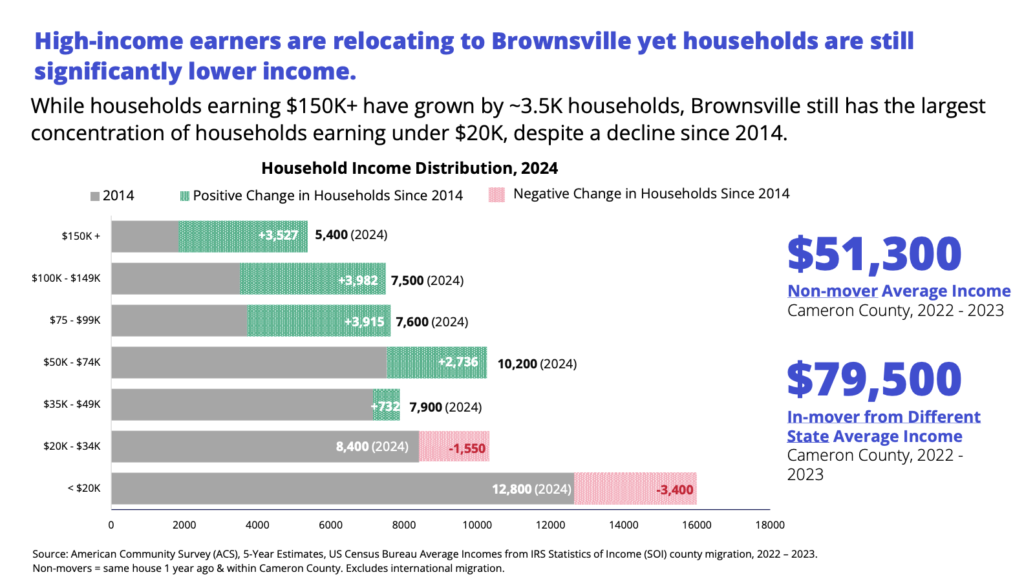
The average income of new residents to the Brownsville community is closer to $79,000 compared to $51,000 for existing long-term residents.
Consultants hired by the city found that there’s a housing mismatch. More than 40% of the homes in downtown Brownsville were built before 1960, which means the housing stock is very old and, since it’s mostly wood, has deteriorated beyond repair in the hot humid, and salty air over generations.
New York City-based HR&A Advisors and Houston-based Tecolotl, a grassroots consulting collective that offers bilingual community meeting and feedback services, are managing the housing report for Brownsville under contract.
The typical home price in the city of Brownsville was about $191,000 in 2024, while the likely maximum affordability for a median household is about $211,000, which doesn’t leave much wiggle room in household budgets.
There were roughly 77 affordable rental units for every 100 residents earning 50% of the area median income or below – which is $21,300 for one person or $30,400 for a household with four people.
Lower wages within city limits remain persistent, as 75% of available jobs pay less than the median wage of $45,000, according to the consultant’s research.
Since 2014, when Space Exploration Technologies created the city of Starbase, an additional 7,200 jobs have had median wages above $70,000.
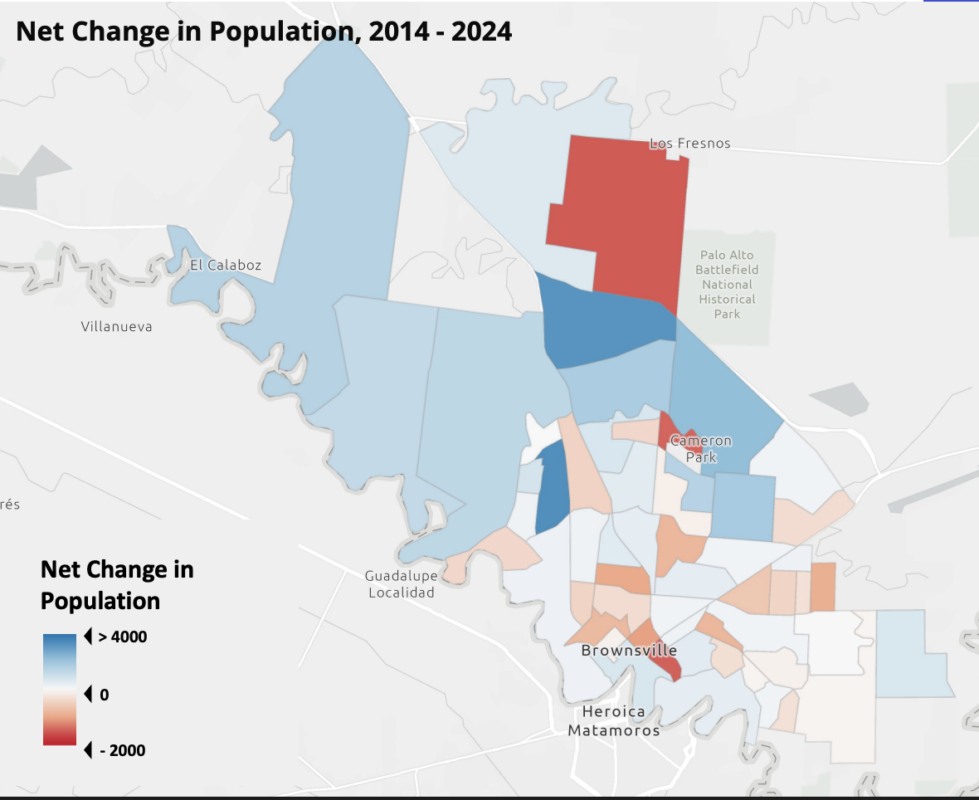
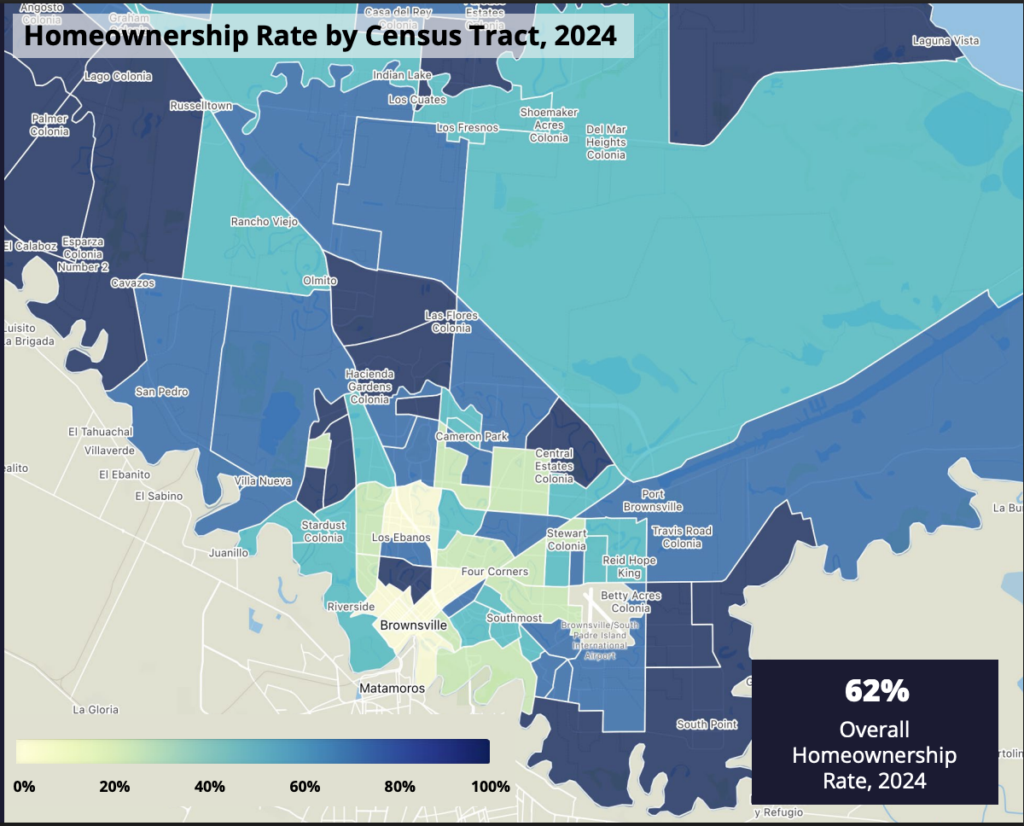
Much of the population change has happened near Brownsville’s border with Los Fresnos on the north side of its suburban tracts, U.S. Census data show.
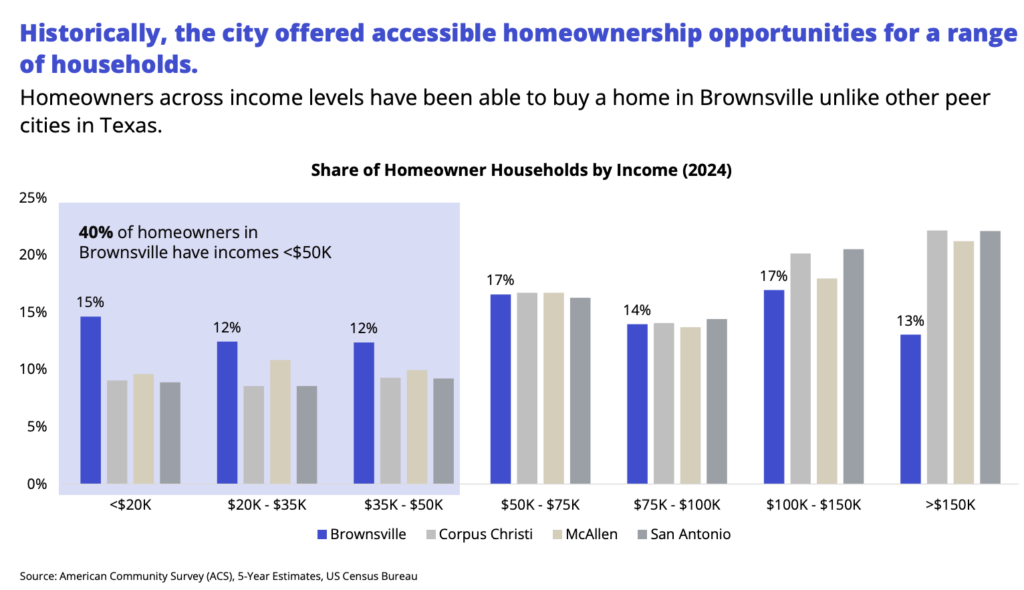
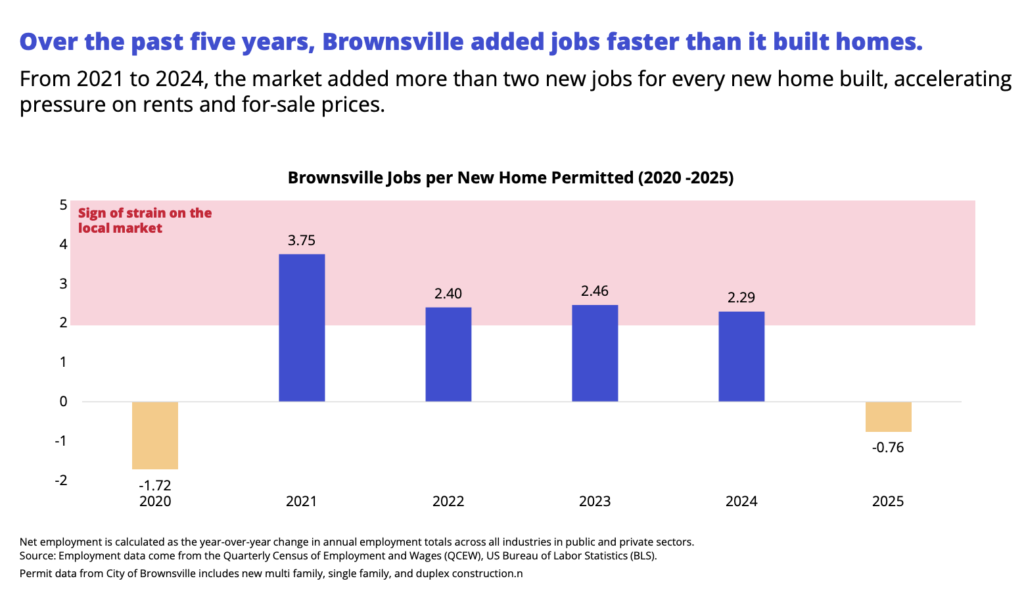
But on the housing side, Brownsville added two jobs for every new home constructed between 2021 and 2024.
The master housing plan is expected to be completed by December 2026 and no later than January 2027.
“We did realize through our findings and conversations with stakeholders that rental housing for lower-income households does remain a persistent and unmet challenge. Meaning that even with the kind of growth that the city is seeing, providing renters options is a gap the city will need to address,” said Jazmin Harper, a director for HR&A Advisors in Dallas. “There’s a real need to focus on the city’s core and really think about infill opportunities and investment in the historic downtown and southmost neighborhoods.”
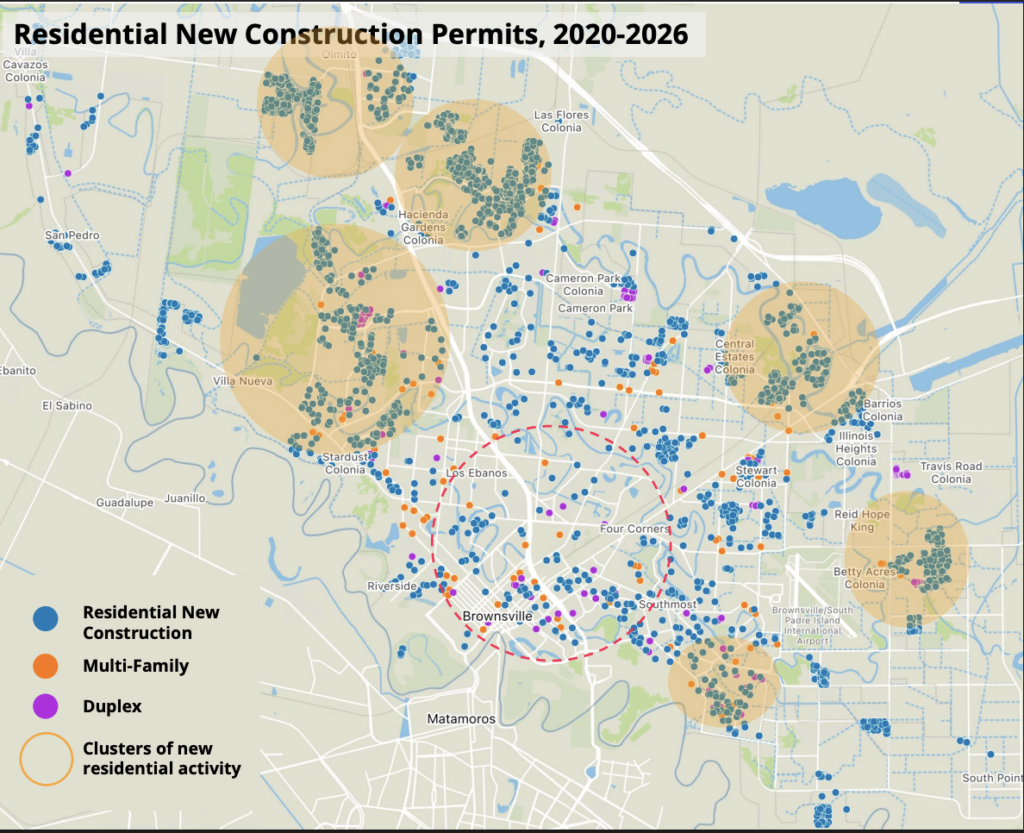
Permitting activity shows much of Brownsville’s growth is happening at the edges of the city while there’s less growth downtown and on the city’s South side where it shares a border with the Mexican city of Matamoros.
The consultants have already held two open houses, collected 242 surveys, and interacted with at least 1,000 residents so far in Brownsville.
José Eduardo Sánchez of Tecolotl said that community concerns center on affordability and homeownership, rising costs relative to incomes, and neighborhood conditions such as safe streets, sidewalks, drainage, lighting, and parks.
“We’ve also heard a lot that a quality home requires an entire neighborhood,” Sánchez said. “As Brownsville continues to grow, residents are also sharing that they want that growth to strengthen existing communities and create opportunities for longtime families to be able to stay and thrive where they are.”

Kristen Mosbrucker-Garza
Reporter
Kristen Mosbrucker-Garza is a versatile multimedia news reporter who lives and works along the Texas-Mexico border in Hidalgo County. Mosbrucker-Garza is a news reporter for the Rio Grande Valley Business Journal. During her career she's worked for the McAllen Monitor, San Antonio Business Journal, The Advocate Newspaper in Louisiana, Phoenix New Times, and public media outlets in Baltimore and Philadelphia.
Most Read
- Is SpaceX quietly building a data center at Starbase? Job postings offer clues
- Developers begin $12M master-planned community near Rio Grande City
- Edinburg ISD rejects nearly $6M offer for prime land near La Sienna despite $15M budget deficit
- A little MySpace, a little AOL: Valleyites help grow new social media platform
- Dickey’s Barbecue Pit to open new McAllen location inside Cambria Hotel
Get the latest business news delivered to your inbox every morning for free.
Try 30 Days Free!
Get full access to award-winning journalism covering business, real estate, health care, economic trends, and the people shaping the Rio Grande Valley.
30 Days Free!
$9.95/month
Limited time offer
Subscription renews after your 30 day free trial at $9.95/mo.
Included Benefits
- Unlimited access to all articles
- Daily business news and analysis
- Subscriber-only content and features
Stories That Matter
- SpaceX seeks economic incentives for $24B Starbase data center and power plant
- New $950K Church’s Chicken restaurant planned for Roma
- New $3M warehouse and office development planned for McAllen
- $12.3M apartment complex planned for Brownsville
- Mission’s first Small Business Expo puts $25K on the line for local entrepreneurs
- McCoy’s gives $10K, tools to launch Mid-Valley construction academy
- UT Health RGV performs new digestive procedure for first time in the Valley
- TSTC bets on advanced manufacturing to meet RGV’s industrial boom
- Pharr’s cross-border business push earns international recognition
- Brownsville eases drought restrictions after nearly three years as Rio Grande reservoir levels improve