Deportations of Mexican nationals from the United States dropped in early 2026, but officials along the border say the bigger change is what happens after people are sent back.
Instead of trying to cross again right away, more migrants are staying in border cities — and starting over there.
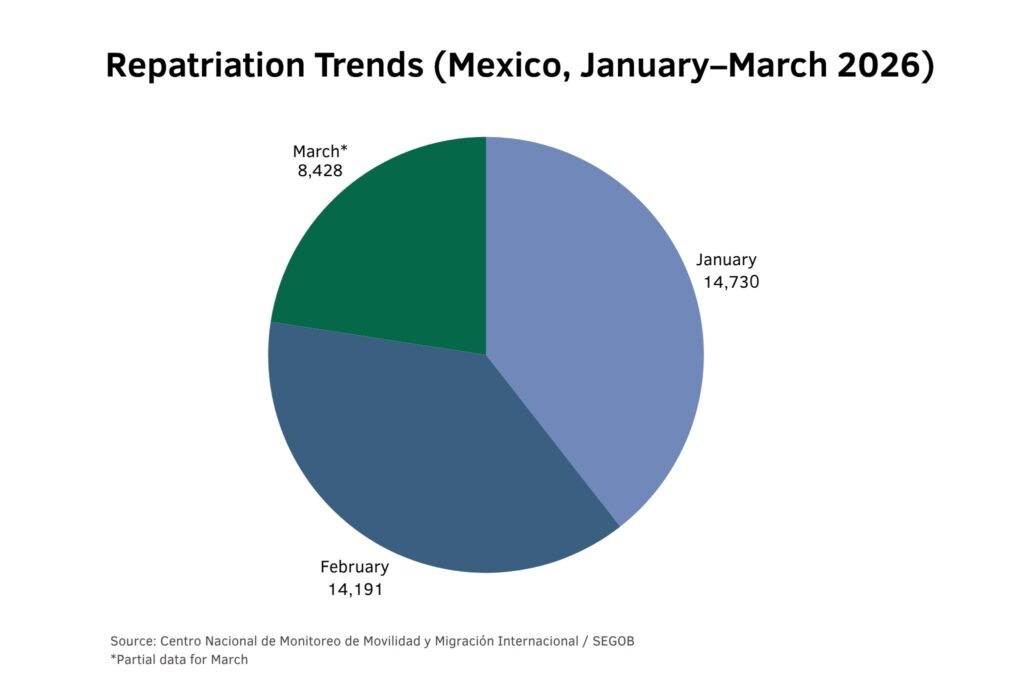
Data from Mexico’s Secretaría de Gobernación shows repatriations fell from 14,730 in January to 14,191 in February, a 3.7% decrease. The drop became more pronounced in March, with partial data showing a 40.6% decline from February.
Officials say that doesn’t mean migration is slowing for good. It means the pattern is changing.
Border cities are no longer just pass-through points
Tamaulipas remains one of the main places where deported migrants are returned, especially through Reynosa, Matamoros, and Nuevo Laredo.
About 8,428 people were returned through the state in the first three months of the year, according to the Instituto Tamaulipeco para los Migrantes.
Most of them are not from Tamaulipas. They come from other parts of Mexico, especially southern and central states.
That means border cities are acting less like a checkpoint — and more like a place where people end up staying.
Fewer people are trying again
Officials say one of the biggest changes is that migrants are no longer immediately trying to reenter the U.S.
“In previous years, it was common for them to try crossing again; now they think twice,” said Juan José Rodríguez Alvarado, head of the state migrant institute.
That shift is keeping more people in cities like Reynosa and Matamoros for longer periods.
More pressure on local systems
As more migrants stay, local agencies are seeing increased demand for: jobs, housing, medical and mental health care and basic documents like birth certificates and ID numbers.
In Matamoros, officials are also helping children born in the U.S. get dual nationality so they can go to school and access healthcare in Mexico.
At least 80 of those cases have been processed so far this year.
Money flowing back home is also dropping
The shift is also showing up in remittances — money sent from the U.S. to families in Mexico.
In Tamaulipas, remittances fell by about $40 million compared to last year, dropping from $1.016 billion to $980 million.
About 225,000 families in the state depend on that income.
The numbers don’t tell the full story
While official data shows deportations are down, local groups say the real situation is more complicated.
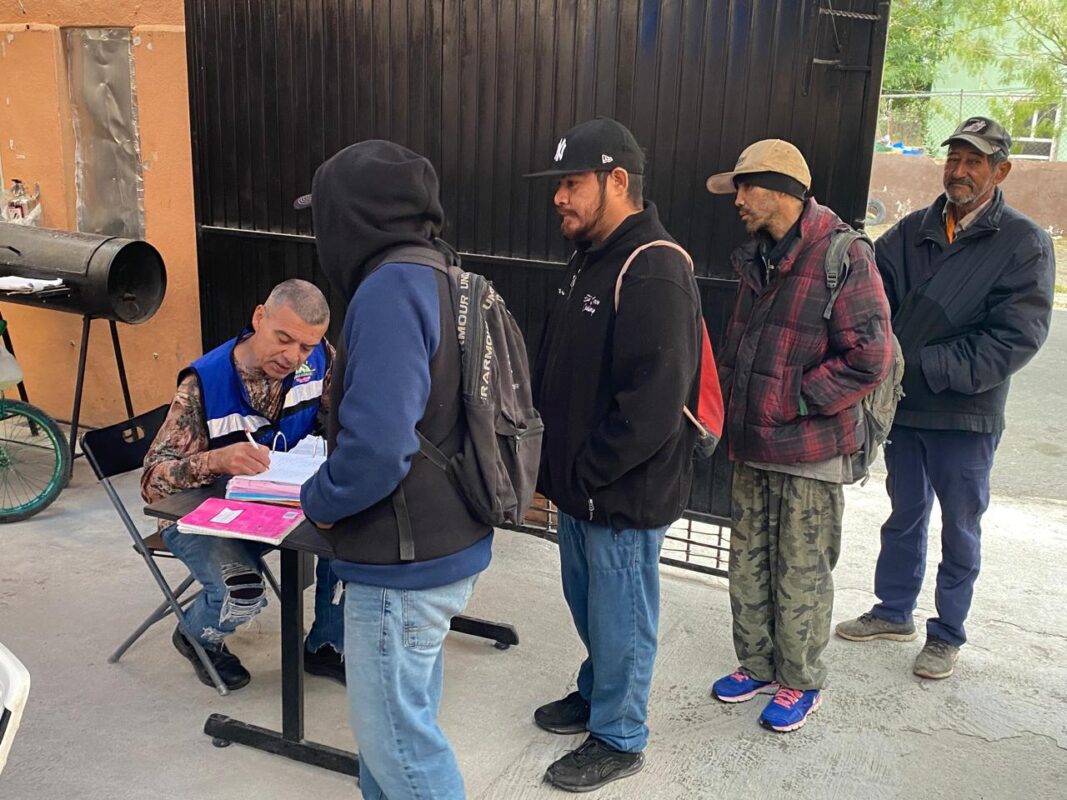
In Reynosa, shelters and aid groups report that many migrants never show up in official counts because they don’t go through formal processing.
“There are migrants who do not go through migration authorities,” said Lulú González, who runs a local shelter.
That means the actual number of people arriving and staying in border cities may be higher than reported.
Starting over — not moving on
For many migrants, returning to Mexico is not temporary.
Officials say many had lived in the U.S. for years, with jobs and families. Now, they are arriving in border cities with few resources and no clear next step.
“They arrive in shock. Many no longer have family in their place of origin,” said Anahí García Cisneros, a regional migrant official in Matamoros.
As deportations decline, border cities are taking on a new role — not just receiving people, but helping them rebuild their lives.

Anayancy Ulloa
Reporter
Most Read
- How much water does SpaceX need to operate near Brownsville? Nearly 20x its current use
- Could apartment-to-condo conversion help make $100K homeownership in the McAllen metro more affordable? One investor says yes.
- SpaceX’s futuristic city of Starbase finalizes massive 7,100-acre annexation. Here’s what we know.
- Cameron County is negotiating a $20M Fluidstack data center donation after Harlingen waffles on the same offer
- Fluidstack breaks ground on $4 billion Cameron County AI data center
Get the latest business news delivered to your inbox every morning for free.
Try 30 Days Free!
Get full access to award-winning journalism covering business, real estate, health care, economic trends, and the people shaping the Rio Grande Valley.
30 Days Free!
$9.95/month
Limited time offer
Subscription renews after your 30 day free trial at $9.95/mo.
Included Benefits
- Unlimited access to all articles
- Daily business news and analysis
- Subscriber-only content and features
Stories That Matter
- These four projects are driving more than $41B in Cameron County investment
- Mission’s first Small Business Expo puts $25K on the line for local entrepreneurs
- Reynosa’s newest technical high school focuses on AI, semiconductors and bionics
- McCoy’s gives $10K, tools to launch Mid-Valley construction academy
- UT Health RGV performs new digestive procedure for first time in the Valley
- TSTC bets on advanced manufacturing to meet RGV’s industrial boom
- Pharr’s cross-border business push earns international recognition
- Brownsville eases drought restrictions after nearly three years as Rio Grande reservoir levels improve
- Texas A&M’s $53.5M McAllen research center will tackle water, food security and Valley health
- STC puts AI to work across 55 courses — from construction sites to car repair