A routine review of the United States–Mexico–Canada Agreement (USMCA) has been transformed into a geopolitical flashpoint.
The discussion between the three nations is supposed to focus on trade policy, but it has been complicated by President Donald Trump’s demand that Mexico stop sending humanitarian oil shipments to Cuba.
The island nation is enduring severe energy shortages, chronic blackouts, and a deepening economic crisis.
Mexico’s state oil company Pemex became a critical supplier to Cuba after Venezuelan oil shipments stalled under U.S. pressure and military action.
Trump has publicly railed against Mexico providing Cuba an energy lifeline and has linked this issue to trade leverage in the USMCA review.
And the Rio Grande Valley is caught in the middle of this standoff.
Sovereignty versus trade leverage
The U.S. has not historically tied trade compliance to geopolitical alignment.
The approach is not a part of official U.S. policy documentation, but it is reflected in the American president’s social media rhetoric and the pressure now being directed at Mexico.
On Jan. 11, Trump posted: “THERE WILL BE NO MORE OIL OR MONEY GOING TO CUBA — ZERO!” signaling that he expected Mexico to align with U.S. policy objectives or face consequences.
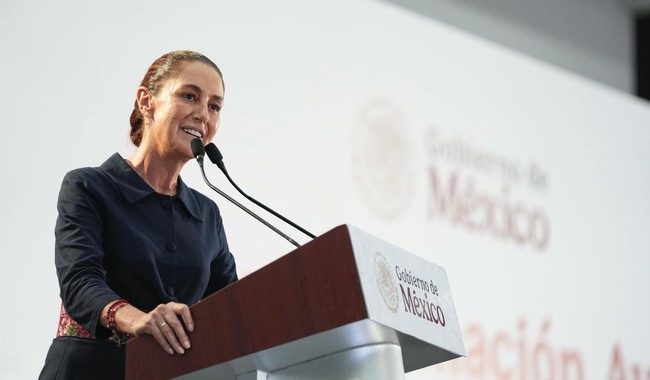
Courtesy of | Hazel Cardenas | Mexican Presidency
Mexico’s President Claudia Sheinbaum responded publicly at a news conference when she was asked whether the decision to halt some shipments to Cuba was influenced by U.S. pressure.
She did not directly deny responding to threats from the White House, and said, “It is a sovereign decision, and it is made in the moment when necessary.”
The Mexican President insisted that Pemex makes decisions based on contractual and humanitarian considerations, not geopolitical pressure, even from Washington.
Sheinbaum’s repeated emphasis on sovereignty reflects a delicate diplomatic balancing act: maintaining ties with Cuba, managing domestic political expectations, and negotiating economic agreements with the U.S.
While she declined to elaborate on plans, her message was that Mexico will not simply acquiesce to U.S. pressure when it believes doing so undermines its national interests.
Senior Mexican officials, however, have reportedly and privately expressed concern that continuing oil shipments could provoke U.S. retaliation.
That retaliation would likely take the form of trade actions or deeper diplomatic pressure as Mexico also negotiates its stance on other sensitive issues such as cartel enforcement and trade.
Tariffs as a policy weapon
Trump’s threat is that if Mexico’s continued humanitarian oil support for Cuba does not align with U.S. policy, the United States could use tariff leverage in the USMCA review to punish Mexican exports.
Though explicit tariff actions tied to the oil issue have not yet been articulated in official policy documents, the specter of punitive tariffs is real given Trump’s pattern of using tariffs historically to push policy demands.
Tariffs applied to Mexico in recent years — including a 25% tariff on some Mexican goods imposed in March 2025 in another dispute — show how quickly Trump is willing to use trade as leverage.
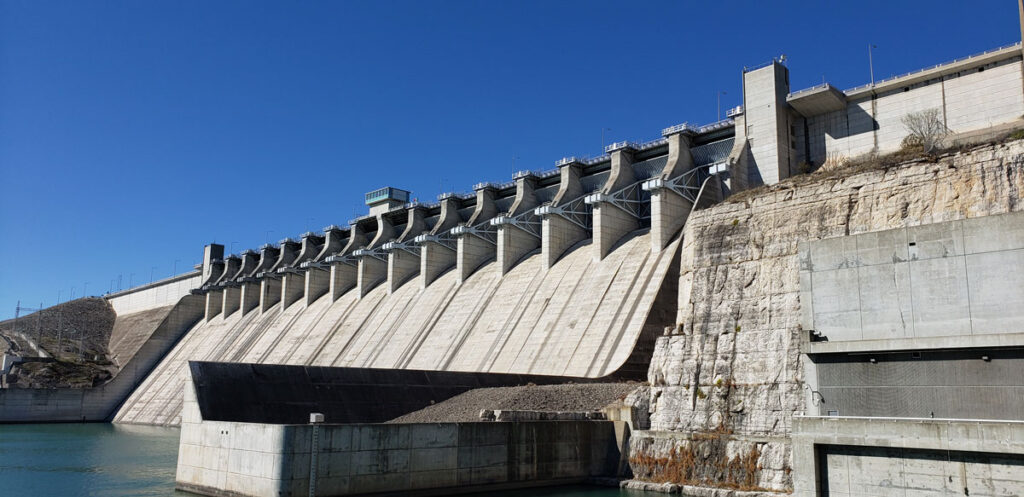
Courtesy of | International Boundary and Water Commission
He has also threatened tariffs, and even sanctions, over Mexico’s alleged shortfalls on water deliveries under the 1944 Rio Grande water treaty, writing that such violations are “very unfair to our U.S. Farmers who deserve this much-needed water” and that this justified a 5 percent tariff if Mexico did not comply.
The threat worked, and Mexico released water, a sequence that has likely emboldened the U.S. president as USMCA talks approach.
There is no shortage of economists and trade analysts warning that such actions could ripple widely, especially in the Rio Grande Valley.
If broad tariffs on Mexican imports were enforced, prices on many goods would rise rapidly because of the deeply integrated nature of the U.S.–Mexico supply chain, and industries that depend on Mexican inputs, from auto parts to electronics, could be hurt.
Why the Valley is uniquely exposed
None of this is just hypothetical in the Rio Grande Valley.
The economy here depends on seamless, low-cost cross-border commerce, and Trump’s trade jockeying has already generated uncertainty that harms investment and business planning.
Investors and businesses cannot plan.
Valley, manufacturers, trade groups, and agricultural leaders have already voiced real concern about how tariff threats could damage their economies.

Dante Galeazzi, CEO and president of the Texas International Produce Association, which represents hundreds of companies across the produce supply chain worth billions annually, told the Rio Grande Valley Business Journal on our podcast that the amount of produce imports in Valley communities and along the entire Texas border is enormous.
“Across Texas,” he said, “we’re bringing in about 13 billion pounds of fresh produce each year. In Pharr alone, about 22 million pounds a day. The main commodities are avocados, tomatoes, limes, bell peppers, and mangoes.”
Galeazzi’s warning about price shocks underscores how sensitive RGV agriculture is to changes in cross-border economic rules.
Most major Valley farms and importers operate supply chains that span both sides of the border, leveraging Mexico’s climate and land for winter production and U.S. distribution networks.
A sudden spike in tariffs would almost certainly ripple from production fields to grocery store shelves.
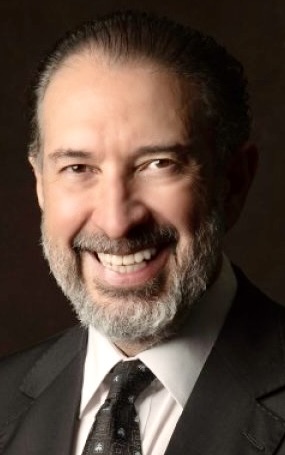
Leaders in manufacturing and border trade have also already voiced alarm.
Joaquin Spamer, president of the logistics firm CIL and a longtime leader in binational trade with Mexico, has said that Mexico could retaliate with its own tariffs on U.S. farm exports if the United States moved forward with punitive trade measures.
“There is a very long list of U.S. agricultural products that are sold in Mexico,” he told the Texas Tribune, pointing to the vulnerability of U.S. farmers on both sides of the border when trade relations deteriorate.
Uncertainty is already shaping decisions
The Valley is a gateway for North American commerce.
Andrew Lawson Carranco, chair of the Government Affairs Council at the Laredo Chamber of Commerce, another major border trade hub, recently explained how tariff uncertainty saps confidence.
“We’re left with more questions than answers,” he said. The need to know is about when or how tariff threats might materialize, making planning across logistics and supply chains precarious.
A Dallas Federal Reserve Bank survey reported nearly 60% of Texas business owners say the Trump administration’s back-and-forth on tariffs has already harmed their ability to plan, forcing them to postpone hiring or investment decisions.
Compounding pressures: water and labor
The Rio Grande Valley’s agricultural sector already faces serious pressures from water shortages tied to climate strains and disputes with Mexico over water deliveries.
Those water issues, cited by Trump in his tariff rationale, are what farmers in the Valley say directly affects their crops, not Mexico’s broader trade relationship.
Valley growers dealing with increasingly inconsistent irrigation supplies have had to adjust their crop plans because of declining water availability. Water is an issue that tariff threats could make worse by increasing costs and shrinking markets when they most need stability.
Courtesy of | 57 Concrete
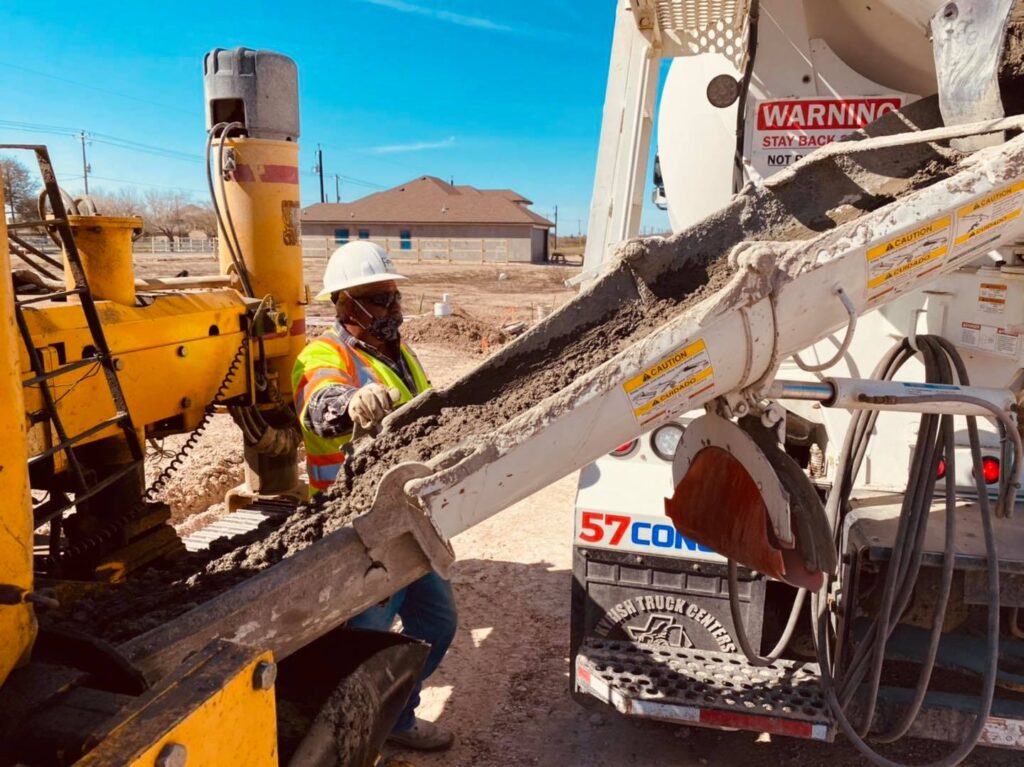
Construction trades in the RGV are also feeling strain from broader federal enforcement actions.
Valley contractors have said heightened immigration enforcement has made workers fear showing up for their jobs, tightening already fragile labor pools.
Nick Rhodes, a Valley home builder, said there is increasing concern across the residential construction sector.
“It’s sad that people are living in fear to come to work,” he said. “But we haven’t seen the direct economic effect of it yet in our business. I can tell you if they continue to up the presence, it will come.”
A continued labor shortage will compound economic harm if tariffs slow the regional economy and reduce demand in construction and trades.
What the USMCA review was supposed to be
Mexican leadership, nonetheless, has been unequivocal about sovereignty.
President Sheinbaum, parsing her language for diplomatic outcomes, stressed that decisions about oil shipments are “sovereign” and based on contracts or humanitarian reasoning, not external pressure.

Photo Credit | Anayancy Ulloa
Mexico’s approach suggests that tying trade compliance to foreign policy choices could destabilize long-standing economic ties that benefit both countries.
Business voices in Mexico, including chambers of commerce, have previously called tariffs “counterproductive” and urged cooperation to strengthen North American economic integration rather than fragment it.
The 2026 USMCA review is meant to be an opportunity for constructive modernization by updating rules on labor, environment, digital trade, and dispute resolution.
It is not intended as a battlefield for unrelated geopolitical demands.
If Mexico and the United States cannot agree on updates, the document does not immediately collapse but enters an annual review process that prolongs uncertainty and discourages investment.
The result will likely be a level of uncertainty that would undermine the predictability that businesses rely on in the Valley, and beyond.
A border economy at risk
The Trump administration’s tactic of threatening tariffs to compel Mexico to alter its humanitarian oil shipments to Cuba transforms trade policy into geopolitical coercion.
For residents of the Rio Grande Valley — farmers, growers, manufacturers, logistics operators, and small business owners — these threats are more than abstract policy. They represent lost revenue, rising costs, snarled supply chains, and economic fragility.
Economic integration across the U.S.–Mexico border is deeply interwoven. The two economies operate almost as one.
Punitive tariffs triggered by unrelated foreign policy disputes risk hurtling the Valley into recessionary conditions. Tariffs, combined with water scarcity, construction labor shortages, and broader economic headwinds, all have the potential to force a thriving business environment into a troubled and harmful state of decay.

James Moore
jmoore
New York Times bestselling author, Emmy-winning TV news correspondent, COO and co-founder of Rio Grande Valley Business Journal
Most Read
- SpaceX’s futuristic city of Starbase finalizes massive 7,100-acre annexation. Here’s what we know.
- 25 Mexican businesses eye McAllen expansion after city pitches U.S. market entry program
- Australian company plans to build a $607M lithium refinery at the Port of Brownsville. It’s a big bet on America’s battery future
- Starbase cancels meeting to consider annexing 444 acres relinquished by Brownsville
- SpaceX reschedules Starship’s first flight around the Earth
Get the latest business news delivered to your inbox every morning for free.
Try 30 Days Free!
Get full access to award-winning journalism covering business, real estate, health care, economic trends, and the people shaping the Rio Grande Valley.
30 Days Free!
$9.95/month
Limited time offer
Subscription renews after your 30 day free trial at $9.95/mo.
Included Benefits
- Unlimited access to all articles
- Daily business news and analysis
- Subscriber-only content and features
Stories That Matter
- Dickey’s Barbecue Pit to open new McAllen location inside Cambria Hotel
- NADBank opens $300M financing pipeline for water, energy projects along the border
- Is SpaceX quietly building a data center at Starbase? Job postings offer clues
- Engineering firm Garver opens $5M Harlingen office, plans up to 50 new jobs
- Mission’s first Small Business Expo puts $25K on the line for local entrepreneurs
- McCoy’s gives $10K, tools to launch Mid-Valley construction academy
- UT Health RGV performs new digestive procedure for first time in the Valley
- TSTC bets on advanced manufacturing to meet RGV’s industrial boom
- Pharr’s cross-border business push earns international recognition
- Brownsville eases drought restrictions after nearly three years as Rio Grande reservoir levels improve