Tamaulipas officials are intensifying livestock health operations across the state as New World screwworm cases continue spreading northward through Mexico, raising concerns about potential impacts to cattle production and cross-border trade near Texas.

State authorities confirmed 435 cumulative cases of New World screwworm, including 160 active infections, during a press conference attended by livestock industry leaders, veterinarians, university researchers, and state officials last week.
The outbreak has become both a sanitary and economic concern for Tamaulipas, one of Mexico’s leading cattle-exporting states with deep trade ties to the United States livestock market.
José Octavio Merino Char, Tamaulipas secretary of rural development, fisheries and aquaculture, said Tamaulipas Gov. Américo Villarreal authorized 15 million pesos — about $790,000 — to strengthen inspections, field operations, and preventive treatments aimed at slowing the pest’s spread toward the Texas border.
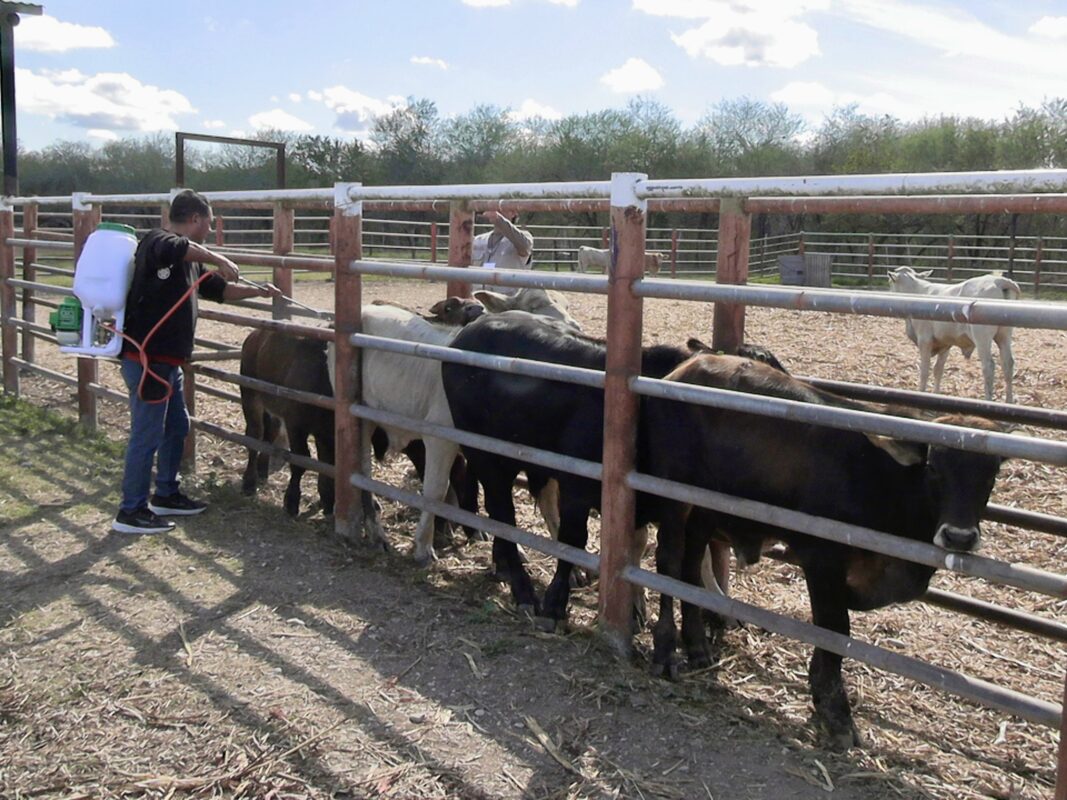
More than 200 veterinarians, inspectors, and technical specialists are now participating in operations across ranches, rural communities, and highway checkpoints throughout the state.
Officials presented updated case maps and containment strategies focused on preventing the outbreak from moving farther north.
Southern Tamaulipas remains hardest hit
According to state officials, the highest concentration of cases remains in southern and highland municipalities bordering Veracruz and San Luis Potosí.
Ocampo and El Mante currently report the largest number of active infections with 14 cases each, while Tula, Llera, and González rank among the municipalities with the highest cumulative case totals.
Authorities said cattle account for 73.5% of detected infections.
Courtesy of | CPA
Of the 319 cattle cases identified so far, 205 involved infections in the navels of newborn calves, representing nearly 65% of infections in cattle.
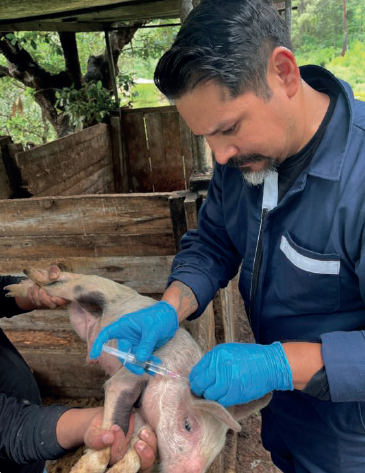
Officials also reported 41 cases in pigs and 24 cases in dogs.
Many of those infections were linked to preventable wounds caused by tethering ropes, animal fights, wire injuries, dehorning, and untreated trauma.
“Navel wounds, wire injuries, dehorning wounds and trauma are entirely preventable causes,” Merino Char said, emphasizing that rapid wound treatment remains one of the most effective tools to reduce the spread of the pest.
Officials said the northernmost confirmed case so far has been detected in the municipality of Villagrán, which is about 100 to 120 miles south of the U.S. Mexico border.
More than 120,000 animals treated
State officials said containment efforts now include 16 fixed inspection checkpoints, 13 treatment stations, eight mobile sanitary brigades, and more than 200 specialists operating in the field.
The operations involve teams from Mexico’s National Service for Agrifood Health, Safety and Quality, the Mexico-U.S. Commission for the Prevention of Foot-and-Mouth Disease and Other Exotic Animal Diseases, the International Regional Organization for Agricultural Health, and Mexico’s Ministry of Agriculture and Rural Development.
Whenever a suspected case is identified, officials said teams immediately launch what authorities describe as a “focal and perifocal sweep,” inspecting all warm-blooded animals within the surrounding area.
As part of those operations, more than 120,000 animals have already received preventive treatments using ivermectin and doramectin.
The state has also restricted livestock imports from southern Mexico for more than a year, a measure officials described as critical to reducing the risk of the pest reaching the U.S. border region.
USDA ramps up sterile fly operations
The report also highlighted the growing role of the U.S. Department of Agriculture in the regional containment strategy.
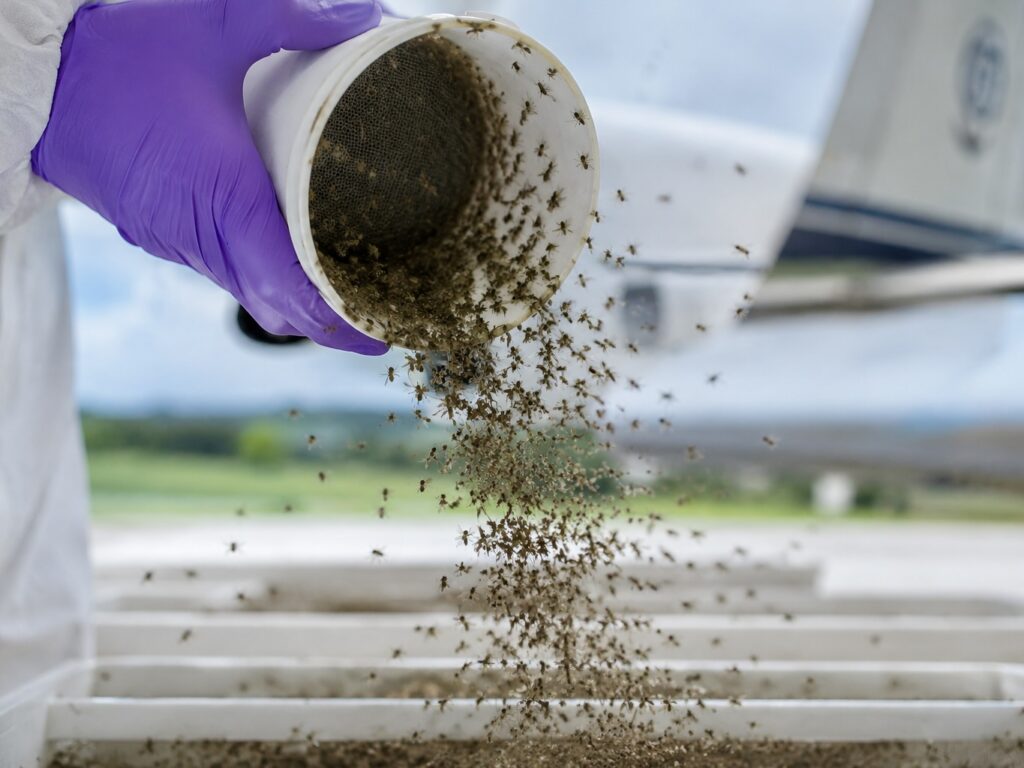
According to USDA Animal and Plant Health Inspection Service officials, approximately 100 million sterile flies are currently being released weekly across Mexico.
The sterile insects are produced at the COPEG facility in Panama and transported into Mexico for aerial dispersal operations over affected areas.
Courtesy of | COPEG
Federal officials said the sterile fly strategy was previously used to eradicate New World screwworm from North America decades ago.
USDA officials initially concentrated operations in southern Mexican states including Chiapas, Oaxaca, and Veracruz, but dispersal zones have now expanded farther north into northeastern Mexico as cases continue advancing toward the Texas border.
APHIS also confirmed new aerial release operations from Tampico aimed at strengthening sanitary coverage near Tamaulipas and Nuevo León.
While USDA has not publicly specified how many sterile flies are being released specifically over Tamaulipas, the agency confirmed the border region remains part of its priority containment strategy.
Federal officials also said the Tapachula-Metapa sterile fly production facility in Chiapas could begin generating between 60 million and 100 million additional sterile flies per week beginning in summer 2026.
Meanwhile, the U.S. is constructing a new sterile fly production facility in Edinburg capable of producing up to 300 million sterile flies weekly.
Combined, officials estimate the regional network could eventually reach nearly 500 million sterile flies per week — levels similar to those used during earlier eradication campaigns across North America.
University researchers join containment efforts
Dámaso Anaya Alvarado, president of the Universidad Autónoma de Tamaulipas, warned that New World screwworm extends beyond livestock production and can also affect pets, wildlife, and humans through untreated wounds.
The university is currently conducting research focused on traps, monitoring systems, and specialized attractants designed to improve detection of the insect.
Anaya Alvarado also announced that Veterinary Medicine, Agronomy, and Engineering students will join support brigades in affected municipalities once the academic semester ends.
The student brigades will focus on inspections, training, and sanitary prevention efforts across rural communities.
The university president also urged immediate treatment of wounds in animals to reduce the spread of larvae and additional infestations.
Officials push for faster reporting
Cuauhtémoc Amaya García, undersecretary of livestock and forestry development, urged ranchers and residents to quickly report suspicious wounds or possible infestations.
“No animals are euthanized, ranches are not quarantined, and livestock is not confiscated from producers,” Amaya García said during the conference.
Officials acknowledged the outbreak continues to spread in parts of the state but said most infections remain concentrated in southern, central, and highland regions of Tamaulipas.

Anayancy Ulloa
Reporter
Most Read
- SpaceX’s futuristic city of Starbase finalizes massive 7,100-acre annexation. Here’s what we know.
- SpaceX reschedules Starship’s first flight around the Earth
- How much water does SpaceX need to operate near Brownsville? Nearly 20x its current use
- Could apartment-to-condo conversion help make $100K homeownership in the McAllen metro more affordable? One investor says yes.
- Crunch Fitness is expanding and struggling in the Valley. Here’s why
Get the latest business news delivered to your inbox every morning for free.
Try 30 Days Free!
Get full access to award-winning journalism covering business, real estate, health care, economic trends, and the people shaping the Rio Grande Valley.
30 Days Free!
$9.95/month
Limited time offer
Subscription renews after your 30 day free trial at $9.95/mo.
Included Benefits
- Unlimited access to all articles
- Daily business news and analysis
- Subscriber-only content and features
Stories That Matter
- Tamaulipas is rethinking how it sells its cattle. A $44.5M project would keep more of the business at home
- Brownsville is changing its drainage fee. Businesses could pay more as the city looks to raise $6.2M a year
- Mission’s first Small Business Expo puts $25K on the line for local entrepreneurs
- Reynosa’s newest technical high school focuses on AI, semiconductors and bionics
- McCoy’s gives $10K, tools to launch Mid-Valley construction academy
- UT Health RGV performs new digestive procedure for first time in the Valley
- TSTC bets on advanced manufacturing to meet RGV’s industrial boom
- Pharr’s cross-border business push earns international recognition
- Brownsville eases drought restrictions after nearly three years as Rio Grande reservoir levels improve
- Texas A&M’s $53.5M McAllen research center will tackle water, food security and Valley health