A new economic analysis commissioned by the Council for South Texas Economic Progress argues that manufacturing remains the Rio South Texas Region’s most powerful engine for job creation and economic growth, generating significantly larger ripple effects than either warehousing or retail investment.
The study compared the economic impact of manufacturing, warehousing and storage, and retail trade investment across the Rio Grande Valley and Laredo regions using a hypothetical $1 billion investment scenario. Researchers found manufacturing generated the strongest returns across nearly every major economic development metric, including jobs, wages, gross domestic product, and overall economic output.
According to the report, a $1 billion manufacturing investment would support about 9,010 regional jobs, compared with 3,573 jobs from warehousing and storage and 3,245 jobs from retail trade. Manufacturing also generated nearly $594 million in annual regional GDP, more than double the output attributed to either of the other sectors.
The biggest difference came from what economists call the “multiplier effect.”

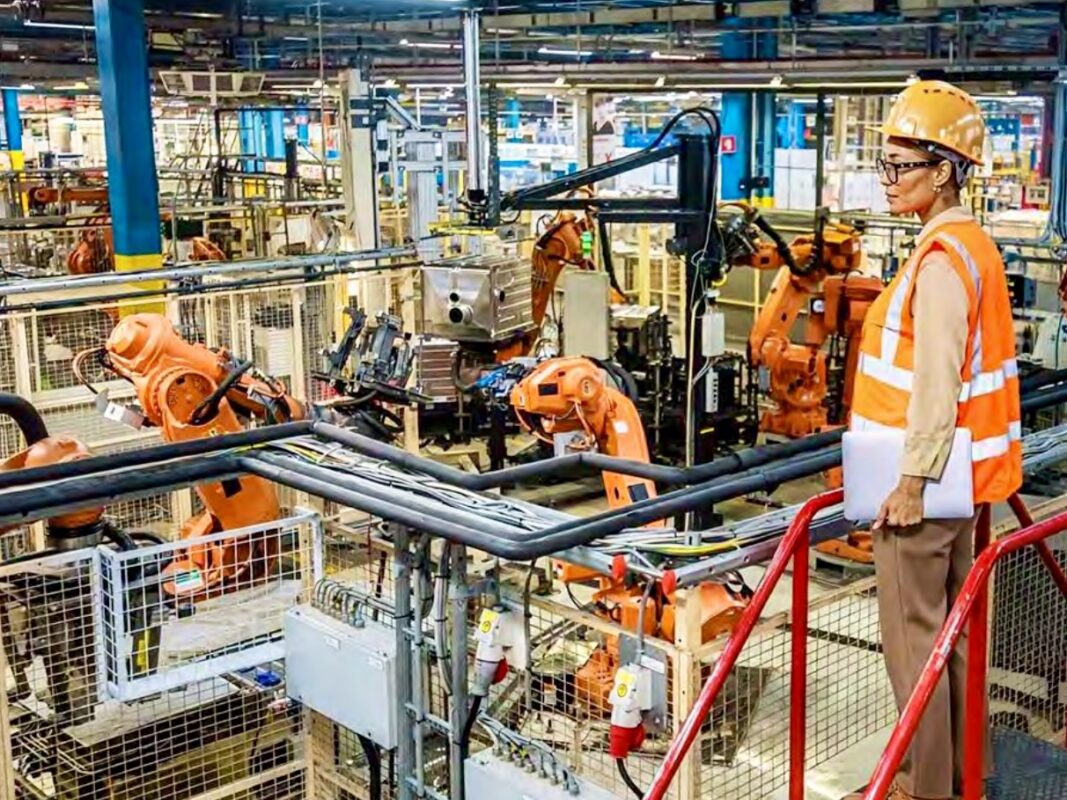
In simple terms, manufacturing tends to create demand for other businesses. Factories buy materials, machinery, transportation services, professional services and other inputs that support additional jobs throughout the economy.
The study found a $1 billion manufacturing investment would create an estimated 5,387 indirect jobs across the supply chain. By comparison, warehousing generated 473 indirect jobs and retail generated 387.
“The defining metric that should reshape our economic policy is the indirect employment channel,” COSTEP CEO Adam Gonzalez wrote in a message accompanying the report.
Researchers found manufacturing generated nearly $2 billion in annual economic output under the $1 billion investment scenario — roughly five times more than either warehousing or retail.
Not an either-or choice
The report does not argue that warehousing and retail should be ignored.
Instead, researchers conclude the region needs all three sectors working together.
Manufacturing serves as the primary economic multiplier, creating products and supporting suppliers throughout the economy. Warehousing functions as the logistics backbone that moves those products through domestic and international markets. Retail provides consumer services and generates local tax revenue that helps fund public infrastructure and quality-of-life investments.
In fact, the study found retail generated the highest amount of local and state tax revenue among the three sectors, producing about $40.7 million annually from a $1 billion investment compared with $38.7 million from manufacturing and $11.8 million from warehousing.
The report recommends a three-part economic development strategy that prioritizes manufacturing recruitment while continuing to build logistics infrastructure and retail development.
Nearshoring opportunity
The findings arrive as economic developers across South Texas continue pursuing nearshoring opportunities tied to U.S.-Mexico trade.
Gonzalez argues the Rio South Texas Region is positioned to benefit from companies relocating production closer to North American markets as businesses seek alternatives to long overseas supply chains.
The report identifies advanced manufacturing sectors including automotive, aerospace, medical devices and electronics as potential targets for future recruitment efforts.
The study also highlights the region’s geographic position along the U.S.-Mexico border, arguing that the Rio Grande Valley and Laredo are uniquely positioned to support cross-border production networks that combine manufacturing, logistics and distribution capabilities.
For local leaders, the report’s central message is straightforward: manufacturing may not always generate the most headlines, but it remains the sector that produces the largest economic ripple effects when new investment arrives.
“The three sectors are structurally complementary, not substitutes,” the report concluded. “An optimal regional economy includes all three.”

RGV Business Journal Staff
Staff
Most Read
- Is SpaceX quietly building a data center at Starbase? Job postings offer clues
- 25 Mexican businesses eye McAllen expansion after city pitches U.S. market entry program
- SpaceX’s futuristic city of Starbase finalizes massive 7,100-acre annexation. Here’s what we know.
- McAllen metro keeps selling more homes as Brownsville-Harlingen market sees 17% drop through August
- Rio Grande LNG moves closer to getting even bigger at Port of Brownsville
Get the latest business news delivered to your inbox every morning for free.
Try 30 Days Free!
Get full access to award-winning journalism covering business, real estate, health care, economic trends, and the people shaping the Rio Grande Valley.
30 Days Free!
$9.95/month
Limited time offer
Subscription renews after your 30 day free trial at $9.95/mo.
Included Benefits
- Unlimited access to all articles
- Daily business news and analysis
- Subscriber-only content and features
Stories That Matter
- McAllen’s job market keeps climbing while Brownsville loses ground
- Mission EDC launches search for new CEO with salary up to $190K
- Texas transportation leaders to discuss Rio Grande Valley infrastructure at Mission summit
- Mission’s first Small Business Expo puts $25K on the line for local entrepreneurs
- McCoy’s gives $10K, tools to launch Mid-Valley construction academy
- UT Health RGV performs new digestive procedure for first time in the Valley
- South Texas College plans $4.7M makeover of cosmetology, security facilities in McAllen
- TSTC bets on advanced manufacturing to meet RGV’s industrial boom
- Pharr’s cross-border business push earns international recognition
- Brownsville eases drought restrictions after nearly three years as Rio Grande reservoir levels improve