NUEVO PROGRESO, Tamaulipas — Truck drivers blocked commercial cargo operations Tuesday at the Progreso International Bridge after a restriction on empty trailers entering Mexico left carriers, customs brokers, and local officials searching for answers.
Drivers say they have been unable to cross empty trailers from the United States into Mexico through the Las Flores cargo section of the crossing since May 21. According to customs brokers, the measure originated with Mexico’s National Customs Agency, known as ANAM.
What remains unclear is why the restriction was implemented, how long it will remain in place, and whether it applies to other border crossings.
That uncertainty became the focus of Tuesday’s protest, which disrupted imports, exports, and empty-trailer crossings used in the agricultural and grain trade between Texas and Mexico.
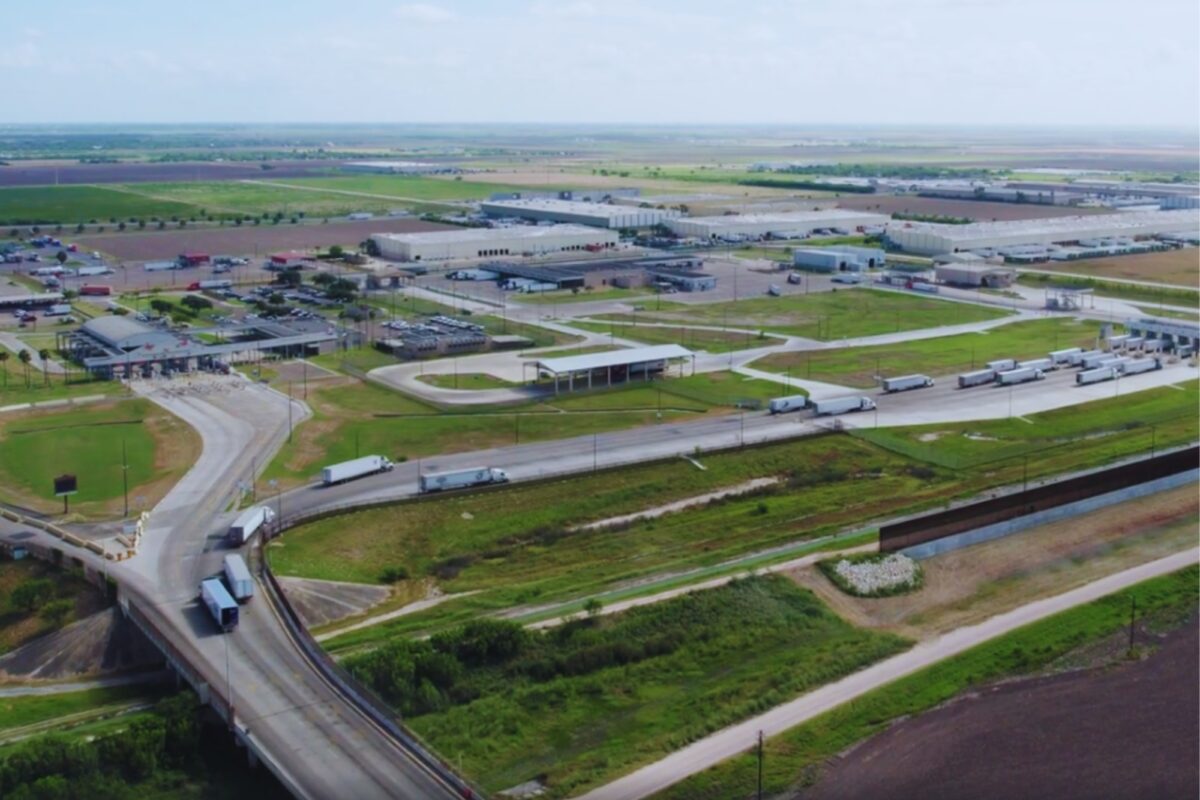
The Progreso International Bridge connects Progreso, Texas, with Nuevo Progreso, Tamaulipas. Commercial cargo traffic on the Mexican side operates through the Las Flores customs section.
Marga López, the Progreso International Bridge director on the U.S. side, did not respond to a request for comment Tuesday.
The Asociación de Agentes Aduanales de Reynosa, A.C. (AAARAC) confirmed the disruption in a notice sent to members Tuesday stating that access to the Las Flores customs section had been blocked by a truckers’ demonstration affecting import and export operations.
During a site visit conducted by the Rio Grande Valley Business Journal on Tuesday, operators, authorities, and customs-sector representatives described an atmosphere of uncertainty stemming from new provisions affecting the crossing of empty trailers from the United States into Mexico.
Most drivers declined to identify themselves for fear of repercussions.
‘They are not allowing empty units through’
Jesús Barrera, general director of AAARAC, confirmed the protest remained active Tuesday afternoon.
“The blockade is still in place,” Barrera said.
Barrera said truckers’ frustrations center on restrictions preventing empty trailers from crossing from the United States into Mexico.
“They are not allowing empty units from the United States into Mexico,” he said.
According to Barrera, the measure did not begin Tuesday but has been in effect since May 21.
The customs-industry representative said discussions have already taken place with authorities in Mexico.
“We already spoke with customs authorities, but customs is still waiting for instructions since early this morning,” Barrera said about government officials in Mexico.
Drivers report immediate economic impact
Outside the cargo area, affected operators said the lack of clarity surrounding the new restrictions has forced them either to stop operations or seek alternative and more expensive border crossings.
One driver explained that carriers normally use the crossing to enter nearby Rio Grande Valley cities before quickly returning to Mexico to load agricultural products.
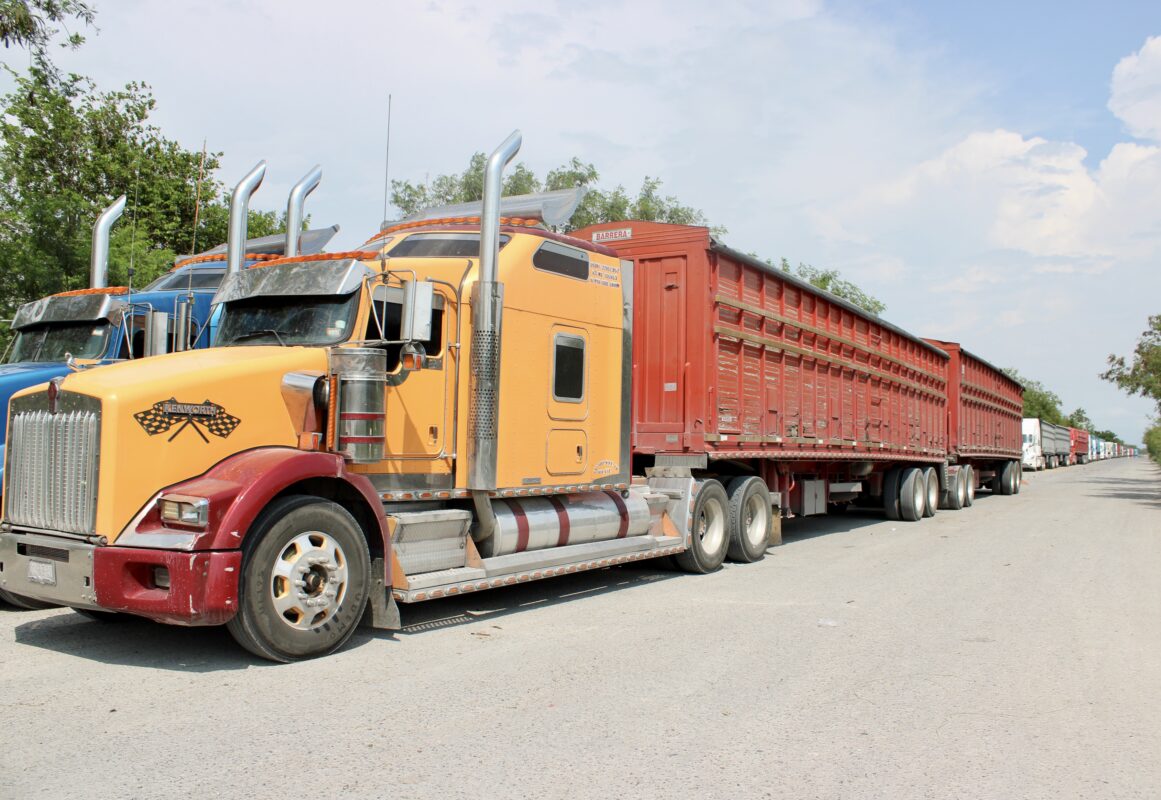
“These kinds of trailers haul corn,” he said while pointing to units parked along the road leading to the customs area. He added that operators also transport onions before returning empty to Mexico.
The driver said some carriers have begun using other crossings, increasing operating costs.
“They started crossing through Pharr, but they spend more diesel, and police stop and fine them because, to them, those are unfamiliar trailers,” he said.
Another driver who used the crossing for more than two decades said he had never experienced a situation like this before.
The testimonies reflected growing concern among operators from states including Jalisco and Tamaulipas who remained stranded while waiting for a solution.
“Drivers from Jalisco can end up stuck here for up to five days; that’s two thousand pesos for the hotel, two thousand pesos for food, plus expenses nobody reimburses,” one operator said.
At current exchange rates, 2,000 pesos is roughly equivalent to $105.
Among the truckers’ primary complaints was the lack of information about how they are expected to operate moving forward and which crossings they will be permitted to use.
“No one is giving us answers,” one driver said.
Agricultural products and grain shipments stranded
Operators said the blockade is primarily affecting shipments of corn, sorghum, onions, and watermelon that regularly move between Texas and Mexican states.
One driver said he planned to cross into the United States to pick up a corn shipment bound for Jalisco.
“That truck over there is empty because it was going to load corn,” he said.
He added that financial losses begin before a truck ever reaches the crossing because carriers must purchase international insurance and absorb other transportation costs.
“It already includes expenses, insurance, all the crossing costs,” he said.
The operator estimated that insurance alone can represent a loss of nearly 2,000 pesos when a truck is unable to cross.
“You lose close to two thousand pesos just on insurance,” he said.
Another trucker warned that perishable products could spoil if delays continue.
“Some are hauling watermelon, and it’s just sitting there; it could spoil,” he said.
The Journal attempted to speak with drivers hauling watermelon into the United States, but requests for interviews were declined while trucks remained stalled near the crossing.
Authorities say protest remains peaceful
Security and surveillance personnel stationed at the bridge said the demonstration remained peaceful and incident-free Tuesday.
Rodolfo Cumplido, who identified himself as being in charge of the Las Flores customs area in Nuevo Progreso, said the protesters remained at the site because they wanted answers about the economic impact they are facing.
“They are there peacefully; they want to know why their economy is being affected,” Cumplido said.
He said local officials are simply following instructions issued by federal authorities.
“We received instructions from the National Agency,” he said.
Cumplido also sought to dispel concerns among some operators who wondered whether the disruption was related to the United States-Mexico-Canada Agreement.
“They ask me whether the Free Trade Agreement has been canceled. No, it has nothing to do with that,” he said.
Strategic crossing for regional trade
The Progreso International Bridge is used daily by transfer operators and trucking companies moving agricultural products and grain shipments between Texas and Mexican states such as Jalisco and Tamaulipas, making it an important link in regional logistics chains.
Until ANAM issues a broader public explanation or trucking organizations receive additional guidance, dozens of operators remain stranded while awaiting a solution that would allow them to resume commercial routes.

Anayancy Ulloa
Reporter
Anayancy Ulloa Luna is a contributor to the Rio Grande Valley Business Journal who hails from Reynosa in the Mexican state of Tamaulipas. Ulloa has a long history as a U.S.-Mexico region business expert in marketing, formerly the editorial director of Mexico Industry.
Most Read
- Is SpaceX quietly building a data center at Starbase? Job postings offer clues
- 25 Mexican businesses eye McAllen expansion after city pitches U.S. market entry program
- Rio Grande LNG moves closer to getting even bigger at Port of Brownsville
- Starbase EDC may issue $3 billion in tax-exempt bonds to support SpaceX, records show
- Edinburg ISD rejects nearly $6M offer for prime land near La Sienna despite $15M budget deficit
Get the latest business news delivered to your inbox every morning for free.
Try 30 Days Free!
Get full access to award-winning journalism covering business, real estate, health care, economic trends, and the people shaping the Rio Grande Valley.
30 Days Free!
$9.95/month
Limited time offer
Subscription renews after your 30 day free trial at $9.95/mo.
Included Benefits
- Unlimited access to all articles
- Daily business news and analysis
- Subscriber-only content and features
Stories That Matter
- S-Mart opens seventh Matamoros store with $12.6M investment, plans more
- Starr County’s next solar farm moves forward as contractor ramps up hiring
- Valley manufacturers face workforce shortage as industry eyes expansion
- Mission’s first Small Business Expo puts $25K on the line for local entrepreneurs
- McCoy’s gives $10K, tools to launch Mid-Valley construction academy
- UT Health RGV performs new digestive procedure for first time in the Valley
- TSTC bets on advanced manufacturing to meet RGV’s industrial boom
- Pharr’s cross-border business push earns international recognition
- Brownsville eases drought restrictions after nearly three years as Rio Grande reservoir levels improve
- Texas A&M’s $53.5M McAllen research center will tackle water, food security and Valley health