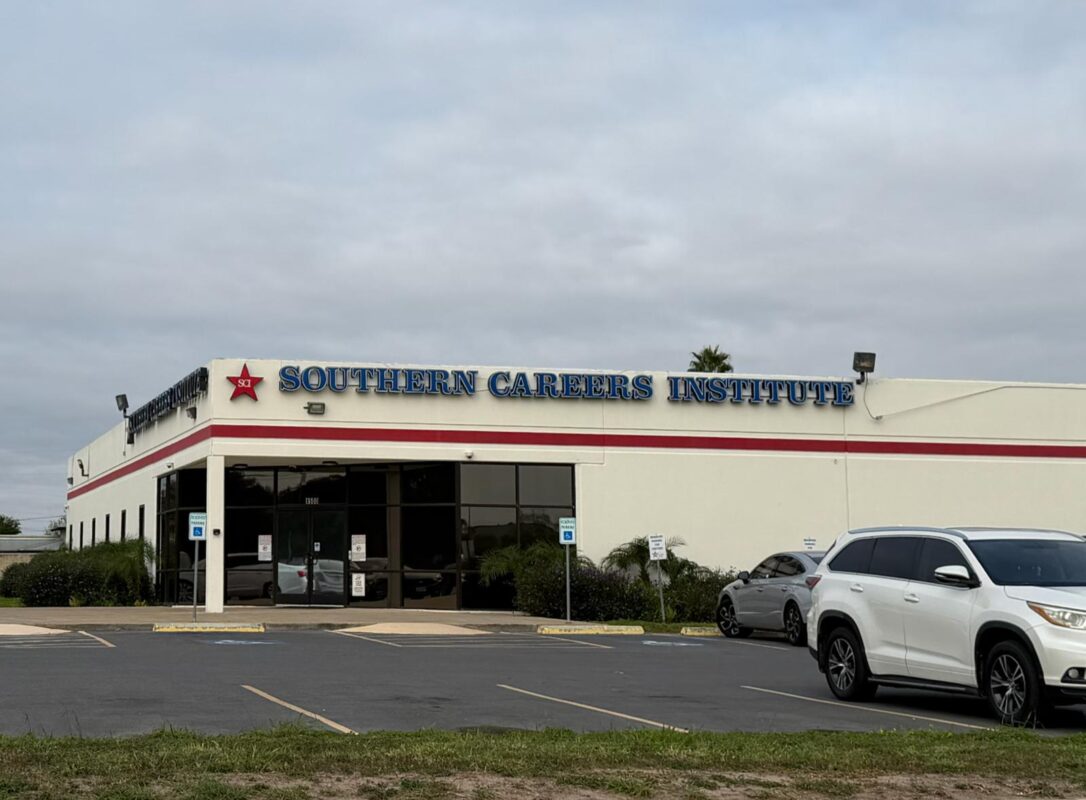
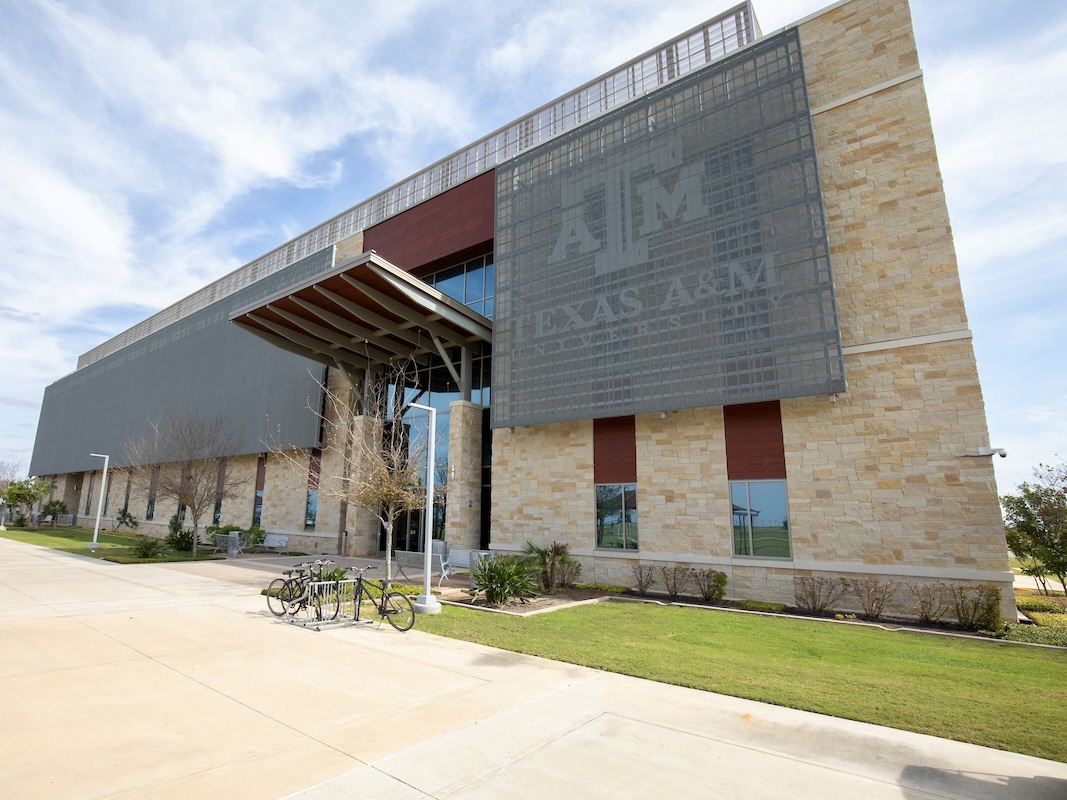
Now that South Texas economic development leaders have helped secure several major companies to invest in the region, the details about how the local educational leaders can help train a workforce to ensure companies meet their hiring goals of more than 14,000 employees are starting to solidify.
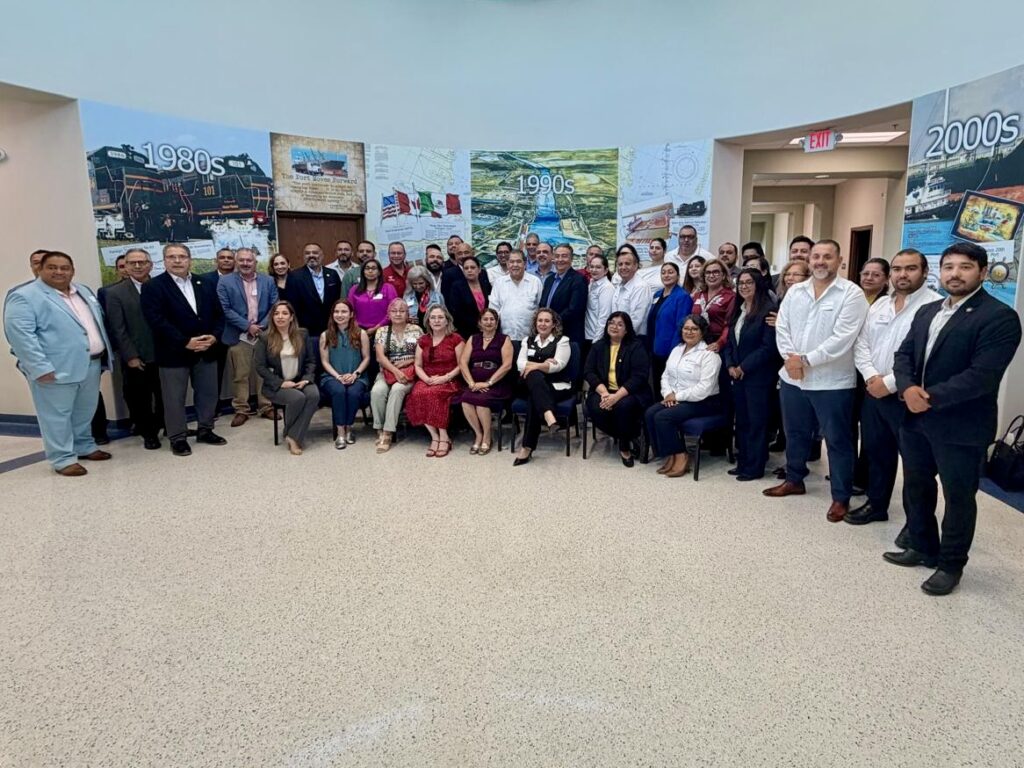
The Council for South Texas Economic Progress, or COSTEP, held a binational meeting on Thursday with executives representing higher education in both Texas and Mexico about what types of skills companies will need.
To help showcase the workforce training landscape, COSTEP is refining a public online dashboard highlighting all the universities in both the Mexican State of Tamaulipas and South Texas.
“The idea here is to make sure that we work closer with industry and that industry gets closer to the academic side so we can create the programs necessary for all these companies that are coming, the new technologies that are coming to this area, and we can keep our talent,” COSTEP CEO Adam Gonzalez said.
The University of Texas Rio Grande Valley alone produces about 7,000 professionals with degrees each year, according to the university. And that’s a fact its workforce development leadership shares with companies interested in investing in the Valley.
“They want to see your starting point, the volume that we’re actually outputting where they can extract talent,” said Ron Garza, senior associate vice president for workforce and economic development at the University of Texas Rio Grande Valley. “There’s kind of this anxiety about a particular workforce that [the company] may or may not have, but until they actually [know] what positions are doing, that’s when institutions can step in and start building the pipeline to match, but they’re not always quite ready to produce job descriptions, but may have technical fields.”
One thing that’s possible that institutions can do right now is to be clear about the skills each major produces already, which can be “crosswalked” for skills seen in the industry, he said.
There are 34 different institutions in the region, 20 of which are in North Tamaulipas and 14 across Rio South Texas. There are 19 different universities which offer bachelors degrees, 18 as technical schools, 16 with master’s degree programs and 15 which specialize in engineering, in addition to six different institutions with doctoral programs. There are more universities in Reynosa and Matamoros than across the Rio Grande Valley — 18 compared to 12 schools.
Also, there are on average about 800 engineers being trained across the South Texas region binationally, according to the enrollment data collected so far.
For example, there’s the Universidad del Atlántico in Reynosa with campuses along the border in Mexico that’s a private college offering bachelors degrees in different subjects, including engineering and business, geared towards the manufacturing sector. The college offers degrees from industrial engineering to electronics, petroleum and computer systems.
Nester Leao Contreras, CEO of the Universidad del Atlántico in Reynosa is himself a graduate of the University of Texas at Austin McCombs School of Economics. The university has been in operation for the past three decades, or roughly the mid-1990s when the North American Free Trade Agreement was negotiated and signed by the U.S., Canada and Mexico.
Contreras trekked to the Port of Brownsville to hear directly from economic development leaders such as Gilberto Salinas, CEO of Brownsville Economic Development Corporation, about the needs of companies from Saronic Technologies to SpaceX.
For the Port of Brownsville employers, such as the incoming Saronic Technologies tenant promising 10,000 jobs, there’s a roadmap for the ramp-up.
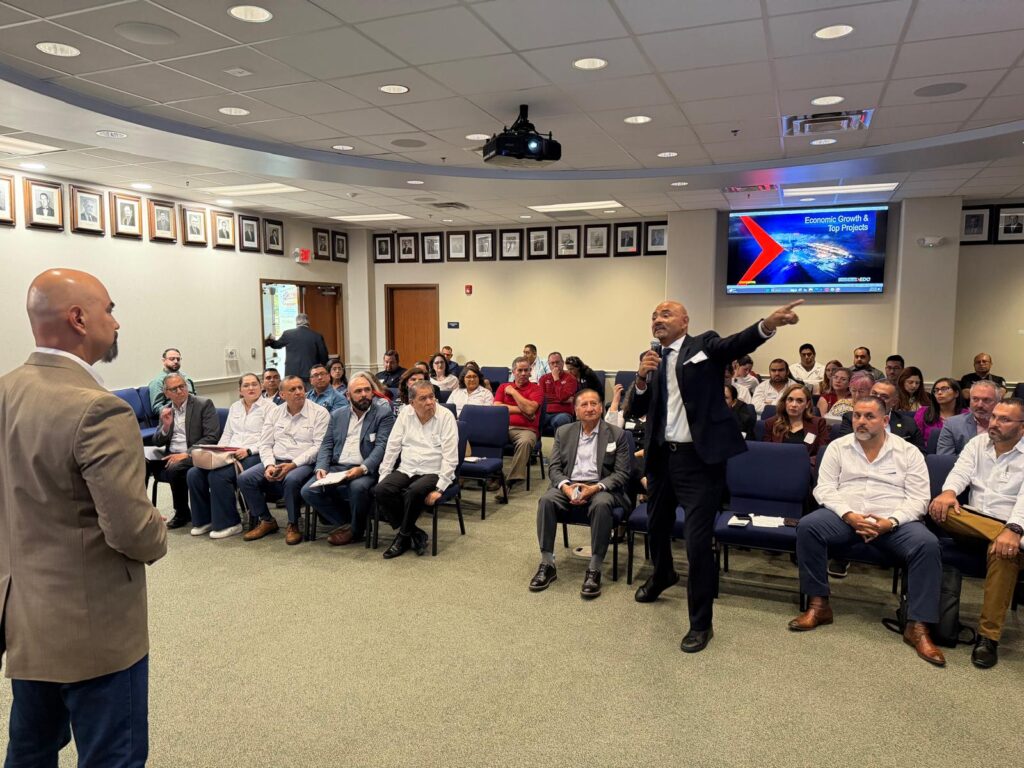
For example, the company needs about 180 welders and fitters in the first year and then about 700 by year five. For the mechanical and electrical workforce the company will need about 70 workers by year three and more than 900 by the end of year 10. For assembly and material logistics, the company needs from 84 workers in the third year to more than 2,000 at the peak of operation. On the technical office side, they expect to need about 90 engineers by year three and more in research and development as specialists and then administrative staff.
Karpowership, the Turkish company that took over the Seatrium Amfels operation with its own big plans, will need at least 1,500 workers with various skills. And then SpaceX has about 5,000 employees and expects to hire roughly 3,000 more.
“Some of our brightest kids were always leaving and a lot of our hardest workers, welders and so on, now a lot of them are coming back,” Salinas said. “And a lot of new people are coming in as well. Right now, we’re sitting on $50 billion in capital investments. We went from zero to 100 in just 12 months.”
The CEO of the Reynosa university envisioned his students perhaps working for either those companies or suppliers as the ecosystem of businesses are sprouting up around the mega projects.
“We have to work together to generate progress for all,” Contreras said. “One of the important themes that I think we have to understand is that only by collaborating on both sides of the border can we face all this big upcoming investment for our region. Texas is becoming an increasingly thriving economy day-by-day, but above all, we are [together] transforming social and economic realities.”
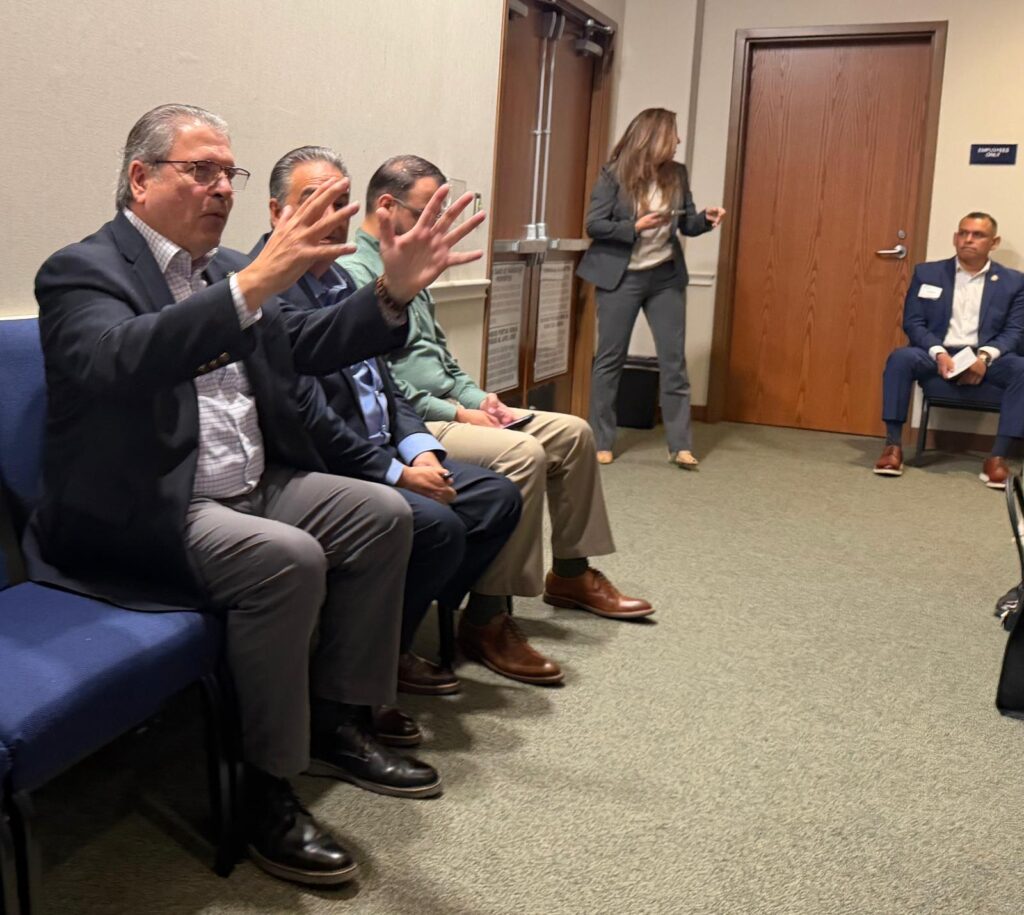
Photo Credit | Kristen Mosbrucker-Garza
Contreras said he’s noticed that companies are most interested in working with talent no matter where they are from and increasingly there’s demand for microskills that can help move businesses forward with specific solutions to concrete challenges to meet demand in the marketplace.
“Today I believe that the most important element is not the curriculum, it’s not your resume, it’s what you contribute to the purpose, but above all to the company’s mission and vision,” he said.
While a bachelor’s degree earned in Mexico may be equivalent to one earned in the U.S., some companies may require or request further evaluation of those credentials to ensure the degrees have transferable skills. And it’s likely that those degrees are earned in the Spanish language, which is common along the border, but bilingualism of both fluency and professional literacy is a key additional skill, plus a legal immigration status or willingness for employers to sponsor visas and foster the process as well.
For instance, with medical degrees, there is not a direct equivalency. Medical doctors trained in Mexico may be accepted to work as nurse practitioners or nurses with extra training in the U.S. but a foreign medical degree does not automatically transfer and would require more licensure exams and potentially classwork. In Texas, there are some medical doctors in Mexico who pick up shifts in the U.S. as nurses or other healthcare professionals, for example.
The balance in economic development is that often recruiting organizations are unable to share the full details of a company’s plans until a formal announcement, then there’s a period of getting up to speed and organizing to build educational curriculum to suit the workforce needs.
For some companies, typically the largest corporations, executives already have a roadmap with job descriptions and skills required. But in a rapidly changing world, and for startup companies in particular, those job descriptions may not exist yet.
Leaders may have a general sense of the type of workers they will need to succeed, but the pace of technology and innovation is so intense that the biggest skill is adaptability and willingness to keep learning.
That dynamic appears to be especially true in the confluence of engineering, oil and gas, manufacturing, technology, aerospace and defense industries, which have decided to invest in South Texas at the Port of Brownsville.
It’s not just about training confident engineers whether those with software or hardware skills or welders to build these projects, but ensuring that both vocational training and university level curriculum understand how to encourage critical thinking from a business perspective about how individual workers can move a company forward.
And that perspective can be powerful, Salinas, the Greater Brownsville EDC CEO, said.
“[Outsiders] are seeing something that sometimes, since we’re here day in and day out, we [don’t see]. Sometimes we have to force ourselves to think big because we can’t see it [yet]. But they [outsiders] see it. This is the place to be. This is where investments are going,” he said.

Kristen Mosbrucker-Garza
Reporter
Kristen Mosbrucker-Garza is a versatile multimedia news reporter who lives and works along the Texas-Mexico border in Hidalgo County. Mosbrucker-Garza is a news reporter for the Rio Grande Valley Business Journal. During her career she's worked for the McAllen Monitor, San Antonio Business Journal, The Advocate Newspaper in Louisiana, Phoenix New Times, and public media outlets in Baltimore and Philadelphia.
Most Read
- Is SpaceX quietly building a data center at Starbase? Job postings offer clues
- 25 Mexican businesses eye McAllen expansion after city pitches U.S. market entry program
- Starbase EDC may issue $3 billion in tax-exempt bonds to support SpaceX, records show
- Edinburg ISD rejects nearly $6M offer for prime land near La Sienna despite $15M budget deficit
- Developers begin $12M master-planned community near Rio Grande City
Get the latest business news delivered to your inbox every morning for free.
Try 30 Days Free!
Get full access to award-winning journalism covering business, real estate, health care, economic trends, and the people shaping the Rio Grande Valley.
30 Days Free!
$9.95/month
Limited time offer
Subscription renews after your 30 day free trial at $9.95/mo.
Included Benefits
- Unlimited access to all articles
- Daily business news and analysis
- Subscriber-only content and features
Stories That Matter
- TSTC to take manufacturing training directly to employers
- Handel’s Ice Cream plans first Valley location
- What Toyota’s $3.6B San Antonio expansion could mean for the Rio Grande Valley
- Mission’s first Small Business Expo puts $25K on the line for local entrepreneurs
- McCoy’s gives $10K, tools to launch Mid-Valley construction academy
- UT Health RGV performs new digestive procedure for first time in the Valley
- TSTC bets on advanced manufacturing to meet RGV’s industrial boom
- Pharr’s cross-border business push earns international recognition
- Brownsville eases drought restrictions after nearly three years as Rio Grande reservoir levels improve
- Jeff’s Bagel Run plans first Valley location in Edinburg