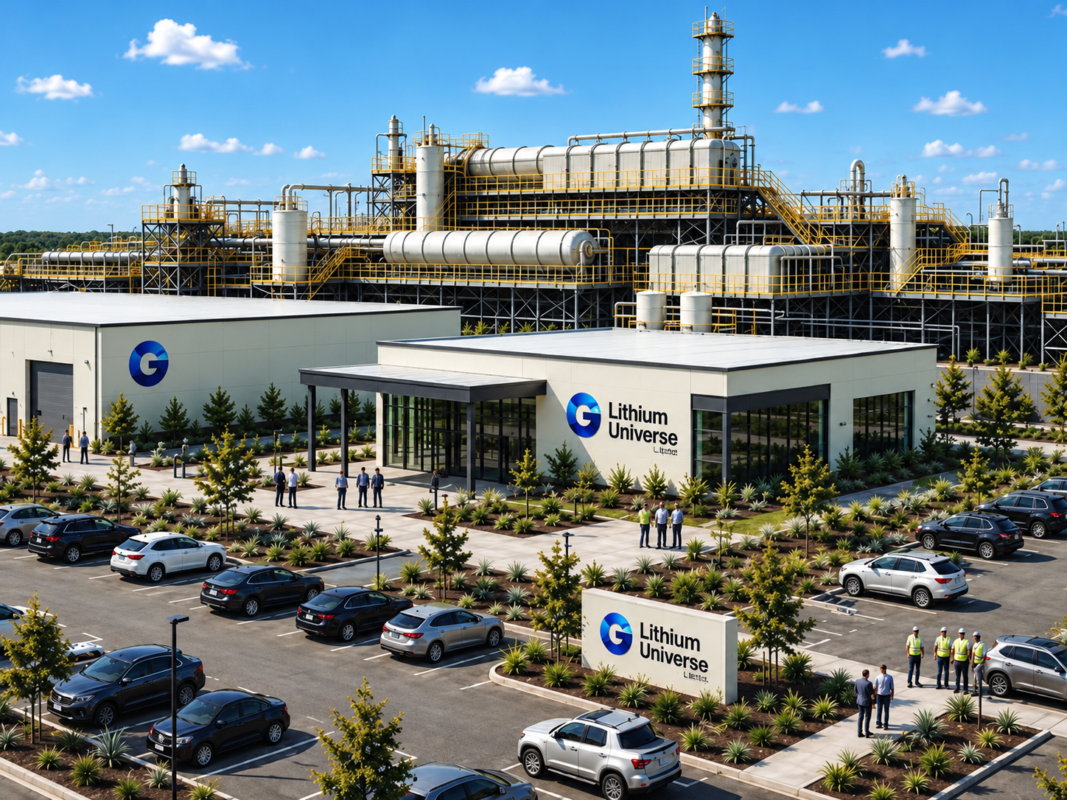
Australian company Lithium Universe Ltd. plans on building a refinery in the Port of Brownsville that would convert minerals from Africa, Brazil and the U.S. into lithium carbonate, a material long used in some batteries for electric vehicles, energy storage and consumer electronics.
The project aims to support up to 200 full-time permanent employees, has an estimated capital cost of $607 million and projects a 42% gross margin, according to the company’s pre-feasibility study released this month.

Lithium Universe’s entrance into the U.S. market comes as the Trump administration tries to reduce dependence on other countries for critical minerals such as lithium. Last year, the country relied on imports to meet more than half of domestic lithium demand, while China’s output accounted for three-fourths of refined lithium production.
“We don’t want to be depending on other countries to make lithium carbonate and ship it to us,” Arumugam Manthiram, a materials scientist and engineer at the University of Texas at Austin whose inventions led the way for the creation of certain lithium batteries, told the Rio Grande Valley Business Journal.
In the U.S., the proposed Brownsville refinery would join a small group of lithium operations, including one commercial-scale primary lithium extraction and refining operation in Nevada, several lithium recycling facilities, a few smaller demo plants, and other lithium refineries under development and ramping up, such as a Tesla facility near Corpus Christi.

But before the project becomes a reality, a final study, leases, permits and funding need to be secured. If the project comes online, the commercial success of the refinery is up against rapidly changing battery technology and volatile lithium prices that have dampened past lithium ventures.
“The question is whether the market will ultimately be there to support the project,” Michelle Michot Foss, a Texas-based political economist, energy and minerals researcher and international consultant, told the Journal. “It’s a risky venture.”
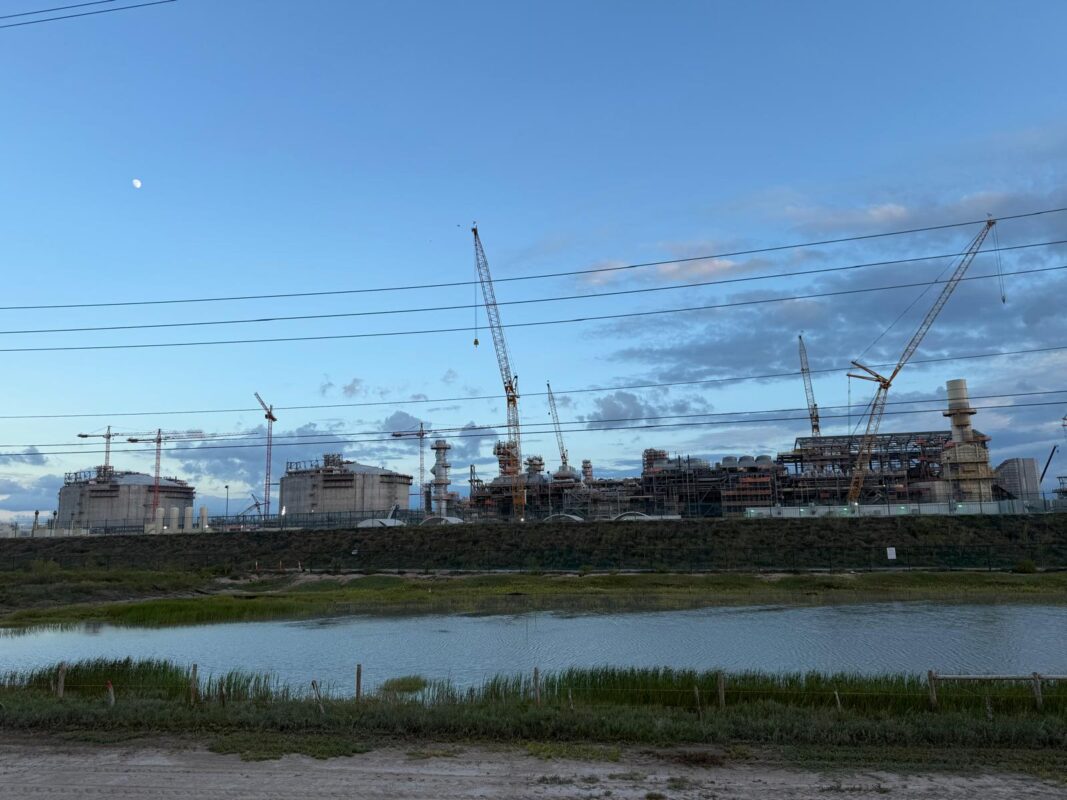
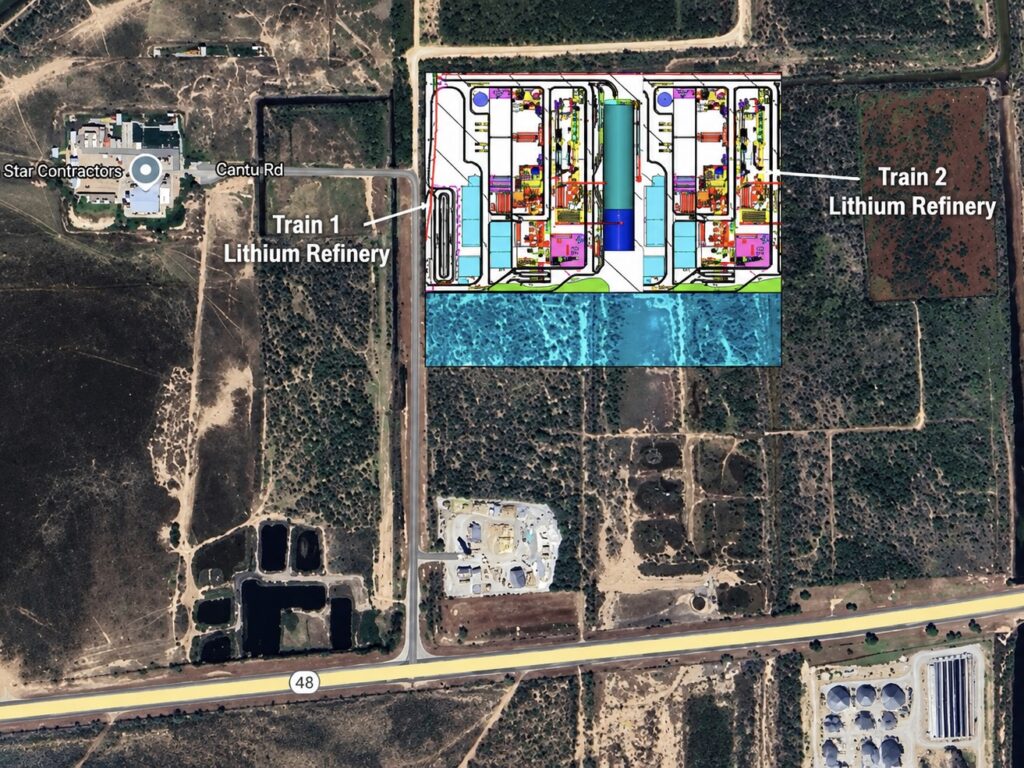
The Brownsville refinery is expected to produce up to 18,270 metric tons of lithium carbonate per year. The company said that it has formally requested a two-year option from the Port of Brownsville for 35 acres north of Highway 48. The location, Lithium Universe said, will provide it with existing power and transportation infrastructure, space for two refinery trains, deep-water access for mineral shipments and a favorable business environment.
Leading the project is longtime minerals developer Iggy Tan, who has overseen a lithium refining operation in China, a lithium mining operation in Australia and conducted feasibility studies for other types of mineral operations. Tan intends the Brownsville refinery to be a direct replica of the China plant that opened in 2012, saying it would minimize technological and operational risks that other lithium refinery projects have faced.
The company did not respond to requests for comment earlier this month.
Betting on lithium
Lithium is often used in batteries because it allows for large amounts of energy storage compared to its weight. It can be recovered from a mineral known as spodumene, underground saltwater known as brine or recycled batteries. The raw material is then processed into chemicals such as lithium hydroxide or lithium carbonate, the latter of which Lithium Universe will produce in Brownsville.
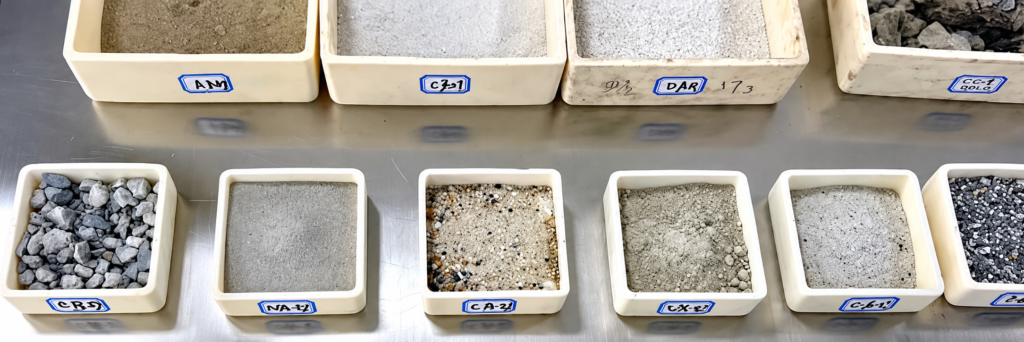
Lithium Universe plans on selling lithium carbonate for uses in lithium iron phosphate batteries (LFPs), which account for more than 90% of global stationary battery-storage deployment, more than half of global EV batteries deployed and about 4% of EV battery sales in the U.S., according to data from the International Energy Agency.
Lithium hydroxide, meanwhile, is used in nickel-containing batteries like NMCs, which store more energy, making them preferred for longer-range electric vehicles, but can have less thermal stability. In the U.S. last year, nickel-based batteries made up 96% of EV battery sales in the U.S.
Other types of batteries exist, including sodium ion batteries, but Manthiram said they are not yet widely commercial and that lithium will still play a role in some future technologies.
In short, Lithium Universe’s proposed supply chain is as follows: Spodumene would be sourced from Nigeria, Brazil or the U.S., shipped to Brownsville to be refined into lithium carbonate and then sold in the North American market to be used in LFPs.
While lithium-ion batteries dominate certain industries, Foss said battery designs are changing rapidly, making it uncertain whether lithium will still be needed at the same level of demand seen now.
“I think it’s [lithium carbonate] either gonna become a minimal component of batteries or people will come up with something else,” Foss said. “If you build a big lithium carbonate producing plant and all of a sudden that’s not what everybody wants, then you’re kind of stuck.”
Foss said the bet on lithium is also affected by whether forecasted electric vehicle demand actually shapes up, arguing that electric vehicles are sometimes costlier than gas-powered cars.
Manthiram is bullish on the electric vehicle demand and on using lithium batteries for data centers and wind and solar energy storage.
Price and supply risks
Another factor to take into consideration is the volatility of lithium prices.
Yearly-average prices have reached upwards of $63,000 and under $10,000 in the past few years. The company’s financial estimates assume a long-term selling price of $20,970 for a metric ton of lithium carbonate. One price benchmark as of early September, according to Benchmark Mineral Intelligence, was $19,750.
Price volatility has previously forced companies to scale back lithium projects in Tennessee and South Carolina.
Lithium Universe said it has built in a $130 million contingency amount as part of the $607 million capital cost estimate to account for market volatility and project risks.
Pricing differences globally can also affect the project.
Foss noted that since China has significantly more lithium carbonate supply, there’s a scenario where Chinese companies could provide it to North American customers at lower prices, even when taking shipping costs into account.
“At the end of the day, a lot depends upon the cost,” Manthiram said. “It is better that we have different resources, different possibilities.” For example, importing spodumene could be cheaper than creating a new extraction operation in the U.S., but having domestic extraction would increase supply and support the domestic supply chain.
Lithium Universe noted in its estimates that lithium carbonate processing costs are typically lower in China, but that shipping raw North American spodumene to China for processing would make it more expensive than processing it at a domestic refinery.
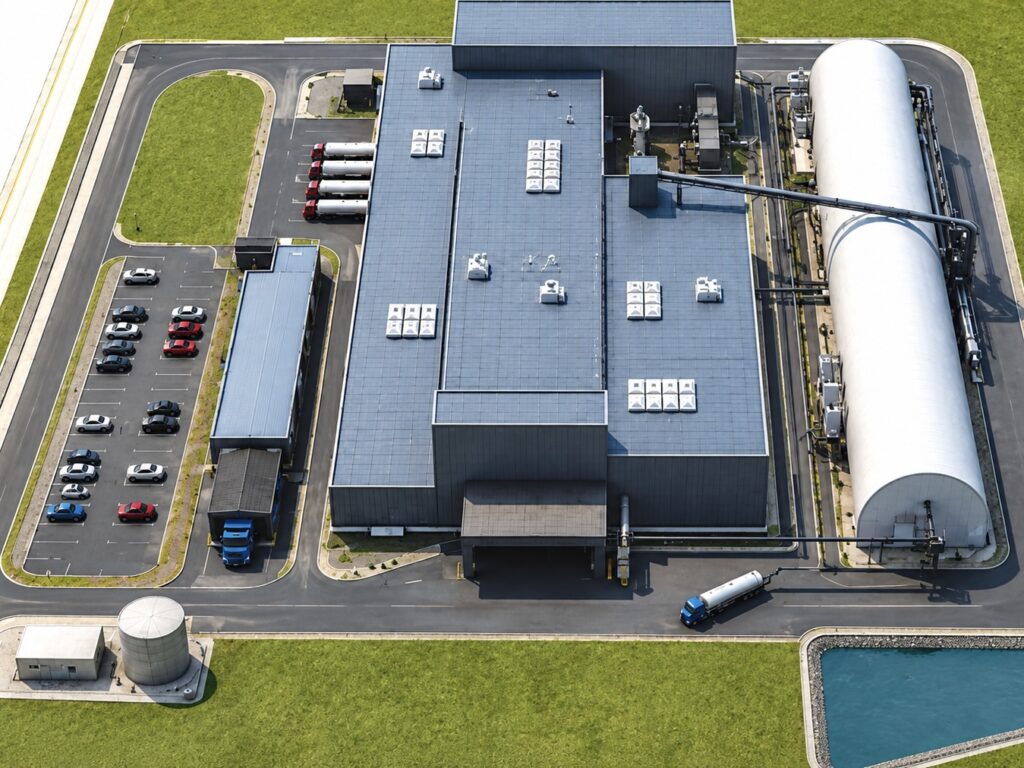
While the Brownsville project anticipates domestic spodumene, there is currently no commercial U.S. spodumene production. A selling point by the company is that it has discounted spodumene from an agreement with a Nigerian company that is currently constructing a spodumene concentrator.
Project funding requirements are expected to span anywhere from $620 million to $650 million, while its $607 million capital cost estimate carries a 30% accuracy range. There are currently no financial arrangements in place and the company intends to offer up to a 49% interest in the Brownsville project to investors.
Another option is government financing.
For more than a decade now, federal agencies have given out grants and loans to companies supporting the battery supply chain. Last month, the Department of Energy announced $500 million for seven projects, including $100 million for a lithium carbonate extraction and refining facility in Utah. Lithium Universe did not indicate whether it had already submitted applications to any federal programs.
Environmental considerations
Like many refineries in which high temperatures are involved, the proposed refining process in Brownsville includes burning natural gas, which releases heat-trapping carbon dioxide into the air. As for wastewater, Lithium Universe said it doesn’t plan on discharging any of it to surface waters, instead opting to internally recycle it. If the refinery is built as designed, it would contrast with the Tesla lithium refinery near Corpus Christi, which has drawn local scrutiny for its wastewater practices.
As for regulatory approval, the company expects to mainly rely on state-level permits, particularly the Air New Source Review permit from the Texas Commission on Environmental Quality. The study noted that minimal exposure to the federal permitting process is expected, given the existing industrial development zone in Brownsville, no marine terminal construction requirement, potentially no dredging activities and plans to not release any wastewater.
If all goes according to preliminary plans, Lithium Universe said the environmental approval process could be completed anywhere from 15 to 24 months.

José Luis Martínez
Reporter
José Luis Martínez is a Houston-based journalist and contributor to the Rio Grande Valley Business Journal. He has previously worked for Law360, the Houston Landing and the Connecticut Mirror, and his work has also appeared in the Texas Observer.
Most Read
- Is SpaceX quietly building a data center at Starbase? Job postings offer clues
- Developers begin $12M master-planned community near Rio Grande City
- Edinburg ISD rejects nearly $6M offer for prime land near La Sienna despite $15M budget deficit
- A little MySpace, a little AOL: Valleyites help grow new social media platform
- Dickey’s Barbecue Pit to open new McAllen location inside Cambria Hotel
Get the latest business news delivered to your inbox every morning for free.
Try 30 Days Free!
Get full access to award-winning journalism covering business, real estate, health care, economic trends, and the people shaping the Rio Grande Valley.
30 Days Free!
$9.95/month
Limited time offer
Subscription renews after your 30 day free trial at $9.95/mo.
Included Benefits
- Unlimited access to all articles
- Daily business news and analysis
- Subscriber-only content and features
Stories That Matter
- RGV Business Journal heads to Social Fest to find stories worth telling
- Amazon expands Valley delivery network with massive new McAllen station
- SpaceX’s old tax breaks in Cameron County expired last year. Now it wants incentives for a Starbase data center
- Mission’s first Small Business Expo puts $25K on the line for local entrepreneurs
- McCoy’s gives $10K, tools to launch Mid-Valley construction academy
- UT Health RGV performs new digestive procedure for first time in the Valley
- TSTC bets on advanced manufacturing to meet RGV’s industrial boom
- Pharr’s cross-border business push earns international recognition
- Brownsville eases drought restrictions after nearly three years as Rio Grande reservoir levels improve
- Texas A&M’s $53.5M McAllen research center will tackle water, food security and Valley health