SpaceX’s Starship reached orbit for the first time Monday after launching from South Texas, marking a major milestone for the company’s massive rocket program and its growing Starbase operations.
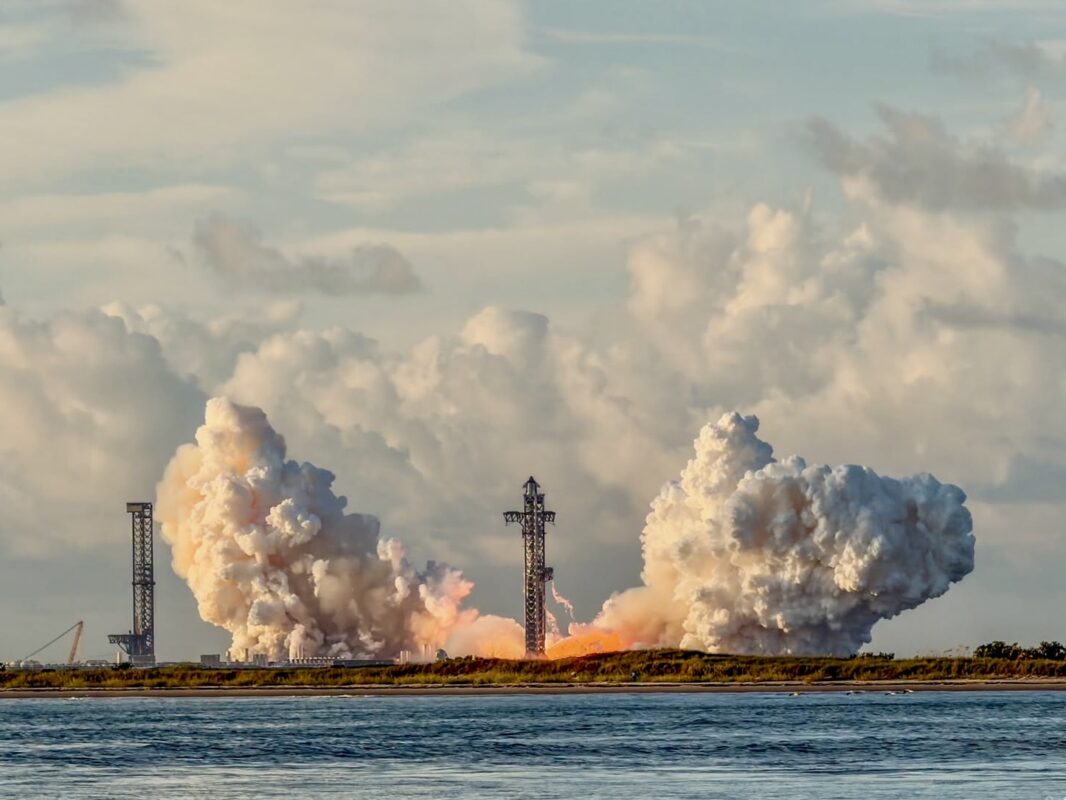
Starship lifted off from Starbase at 7:48 a.m. Sept. 28 on its 14th flight and first attempt to reach orbit.
The spacecraft succeeded, then deployed 26 Starlink V3 satellites — the first meaningful payload carried to orbit by Starship, according to SpaceX.
The milestone moves Starship beyond the suborbital test flights that have defined the program so far and demonstrates its ability to deliver satellites into orbit from the company’s launch site near Boca Chica Beach.
The flight was not without problems.
One of the Super Heavy booster’s 33 Raptor engines shut down during the initial climb. After Starship separated from the booster, one of the spacecraft’s six engines also shut down early during ascent.
Starship compensated by firing its remaining five engines longer than planned, allowing it to reach its intended suborbital trajectory.
SpaceX said flight controllers then evaluated the spacecraft and determined its three sea-level Raptor engines were healthy enough to proceed with the attempt to reach orbit.
About 25 minutes after liftoff, Starship reignited one of those engines for an orbital insertion burn.
For the first time, Starship entered orbit around Earth.

Starship delivers its first satellites
Once in orbit, Starship began deploying its 26 Starlink V3 satellites about 34 minutes after launch.
SpaceX said it established contact with all 26 satellites through laser links, ground stations and Starlink user terminals. The satellites will undergo checks and raise their orbits before beginning service.
The deployment represents another first for the Starship program. Previous test flights included demonstrations using simulated Starlink satellites, while Monday’s mission carried 26 Starlink V3 satellites into orbit.
Starship remained in orbit after the deployment, but SpaceX decided to shorten that portion of the mission because of the engine problem experienced during ascent.
The company instead proceeded with an early deorbit to one of two landing areas that had been established before the flight and cleared of air and sea traffic.
About eight hours and 53 minutes after liftoff, Starship reignited a Raptor engine for its first deorbit burn, putting the spacecraft on a path back through Earth’s atmosphere.
Starship eventually descended over the northern Pacific Ocean, performed a landing burn and flip maneuver and splashed down at its intended location about nine hours and 50 minutes after leaving South Texas.
Super Heavy ends flight in fiery test
The Super Heavy booster also completed a series of tests after separating from Starship.
SpaceX intentionally designed the booster’s return maneuver to burn through the liquid oxygen remaining in its main tank, testing the limits of the vehicle ahead of future attempts to return Super Heavy to the launch site.
The booster experienced additional engine losses during its return. It reignited 31 of the planned 33 engines for its boostback burn and 11 of 13 engines for the high-thrust portion of its landing burn.
Super Heavy eventually reduced its landing burn to three engines before splashing down in the Gulf about seven minutes after liftoff.
SpaceX then intentionally triggered the booster’s flight termination system, destroying it in a fiery demonstration of the vehicle’s safety hardware.
Monday’s mission adds another milestone to SpaceX’s Starship development program at Starbase, where the company is developing the vehicle for satellite deployment, human spaceflight and other missions.
Unlike the previous 13 Starship flights, Flight 14 demonstrated that the vehicle could reach orbit, deploy a payload and perform a controlled deorbit before returning through the atmosphere.
The mission concluded about nine hours and 50 minutes after Starship left South Texas.

RGV Business Journal Staff
Staff
Most Read
- Edinburg ISD rejects nearly $6M offer for prime land near La Sienna despite $15M budget deficit
- Port of Brownsville approves $2M SpaceX pipeline deal, with millions more on the table
- What Toyota’s $3.6B San Antonio expansion could mean for the Rio Grande Valley
- McAllen’s nonstop Mexico City flight is back
- 5×5 Brewing plots $2.5M comeback with new Edinburg brewpub near UTRGV
Get the latest business news delivered to your inbox every morning for free.
Try 30 Days Free!
Get full access to award-winning journalism covering business, real estate, health care, economic trends, and the people shaping the Rio Grande Valley.
30 Days Free!
$9.95/month
Limited time offer
Subscription renews after your 30 day free trial at $9.95/mo.
Included Benefits
- Unlimited access to all articles
- Daily business news and analysis
- Subscriber-only content and features
Stories That Matter
- Port of Brownsville details SpaceX agreements worth more than $125M in potential revenue
- SpaceX makes history with first Starship catch at Starbase
- Mission’s first Small Business Expo puts $25K on the line for local entrepreneurs
- McCoy’s gives $10K, tools to launch Mid-Valley construction academy
- UT Health RGV performs new digestive procedure for first time in the Valley
- TSTC bets on advanced manufacturing to meet RGV’s industrial boom
- Pharr’s cross-border business push earns international recognition
- Brownsville eases drought restrictions after nearly three years as Rio Grande reservoir levels improve
- Texas A&M’s $53.5M McAllen research center will tackle water, food security and Valley health
- STC puts AI to work across 55 courses — from construction sites to car repair