Uber Freight, que comenzó como una agencia de transporte por carretera hace aproximadamente una década, se muestra optimista respecto a su potencial como empresa de servicios aduaneros, de almacenamiento y logística transfronterizos a lo largo de la frontera entre Estados Unidos y México.
Y tiene planes de expandirse en el Valle del Río Grande; eso podría significar contratar a más conductores de camiones, captar clientes del sector manufacturero o arrendar almacenes para la logística, según declaró un ejecutivo de Uber Freight al Rio Grande Valley Business Journal en una entrevista reciente.
“Lo que pueden esperar de nosotros es una inversión y un crecimiento continuos a ambos lados de la frontera, [desde McAllen hasta] Brownsville inclusive, pero Laredo seguirá siendo una ubicación importante para nosotros, y Tijuana es otra ubicación importante”, declaró Zeid Houssami, vicepresidente sénior de ventas globales de Uber Freight, al Rio Grande Valley Business Journal. «Esos mercados suelen requerir menos espacio de almacenamiento, y la mayor parte de la carga que pasa por esos puntos de tránsito sigue su camino sin detenerse. A veces, los transportistas necesitan patios de remolques donde puedan dejar los remolques y luego retirarlos».
Uber Freight cuenta con varios almacenes entre McAllen y Brownsville; podría comenzar a alquilarlos como parte de su cartera, pero aún no está lista para dar el paso. En cambio, la mayor parte de sus operaciones, incluidos ocho almacenes alquilados que suman un total de 1.5 millones de pies cuadrados, se encuentran en Laredo.
Un obstáculo importante ha sido el precio del diésel, que casi se ha duplicado en el último año.
En Laredo, a mediados de junio costaba 2,88 dólares el galón, pero ahora ronda los 4,50 dólares el galón. Se observa una tendencia similar en el área metropolitana de Brownsville, donde el precio subió de 2,89 dólares el año pasado a 4,66 dólares este año. En el área metropolitana de McAllen, el precio del diésel dio un salto de 2,83 dólares a 4,63 dólares a lo largo del año.
“Cada vez que sube el precio del combustible, estar en el medio genera tanto presión por el lado de la venta por parte del cargador como presión por el lado de la compra. También enfrentamos una enorme presión en los precios por parte de nuestros clientes. Así que definitivamente tiene un impacto y parte de ese impacto se traslada a la comunidad de transportistas, otra parte la absorben empresas como Uber Freight y otra parte la absorben también los camioneros», dijo Houssami.
En 2021, Uber adquirió Transplace, una empresa de intermediación logística de transporte por carretera con sede en Frisco, Texas.
Para 2024, Uber había alcanzado los 750 millones de dólares en carga gestionada en todo México.
“Adquirimos un negocio transfronterizo muy sólido. Eso realmente nos dio a conocer al otro lado de la frontera [especialmente] en Laredo”, dijo. “Además, somos una agencia aduanal estadounidense muy sólida. Somos la tercera agencia aduanal mexicana más grande del país”.
La empresa se posiciona como una opción de servicio integral para los fabricantes de todo México, especialmente para aquellos que han ampliado sus operaciones como parte de una estrategia de nearshoring durante la última década, ya que ha invertido en operaciones en el interior del país y a lo largo de la frontera, así como en el mercado estadounidense. La empresa suele trabajar con los principales fabricantes de los sectores químico, automotriz, de alimentos y bebidas, y de bienes de consumo.
En Monterrey, en el estado mexicano de Nuevo León, la empresa cuenta con unas 300 personas empleadas repartidas en tres instalaciones, además de muchas más en la Ciudad de México y otras sedes satélites. La empresa ya cuenta con más de 100 000 operadores en su red.
La empresa está buscando ampliar su plantilla de conductores de camiones en el Valle, sobre todo porque ha habido una escasez de conductores agravada por las restricciones a las visas de visitante B-1 y los requisitos de dominio del inglés impuestos por la administración de Donald Trump.
El problema con los cambios en el mercado de los conductores B1 es que el programa estaba destinado a la carga fabricada en México, pero con el paso de los años, la carga se iba descargando a lo largo de la frontera mientras los conductores B1 esperaban.
“Se abusó de ese privilegio y, por eso, gran parte de las cargas que se transportaban desde la frontera no provenían de México; eran remolques que se dejaban en la frontera y eran recogidos por conductores con licencia B1, y las llevaban a un destinatario en Estados Unidos, donde podían aprovechar el mercado estadounidense, más lucrativo, y sus trayectos más largos y distancias más extensas; por eso, los salarios eran mucho más altos», dijo. “Ahora hay que demostrar que realmente se está transportando algo de México a Estados Unidos; por eso, debido a esa medida de control, gran parte de esa capacidad que circulaba con bastante libertad desde la frontera hacia Estados Unidos se ha retirado del mercado, por lo que hay menos conductores disponibles”.
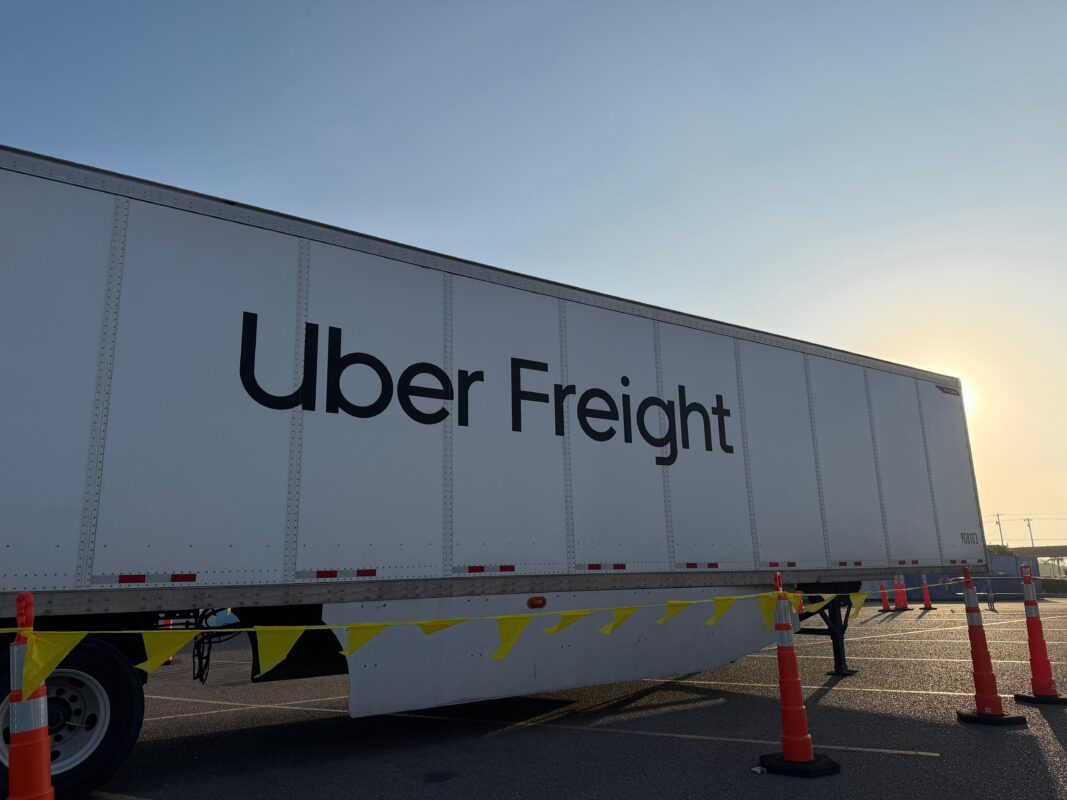
Recientemente, un camión con remolque promocional de Uber Freight se estacionó en el estacionamiento de Walmart en Hidalgo, una concurrida intersección cerca de las calles Jackson y Dicker, un lugar muy frecuentado por los conductores de camiones para descansar.
«[Nuestros] planes en el Valle son seguir creciendo. Es un mercado en expansión; el nearshoring tiene una presencia enorme porque vemos que cada vez más empresas con sede en Asia se están estableciendo en México», dijo. «Siempre estamos abiertos a incorporar transportistas y, de hecho, en este momento, con la escasez de capacidad de transporte por carretera debido a algunos de los requisitos de la visa B1 y de dominio del inglés, hemos visto que muchos conductores han abandonado el mercado y eso ha generado mucha presión. Por eso, siempre estamos abiertos a incorporar transportistas y a dar la bienvenida a nuevos camioneros».

Kristen Mosbrucker-Garza
Reportero
Kristen Mosbrucker-Garza es una versátil reportera multimedia que vive y trabaja en la frontera entre Texas y México, en el condado de Hidalgo. Mosbrucker-Garza es reportera del Rio Grande Valley Business Journal. A lo largo de su carrera, ha trabajado para el McAllen Monitor, el San Antonio Business Journal, el periódico The Advocate de Luisiana, el Phoenix New Times y medios de comunicación públicos en Baltimore y Filadelfia.
Lo más leído
- La ciudad futurista Starbase de SpaceX culmina una anexión masiva de 7,100 acres. Esto es lo que sabemos.
- SpaceX reprograma el primer vuelo de Starship alrededor de la Tierra
- ¿Cuánta agua necesita SpaceX para operar cerca de Brownsville? Casi 20 veces su consumo actual
- ¿Podría la conversión de departamentos en condominios ayudar a que la compra de una vivienda de 100 mil dólares en el área metropolitana de McAllen sea más accesible? Un inversionista dice que sí.
- El área metropolitana de McAllen sigue vendiendo más viviendas, mientras que el mercado de Brownsville-Harlingen registra una caída del 17 % hasta agosto
Recibe las últimas noticias empresariales en tu bandeja de entrada cada mañana, gratis.
¡Pruébalo gratis durante 30 días!
Disfruta de acceso completo a un periodismo galardonado que abarca temas como los negocios, el sector inmobiliario, la sanidad, las tendencias económicas y las personas que dan forma al Valle del Río Grande.
¡30 días gratis!
$9.95/month
Oferta por tiempo limitado
La suscripción se renueva tras el periodo de prueba gratuito de 30 días por 9,95 $ al mes.
Prestaciones incluidas
- Acceso ilimitado a todos los artículos
- Noticias y análisis diarios sobre el mundo empresarial
- Contenidos y funciones exclusivos para suscriptores
Historias que importan
- La recaudación del impuesto sobre las ventas en el Valle ha aumentado un 5,7 %. ¿Podría estar contribuyendo a ello un peso más fuerte?
- Las empresas de Mission pueden solicitar hasta 15 000 dólares en subvenciones este mes
- Pharr duplica la capacidad de su puente a medida que los centros de datos y los productos agrícolas impulsan una nueva demanda comercial
- T-Mobile planea ampliar su red de Internet por fibra óptica en Mercedes
- Un poco de MySpace, un poco de AOL: los habitantes del Valle contribuyen al crecimiento de una nueva plataforma de redes sociales
- Brownsville va a modificar su tarifa de drenaje. Las empresas podrían tener que pagar más, ya que la ciudad busca recaudar 6.2 millones de dólares al año
- Los líderes de Starbase aprobaron un contrato de arrendamiento de 45 años con SpaceX por 166 acres, pero lo que se construirá allí sigue siendo un misterio
- NADBank abre una línea de financiamiento de 300 millones de dólares para proyectos de agua y energía a lo largo de la frontera
- Frost Bank está invirtiendo en Harlingen, un laboratorio de cemento que se instalará en Brownsville, los departamentos de la ciudad de Hidalgo y las nuevas oficinas de Terra-Gen
- Es posible que se esté gestando otro proyecto de GNL en la frontera del sur de Texas; esta vez, en Matamoros