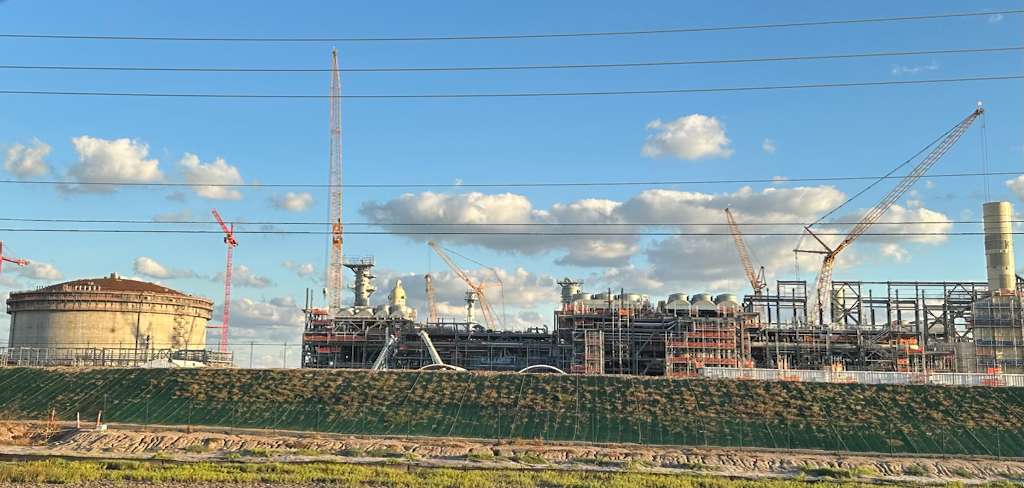
Houston-based energy company NextDecade Corp. is hosting a public meeting this month to discuss its expansion plans for the Rio Grande LNG project in Brownsville, which could cost several billion dollars.
Rio Grande LNG expects to spend $30 billion for trains one through five along the Brownsville Shipping Channel.
NextDecade’s meeting is slated for Feb. 17 from 5 p.m. to 7 p.m. at the Port Isabel Event and Cultural Center, located at 309 Railroad St.
The meeting is required by the Federal Energy Regulatory Commission’s environmental review process to inform landowners, stakeholders, and elected officials about the company’s plans.
A liquefaction train is a processing facility that takes natural gas from a pipeline and both compresses and supercools it. The final product, liquefied natural gas, is a supercooled product often exported overseas as an alternative energy source to nations without domestic energy extraction industries, such as many European and Asian countries.

NextDecade, a publicly traded company, already has several long-term contracts to export various volumes of LNG to companies such as ConocoPhillips, JERA, and EQT Corporation.
As a result of those contracts, four liquefaction trains are under construction, and the company approved a final investment decision for a fifth train in late 2025. The first train should be built by 2027.
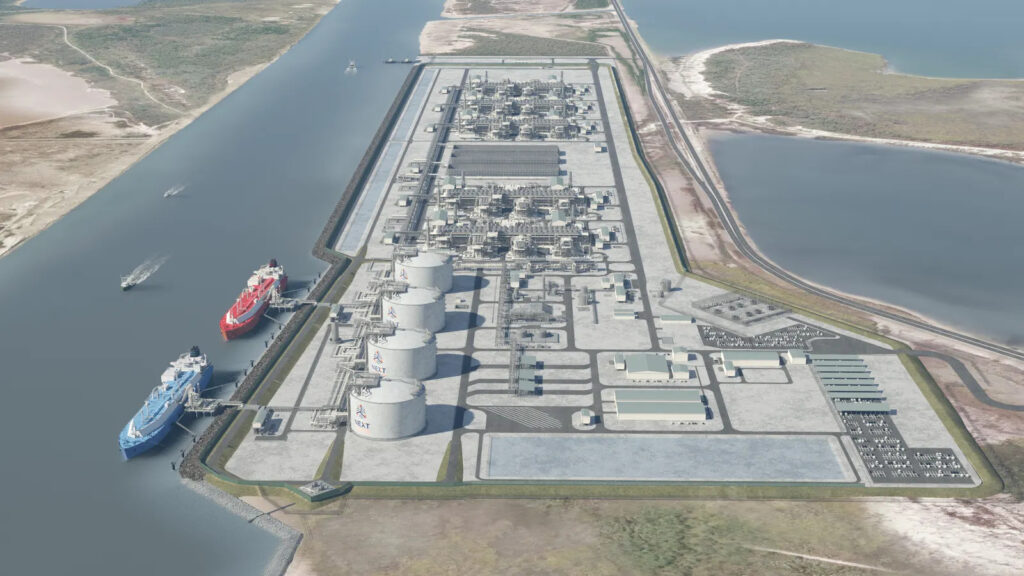
Now, Rio Grande LNG plans to add a sixth liquefaction train and marine jetty inside a massive export terminal along the Brownsville Ship Channel.
The export terminal has space for 10 liquefaction trains on a nearly 1,000-acre site, with a capacity of 60 million tonnes of LNG per year.
Trains one through five are under construction, and the sixth train is in the permitting process. Trains seven and eight are in planning and development.
Next Carbon Solutions is also collaborating with Rio Grande LNG to develop a potential carbon capture and storage project at the same location, but there is no timeline for construction, according to U.S. Securities and Exchange Commission filings.

Kristen Mosbrucker-Garza
Reporter
Kristen Mosbrucker-Garza is a versatile multimedia news reporter who lives and works along the Texas-Mexico border in Hidalgo County. Mosbrucker-Garza is a news reporter for the Rio Grande Valley Business Journal. During her career she's worked for the McAllen Monitor, San Antonio Business Journal, The Advocate Newspaper in Louisiana, Phoenix New Times, and public media outlets in Baltimore and Philadelphia.
Most Read
- SpaceX’s futuristic city of Starbase finalizes massive 7,100-acre annexation. Here’s what we know.
- 25 Mexican businesses eye McAllen expansion after city pitches U.S. market entry program
- Australian company plans to build a $607M lithium refinery at the Port of Brownsville. It’s a big bet on America’s battery future
- Starbase cancels meeting to consider annexing 444 acres relinquished by Brownsville
- SpaceX reschedules Starship’s first flight around the Earth
Get the latest business news delivered to your inbox every morning for free.
Try 30 Days Free!
Get full access to award-winning journalism covering business, real estate, health care, economic trends, and the people shaping the Rio Grande Valley.
30 Days Free!
$9.95/month
Limited time offer
Subscription renews after your 30 day free trial at $9.95/mo.
Included Benefits
- Unlimited access to all articles
- Daily business news and analysis
- Subscriber-only content and features
Stories That Matter
- Dickey’s Barbecue Pit to open new McAllen location inside Cambria Hotel
- NADBank opens $300M financing pipeline for water, energy projects along the border
- Engineering firm Garver opens $5M Harlingen office, plans up to 50 new jobs
- Is SpaceX quietly building a data center at Starbase? Job postings offer clues
- Mission’s first Small Business Expo puts $25K on the line for local entrepreneurs
- McCoy’s gives $10K, tools to launch Mid-Valley construction academy
- UT Health RGV performs new digestive procedure for first time in the Valley
- TSTC bets on advanced manufacturing to meet RGV’s industrial boom
- Pharr’s cross-border business push earns international recognition
- Brownsville eases drought restrictions after nearly three years as Rio Grande reservoir levels improve