MATAMOROS, Tamaulipas — Jorge Luis Loredo Salazar was born in Matamoros, but he barely knew the city when he returned to it this spring.
His family took him to the U.S. before he was a year old. He was living in Kansas, where he built a career working in automotive mechanics and started a family, before being deported in April.
Now 41, Loredo is back in the country where he was born — while his wife and three children, ages 17, 9 and 3, remain in the U.S.
Since arriving in Matamoros, Loredo has been living with relatives, looking for work and assembling the Mexican documents he needs to rebuild a life in a country that, despite being his birthplace, was never really home.
His experience puts a human face on a much larger shift unfolding along the Tamaulipas border.
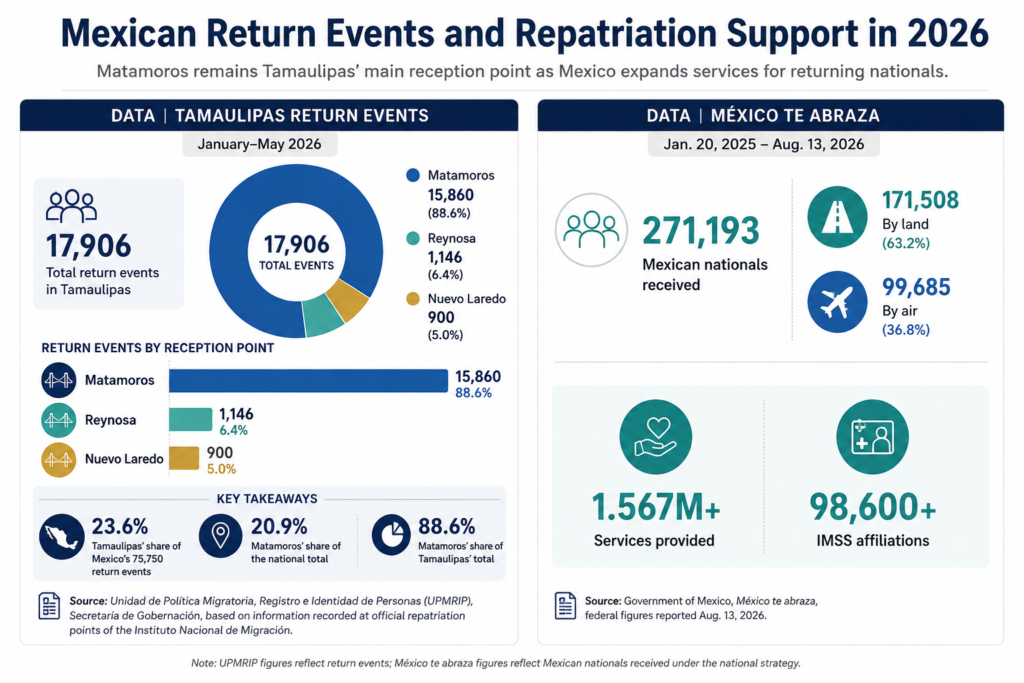
During the first five months of 2026, Matamoros recorded 15,860 repatriation events involving Mexicans sent back from the U.S., according to Mexico’s Unit of Migration Policy, Registration and Identity of Persons.
That was about 21% of the 75,750 repatriation events recorded across Mexico and nearly 90% of all such events in Tamaulipas.
For Matamoros and the broader state economy, those numbers represent more than people crossing the border.
Some, like Loredo, are returning after spending much of their lives in the U.S. workforce. They arrive with experience in construction, electrical work, mechanics and other skilled trades that Tamaulipas employers could potentially tap.
But converting those skills into a job in Mexico is not always straightforward.
Starting over at 41
Loredo said his April removal was his third deportation from the U.S. He was previously deported in 2003 and 2009 before returning again and spending more than a decade there without further contact with immigration authorities or the law, he said.
Loredo said he did not know until his most recent case that he had previously held U.S. residency documents. Immigration officials told him he was being removed under a final order of deportation, he said.
He was detained in Oklahoma, transferred to El Paso and ultimately sent to Mexico, arriving in Chiapas on April 20.
By April 23, he had made his way to Matamoros, where he has since remained.
A cousin initially took him to work, but that job ended. Loredo contacted the Tamaulipas Institute for Migrants about a week or two after arriving in the border city, as he tried to figure out what he needed to establish himself in Mexico.
He has since obtained his Mexican birth certificate, Social Security number and Federal Taxpayer Registry, or RFC. He is still working to obtain a driver’s license and determine how to validate his U.S. education and automotive training.
That distinction matters when trying to turn years of practical experience into formal employment.
Loredo attended high school in the U.S., was working toward a GED and was pursuing a diploma related to automotive mechanics.
His experience could potentially translate into work in Matamoros’ large manufacturing economy. But having the skills and having the Mexican documents or credentials to prove them are not necessarily the same thing.
A workforce coming back across the border
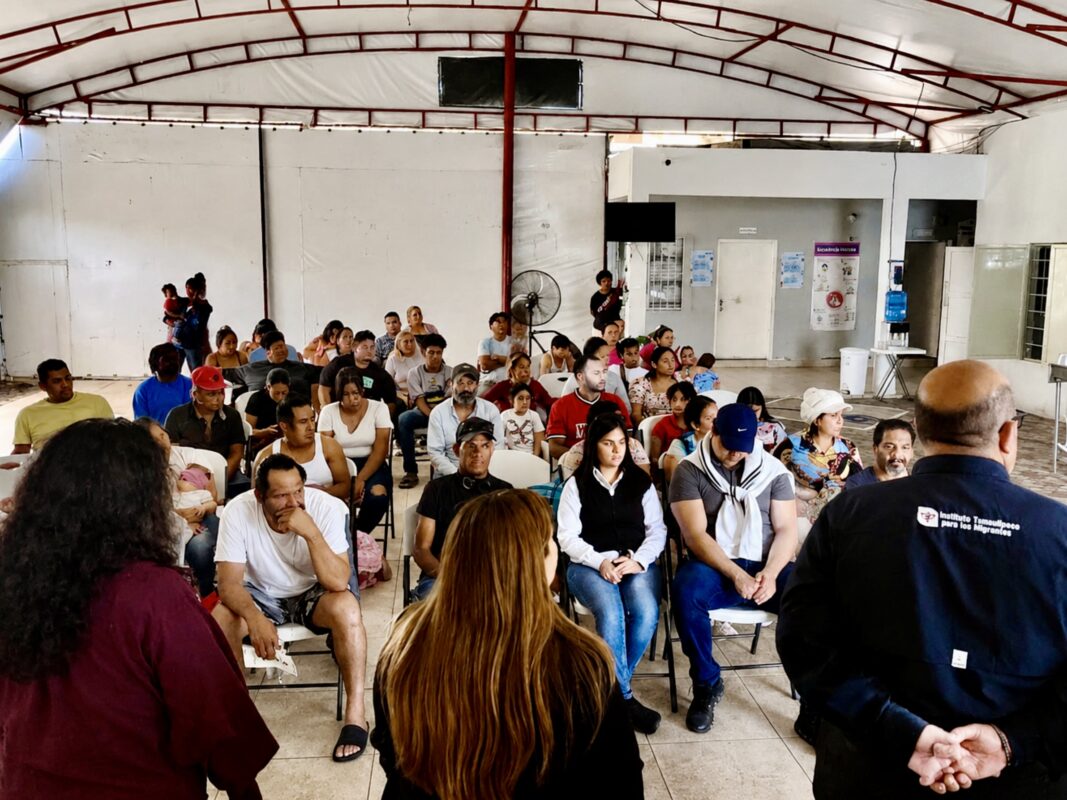
Anahí García Cisneros, regional delegate of the Tamaulipas Institute for Migrants in Matamoros, said Loredo is not alone.
Some Mexicans sent back from the United States have spent 20 or 25 years there and arrive with substantial work experience but without the documents they need to immediately enter Mexico’s formal economy.
Some need Mexican identification before they can get a formal job, open a bank account or complete government procedures.
At the same time, García Cisneros said, their U.S. work experience can make them valuable potential employees.
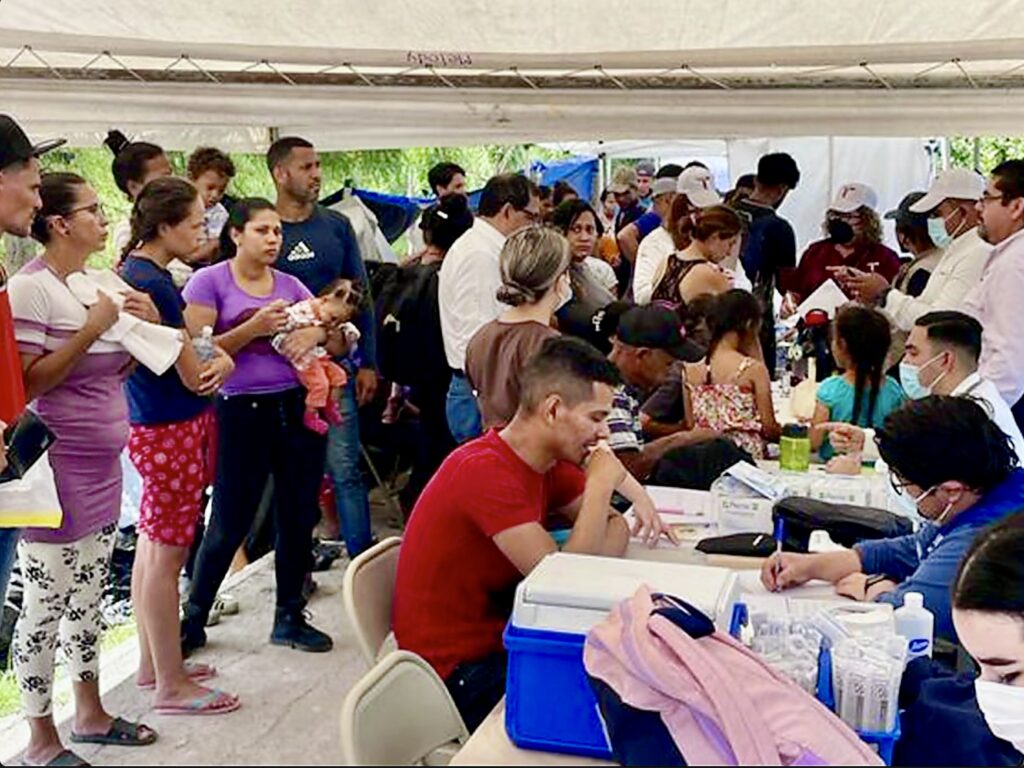
The institute has assisted returnees with backgrounds in construction, electrical work, mechanics and other skilled trades. Some have been connected with companies looking for workers with technical or specialized experience.
That presents both a challenge and an opportunity for Tamaulipas: helping people rebuild their lives while potentially absorbing experienced workers into a labor market that needs their skills.
Matamoros takes a much larger share
Matamoros’ role in that process has grown substantially over the past year, even as the overall number of repatriation events in Tamaulipas has fallen.
Tamaulipas recorded 17,906 repatriation events from January through May, down nearly 50% from 35,639 during the same period last year.
But the decline was dramatically different among the state’s three reception points.
Matamoros recorded 15,860 events, down 26.3% from 21,529 a year earlier.
Reynosa, meanwhile, fell 87.5%, from 9,141 to 1,146. Nuevo Laredo dropped 81.9%, from 4,969 to 900.
As a result, Matamoros’ share of Tamaulipas’ repatriation events surged from 60.4% during the first five months of 2025 to 88.6% during the same period this year.
Matamoros recorded nearly 14 times as many events as Reynosa.
The figures measure repatriation events recorded at official reception points and should not necessarily be read as a count of unique people.
His family remains in the U.S.
For Loredo, the consequences extend far beyond finding another job.
His wife and children remain in the U.S. His father is also there and depended on Loredo for transportation to medical appointments.
Loredo said attorneys have told him he may have to wait 10 years before he has another opportunity to address his immigration situation.
In the meantime, he is relying partly on his family in the U.S.
His wife sometimes sends him $40 or $50, he said. His mother and siblings occasionally send smaller amounts to help him cover basic expenses while he searches for work.
His children ask when he is coming back.
“People think that because you live over there, you have money,” Loredo said.
But earning U.S. wages does not necessarily mean someone arrives in Mexico with substantial savings, he said, particularly for workers without higher levels of education.
Some people sent back may have neither savings nor a home or close relatives waiting for them in Mexico.
Loredo at least had family in Matamoros willing to give him somewhere to stay.
He declined to be photographed for this story, citing privacy concerns and possible stigma.
The migration challenge extends beyond Mexicans
The Tamaulipas Institute for Migrants is also dealing with another population caught between countries.
García Cisneros said the institute has recently seen an increase in non-Mexican migrants asking for help voluntarily returning to their countries of origin — a trend she said was not present during the first three months of the year.
Some had remained hopeful that a change in U.S. immigration policy might eventually allow them to enter the U.S, while others have been unable to regularize their immigration status in Mexico.
Without legal documentation, migrants can struggle to work, pay rent or travel to complete immigration and consular procedures.
That leaves some deciding whether they can realistically establish themselves in Mexico or need to return home.
From U.S. experience to Tamaulipas jobs
For Tamaulipas, the economic impact of repatriation will ultimately depend on more than how many people arrive through Matamoros.
Returning Mexican nationals can require housing, transportation, health care, documentation and financial assistance. Families can suddenly lose U.S. income while communities in Mexico absorb people who may not have lived there for decades.
But some of those same people arrive with something valuable: years of experience acquired in the U.S. labor market.
Whether that experience can become productive capacity in Tamaulipas depends partly on how quickly workers can obtain documents, demonstrate their skills and connect with employers.
For Loredo, those questions aren’t theoretical.
He spent virtually his entire life in the U.S. His family is still there. His automotive experience was acquired there.
Now he is in Matamoros trying to turn those skills into a paycheck while figuring out what comes next.
His situation illustrates what sits behind the 15,860 repatriation events recorded in the city this year: people crossing into Mexico with careers, families and financial lives suddenly divided by an international border — and, in some cases, decades of experience that could become part of Tamaulipas’ workforce.

Anayancy Ulloa
Reporter
Most Read
- SpaceX’s futuristic city of Starbase finalizes massive 7,100-acre annexation. Here’s what we know.
- SpaceX reschedules Starship’s first flight around the Earth
- How much water does SpaceX need to operate near Brownsville? Nearly 20x its current use
- Could apartment-to-condo conversion help make $100K homeownership in the McAllen metro more affordable? One investor says yes.
- Crunch Fitness is expanding and struggling in the Valley. Here’s why
Get the latest business news delivered to your inbox every morning for free.
Try 30 Days Free!
Get full access to award-winning journalism covering business, real estate, health care, economic trends, and the people shaping the Rio Grande Valley.
30 Days Free!
$9.95/month
Limited time offer
Subscription renews after your 30 day free trial at $9.95/mo.
Included Benefits
- Unlimited access to all articles
- Daily business news and analysis
- Subscriber-only content and features
Stories That Matter
- Starbase leaders approved a 45-year land deal with SpaceX for 166 acres, but what will be built there remains a mystery
- Two Valley businesses turned mangonadas into a school-friendly popsicle. Now they want to take it nationwide
- Pharr doubles bridge capacity as data centers and produce drive new trade demand
- Mission’s first Small Business Expo puts $25K on the line for local entrepreneurs
- Reynosa’s newest technical high school focuses on AI, semiconductors and bionics
- McCoy’s gives $10K, tools to launch Mid-Valley construction academy
- UT Health RGV performs new digestive procedure for first time in the Valley
- Construction begins on Saronic’s $3.2B Brownsville shipyard. Here’s what’s being built first
- TSTC bets on advanced manufacturing to meet RGV’s industrial boom
- Pharr’s cross-border business push earns international recognition