Companies considering new manufacturing operations in Reynosa are asking a different question than they were a decade ago.

Before discussing labor, logistics or even security, many want to know whether enough electrical power is available.
“It’s the first question they ask us: Do you have enough power to support an operation?” said Martín Anzaldúa, director general del Grupo Río San Juan..
Grupo Río San Juan is one of the largest industrial real estate developers in Reynosa and a major player in the city’s maquiladora sector. The company develops, owns and manages industrial parks, warehouses and manufacturing facilities used by export-oriented manufacturers along the U.S.-Mexico border.
Anzaldúa said the energy needs of manufacturers have increased dramatically as companies adopt more automation and advanced production processes.
“We used to see companies operating with 500, 750 or 1,000 kVA. Today, they arrive requesting 3,000 or even 5,000 kVA,” he said.
The trend began accelerating around 2019 as companies searching for sites in northern Mexico sought larger electrical loads to support increasingly sophisticated operations.
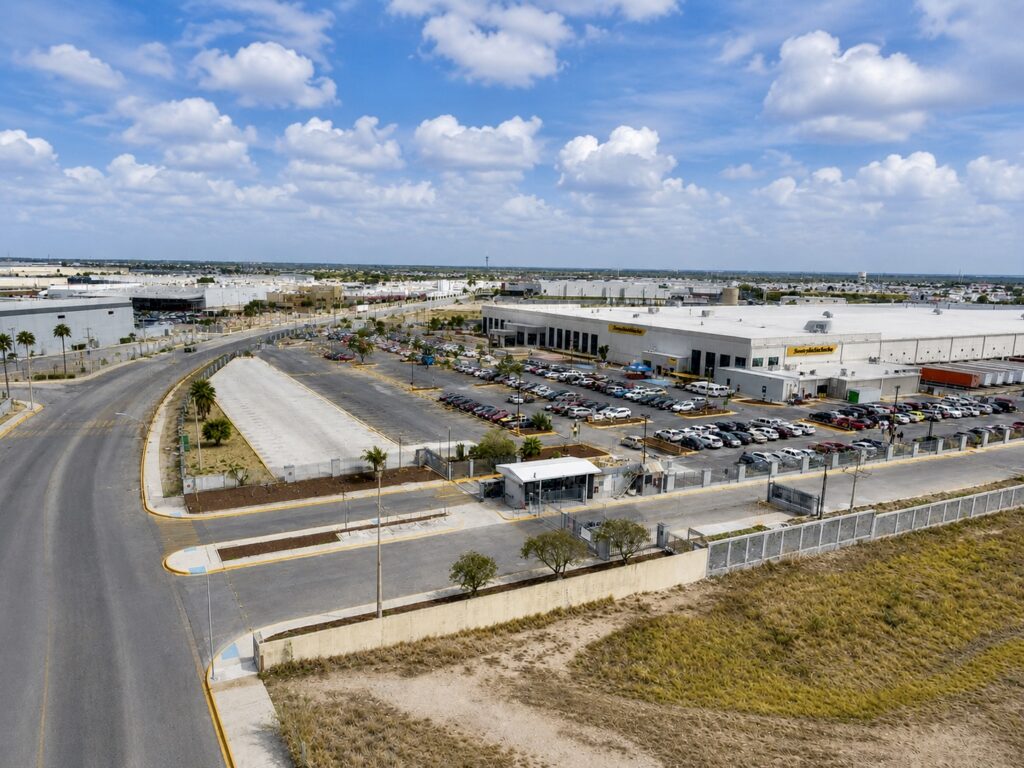
Courtesy of | Villa Florida Industrial Park
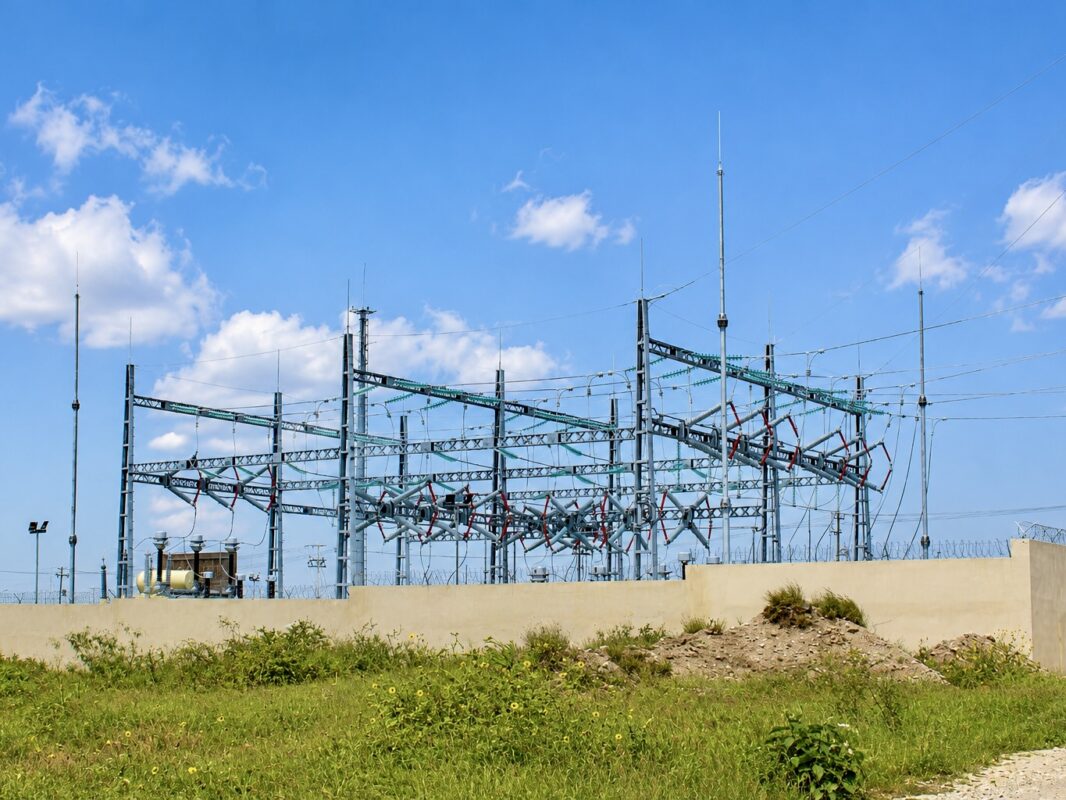
The growing demand forced infrastructure upgrades at Villa Florida Industrial Park, where existing capacity had reached its limit. To address the issue, Mexico’s Federal Electricity Commission, known as CFE, built a new 30-megavolt-ampere, or MVA, substation called Santander.
The new substation adds to the park’s existing 60 MVA of capacity and helps position Reynosa to accommodate future industrial growth, Anzaldúa said. Grupo Río San Juan provided the land for the project.
Anzaldúa argued that Mexico’s energy challenge is no longer generation, but rather transmission and distribution infrastructure.
“Power generation can be done, and it is being done. What we need is transmission, distribution and substations,” he said.
According to Anzaldúa, industrial parks that can immediately provide electrical capacity now have a major advantage when competing for new investment.
“Today, whoever has the installed capacity to provide power to industrial park users is in first place in the game,” he said.
He added that energy availability now carries more weight in site-selection decisions than issues that have historically been associated with Reynosa.
“Right now, companies are more concerned about whether there is power available than about security,” he said. “If that infrastructure is not available, prospects simply move elsewhere.”

Other industrial developers say Reynosa still has available capacity.
Rosario Espinoza Fernández, property manager at Centinela Property, said power availability has become a deciding factor for manufacturers evaluating locations in the city.
“It is fundamental to the decision-making process,” she said.
Centinela East Park, one of Reynosa’s newer industrial developments, is served by a 30-MVA substation and currently maintains an estimated 20,000 kVA of available capacity for future projects, according to the company.
Espinoza said manufacturers continue to prioritize location and cross-border logistics, but electrical capacity has become equally important.
“Companies will always ask about location because imports and exports are fundamental to their operations, but power capacity has definitely become a determining factor,” she said.
She added that Colonial Industrial Park and Reynosa Industrial Park also maintain dedicated electrical infrastructure. Together with Centinela East Park, the three developments account for roughly 73 MVA of installed capacity.
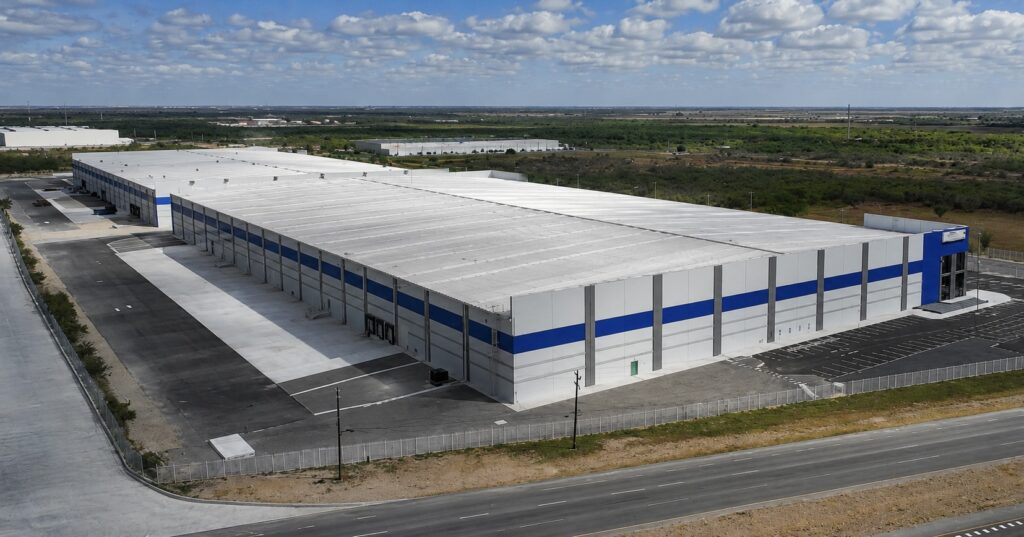
Courtesy of | Centinela Property
“There is still available capacity that can be utilized,” Espinoza said.
Developers say that available capacity gives Reynosa an advantage at a time when electrical constraints are becoming a growing concern in manufacturing markets across Mexico and the United States.
The next challenge could come from data centers and other energy-intensive industries.
Anzaldúa said Reynosa is not yet prepared to compete for large data center projects because of their power and water requirements.
“Data centers require a tremendous amount of power and water,” he said. “That is where a major challenge could arise.”
For now, industrial developers say Reynosa’s available electrical capacity remains a key selling point as manufacturers continue expanding operations in northern Mexico.

Anayancy Ulloa
Reporter
Most Read
- SpaceX is giving Brownsville $220M for water projects. In exchange, the city gave up zoning control of 444 acres near Starbase
- What you need to know about Texas A&M’s newest manufacturing hub near the Port of Brownsville
- Port of Brownsville could soon host Nodule City, a first-of-its-kind commercial deep-sea mining hub
- Fluidstack breaks ground on $4 billion Cameron County AI data center
- Cameron County is negotiating a $20M Fluidstack data center donation after Harlingen waffles on the same offer
Get the latest business news delivered to your inbox every morning for free.
Try 30 Days Free!
Get full access to award-winning journalism covering business, real estate, health care, economic trends, and the people shaping the Rio Grande Valley.
30 Days Free!
$9.95/month
Limited time offer
Subscription renews after your 30 day free trial at $9.95/mo.
Included Benefits
- Unlimited access to all articles
- Daily business news and analysis
- Subscriber-only content and features
Stories That Matter
- Mexico car sales are growing, but its factories are making fewer vehicles
- Edinburg’s Texas Cook’Em generated nearly $7 for every $1 invested
- Momole gains ground in McAllen as Reynosa-born brand plots U.S. expansion
- Harlingen earns state tourism certification aimed at boosting local economic development
- Mission’s first Small Business Expo puts $25K on the line for local entrepreneurs
- Reynosa’s newest technical high school focuses on AI, semiconductors and bionics
- McCoy’s gives $10K, tools to launch Mid-Valley construction academy
- UT Health RGV performs new digestive procedure for first time in the Valley
- TSTC bets on advanced manufacturing to meet RGV’s industrial boom
- Pharr’s cross-border business push earns international recognition