There’s a new industry trade group in the fast-growing electronics sector along the Texas-Mexico border between the Rio Grande Valley and the Mexican state of Tamaulipas.
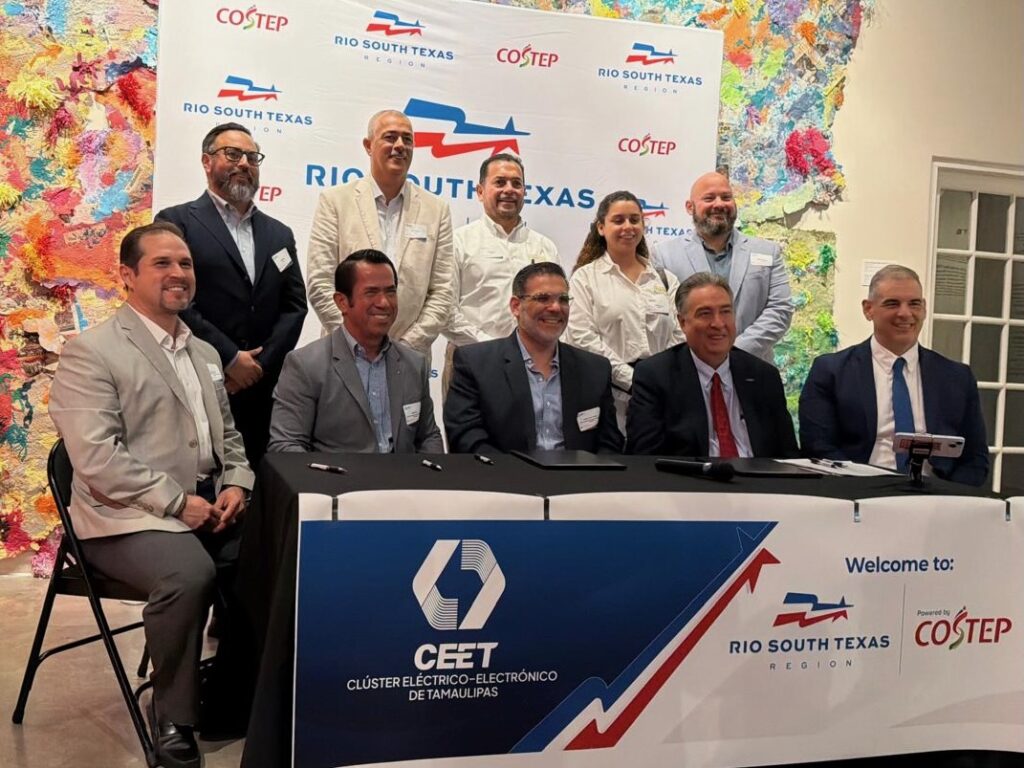
The Cluster Electrico-Electronico de Tamaulipas was co-founded recently by leaders of several different maquiladoras, or Mexican factories, and signed a memorandum of understanding to join the Council for South Texas Economic Progress, or COSTEP, Rio South Texas on Friday.
The group signed the MOU at the International Museum of Art and Science in McAllen.
As an economic development organization, COSTEP leaders have been focused on recruiting more manufacturing companies to the border region in both the U.S. and Mexico.
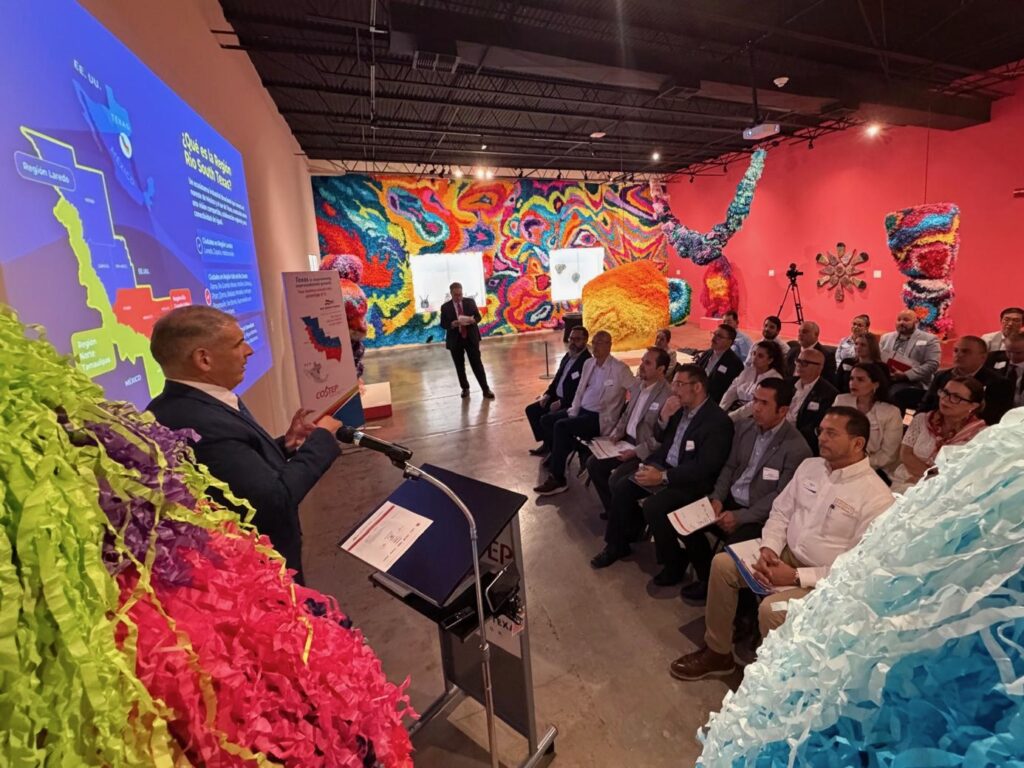
The goal is to increase connectivity among different companies, streamline supply chains, and include the education sector in workforce development for the fast-growing industry.
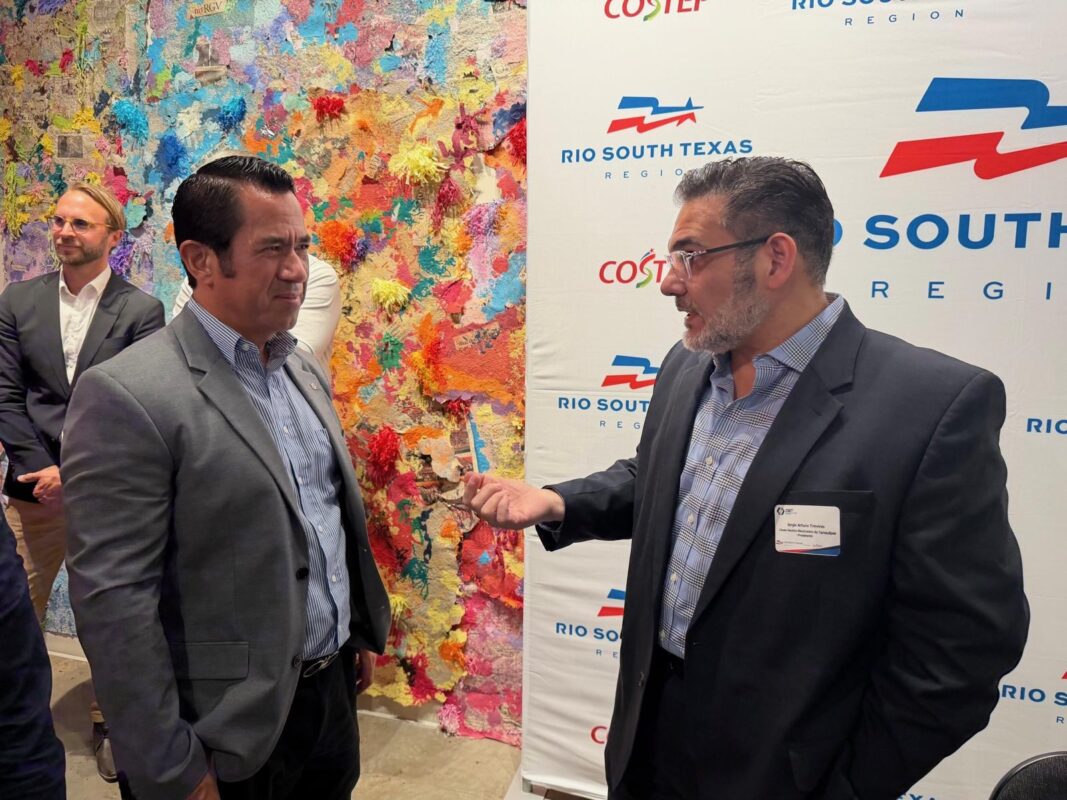
Sergio Arturo Treviño Ayala is the president of the Tamaulipas Electrical-Electronics Cluster and serves as the general manager of Stanley Black & Decker maquiladora in Reynosa – which sits across the international bridges from the McAllen metro area.
“Our goal is to grow the region by creating ecosystems that allow for organic expansion and a better future,” Treviño told the Rio Grande Valley Business Journal. “There is a strong economy at the border, partly due to the workforce. The key advantage of the border region is the existing collaboration, communication and rapid connectivity with the United States, and the capacity and technology installed at the border are more advanced than in the interior [of Mexico]. However, there is an opportunity for growth across the board both by further developing and expanding existing border operations and by playing a vital role in meeting supply chain and workforce needs.”
Right now, the organization includes 20 different companies, but it’s open to other manufacturers on both sides of the border interested in joining. And there’s room to grow; according to COSTEP’s survey, there are 95 companies that are active in electronic manufacturing along the Rio South Texas region.
“Currently, everyone operates in isolation, which hinders investment, growth and productivity. The second factor is talent development,” Treviño said. “The people and the capacity are there, but sometimes the talent isn’t developed in a way that enables the growth and innovation required by this specific economic sector.”
The industry is growing, going through a particular boom period right now, he said. And sometimes growth on the Mexican side translates to investment in South Texas.
In Mission, Stanley Black and Decker is expanding operations this year to the tune of $4 million, and Valeo, which operates in Rio Bravo, is investing in a major factory in McAllen, a $225 million deal.
COSTEP has been increasingly involved in helping organize the bridge between Mexico and the U.S. for manufacturers looking for synergy.
For example, there was a group of manufacturers in Tamaulipas in the same industrial park sourcing materials from the Middle East when the product was available within a few miles, said Rick Carrera, an economic development executive at COSTEP.

That’s one reason why the organization created a database with hundreds of companies and the types of products or services they offer in the South Texas and northern Tamaulipas region.
COSTEP found there were at least 315 manufacturers, 267 of which operate in Northern Tamaulipas and 48 in South Texas. The organization has been very active in recent years, bringing industry clusters from the interior region of Mexico, such as the automotive industry, to consider the border.
“Perhaps they’ve never looked at us [along the border] as a place to expand and invest,” Carrera said. “Whether they’re from Mexico, Europe, Asia, South America, we’re here to promote the region as an investment opportunity. We’re known for our manufacturing prowess, but not our ecosystem.”
So through these efforts, COSTEP is trying to change that dynamic and improve connectivity among business leaders.

Kristen Mosbrucker-Garza
Reporter
Kristen Mosbrucker-Garza is a versatile multimedia news reporter who lives and works along the Texas-Mexico border in Hidalgo County. Mosbrucker-Garza is a news reporter for the Rio Grande Valley Business Journal. During her career she's worked for the McAllen Monitor, San Antonio Business Journal, The Advocate Newspaper in Louisiana, Phoenix New Times, and public media outlets in Baltimore and Philadelphia.
Most Read
- Is SpaceX quietly building a data center at Starbase? Job postings offer clues
- 25 Mexican businesses eye McAllen expansion after city pitches U.S. market entry program
- Rio Grande LNG moves closer to getting even bigger at Port of Brownsville
- Starbase EDC may issue $3 billion in tax-exempt bonds to support SpaceX, records show
- Edinburg ISD rejects nearly $6M offer for prime land near La Sienna despite $15M budget deficit
Get the latest business news delivered to your inbox every morning for free.
Try 30 Days Free!
Get full access to award-winning journalism covering business, real estate, health care, economic trends, and the people shaping the Rio Grande Valley.
30 Days Free!
$9.95/month
Limited time offer
Subscription renews after your 30 day free trial at $9.95/mo.
Included Benefits
- Unlimited access to all articles
- Daily business news and analysis
- Subscriber-only content and features
Stories That Matter
- S-Mart opens seventh Matamoros store with $12.6M investment, plans more
- Starr County’s next solar farm moves forward as contractor ramps up hiring
- Valley manufacturers face workforce shortage as industry eyes expansion
- Mission’s first Small Business Expo puts $25K on the line for local entrepreneurs
- McCoy’s gives $10K, tools to launch Mid-Valley construction academy
- UT Health RGV performs new digestive procedure for first time in the Valley
- TSTC bets on advanced manufacturing to meet RGV’s industrial boom
- Pharr’s cross-border business push earns international recognition
- Brownsville eases drought restrictions after nearly three years as Rio Grande reservoir levels improve
- Texas A&M’s $53.5M McAllen research center will tackle water, food security and Valley health