Automotive manufacturing industry leaders from central Mexico visited McAllen and Brownsville this week in search of new investment opportunities.
Representatives from Grupo Industrial Region Aguascalientes Automotive Cluster (GIRAA) mingled with business leaders across the Rio Grande Valley to discuss potential partnerships and assess the region’s role in evolving North American supply chains.
“We didn’t imagine there would be so many opportunities,” GIRAA President Monica Mendoza said.
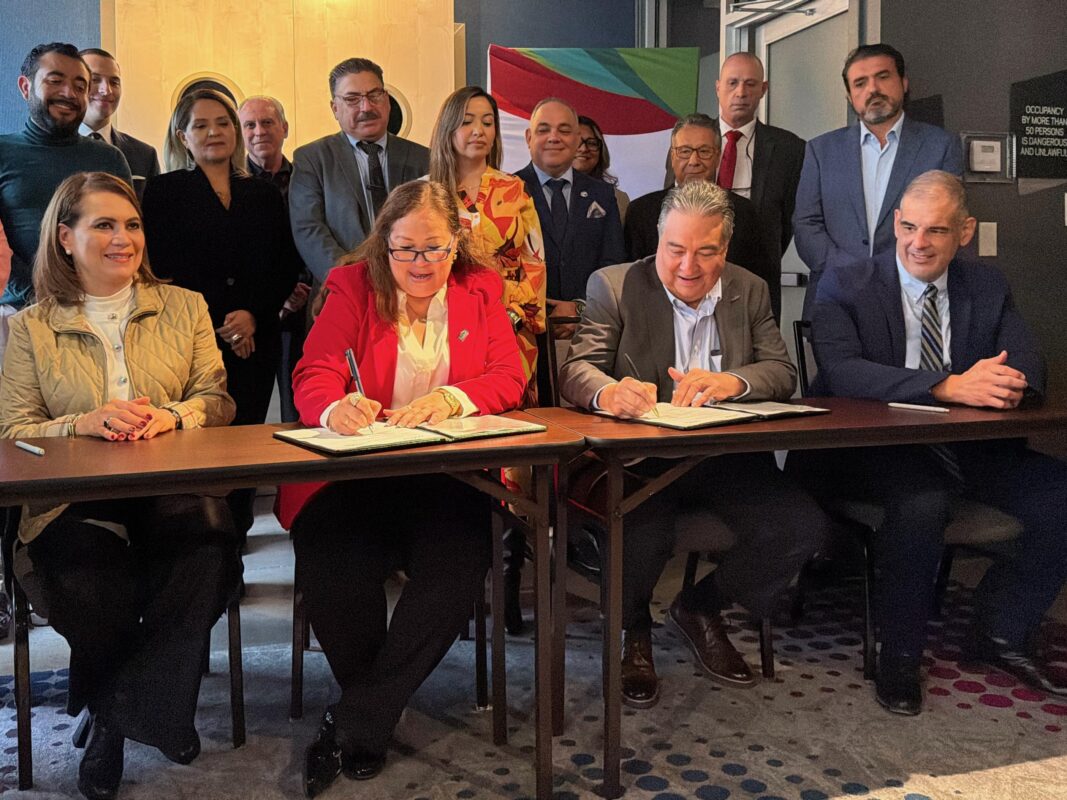
The trade group signed a memorandum of understanding with the Council for South Texas Economic Progress (COSTEP) to facilitate greater cross-border trade.
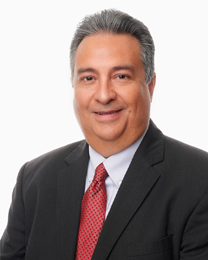
Adam Gonzalez, CEO of COSTEP, said the goal is to bring more manufacturing jobs to the Rio Grande Valley.
“We’re going to start bringing in any type of manufacturing cluster from Mexico that is interested in expanding into Texas,” Gonzalez said.
The visit comes as the tariff landscape on both sides of the border continues to shift.
Both the U.S. and Mexico are seeking to bolster domestic manufacturing and are imposing higher tariffs on imports from China and other Asian countries.
Tariffs reshape how manufacturers plan production
While the Trump administration imposed significant tariffs on overseas imports into the U.S. last year — including a hefty 100% tariff on China — Mexico implemented its own new set of tariffs beginning Jan. 1.
Those measures apply to imports from countries without free trade agreements with Mexico and range from 5% to 50% across more than 1,400 products, including goods originating in China, India, and Thailand.
Together, the policies are forcing manufacturers to reconsider where they source materials and locate production, particularly when products cross multiple borders before reaching the U.S. market.
“It does improve the position of our region: it’s the closest these companies that are in Mexico can get to the U.S. and still be very close to Mexico, where they might have their larger organization,” Gonzalez said. “There’s a lot of interest.”
Why proximity to the U.S. matters more now
For some manufacturers, the cost savings are clear.
For example, a manufacturer that imports copper electrical cable from China into Mexico for assembly now faces a 50% tariff on copper, steel, and aluminum under Mexico’s new policy. If the finished product is later exported to the U.S., it may also be subject to additional trade costs.
“It seems you can’t buy many things from China anymore, but rather develop a local supply,” she said.
The new U.S. tariff environment has been challenging for companies operating in Mexico, Mendoza said.
“It has hit us very hard, to be honest,” she said. “We are a little worried about the tariffs and how this could potentially slow down investment in Mexico. But we have faith that Mexico and the United States’ economies need to work together.”
Navigating tariffs through logistics and assembly
Imports can go through a complicated customs process, but there are ways to save money, said
Abraham Guerra, president of International Distribution and Logistics (IDL) in McAllen.
In some cases, products imported separately and later assembled may qualify for tariff relief under the United States-Mexico-Canada Agreement, depending on how the manufacturing transformation is documented.
“Depending on how you explain the transformation you’ve made, you can save on tariffs because you’re able to enter independently of the harmonized tariff schedule,” Guerra said.
IDL helps manufacturing clients import materials through ports in the U.S. and Mexico.
“For example, today we’re receiving lumber that arrives through the Port of Houston. It comes from Malaysia, and, ultimately, a company that manufactures office furniture here in Reynosa is using it in production,” he said.
From advanced manufacturing to space supply chains
Salvador Montaner, a representative of Solinda, a manufacturer in Aguascalientes serving the aerospace and automotive industries, said the company is looking to grow.
Solinda’s five-year business plan targets sustainable growth between 20% to 25% each year.
“It’s ambitious, but we believe that we can achieve it,” Montaner said.
Solinda tends to purchase its raw materials from nations under free trade agreements across North America and then uses advanced manufacturing techniques, including high-precision machines and robots, to weld parts together.
“This reduces problems and administrative procedures related to tariffs,” Montaner said.
Catalina Ramirez Vazquez, CEO of SpaceportMX, is hopeful about the opportunity to facilitate partnerships between manufacturers and space exploration companies, such as SpaceX. Right now, she’s mostly working with companies in Guanajuato and Chiapas.
“The intention is to create a supply chain and find ways for Mexico to be able to provide what is needed in this new space industry,” she said. “Companies in that sector will require not only products but also services.”

Kristen Mosbrucker-Garza
Reporter
Kristen Mosbrucker-Garza is a versatile multimedia news reporter who lives and works along the Texas-Mexico border in Hidalgo County. Mosbrucker-Garza is a news reporter for the Rio Grande Valley Business Journal. During her career she's worked for the McAllen Monitor, San Antonio Business Journal, The Advocate Newspaper in Louisiana, Phoenix New Times, and public media outlets in Baltimore and Philadelphia.
Most Read
- SpaceX’s futuristic city of Starbase finalizes massive 7,100-acre annexation. Here’s what we know.
- 25 Mexican businesses eye McAllen expansion after city pitches U.S. market entry program
- Australian company plans to build a $607M lithium refinery at the Port of Brownsville. It’s a big bet on America’s battery future
- Starbase cancels meeting to consider annexing 444 acres relinquished by Brownsville
- SpaceX reschedules Starship’s first flight around the Earth
Get the latest business news delivered to your inbox every morning for free.
Try 30 Days Free!
Get full access to award-winning journalism covering business, real estate, health care, economic trends, and the people shaping the Rio Grande Valley.
30 Days Free!
$9.95/month
Limited time offer
Subscription renews after your 30 day free trial at $9.95/mo.
Included Benefits
- Unlimited access to all articles
- Daily business news and analysis
- Subscriber-only content and features
Stories That Matter
- A Brownsville startup wants to deliver water in space. First, it needs $7M
- $10M apartment complex planned in Hidalgo
- Edinburg looks to attract new franchise businesses with matchmaking event
- T-Mobile plans fiber-optic internet expansion in Mercedes
- New Harlingen airport CEO eyes Mexico flights, cargo expansion and more development
- Mission’s first Small Business Expo puts $25K on the line for local entrepreneurs
- McCoy’s gives $10K, tools to launch Mid-Valley construction academy
- UT Health RGV performs new digestive procedure for first time in the Valley
- TSTC bets on advanced manufacturing to meet RGV’s industrial boom
- Pharr’s cross-border business push earns international recognition