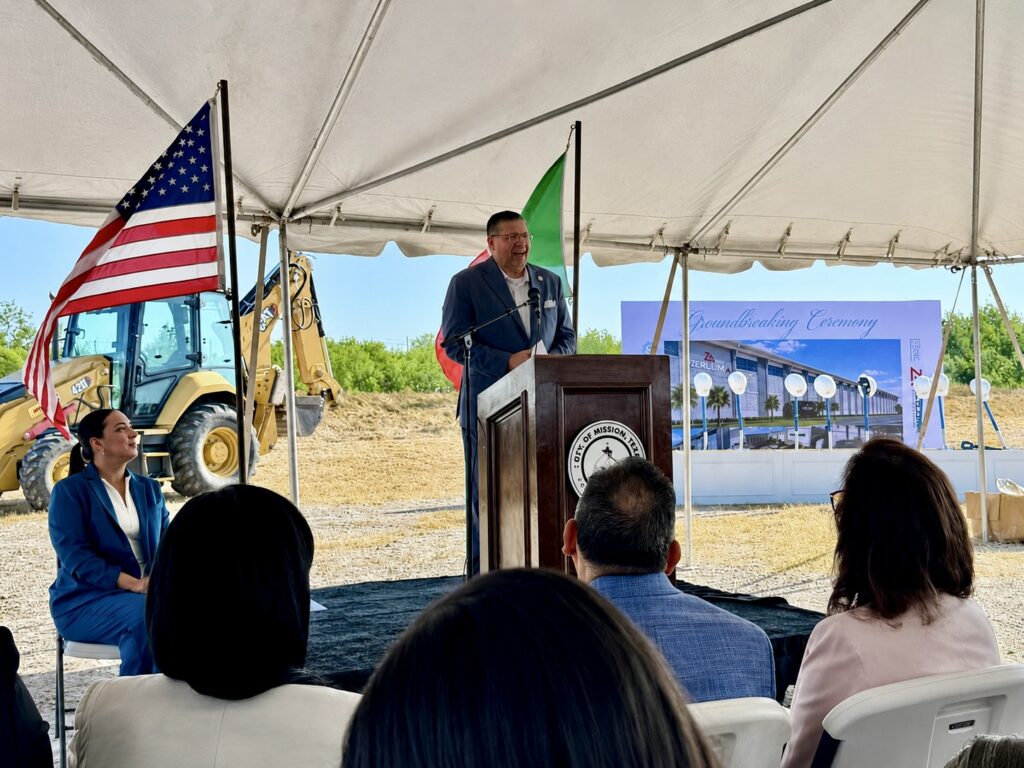
Mission has officially broken ground on a $50 million aluminum recycling and advanced manufacturing facility that city leaders say will strengthen the city’s industrial base while positioning the Rio Grande Valley to capitalize on growing demand for sustainable manufacturing.
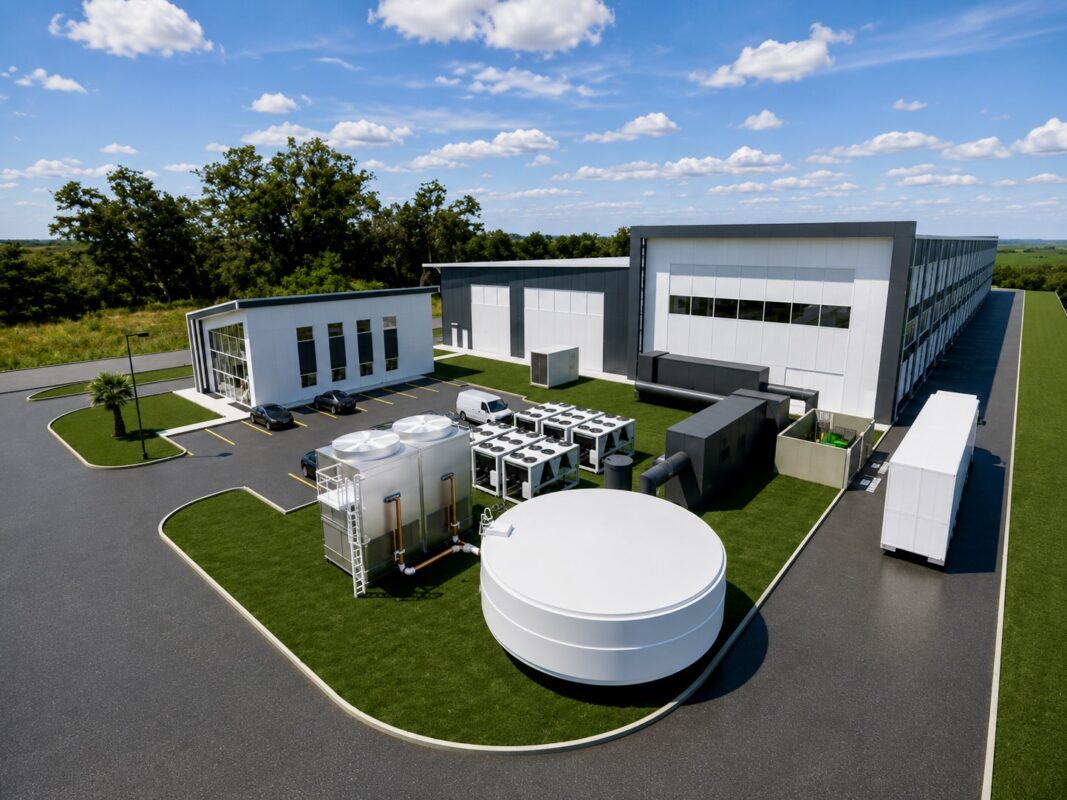
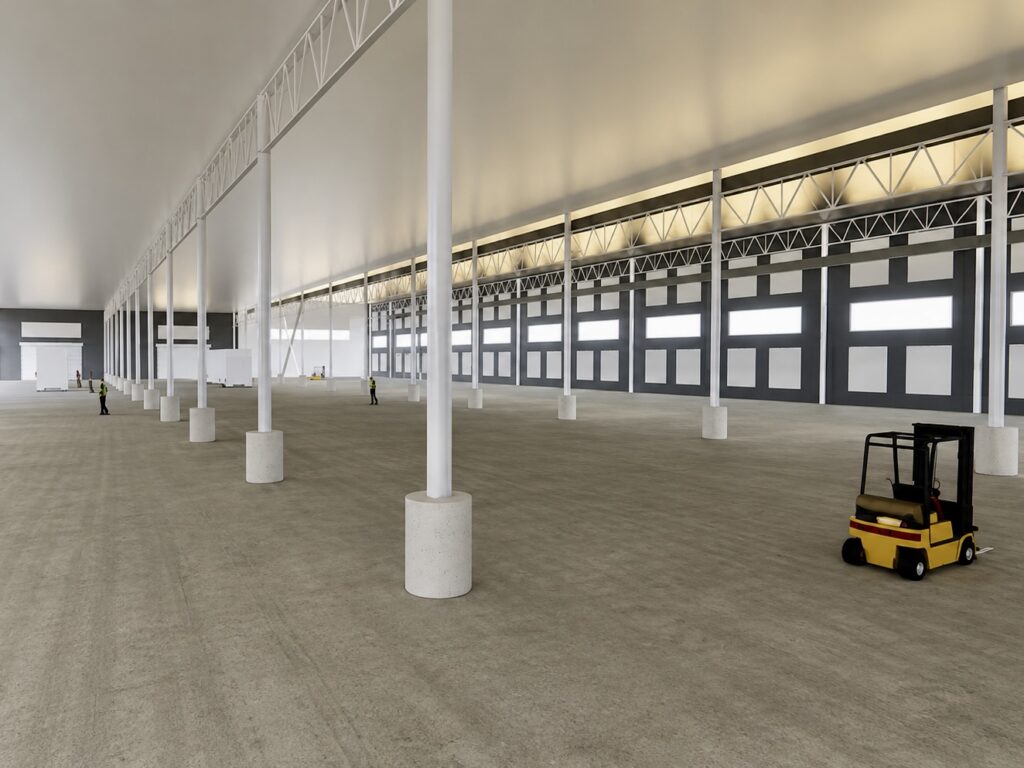
The project, developed by Mexico-based ZERLUMA, will bring a nearly 100,000-square-foot aluminum recycling plant to Mission’s Expressway Business Park. The highly automated facility is expected to create about 70 permanent jobs initially, with room to expand as production grows.
Courtesy of | RGV Partnership
“We’ve been working on it for about a year, maybe just a little bit more,” Mission Economic Development Corporation CEO Teclo Garcia said in an interview with the Rio Grande Valley Business Journal. “The big news is that we’ve solidified and confirmed that this $50 million aluminum recycling plant will be located here in Mission.”
Garcia said Tuesday’s groundbreaking officially marks the start of construction on what he described as a regional project that extends beyond Mission’s city limits.
The facility will be built at 300 Trinity St. and will include surrounding industrial yard space for materials handling and future expansion.
The investment is among the largest private industrial projects in Mission’s history and continues the city’s recent push to attract advanced manufacturing operations, Garcia said.
The project follows other recent industrial announcements, including expansions by Stanley Black & Decker and Bettcher Manufacturing.
Recycling aluminum for North American manufacturers
Rather than producing aluminum from raw ore, ZERLUMA will recycle scrap aluminum into new aluminum billets used by manufacturers throughout North America and beyond.
Garcia said the company’s existing operation outside Guadalajara takes discarded aluminum, melts it, removes impurities and produces large aluminum cylinders that are shipped to customers in industries ranging from automotive manufacturing to appliance production.
“They’re taking discarded aluminum, melting it down, cleaning it and creating new aluminum,” Garcia said. “Aluminum is a metal that never loses its properties. You can continue recycling it over and over.”
He said the growing demand for recycled materials has become a competitive advantage as manufacturers seek more sustainable supply chains.
“A lot of companies like using recycled material instead of buying new,” Garcia said. “They’re in business to make money, obviously, but they’re also providing a really good service.”
Tariffs and logistics played a role
Garcia said locating production in Mission also helps the company navigate ongoing trade uncertainty between the United States and Mexico.
Instead of shipping scrap aluminum into Mexico for processing and then transporting finished products back across the border, the Mission facility will allow ZERLUMA to process U.S.-sourced material domestically before shipping directly to American customers.
“They can avoid the back and forth of material over the border,” Garcia said. “If they were in Mexico, they’d have to cross the border twice.”
Garcia noted aluminum remains part of ongoing trade discussions between the United States and Mexico, but said manufacturers cannot afford to wait for long-term policy certainty.
“The private sector can’t wait on that,” he said. “They’re moving forward with this plant.”
Workforce partnerships already underway
While the facility will rely heavily on automation, Garcia said the company expects to hire engineers, technicians, and other skilled manufacturing workers from across the Valley.
Courtesy of | Mission EDC
Mission EDC has already connected ZERLUMA with South Texas College, the University of Texas Rio Grande Valley, and Workforce Solutions to begin developing workforce training programs.
“The institutions of higher learning need to hear from the employer,” Garcia said. “UTRGV and South Texas College don’t have all the answers. They need to know what skills the company will need so they can prepare that workforce.”
Company officials have said operations will initially begin with one production shift before eventually expanding to around-the-clock production as demand increases.
Despite the project’s scale, Garcia said Mission has not approved any economic incentives for the company.
“As of right now, we have not provided them any incentives,” he said. “We don’t have any agreements between us and the company.”
He said the city has committed to helping connect the manufacturer with workforce partners and could potentially assist with future infrastructure improvements if needed.
More than 500 jobs in total economic impact
A University of Texas Rio Grande Valley economic impact analysis estimates the project will create 275 temporary construction jobs and generate more than $41 million in economic output during construction.
Once operational, the facility is projected to support 243 total jobs across direct, indirect and induced employment, produce nearly $87 million in annual economic output, and generate about $16 million in annual labor income.
Combined, the construction and operational phases are expected to support 518 jobs, generate approximately $128.4 million in economic activity, and contribute nearly $4.8 million in state and local tax revenue.
Part of a broader regional manufacturing surge
Garcia said the investment reflects broader industrial momentum across South Texas, pointing to major announcements in Brownsville, McAllen and throughout the region.
“I think it’s bigger than just Mission,” Garcia said. “It’s a regional thing.”
He also cited the future commercialization of the Anzalduas International Bridge as another factor expected to strengthen Mission’s position for manufacturing and logistics investment.
“We have the right workforce in place to do these jobs,” Garcia said. “This will be a regional impact project.”
Garcia teased that Mission is preparing additional economic development announcements in the coming months, including another industrial project, a major retail development, and a professional services company that together are expected to create hundreds of additional jobs.

RGV Business Journal Staff
Staff
Most Read
- SpaceX is giving Brownsville $220M for water projects. In exchange, the city gave up zoning control of 444 acres near Starbase
- What you need to know about Texas A&M’s newest manufacturing hub near the Port of Brownsville
- Port of Brownsville could soon host Nodule City, a first-of-its-kind commercial deep-sea mining hub
- Fluidstack breaks ground on $4 billion Cameron County AI data center
- Cameron County is negotiating a $20M Fluidstack data center donation after Harlingen waffles on the same offer
Get the latest business news delivered to your inbox every morning for free.
Try 30 Days Free!
Get full access to award-winning journalism covering business, real estate, health care, economic trends, and the people shaping the Rio Grande Valley.
30 Days Free!
$9.95/month
Limited time offer
Subscription renews after your 30 day free trial at $9.95/mo.
Included Benefits
- Unlimited access to all articles
- Daily business news and analysis
- Subscriber-only content and features
Stories That Matter
- Mexico car sales are growing, but its factories are making fewer vehicles
- Edinburg’s Texas Cook’Em generated nearly $7 for every $1 invested
- Momole gains ground in McAllen as Reynosa-born brand plots U.S. expansion
- Harlingen earns state tourism certification aimed at boosting local economic development
- Mission’s first Small Business Expo puts $25K on the line for local entrepreneurs
- Reynosa’s newest technical high school focuses on AI, semiconductors and bionics
- McCoy’s gives $10K, tools to launch Mid-Valley construction academy
- UT Health RGV performs new digestive procedure for first time in the Valley
- TSTC bets on advanced manufacturing to meet RGV’s industrial boom
- Pharr’s cross-border business push earns international recognition