Editor’s note: This is the second of two stories from Thursday’s “Powering Texas and Regional Growth: Infrastructure + Workforce Exchange” in Harlingen. The first focused on infrastructure. This story examines the Rio Grande Valley’s workforce needs.
The Rio Grande Valley has spent decades educating workers who often had to leave home to find jobs matching their skills.
Now, some of them are coming back.
Industrial growth is bringing RGV workers home — now the region needs to build its next workforce generation
More than 70% of the 6,000-plus workers currently building NextDecade’s Rio Grande LNG project at the Port of Brownsville are from within 100 miles of the site, company officials said Thursday during a regional workforce forum in Harlingen.
Brownsville is the project’s largest source of workers, followed by Edinburg and Mission, while Harlingen ranks second among Cameron County communities, said Andrea Figueroa Benton, director of community relations for NextDecade.
The numbers are significant for a region experiencing an unprecedented wave of industrial investment — and one that has long struggled to retain the workers its colleges and universities produce.
“We have a powerful workforce,” Rafael Vela, chief executive officer of Workforce Solutions Cameron, said. “For generations, our universities, our institutions, our education have produced hundreds of thousands of graduates.”
The problem, he said, has been what happened after graduation.
“Our issue has been that there’s not been the industrial complex to support that workforce.”
That dynamic is beginning to change.
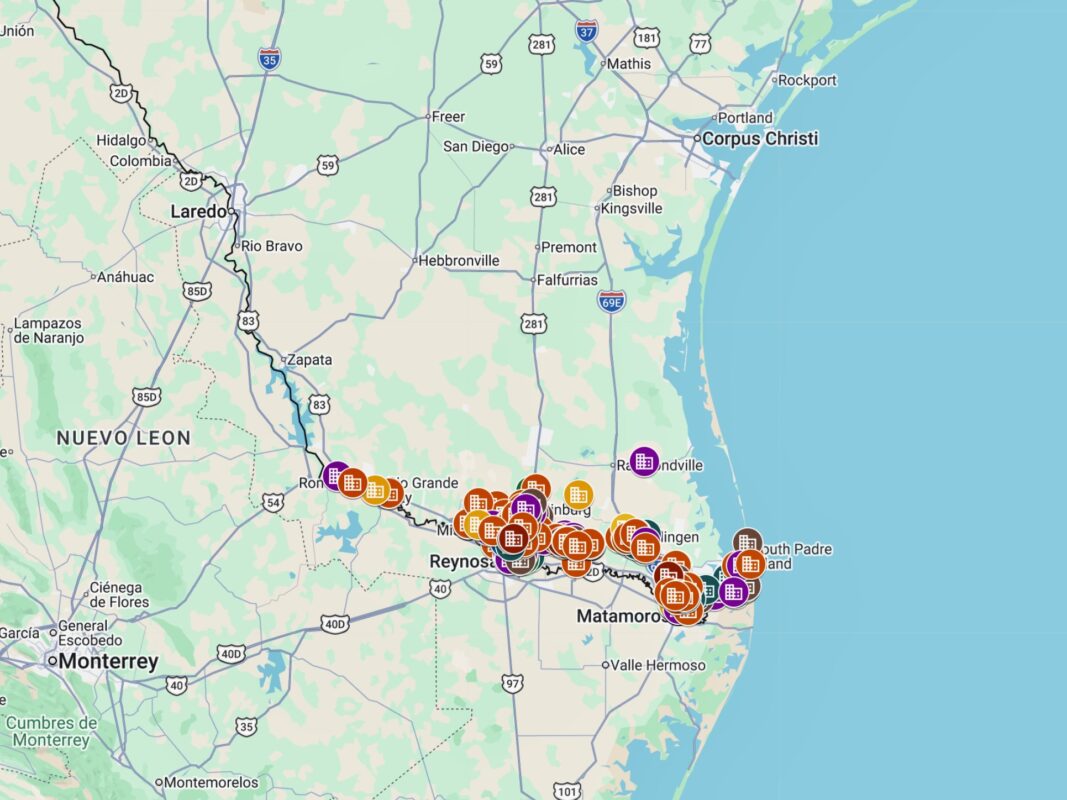
Rio Grande LNG is approaching its fourth year of construction and is expected to begin operations in less than a year, according to comments made during the forum. The project is one of several major industrial developments reshaping Cameron County, alongside SpaceX’s continued expansion at Starbase and other manufacturing and industrial investments.
For NextDecade, the local workforce has already exceeded early expectations.
When the company began working with Bechtel, the contractor building Rio Grande LNG, NextDecade had committed to filling at least 35% of the project’s jobs locally.
Bechtel believed it could do better.
“They told us, ‘We can do a lot better than that because we know that we have people from the Rio Grande Valley working in other Bechtel projects along the Gulf Coast and around the world,’” Figueroa Benton said.
That is exactly what happened, she said.
“We’ve seen people that before did not have the opportunities but had the skills and were going elsewhere to look for jobs,” Figueroa Benton said. “They are coming back. They have come back and they are now here in the community.”
Getting ahead of the jobs
The next challenge is making sure the Valley has enough workers for what comes after Rio Grande LNG.
For Texas State Technical College, that means employers cannot wait until they are ready to hire to tell educators what they need.
Gina Cano-Monreal, provost of TSTC’s Harlingen campus, said the college works with industry partners to understand what jobs and skills they expect to need 18 to 24 months in advance.
“What is coming so that we can make sure that we are producing a workforce that will be ready to go day one or even before that?” Cano-Monreal said.
Those conversations get specific: What skills will workers need? What competencies? How many employees will a company need?
That gives TSTC time to put faculty, equipment and training capacity in place before the jobs arrive. In other cases, Cano-Monreal said, workers may already have the foundation they need and require only short-term, accelerated training to move into a new position.
But the scale of the growth now confronting the Valley is larger than any one college can handle alone.
“It isn’t just, how can an entity like TSTC fulfill that?” Cano-Monreal said. “It’s going to have to be a combination of TSTC, TSC, STC, UTRGV. How are all of these entities going to come together?”
Companies considering the Valley are not necessarily concerned with which institution produces their workers, she said.
“It’s really, what can the region provide,” Cano-Monreal said. “It doesn’t matter to them who is providing it. Can the whole region come together to produce this workforce?”
That regional approach comes as Texas employers continue to compete heavily for workers with education and technical training beyond high school but short of a four-year degree. Statewide, middle-skill occupations accounted for 42.8% of live job postings in March, according to Texas Workforce Commission labor market data.
Those jobs span industries ranging from health care and transportation to maintenance, manufacturing and other technical fields — the same broader workforce pool increasingly important as the Valley’s industrial base grows.
Building the pipeline earlier
Colleges, however, are only one part of the equation.

Photo Credit | Naxiely Lopez-Puente
Maricela “Mari” De León, executive director of RGV LEAD, said the Valley needs to begin connecting young people with those opportunities while they are still deciding what they want to do after high school.
Many students choose a program of study between ninth and 12th grade knowing what a career sounds like on paper but having little idea what the work actually looks like, she said.
That is why RGV LEAD has increasingly focused on putting students inside workplaces for firsthand exposure — not only through formal internships or apprenticeships.
“There has to be direct intentionality,” De León said. “There has to be something tangible.”
The organization works with regional school districts whose students are already enrolled in programs ranging from architecture and construction to engineering, advanced manufacturing and information technology. De León said employers are also identifying emerging needs such as cybersecurity.
During the last academic year, RGV LEAD served an area encompassing more than 69,000 students, De León said. More than 16,000 students move through that regional talent pipeline each year.
That represents a workforce employers should be thinking about before students graduate, she said.
“When you think of workforce, don’t just think about the higher-end component of that,” De León said.
For companies arriving in the Valley looking for hundreds of employees, she said, there are already high school students identifying engineering, health science and other fields as their career paths. The missing piece can be giving them meaningful exposure to the companies that could eventually employ them.
Her message to employers was straightforward: open the doors.
“Give us a chance to give the students an opportunity to gain experience that they would not have the ability to do on their own,” De León said.
RGV LEAD entered the new academic year with signed agreements with 12 regional school districts and a goal of reaching 34. De León cited returning or newly recruited districts including Harlingen, Brownsville, San Benito and Edinburg-area schools.
More jobs closer to home
NextDecade is making a similar bet on developing workers early.
Education receives the largest share of the company’s community investment, Figueroa Benton said, including scholarships and support for educational programs. NextDecade also operates internship programs in Houston and the Rio Grande Valley.
That investment is increasingly tied to where the company itself expects its workforce to be.
“At some point, our company’s going to have more employees in Brownsville than in Houston,” Figueroa Benton said.
“So, it just makes sense for us to invest in this community and the youth,” she added, “and in making sure that not only the people know what LNG is, that they know the importance, but also know the opportunities and the career paths that this industry brings.”
For Vela, the significance extends beyond any single company.
Cameron County has about 175,000 people in its workforce today, he said. As the Valley adds projects on a scale it has rarely experienced before, its success will depend not simply on attracting workers but on preparing and retaining them.
For decades, the region’s workforce pipeline often ended with talented residents leaving for opportunities elsewhere.
The difference now is that some of those opportunities are finally being built here.
Rio Grande Valley Business Journal Managing Editor Naxiely Lopez-Puente contributed to this report.

RGV Business Journal Staff
Personal
Lo más leído
- La ciudad futurista «Starbase» de SpaceX culmina una anexión a gran escala de 7.100 acres. Esto es lo que sabemos.
- ¿Podría la conversión de apartamentos en pisos en propiedad ayudar a que la adquisición de una vivienda de 100.000 dólares en el área metropolitana de McAllen resulte más asequible? Un inversor afirma que sí.
- Pharr pone en marcha un nuevo foro centrado en el comercio transfronterizo, la logística y la inversión
- ¿Quién está invirtiendo en Tamaulipas? El nuevo mapa del capital industrial
- Texas ha aprobado solo cuatro nuevos distritos culturales. Dos de ellos se encuentran en el Valle del Río Grande
Recibe las últimas noticias empresariales en tu bandeja de entrada cada mañana, gratis.
¡Pruébalo gratis durante 30 días!
Disfruta de acceso completo a un periodismo galardonado que abarca temas como los negocios, el sector inmobiliario, la sanidad, las tendencias económicas y las personas que dan forma al Valle del Río Grande.
¡30 días gratis!
$9.95/month
Oferta por tiempo limitado
La suscripción se renueva tras el periodo de prueba gratuito de 30 días por 9,95 $ al mes.
Prestaciones incluidas
- Acceso ilimitado a todos los artículos
- Noticias y análisis diarios sobre el mundo empresarial
- Contenidos y funciones exclusivos para suscriptores
Historias que importan
- Una empresa de ingeniería de Weslaco demanda a Donna y afirma que el ayuntamiento le debe casi 4,5 millones de dólares por un proyecto de aguas residuales
- Southwest agrega vuelos directos entre Harlingen y Las Vegas y amplía su servicio a Austin
- Otra sequía grave podría costarle al sur de Texas 2.8B y 11.500 puestos de trabajo
- Por qué Uber Freight afirma que ahora está explorando el Valle del Río Grande
- Estados Unidos impone un arancel del 25 % a los camiones pesados, lo que sacude el sector exportador mexicano, valorado en 15 000 millones de dólares
- Primer vistazo al plan director de vivienda de Brownsville. Lo que tienes que saber y cómo participar.
- Se firma el primer contrato de arrendamiento en el nuevo centro comercial junto al Puerto de Brownsville; consulta el mapa de construcción del proyecto
- Por qué la Zona de Comercio Exterior de McAllen adquirió 1.500 acres en la zona norte de la ciudad
- El vicepresidente JD Vance da inicio a la construcción de un astillero en Brownsville, con un costo de 3.2 mil millones de dólares, y promete 10,000 empleos
- Las grandes cadenas comerciales de Reynosa registran ganancias iniciales durante el evento al estilo del «Viernes Negro» de México, pero las tiendas del centro de la ciudad atraviesan dificultades debido a la ausencia de compradores estadounidenses.