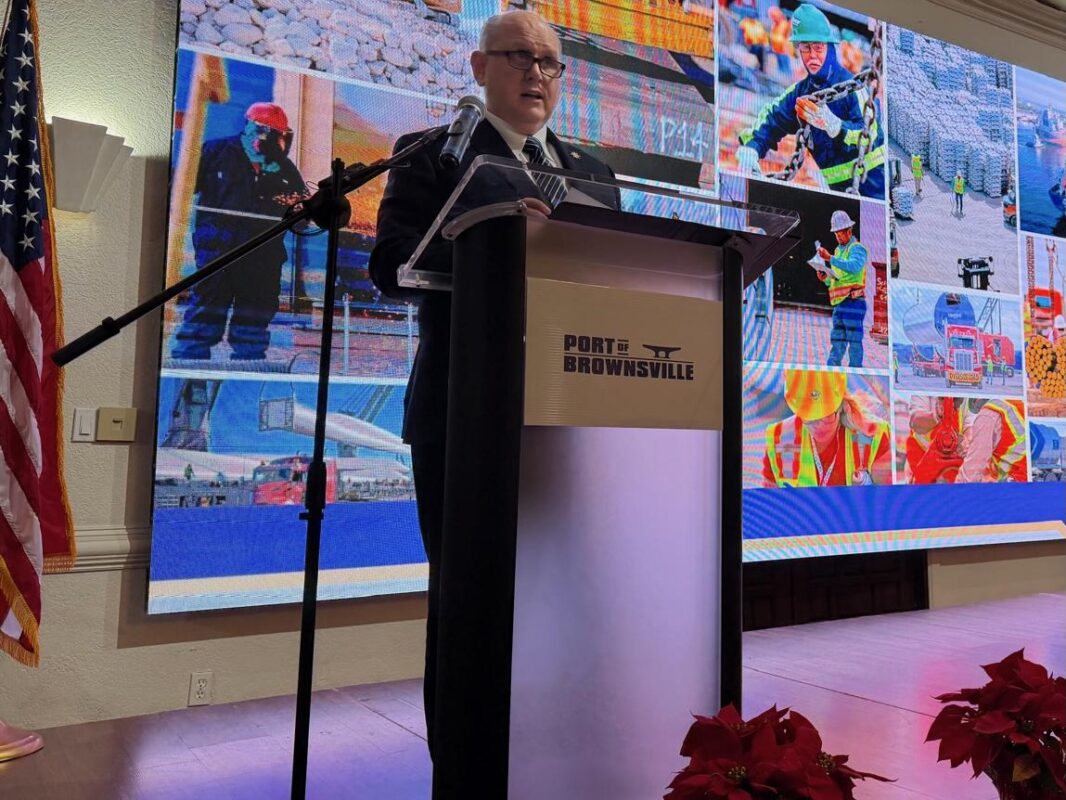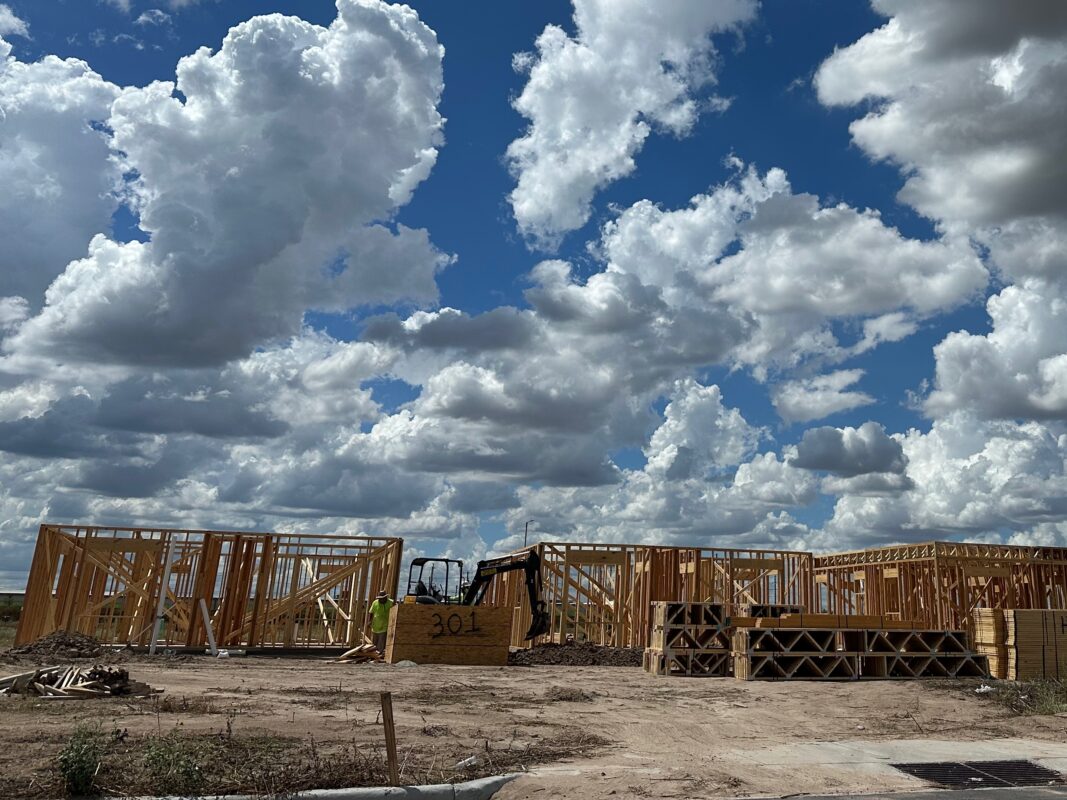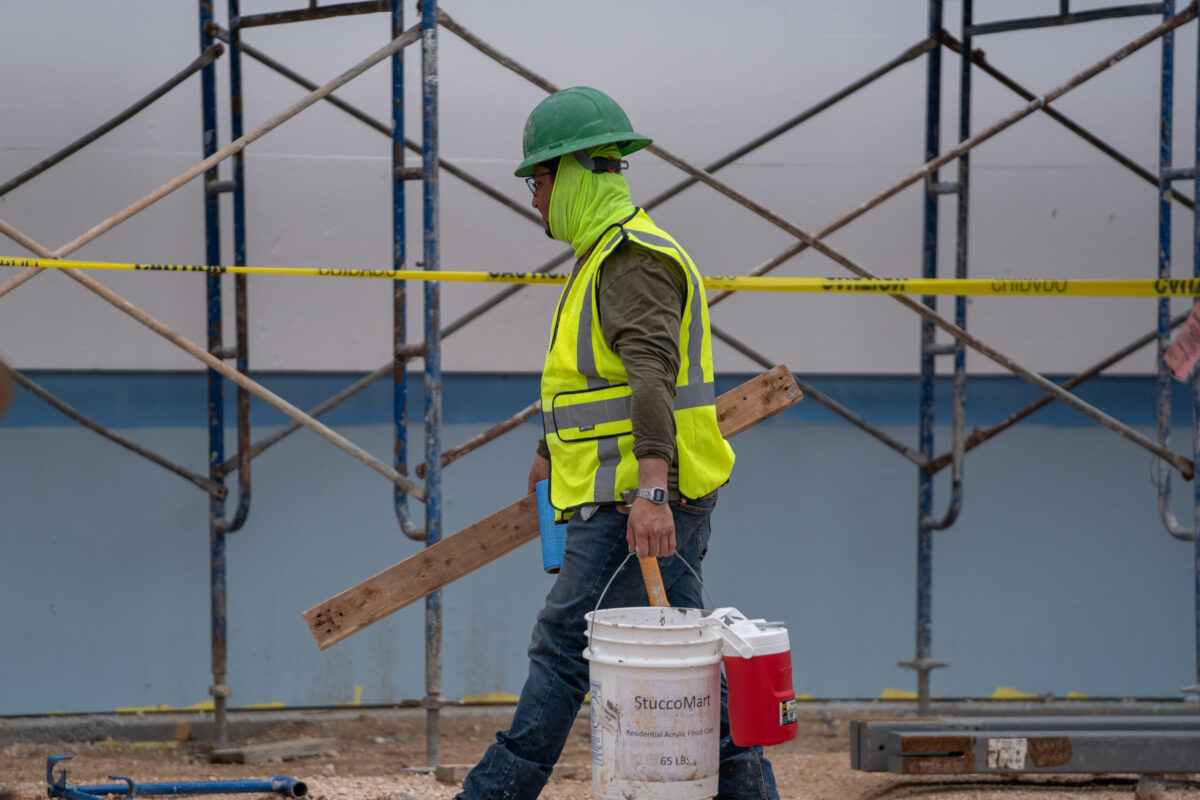
Editor’s note: This is the first of two stories from Thursday’s “Powering Texas and Regional Growth: Infrastructure + Workforce Exchange” in Harlingen. This story focuses on infrastructure. The second will examine the Rio Grande Valley’s workforce needs.
The Rio Grande Valley spent years trying to attract the kind of large-scale industrial investment now pouring into South Texas.
Now that some of those projects are here, their suppliers are beginning to follow and the infrastructure needed to support them is being tested in ways regional leaders say will require the Valley to plan — and build — differently.
In Brownsville, that challenge can already be measured in megawatts.
The city’s entire electric system currently serves a load of roughly 300 megawatts, according to Javier Martinez, electrical system planning manager for the Brownsville Public Utilities Board.
One prospective customer asked for 500 megawatts.
“Our system for the city of Brownsville is 300,” Martinez said. “I mean, we’re talking about doubling.”
And that wasn’t the largest request. Martinez said BPUB has since encountered one for 1 gigawatt — equivalent to 1,000 megawatts.
Across the Valley, AEP Texas has already invested more than $1 billion in roughly 190 miles of major transmission improvements, Dale Fowler, senior manager of economic and business development for the utility, said, adding that another round may already be needed.
Water presents a parallel challenge.
Albert Escobedo, government affairs director for RGV Desal’s South Texas operations, said communities interested in seawater desalination now need to begin identifying how much water they will actually need and working toward commitments that could move a regional project closer to construction.
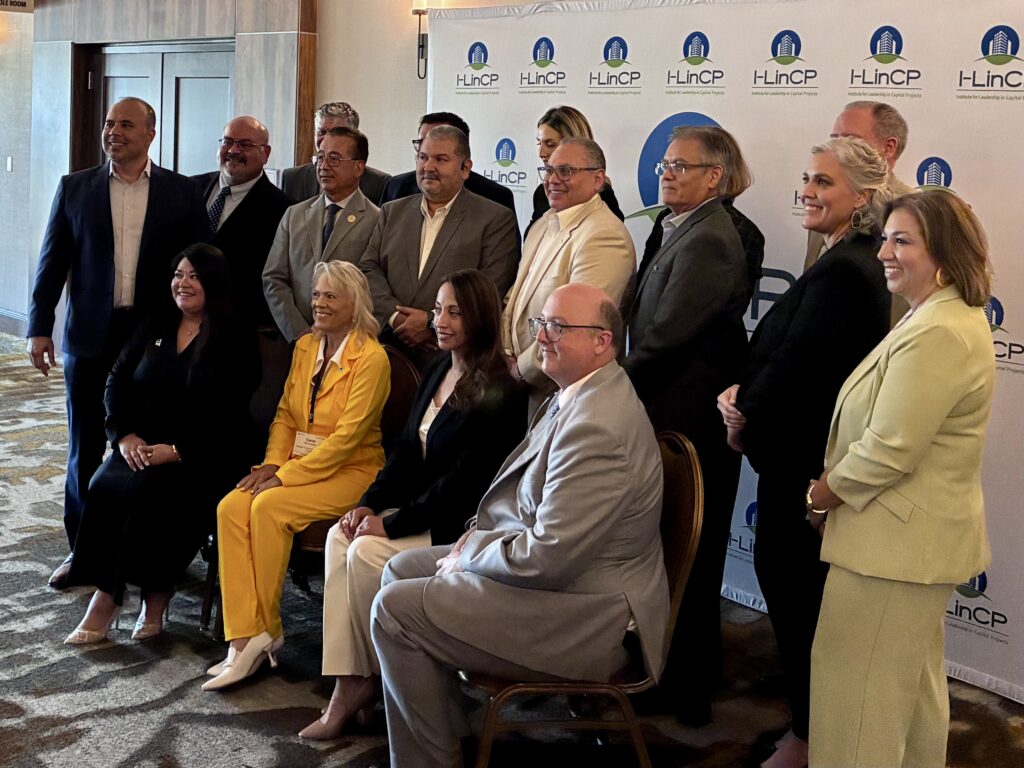
Those were among the challenges laid out Thursday during the “Powering Texas and Regional Growth: Infrastructure + Workforce Exchange” at the Harlingen Convention Center, where the conversation centered not on whether growth is coming, but whether the Valley can build fast enough to support it.
Harlingen Mayor Norma Sepulveda said that will require cooperation between cities, utilities, economic development organizations, educational institutions, and private companies.
“Public-private partnerships will continue to be a key part of that success,” Sepulveda said.
$1 billion later, the Valley may need more
The Valley’s rising power needs come as Texas prepares for a much larger increase in electricity demand.

Mike Hoke, director of public engagement for the Public Utility Commission of Texas, said some forecasts show statewide demand doubling or more over the next decade, with data centers contributing significantly to projected growth. Some proposed loads elsewhere in Texas are large enough to rival entire cities.
“You’re talking about putting an electric consumer in, in very short notice, that’s equal to, say, the city of Brownsville,” Hoke said.
Locally, several large projects can also seek service simultaneously. Loads of 75 megawatts or more now fall under an Electric Reliability Council of Texas process that allows their combined effect on the grid to be studied, Martinez said.
“Realistically, all of these are happening simultaneously,” Martinez said. “Is it going to overload our system? Do we need to build new infrastructure?”
The Valley has already spent heavily trying to stay ahead of that question.
AEP Texas has invested more than $1 billion in roughly 190 miles of 345-kilovolt transmission improvements across the region as part of what Fowler called the Rio Grande Valley Improvement Plan, an effort that began around late 2021.
The improvements strengthened reliability while creating additional capacity for growth. But Fowler said both the number of prospective projects and the size of their power requests have increased, and AEP has submitted another regional planning proposal to ERCOT aimed at demonstrating the need for additional transmission.
“Over the next five years, in order to meet these demands, we’re going to have to build more infrastructure,” Fowler said. “And it’s going to require kind of all of us in the room to let our voices be heard.”
Building it also means deciding where it goes.
“Most people don’t want a power line going across their property,” Hoke said, “but … it’s critical that we be able to move the power.”
Texas is also looking at higher-capacity transmission, with Hoke noting the closest lines of that scale are south of San Antonio.
More generation could help.
Hoke said Texas generally does not require Public Utility Commission approval simply to build or operate a power plant, although other permits may apply — a distinction relevant locally as a developer pursues a proposed 1.5-gigawatt natural gas-fired power plant and microgrid at the Port of Brownsville.
But generating more electricity is only part of the equation. Utilities still have to get it to the projects that need it.

Brownsville changes how it plans
For BPUB, that is increasingly a race against time.
Martinez said some transformers, circuit breakers, and other specialized equipment can take roughly two years to obtain, upending the traditional sequence of designing infrastructure first and ordering equipment later.
In some cases, BPUB needs the equipment specifications before engineers can even finish the design.
“We need to have elements already ordered,” Martinez said. “We need the specifications so that we can actually design it.”
That has BPUB looking further ahead, including whether equipment traditionally maintained for emergencies could also help prepare the system for future economic development.
Some companies are bringing another advantage: their own purchasing power and supplier relationships.
Martinez described a recent project in which the normal procurement timeline was approaching the date the developer expected to need electricity. The company believed its own network could cut the wait.
“They said, ‘Don’t worry about it. We actually have resources. I can probably get that in a year,’” Martinez said. “So we’re finding different ways that we can combat this.”
BPUB is also pursuing capital projects to harden and modernize some of Brownsville’s oldest substations as it prepares for additional demand.
And that demand may continue to multiply as suppliers follow the companies already here.
Industrial growth brings a second wave
Jerry Briones, executive vice president of the Greater Brownsville Incentives Corporation, described Brownsville as entering “phase 1.5” of its industrial expansion as supply chains begin forming around major employers.
Two Tier 1 suppliers serving SpaceX are already in Brownsville, he said.
“If they want to launch two rockets every week, they need parts the next day,” Briones said about SpaceX.
One is operating from a roughly 20,000-square-foot building and has brought in 11 new computer numerical control, or CNC, machines.
Another SpaceX supplier is considering a roughly 300,000-square-foot facility that could employ close to 500 people at a 730-acre industrial park under development in Brownsville, Briones said. He did not identify the company or provide a timeline.
Briones said Brownsville’s work recruiting Saronic Technologies has also led to contacts with defense consultants, contractors, and other companies looking toward South Texas.
That growth will put pressure beyond the electric grid.
Briones pointed to Highway 48, which connects Brownsville with the Port of Brownsville, as one corridor that will eventually need additional capacity.
“You got to love me because we’re going to bring some good-paying jobs to the area,” Briones said. “But you’re going to hate me because you’re going to have congestion. You’re going to have wait times.”
Water poses another challenge the region cannot solve simply by expanding existing infrastructure.
Water needs commitments, not another study
South Texas remains heavily dependent on the Rio Grande, leaving cities and industries vulnerable to drought, reservoir conditions and uncertainty surrounding Mexico’s water deliveries.
Escobedo said Falcon Reservoir was about 25% full Thursday, but cautioned against allowing temporary improvements in water conditions to delay development of alternative supplies.
“Economic development cannot depend” on rainfall occurring in the right place or Mexico delivering water at the right time, Escobedo said. “We need a water supply that we can control.”
RGV Desal is proposing seawater desalination as part of a broader portfolio that would continue to include Rio Grande water, conservation, reuse and groundwater.
The proposed plant would be privately financed, Escobedo said. But getting its water to cities, water districts, ports, and industrial users could require a regional network of pipelines, pump stations, storage facilities, and interconnections.
Before RGV Desal can properly size that system, it needs something more concrete than interest.
“We’ve had a tremendous amount of interest throughout South Texas, and that’s very, very encouraging,” Escobedo said. “The next step is turning that interest into planning and commitments.”
Those commitments would help determine how much water the plant needs to produce, where it needs to go, and what infrastructure would be required to move it.
Water and electricity also intersect: large-scale seawater desalination requires significant power, meaning the region cannot plan one system without considering the other.
For Escobedo, however, the immediate priority is moving from identifying the problem to building solutions.
“If I could just pick one thing,” Escobedo said, “we need to move from an endless study — and we keep studying and studying new water — but we actually need to start building new water.”
For years, much of the Valley’s economic development conversation centered on what might come.
Now major industrial projects are moving forward and their suppliers are beginning to follow.
The question is no longer whether the Valley can attract growth.
It’s whether its infrastructure can keep up with what it attracts.
Rio Grande Valley Business Journal Managing Editor Naxiely Lopez-Puente contributed to this report.

RGV Business Journal Staff
Staff
Most Read
- How much water does SpaceX need to operate near Brownsville? Nearly 20x its current use
- Could apartment-to-condo conversion help make $100K homeownership in the McAllen metro more affordable? One investor says yes.
- SpaceX’s futuristic city of Starbase finalizes massive 7,100-acre annexation. Here’s what we know.
- Cameron County is negotiating a $20M Fluidstack data center donation after Harlingen waffles on the same offer
- Fluidstack breaks ground on $4 billion Cameron County AI data center
Get the latest business news delivered to your inbox every morning for free.
Try 30 Days Free!
Get full access to award-winning journalism covering business, real estate, health care, economic trends, and the people shaping the Rio Grande Valley.
30 Days Free!
$9.95/month
Limited time offer
Subscription renews after your 30 day free trial at $9.95/mo.
Included Benefits
- Unlimited access to all articles
- Daily business news and analysis
- Subscriber-only content and features
Stories That Matter
- SpaceX bought some water rights from the Rio Grande River. Here’s what we know.
- Foreign-Trade Zone No. 12 expands into Willacy County
- Mission’s first Small Business Expo puts $25K on the line for local entrepreneurs
- Reynosa’s newest technical high school focuses on AI, semiconductors and bionics
- McCoy’s gives $10K, tools to launch Mid-Valley construction academy
- UT Health RGV performs new digestive procedure for first time in the Valley
- TSTC bets on advanced manufacturing to meet RGV’s industrial boom
- Pharr’s cross-border business push earns international recognition
- Brownsville eases drought restrictions after nearly three years as Rio Grande reservoir levels improve
- Texas A&M’s $53.5M McAllen research center will tackle water, food security and Valley health