Texas will now require many occupational and professional license applicants to prove they are lawfully present in the U.S before receiving or renewing a license.
The Texas Department of Licensing and Regulation, which oversees and issues licenses for dozens of trades and occupations in Texas, implemented the policy change last week.
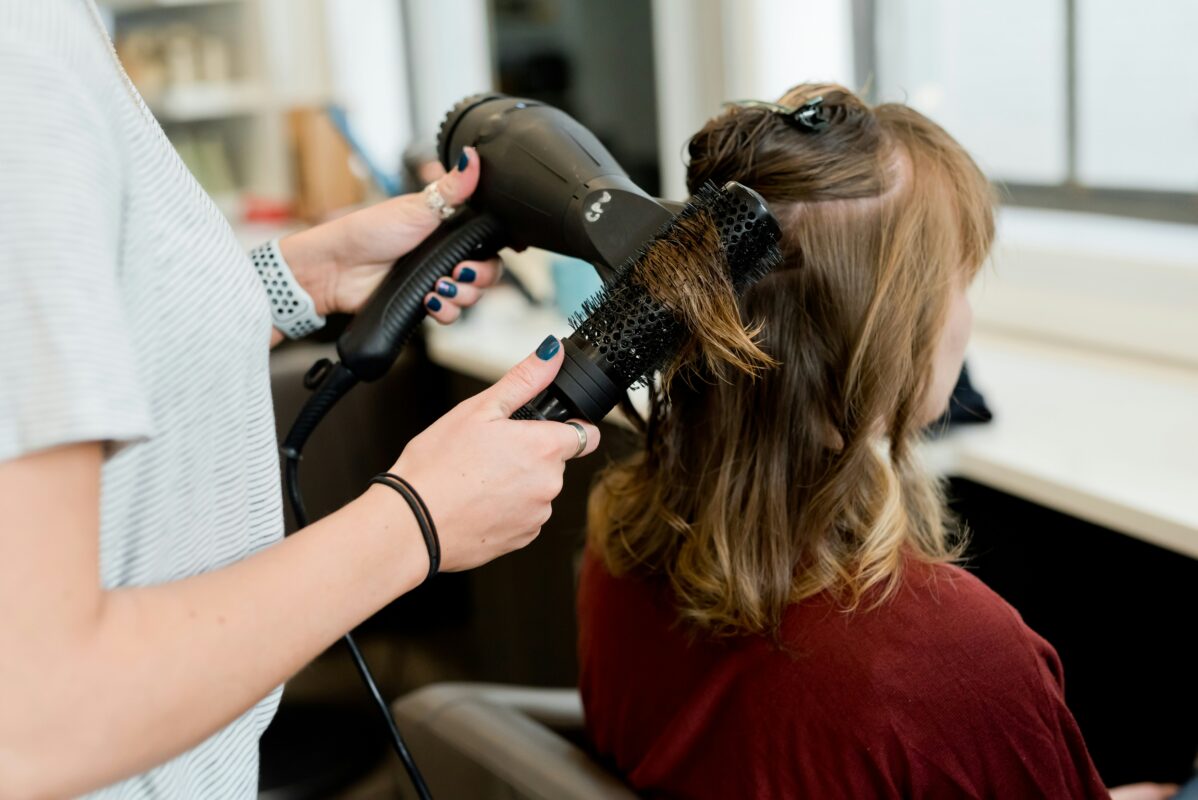
The requirement applies to initial applications and renewals for a wide range of state-regulated occupations, including cosmetologists, barbers, electricians, plumbers, HVAC technicians, tow truck operators, vehicle inspectors, and midwives.
Under the change, applications may be placed in pending status until acceptable documentation is submitted, and licenses can be denied if proof is not provided.
The local lens
For the Rio Grande Valley, where not all residents have lawful status, the policy change introduces another roadblock for individuals trying to move up the financial ladder in an economy where licensed trades and service occupations are a primary gateway into higher-paying jobs.
Recent U.S. Census data show Valley metro areas posted some of the fastest income gains in Texas — growth that is closely tied to job expansion in sectors that depend heavily on licensed and credentialed workers.
Between 2019 and 2024, the McAllen-Edinburg-Mission metro area added nearly 8,000 construction jobs, a 28% increase, according to American Community Survey data.
Over the same period, employment in transportation, warehousing, and utilities grew by 7,100 jobs, a 44% increase.
Both industries rely on licensed trades and regulated occupations such as electricians, plumbers, HVAC technicians, vehicle inspectors, and tow truck operators.
Workers who cannot meet the documentation requirement will be unable to obtain or renew licenses, regardless of experience or tenure in their field.
Small businesses, particularly owner-operators and family-run enterprises, could feel the impact first. Fewer licensed workers can translate into staffing constraints, slower project timelines, and limited capacity to expand.
For many residents, obtaining a state license is a key step toward formal employment, business ownership, and upward mobility. Requiring proof of lawful presence adds a new barrier to that pathway.

RGV Business Journal Staff
Staff
Most Read
- SpaceX’s futuristic city of Starbase finalizes massive 7,100-acre annexation. Here’s what we know.
- SpaceX reschedules Starship’s first flight around the Earth
- How much water does SpaceX need to operate near Brownsville? Nearly 20x its current use
- Could apartment-to-condo conversion help make $100K homeownership in the McAllen metro more affordable? One investor says yes.
- Crunch Fitness is expanding and struggling in the Valley. Here’s why
Get the latest business news delivered to your inbox every morning for free.
Try 30 Days Free!
Get full access to award-winning journalism covering business, real estate, health care, economic trends, and the people shaping the Rio Grande Valley.
30 Days Free!
$9.95/month
Limited time offer
Subscription renews after your 30 day free trial at $9.95/mo.
Included Benefits
- Unlimited access to all articles
- Daily business news and analysis
- Subscriber-only content and features
Stories That Matter
- Mission’s first Small Business Expo puts $25K on the line for local entrepreneurs
- Reynosa’s newest technical high school focuses on AI, semiconductors and bionics
- McCoy’s gives $10K, tools to launch Mid-Valley construction academy
- UT Health RGV performs new digestive procedure for first time in the Valley
- Starbase leaders approved a 45-year land deal with SpaceX for 166 acres, but what will be built there remains a mystery
- TSTC bets on advanced manufacturing to meet RGV’s industrial boom
- Pharr’s cross-border business push earns international recognition
- Pharr doubles bridge capacity as data centers and produce drive new trade demand
- Brownsville eases drought restrictions after nearly three years as Rio Grande reservoir levels improve
- Two Valley businesses turned mangonadas into a school-friendly popsicle. Now they want to take it nationwide