Entering the year 2026, the Rio Grande Valley (RGV) is navigating what appears to some analysts as a complex transition from rapid, pandemic-era growth to a more structured, industrial-focused economy. Our reporting over the last quarter of 2025, and some of the work of other regional publications, suggests the upcoming year will be defined by massive infrastructure completions, a slightly surprising pivot in cross-border trade dynamics, and the burgeoning aerospace and energy sector in the Port of Brownsville.
Here are the key stories and trends to watch in the Rio Grande Valley for 2026 based upon our journalism and research.
The bridge expansion era: reshaping cross-border logistics
Infrastructure is perhaps the most visible story of 2026, and there aren’t many projects bigger than efforts to expand bridges to manage the burgeoning bi-national trade of the Valley. The Pharr-Reynosa International Bridge expansion, a $150 million project, is slated for completion in the first quarter of the year. The project will nearly double the bridge’s capacity and address long-standing bottlenecks at one of the nation’s busiest land ports of entry.
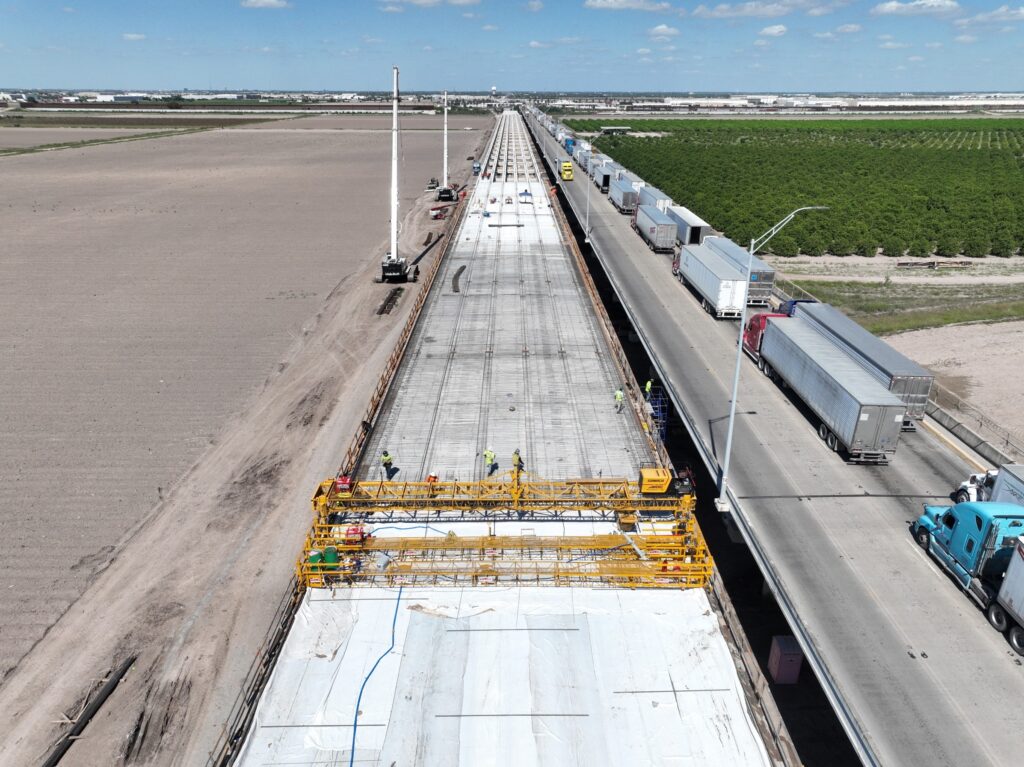
Courtesy of | City of Pharr
Cameron County, meanwhile, is set to finalize its acquisition of the Brownsville & Matamoros International Bridge (B&M Bridge), adding a fourth crossing to its network.
These developments are critical as the RGV adapts to what has been described to us as a “fewer crossings, higher value” trade model.
Following the implementation of U.S. tariffs and stricter regulatory requirements in 2025, logistics firms like Interlink Trade Services report that while the volume of individual crossings has dipped, the total value and complexity of the goods, particularly in the automotive and electronics sectors, have increased. What’s less certain, though, is impact on pricing of imported goods.
The Anzalduas International Bridge in Mission has also been undergoing a major commercial expansion to support full truck traffic beyond its original passenger-vehicle use. Construction began in late 2022 and continues into mid-2026. The project includes six new commercial inspection lanes, inspection booths, cargo processing facilities, canopy structures, and updated security/inspection technology inside the Anzalduas Land Port of Entry (LPOE).
The expansion will allow northbound and southbound loaded truck crossings, eliminating its prior limitation where only empty trucks were permitted. Officials estimate the bridge could handle more than 1,500 commercial trucks per day, significantly increasing regional freight capacity and reducing congestion at other border crossings like the Hidalgo and Pharr.
There are also other expansion projects underway at the Donna-Rio Bravo International Bridge and Progreso-Nuevo Progreso International Bridge.
The Port of Brownsville: energy and aerospace convergence
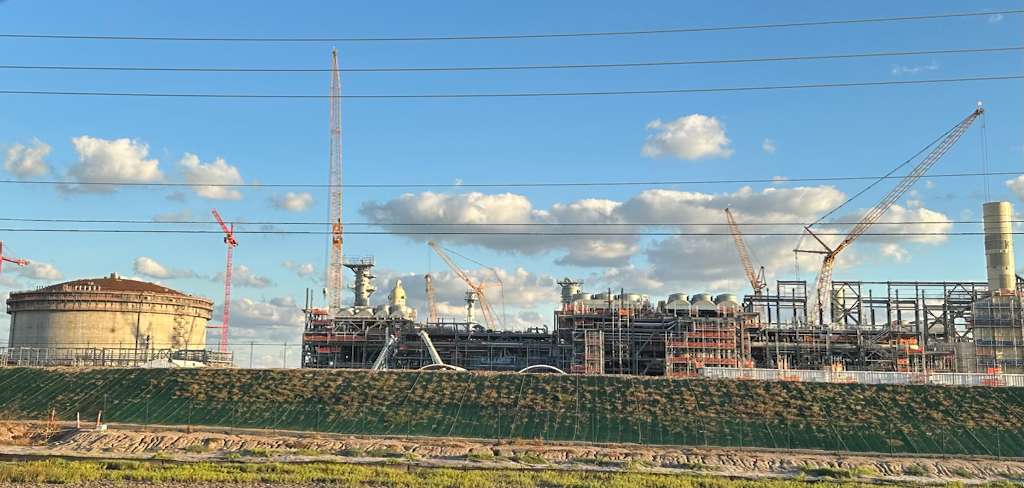
Photo Credit | Kristen Mosbrucker-Garza
The Port of Brownsville has become the epicenter of the Valley’s “industrial revolution” and two major stories are likely to continue generating headlines this year.
- NextDecade’s Rio Grande LNG: Construction on the massive liquefied natural gas export terminal is in full swing. With billions already invested, 2026 will be a pivotal year for the project as it moves toward its 2029 operational target. A second terminal, Texas LNG, is also nearing a final investment decision, which could trigger a new wave of thousands more construction jobs.
- SpaceX and the “GigaBay”: There is no way to deny that Elon Musk’s $500 million Starship manufacturing facility, known as GigaBay, is transforming Boca Chica. Just to keep pace with vehicle traffic to the formerly remote beach, TxDOT is expected to release construction bids in the summer of 2026 for a major expansion of State Highway 4. This project will widen the only road to SpaceX into a four-lane divided highway. The work is considered essential since traffic to the launch site and the city of Starbase has increased tenfold over the last five years, a growth rate that may not slow in the foreseeable future.
Retail and real estate: the mid-Valley boom
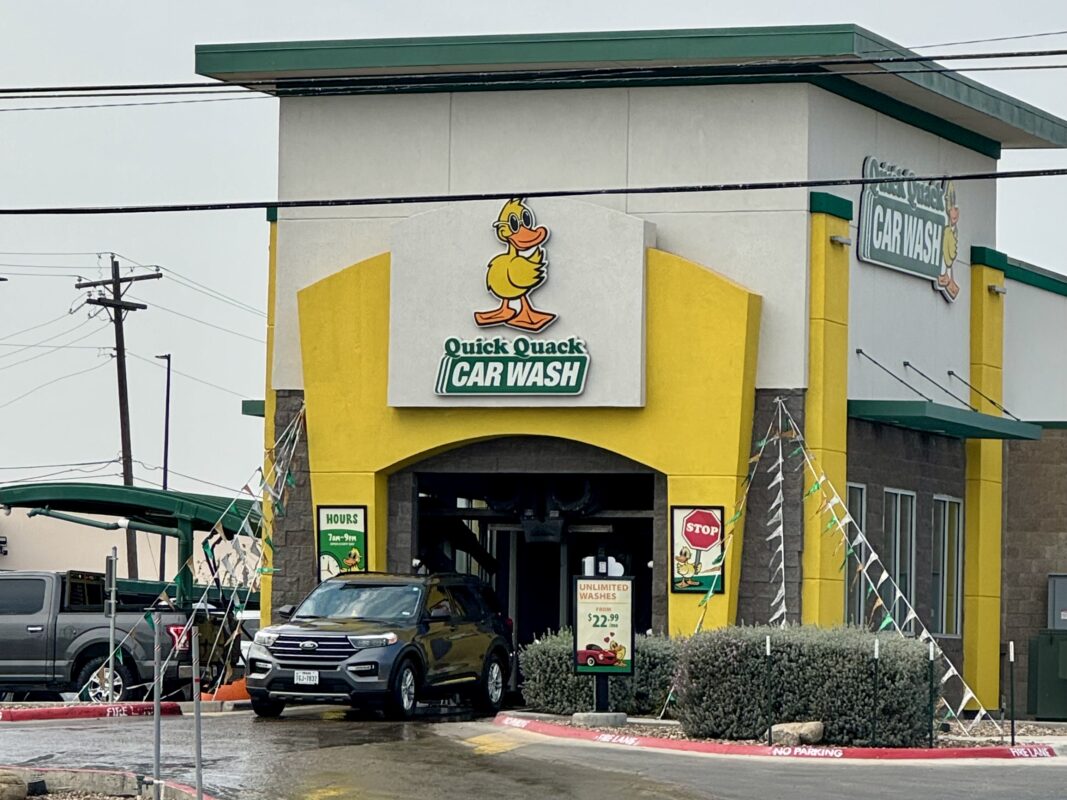
McAllen, generally, remains the Valley’s retail powerhouse, a fact evidenced by the anticipated 2026 opening of a new Nordstrom Rack. But mid- and upper-Valley cities like Mercedes and Peñitas are also seeing unprecedented commercial activity.
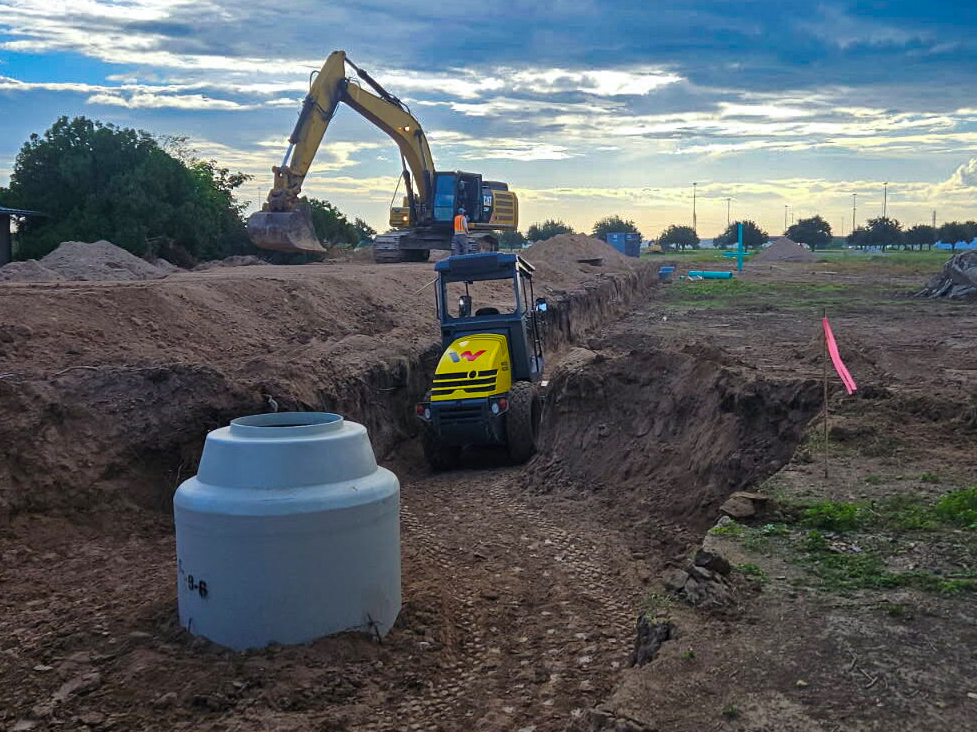
Courtesy of | Beto Garza
- The Shops at Mercedes: This $52 million, 28-acre development is one of our “Six Construction Projects to Watch in 2026.” Located next to the existing Premium Outlets, the development aims to capture business from the average of 81,000 vehicles passing on Interstate 2 every day.
- Peñitas Crossing: Smaller cities throughout the region are also securing national brands, with Olive Garden and LongHorn Steakhouse formally filing construction plans for 2026 in the western Hidalgo County community. The announcements are further proof that the Valley’s growth is no longer confined to its traditional hubs.
Economic headwinds: tariffs, taxes, and healthcare
Despite the industrial boom, Valley businesses are dealing with several policy shifts that will test the region’s resilience this year.
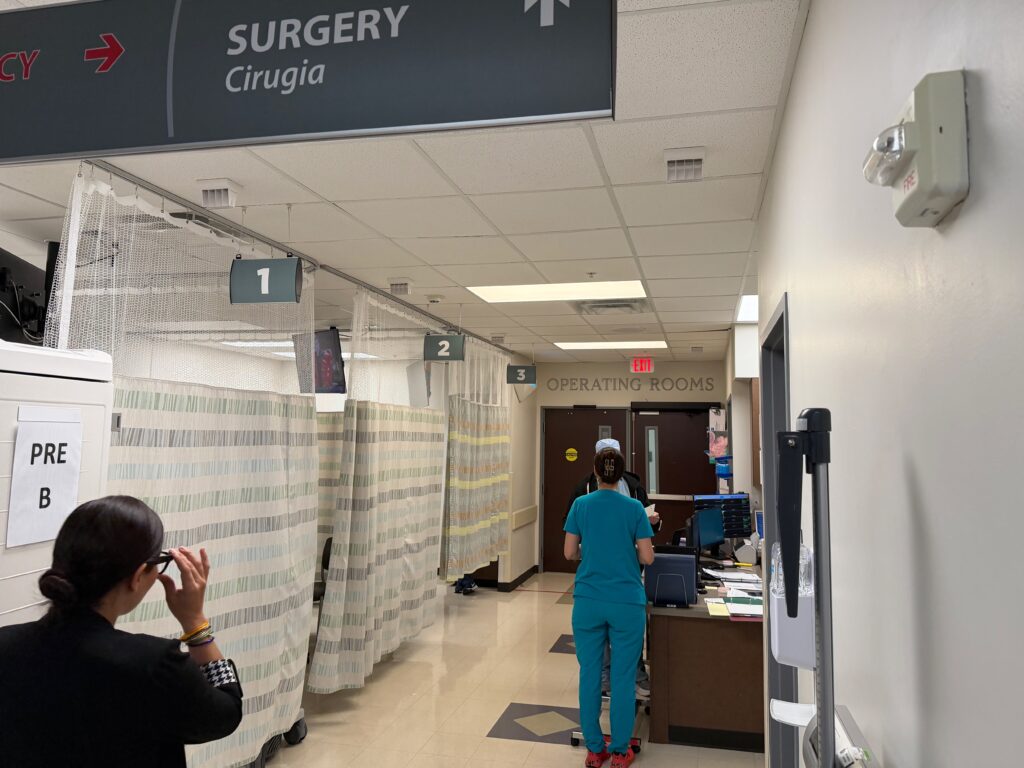
Photo Credit | Kristen Mosbrucker-Garza
- Remittance and trade costs: A new federal tax on money sent to Mexico has made remittances more expensive, a story that directly impacts the Valley’s binational families and local liquidity. Less personal disposable income because of remittance cost increases affects purchasing power at the retail level.
- The ACA squeeze: One of the most pressing socioeconomic stories is the expiration of enhanced Affordable Care Act (ACA) subsidies. With roughly one in five RGV residents relying on ACA plans, 2026 is expected to see a sharp decline in coverage and a spike in healthcare costs for the middle class.
- Manufacturing realignment: While the Valley’s logistics sector is growing, the automotive industry in nearby Mexico is in flux. The scheduled closure of the COMPAS plant in Aguascalientes by May 2026 serves as a warning of how global supply chain realignments and U.S. trade policies can abruptly shift regional employment.
Emerging tech and sustainability
This will also be the year that the tech economy begins dramatic expansion in the upper Valley. Zoho Corporation, a global tech firm, is moving forward with plans for a 1,000-acre tech campus and manufacturing facility north of Edinburg. Zoho officially completed the purchase of the historic Echo Hotel property in Edinburg in April 2025, according to Hidalgo County property records and local economic development announcements. The acquisition marked a major milestone as Zoho now owns the site it plans to redevelop into a state-of-the-art office campus for its operations and potentially other uses tied to workforce and tech development.
Beyond the Echo Hotel site redevelopment, Zoho also acquired about 1,050 acres north of Edinburg for a larger campus and potential manufacturing or tech facilities. The land purchase was completed and planned for future development, though building there is still in planning stages rather than finalized construction. The Zoho project and its scope suggest that the RGV is beginning to prioritize high-tech and eco-conscious development alongside its traditional trade roots.
The Rio Grande Valley is entering a period of transition in 2026 and beyond. As major infrastructure projects — including expansions at the Pharr and Anzalduas bridges and new LNG terminals — near completion, the four-county region will face the challenge of balancing its growing industrial potential with rising living costs and continued uncertainty in international trade.
2026 is just another year of “becoming” for the Valley, which is no longer only a border region set on the southern edge of the U.S. It has already become an international hub for energy, space exploration, and advanced logistics, and its economic engines have put it, increasingly, at the center of the economies of Texas and the rest of America.

James Moore
jmoore
Most Read
- SpaceX is giving Brownsville $220M for water projects. In exchange, the city gave up zoning control of 444 acres near Starbase
- SpaceX seeks to take zoning control over nearly 450 acres from city of Brownsville as a ‘regional’ water deal takes shape
- Port of Brownsville could soon host Nodule City, a first-of-its-kind commercial deep-sea mining hub
- Cameron County is negotiating a $20M Fluidstack data center donation after Harlingen waffles on the same offer
- How much water does SpaceX need to operate near Brownsville? Nearly 20x its current use
Get the latest business news delivered to your inbox every morning for free.
Try 30 Days Free!
Get full access to award-winning journalism covering business, real estate, health care, economic trends, and the people shaping the Rio Grande Valley.
30 Days Free!
$9.95/month
Limited time offer
Subscription renews after your 30 day free trial at $9.95/mo.
Included Benefits
- Unlimited access to all articles
- Daily business news and analysis
- Subscriber-only content and features
Stories That Matter
- McAllen’s $204M water investment expects to seek construction bids in 2027
- Saronic lands Navy landing craft contract, first build at Brownsville’s Port Alpha
- The Rio Grande Valley’s tech industry is small but growing — meet some of the next-gen workforce
- Entrepreneurs enter Mission EDC’s ‘Shark Tank’ competition for $25K top prize
- Mission’s first Small Business Expo puts $25K on the line for local entrepreneurs
- Reynosa’s newest technical high school focuses on AI, semiconductors and bionics
- McCoy’s gives $10K, tools to launch Mid-Valley construction academy
- UT Health RGV performs new digestive procedure for first time in the Valley
- TSTC bets on advanced manufacturing to meet RGV’s industrial boom
- SpaceX reschedules Starship’s first flight around the Earth