What began as a temporary response to stalled cattle exports is quickly becoming a new way of doing business for livestock producers in northern Tamaulipas.
The first two cattle auctions held in Reynosa recorded a 57.2% increase in animals marketed in just one month, reflecting growing interest from producers and buyers as restrictions on exports to the United States remain in place.

“The purpose of these auctions is to protect cattle producers,” José Heriberto Cantú, president of the Reynosa Cattle Producers Association, said.
The auctions are emerging as more than an alternative sales channel. They are also transforming infrastructure that for decades served as a critical link in the cross-border cattle trade.
The auctions are being held at Reynosa’s quarantine pens, facilities originally designed to prepare and inspect cattle destined for the U.S. market. Now, with exports restricted because of measures aimed at preventing the spread of the New World screwworm, the facilities are being repurposed into a regional livestock marketplace.
“The United States has had our exports on hold since late November 2024,” Cantú said.
Historically, Reynosa has played an important role in the cattle trade between Mexico and the U.S. According to the Tamaulipas Ministry of Rural Development, the state once exported nearly 160,000 head of live cattle annually to the U.S., generating more than 2.1 billion pesos, or about $119.3 million, in economic activity. During the first months of the 2019-2020 export cycle alone, 7,800 head of cattle were inspected in Reynosa.
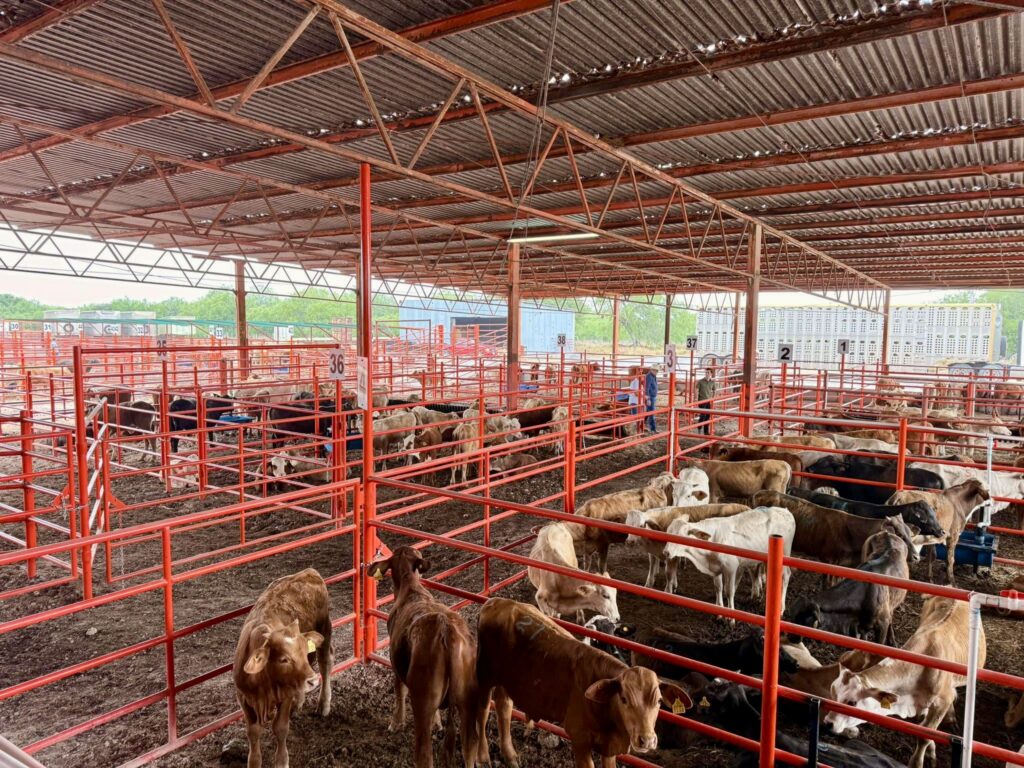
Courtesy of | Regional Cattle Union of Tamaulipas
With those exports largely on hold, producers have increasingly turned to auctions as a way to reach more buyers and improve pricing.
“At auction, producers can earn between 10 and 12 pesos more per kilogram — about 26 to 31 cents more per pound — than selling directly from the ranch,” Cantú said.
The benefit, he said, is that buyers compete directly against one another, allowing the market to determine the highest available price for each lot.
Producers from Reynosa, Río Bravo, Matamoros, San Fernando, Méndez, and Nuevo Laredo are already participating.
The first auction, held May 7, marketed 369 head of cattle across 145 lots and attracted 13 buyers. One month later, participation climbed to 580 head, 173 lots and 16 buyers.
The increase represents growth of 57.2% in cattle marketed, 19.3% in lots offered and 23.1% in participating buyers.
The response has exceeded organizers’ expectations. Their goal was to maintain participation between 450 and 500 animals during the program’s first year, but that benchmark has already been surpassed.
The growth suggests producers are embracing a model that reduces reliance on intermediaries while creating a more competitive marketplace.
The shift could also have longer-term implications for how cattle move through the border region.
“Even if exports reopen, these facilities will likely no longer operate as quarantine stations,” Cantú said.
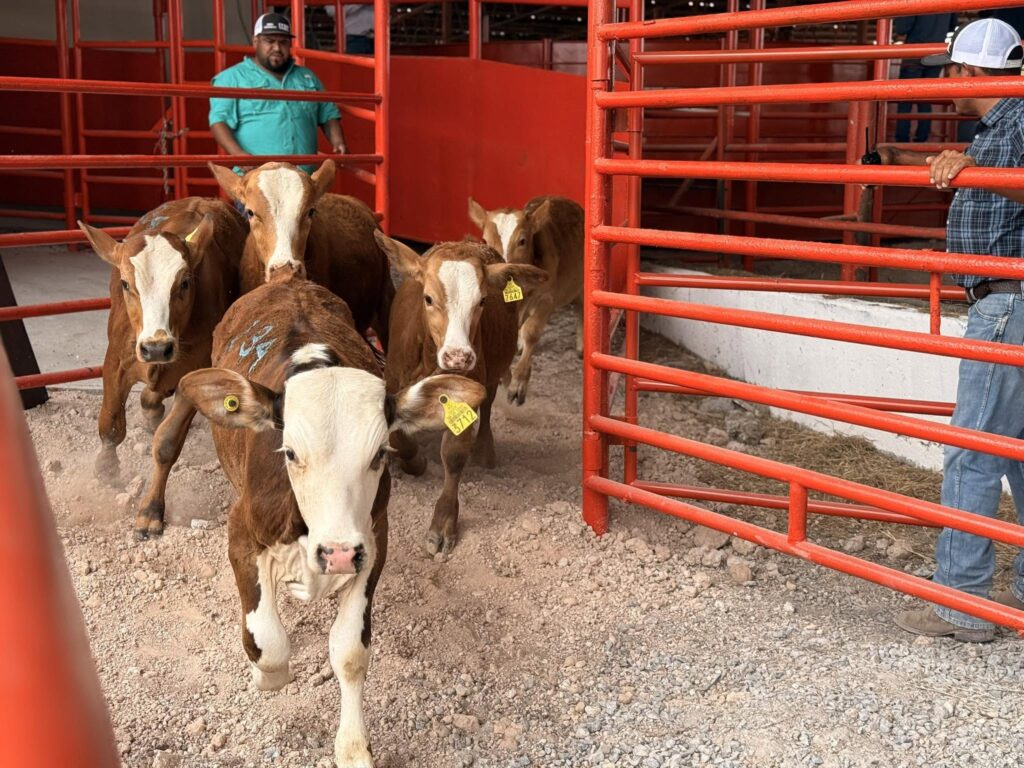
Courtesy of | Regional Cattle Union of Tamaulipas
According to Cantú, the industry expects sanitary inspections to eventually take place directly at border customs facilities, potentially ending a decades-old operating model in which cattle passed through dedicated quarantine facilities before crossing into the U.S.
The first two auctions also provide a snapshot of current market conditions.
Calves weighing less than 150 kilograms, or 331 pounds, generated the strongest prices, averaging 118.75 pesos per kilogram, or about $3.06 per pound, in May and 119.84 pesos per kilogram, or about $3.09 per pound, in June.
Heavier cattle, however, showed signs of weakening demand. Calves weighing between 301 and 350 kilograms, or 663 to 772 pounds, fell from 86 pesos per kilogram, or about $2.22 per pound, in May to 74.50 pesos per kilogram, or about $1.92 per pound, in June, a decline of nearly 13.4%.
“Feedlots do not want to take heavier cattle right now because they are already saturated,” Cantú said.
He said industry participants have reported high inventories in both feedlots and cold-storage facilities. Despite those conditions, he does not expect consumers to see significant reductions in retail beef prices.
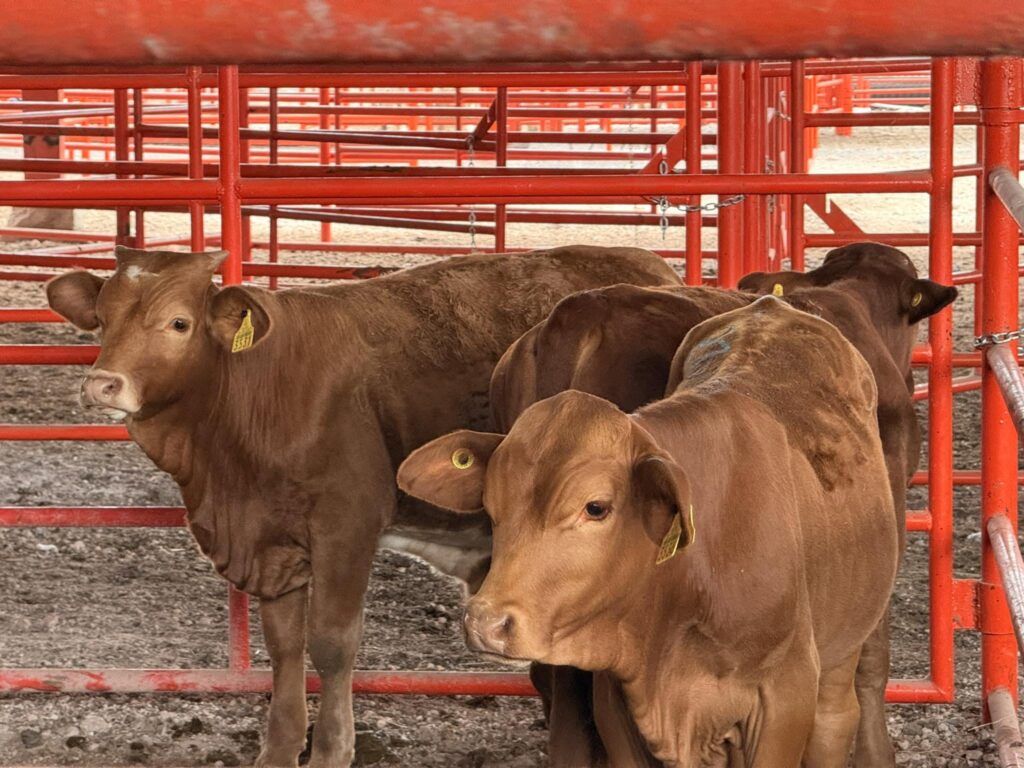
Courtesy of | Regional Cattle Union of Tamaulipas
Behind the growth of the auctions remains the issue that continues to shape the livestock industry on both sides of the border: restrictions tied to New World screwworm surveillance efforts.
Cantú emphasized that no confirmed cases have been reported in northern Tamaulipas.
Although recent detections have kept the industry on alert, he noted that the most discussed U.S. cases occurred outside the Rio Grande Valley, including an area between Del Rio and Eagle Pass and a later detection in New Mexico.
Containment efforts remain active, including the continued release of sterile flies as part of eradication efforts.
Cantú, who witnessed previous screwworm eradication campaigns during the 1970s and 1980s, said the current situation should be viewed in context.
“This is not like COVID. It is not a pandemic. These are isolated cases on ranches,” he said.
He encouraged producers to pay close attention to newborn calves and animals with open wounds, which are the most vulnerable to infestation.
For now, the export restrictions are forcing producers to adapt. In Reynosa, that adaptation is creating a growing marketplace that may continue to reshape the region’s cattle industry long after exports resume.

Anayancy Ulloa
Reporter
Most Read
- SpaceX is giving Brownsville $220M for water projects. In exchange, the city gave up zoning control of 444 acres near Starbase
- What you need to know about Texas A&M’s newest manufacturing hub near the Port of Brownsville
- Port of Brownsville could soon host Nodule City, a first-of-its-kind commercial deep-sea mining hub
- Fluidstack breaks ground on $4 billion Cameron County AI data center
- Cameron County is negotiating a $20M Fluidstack data center donation after Harlingen waffles on the same offer
Get the latest business news delivered to your inbox every morning for free.
Try 30 Days Free!
Get full access to award-winning journalism covering business, real estate, health care, economic trends, and the people shaping the Rio Grande Valley.
30 Days Free!
$9.95/month
Limited time offer
Subscription renews after your 30 day free trial at $9.95/mo.
Included Benefits
- Unlimited access to all articles
- Daily business news and analysis
- Subscriber-only content and features
Stories That Matter
- Mexico car sales are growing, but its factories are making fewer vehicles
- Edinburg’s Texas Cook’Em generated nearly $7 for every $1 invested
- Momole gains ground in McAllen as Reynosa-born brand plots U.S. expansion
- Harlingen earns state tourism certification aimed at boosting local economic development
- Mission’s first Small Business Expo puts $25K on the line for local entrepreneurs
- Reynosa’s newest technical high school focuses on AI, semiconductors and bionics
- McCoy’s gives $10K, tools to launch Mid-Valley construction academy
- UT Health RGV performs new digestive procedure for first time in the Valley
- TSTC bets on advanced manufacturing to meet RGV’s industrial boom
- Pharr’s cross-border business push earns international recognition