MONTE ALTO — The biggest worry on Rio Farms Inc. General Manager Matt Klostermann’s mind is South Texas’ growing water crisis.
The second biggest worry — only ever so slightly less concerning to Klostermann than the first — is that even if he gets enough water to make a crop he won’t have enough people on hand to harvest it.
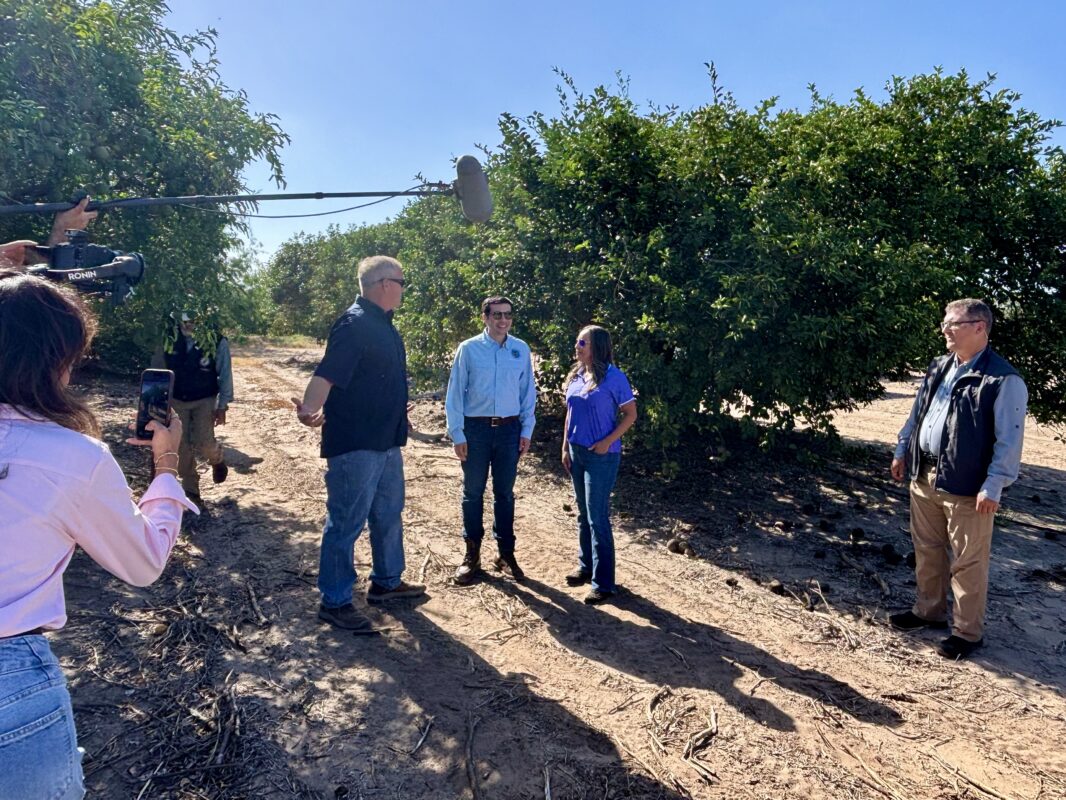
Klostermann, like farmers across the nation, is facing a mounting labor shortage, which is how he found himself Wednesday leading Congresswoman Monica De La Cruz and Acting United States Secretary of Labor Keith Sonderling on a quick jaunt through the orchards behind Rio Farms’ headquarters, where they were surrounded by a gaggle of press and staff.
De La Cruz and Sonderling had just taken part in a roundtable discussion that included representatives from some of South Texas’ most influential citrus and produce entities and farms.
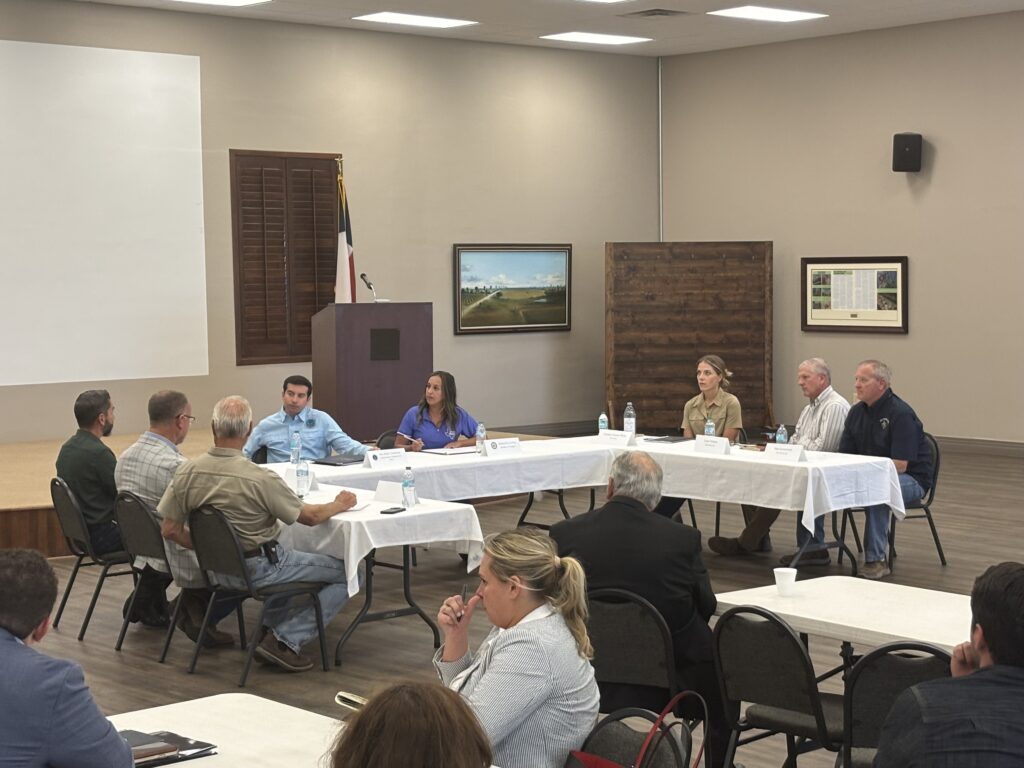
Dozens more farmers and landowners sat in the audience.
The meeting was, De La Cruz and Sonderling said after looking at Rio Farms’ citrus trees, an indication of how committed President Donald Trump’s administration is to solving agricultural labor shortages.
“This community depends on labor, and workforce labor issues are at the forefront of conversations right here in South Texas,” De La Cruz told the media. “The secretary coming down here shows that we finally have a seat at the table. The White House is listening. President Trump is listening. The administration is listening to what South Texans have to say and what our needs are.”
Those needs appear to be growing.
Just shy of a quarter of agricultural workers in the United States are citizens, according to recent estimates.
The rest aren’t citizens: about half of them labor on America’s farms under some sort of work authorization and the other half have no legal work authorization.
Aging farmers and a general reluctance of younger people to get into agriculture have only increased the United State’s reliance on an immigrant workforce.
Trump has comparatively spared agricultural workers from the sort of immigration crackdown levied against other industries, but that hasn’t stopped fear and some destabilization spreading through the ranks of those farm laborers.
A lack of immigrant workers has put a significant chill on the South Texas construction industry and prompted business leaders in that community — even Republican business leaders — to raise an uproar over what a lack of workers is doing to their livelihoods.
Klostermann reckons farmers are facing about the same sort of crisis despite their laborers not precisely being in the crosshairs of U.S. Immigration and Customs Enforcement agents.
“I don’t think the ag industry’s much behind the construction guys,” he said. “We’re hurtin’ for labor and nobody wants to do it. So figuring out a way to do that is something that I would say the labor department could figure out.”
“It’s a tough issue in the Valley, it really is. We haven’t really had the struggle of labor, but in the last five years we’ve seen it,” he said.
At the roundtable, Klostermann said, growers focused largely on the most likely way for them to get authorized workers on their fields and groves.
“I think the biggest concern for these growers is the paperwork involved to get the H-2A and H-2B,” he said about visas. “Just trying to simplify that might be something the secretary could do for some of these larger growers. Just trying to make the process a little easier, a little less scary.”
H-2A and H-2B are temporary work visa programs. H-2A visas are for agricultural workers, and have grown in popularity.
Hundreds of thousands of farm laborers in America work under the authorization of an H-2A visa, making up a sixth of the agricultural labor force, and the Trump administration has responded to farmers’ calls to ease the program’s regulations.
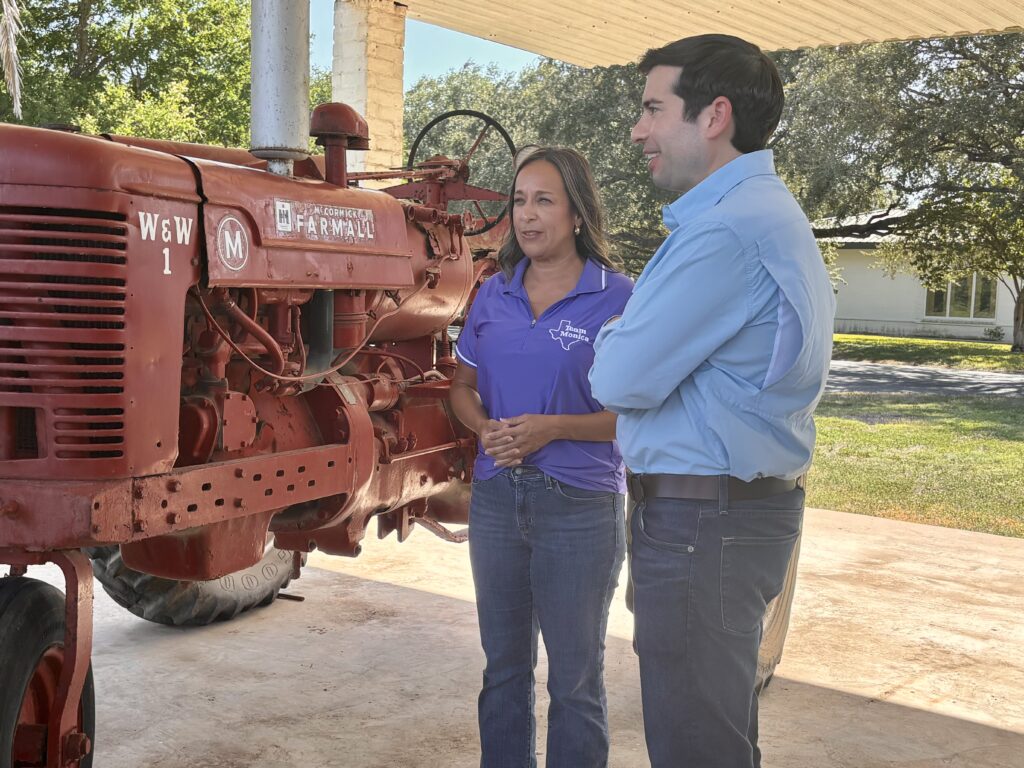
Sonderling said doing so — making legal immigration work more feasible — is a priority.
“And the worst thing that we can have is these generational Texas farms — like we’re here now — not being able to pick crop because they don’t have workers,” he said. “So there are lawful programs to bring in seasonal workers through the H-2A program to be able to at least make sure that these generational farms and the farms throughout South Texas have immediate lawful workers to be able to pick these crops.”
H-2A visas may be growing in popularity, but they’re not particularly well-loved.
Farmers say there’s too much red tape to the program, but critics say abuse is rampant and immigrant laborers lack protections under the visas.
De La Cruz pointed out other efforts on Wednesday to ease immigrant labor shortages, including the bipartisan Dignity Act and her Bracero 2.0 legislation — the latter of which could streamline things around H-2A visa workers.
Klostermann is cautiously optimistic about innovations like that.
“I haven’t studied the bracero two program that they’re talking about, but it sounds feasible. That would probably be something more in line with our row crop guys rather than H-2A and H-2B,” he said.
De La Cruz and Sonderling seemed particularly enthusiastic about longer term possibilities that would line up better with a Trump goal of an all-American workforce that’s been hard to pursue in the face of reality.
They talked about education initiatives and the possibility of spurring interest and ability in agriculture in America’s youth enrolled in schools and colleges.
That sort of idea may bear fruit, but it’s unlikely to provide an immediate solution to the labor shortage problems the farmers De La Cruz and Sonderling met with Wednesday.
What would Klostermann do, if he could do anything, about the thorny knot of visa programs and labor statistics and politics that surround his farm worker problem?
He paused for a moment and thought.
“I think let us hire the people that want to work,” he said.

Matt Wilson
Reporter
Most Read
- How much water does SpaceX need to operate near Brownsville? Nearly 20x its current use
- Could apartment-to-condo conversion help make $100K homeownership in the McAllen metro more affordable? One investor says yes.
- SpaceX’s futuristic city of Starbase finalizes massive 7,100-acre annexation. Here’s what we know.
- Cameron County is negotiating a $20M Fluidstack data center donation after Harlingen waffles on the same offer
- Fluidstack breaks ground on $4 billion Cameron County AI data center
Get the latest business news delivered to your inbox every morning for free.
Try 30 Days Free!
Get full access to award-winning journalism covering business, real estate, health care, economic trends, and the people shaping the Rio Grande Valley.
30 Days Free!
$9.95/month
Limited time offer
Subscription renews after your 30 day free trial at $9.95/mo.
Included Benefits
- Unlimited access to all articles
- Daily business news and analysis
- Subscriber-only content and features
Stories That Matter
- These four projects are driving more than $41B in Cameron County investment
- Mission’s first Small Business Expo puts $25K on the line for local entrepreneurs
- Reynosa’s newest technical high school focuses on AI, semiconductors and bionics
- McCoy’s gives $10K, tools to launch Mid-Valley construction academy
- UT Health RGV performs new digestive procedure for first time in the Valley
- TSTC bets on advanced manufacturing to meet RGV’s industrial boom
- Pharr’s cross-border business push earns international recognition
- Brownsville eases drought restrictions after nearly three years as Rio Grande reservoir levels improve
- Texas A&M’s $53.5M McAllen research center will tackle water, food security and Valley health
- STC puts AI to work across 55 courses — from construction sites to car repair