EDINBURG — The Rio Grande Valley is still being built.
Cranes line the Brownsville Ship Channel. Industrial parks are expanding. Housing developments continue to push outward along major corridors. Billions of dollars in energy and logistics investment remain in motion.
But beneath that visible construction momentum, hiring has slowed.
After several years of steady gains across transportation, warehousing, construction and energy-related industries, 2025 marked a turning point.
The Valley economy continued producing and investing — yet job growth weakened sharply.
At the Rio Grande Valley’s Economic Outlook 2026 summit, Dallas Fed Vice President and Senior Economist Pia Orrenius described the shift as something Texas has not experienced in more than two decades.
“Texas grew in 2025 without adding any jobs or hardly any jobs,” Orrenius said. “This hasn’t happened really since the jobless recovery of 2002, 2003.”
For the Valley, where recent gains were supported by workforce expansion and cross-border trade flows, that distinction matters.
The economy can keep growing even if companies slow down hiring.
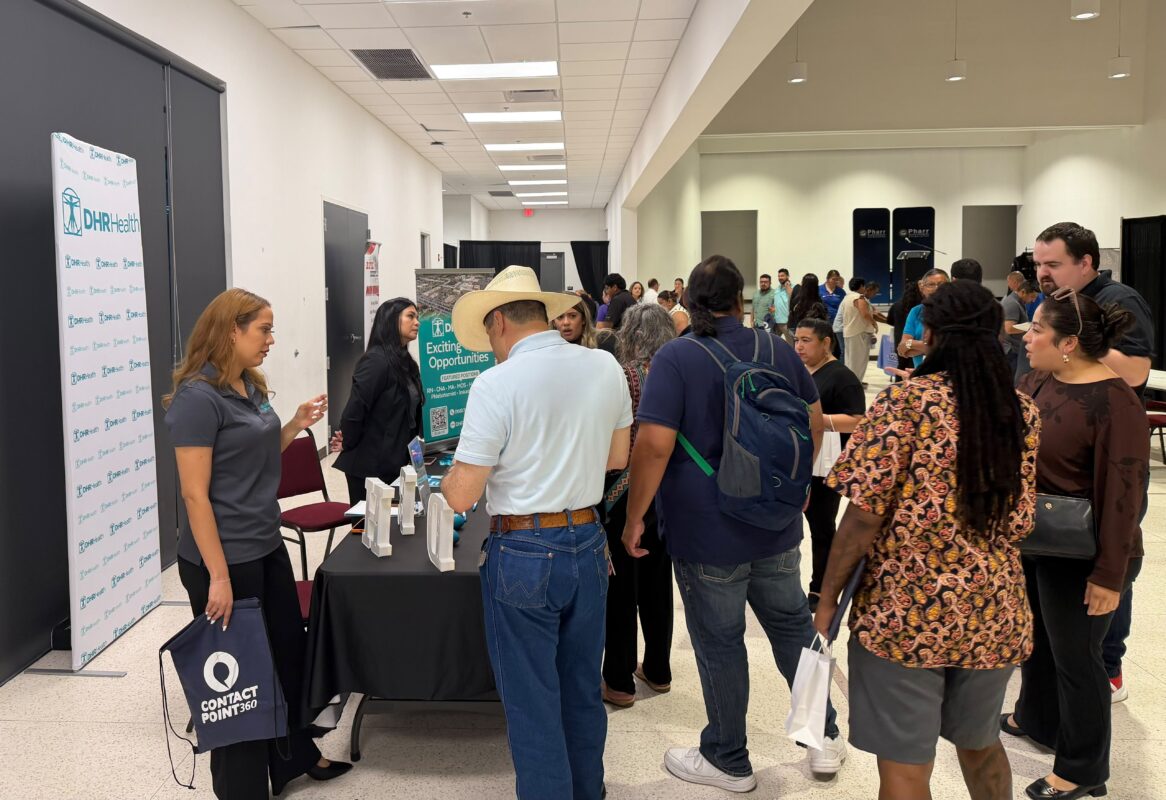
But in the Rio Grande Valley — where new jobs help drive home sales, new households and local spending — fewer hires are felt more quickly. When hiring slows, it touches families, homebuilders and small businesses almost right away.
Breaking down the numbers: What the data show about the pause in Valley job growth
Migration slows the labor pipeline
Orrenius said the hiring slowdown is closely tied to declining migration into Texas — both from other states and from abroad.
“When we have a slowdown in migration, both domestic migration and international migration, you’re gonna have to have a slowdown in job growth,” she said.
Migration has long supplied workers who fill jobs in construction, health care, logistics and energy. When fewer people move into the state, the labor force expands more slowly.
In the Rio Grande Valley, that affects more than payroll data. It influences housing demand, school enrollment, retail sales and small business formation.
Orrenius described the current labor environment as “low hire, low fire” — companies are not laying off workers in large numbers, but they are not hiring aggressively either.
“Businesses are cautious,” she said. “They’re holding on to workers, but they’re not aggressively adding new ones.”
For recent graduates, that caution is becoming visible.
“There are certain groups of workers where you can identify an impact,” Orrenius said. “Actually what it looks like is recent college grads are having a harder time.”
Investment grows, but jobs don’t rise at the same pace
Even as hiring cools, the scale of capital investment entering the Valley has increased.
Large projects — LNG facilities, warehouse expansions and potential data center infrastructure — represent billions of dollars in construction spending.
But these projects rely more on money and equipment than on large numbers of workers.
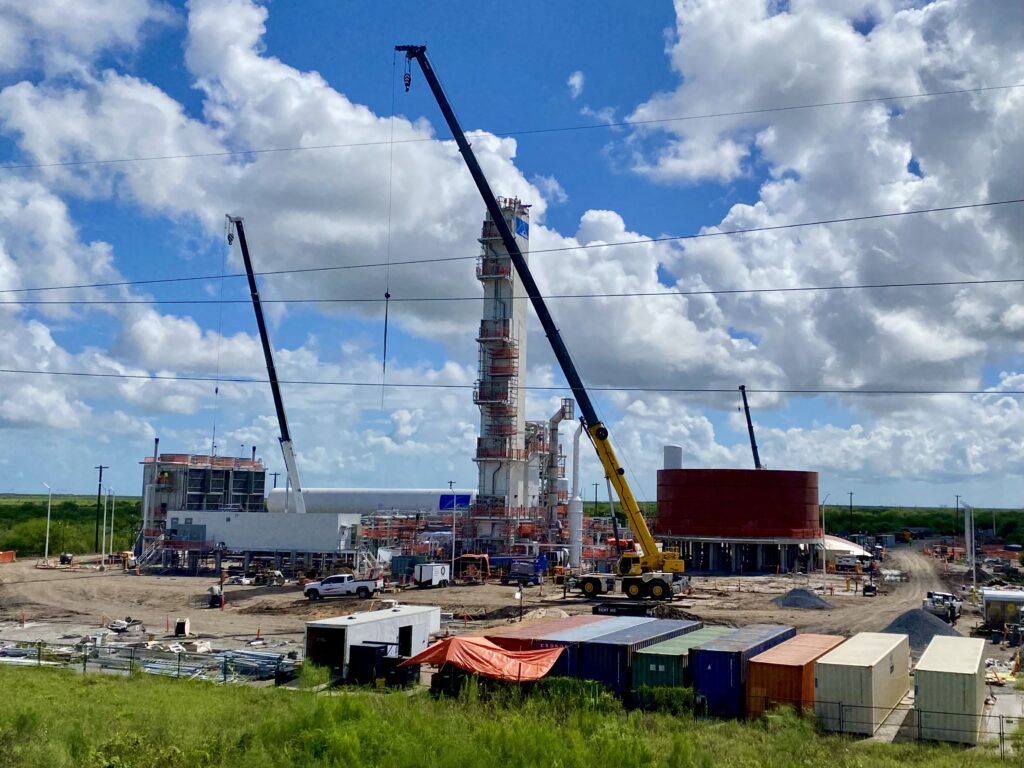
Photo Credit | Naxiely Lopez-Puente
“These are capital-intensive operations,” Orrenius said. “You can have a $10 billion investment and create relatively few permanent jobs.”
Construction phases can employ thousands for several years. Once operational, staffing requirements typically drop.
Data centers illustrate the pattern: heavy upfront spending on land, equipment and electricity, followed by lean permanent staffing supported by automation.
That shift raises another question: power and water demand.
“How is this explosion in data centers and data center investment going to affect the price of electricity?” Orrenius asked.
Texas regulators are forecasting rising peak electricity demand in coming years, driven in part by artificial intelligence infrastructure and large industrial users.
“If demand grows faster than supply, prices respond,” she said. “That’s basic economics.”
For a region courting energy-intensive industries, the availability and cost of electricity are becoming just as critical as land and labor.
Housing reflects the change in pace
Housing markets tend to follow migration and job growth. The Valley is no exception.
“We rely heavily on the creation of new people in this region,” said Shant Samtani, executive vice president of sales for Rhodes Enterprises.

Photo Credit | RGV Business Journal
As migration slows and mortgage rates remain elevated, affordability has tightened significantly.
A home that sold for $179,000 in 2019 now approaches $250,000, Samtani said.
At the same time, higher interest rates mean the income required to qualify has risen sharply.
“That buyer now has to make $80,000,” he said, as opposed to about $40,000 in 2019.
Meanwhile, homeowners who locked-in low pandemic-era mortgage rates are reluctant to sell.
“They’re sitting at great rates,” Samtani said. “It’s hard to give that up.”
The result is a housing market that remains active but slower and more selective than during the rapid growth years earlier in the decade. In fact, many residential homebuilders are struggling with labor shortages and buyers. Immigration raids have sent undocumented workers and even homeowners back across the border.
“I’ve got abandoned homes,” one builder said. “The owners left and they are not coming back. And workers in the trades are afraid to show up even when they have permits. It’s a bad situation for everybody.”
Border exposure adds another layer
Few Texas regions are as closely tied to trade and federal policy as the Rio Grande Valley.
“What happens with USMCA is going to be really, really important to the valley,” Orrenius said, referring to the pending review of the U.S.-Mexico-Canada Agreement. “When you’re close to the border, you feel it first.”
Federal spending also plays a larger role in the Valley economy than in many inland metros, particularly in health care and education.
“Border regions tend to have higher exposure to federal dollars,” Orrenius said. “That can amplify both growth and slowdowns.”
The Valley’s economic structure — cross-border commerce paired with federal funding streams — makes it uniquely sensitive to policy shifts.
Major projects continue across the region
Despite the hiring slowdown, large-scale construction remains underway.
At the Port of Brownsville, NextDecade’s Rio Grande LNG export terminal continues expanding.
“Our current investment is $30 billion,” said Andrea Figueroa Benton, director of community relations for NextDecade.
The project employs approximately 5,500 construction workers, about 70% of whom live within 100 miles of the site.
“The number one source of workers has been Brownsville, then Mission and Edinburg — in that order,” she said.
Industrial recruitment also remains active.
“I think we have the best region in the world to do business,” said Joaquin Spamer, founder of CIL Group.
But he emphasized that regional coordination is essential.
“If we compete against each other, we lose,” Spamer said. “If we compete as a region, we win.”
A recalibration, not a retreat
The data show the Rio Grande Valley is not shrinking, it is recalibrating, industry leaders indicated.
Economic analyses by the Federal Reserve Bank of Dallas predicts job growth is expected to resume in 2026, but at a slower pace than the Valley saw earlier in the decade.
Industrial investment tied to LNG, port infrastructure and logistics remains active, and construction momentum is likely to continue through multiple phases.
The key question is whether the labor force can keep up.
Slower migration and tighter hiring can limit how quickly employers expand, particularly in sectors that rely on steady workforce growth.
Trade policy and federal spending also remain variables for a border economy closely tied to cross-border commerce and public funding streams.
The Rio Grande Valley enters 2026 with visible capital investment and expanding export capacity, but the durability of that growth will depend on whether workforce supply and policy conditions support it.

RGV Business Journal Staff
Staff
Most Read
- How much water does SpaceX need to operate near Brownsville? Nearly 20x its current use
- Could apartment-to-condo conversion help make $100K homeownership in the McAllen metro more affordable? One investor says yes.
- SpaceX’s futuristic city of Starbase finalizes massive 7,100-acre annexation. Here’s what we know.
- Cameron County is negotiating a $20M Fluidstack data center donation after Harlingen waffles on the same offer
- Fluidstack breaks ground on $4 billion Cameron County AI data center
Get the latest business news delivered to your inbox every morning for free.
Try 30 Days Free!
Get full access to award-winning journalism covering business, real estate, health care, economic trends, and the people shaping the Rio Grande Valley.
30 Days Free!
$9.95/month
Limited time offer
Subscription renews after your 30 day free trial at $9.95/mo.
Included Benefits
- Unlimited access to all articles
- Daily business news and analysis
- Subscriber-only content and features
Stories That Matter
- These four projects are driving more than $41B in Cameron County investment
- Mission’s first Small Business Expo puts $25K on the line for local entrepreneurs
- Reynosa’s newest technical high school focuses on AI, semiconductors and bionics
- McCoy’s gives $10K, tools to launch Mid-Valley construction academy
- UT Health RGV performs new digestive procedure for first time in the Valley
- TSTC bets on advanced manufacturing to meet RGV’s industrial boom
- Pharr’s cross-border business push earns international recognition
- Brownsville eases drought restrictions after nearly three years as Rio Grande reservoir levels improve
- Texas A&M’s $53.5M McAllen research center will tackle water, food security and Valley health
- STC puts AI to work across 55 courses — from construction sites to car repair