Local construction advocates said Saturday that the bankruptcy of a Mission concrete company in December could potentially presage more bankruptcies or closings in the industry later this year — though for now, it’s an outlier.
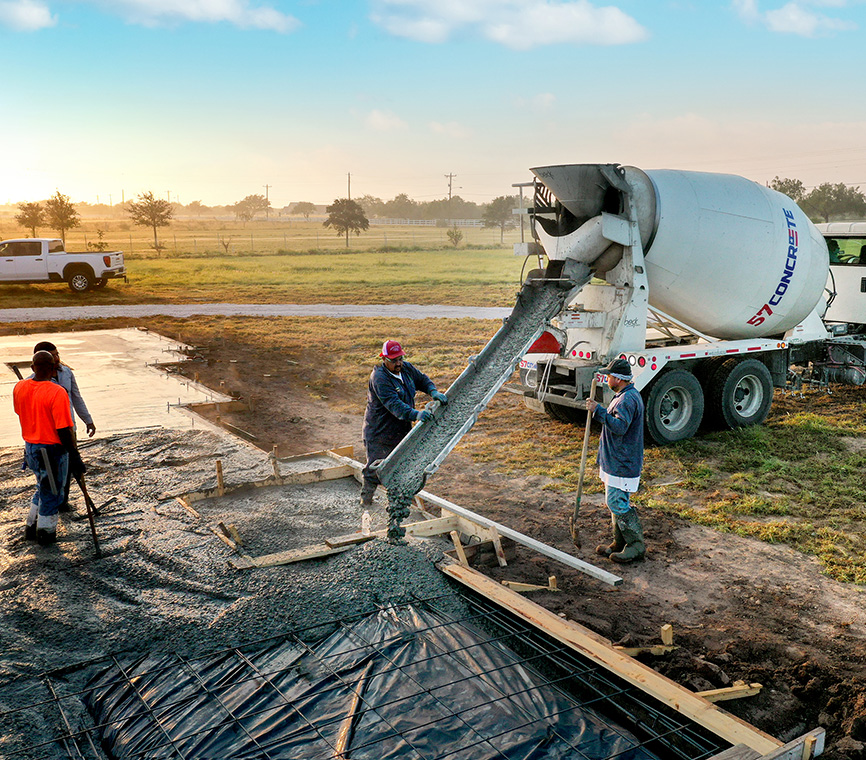
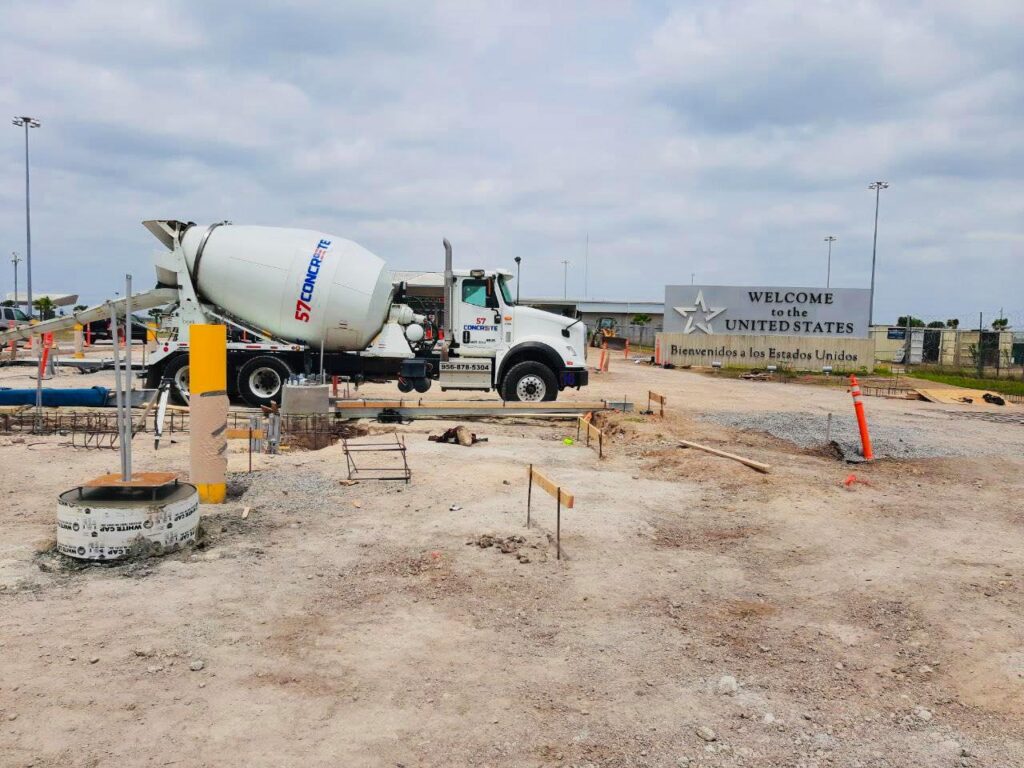
Mission concrete supplier 57 Concrete filed for Chapter 11 bankruptcy in December in an effort to reorganize its debt while continuing to operate, as was first reported by ValleyCentral.
In court documents it blamed that bankruptcy squarely on “enforcement actions” by U.S. Immigrations and Customs Enforcement agents.
“As a direct result of these enforcement actions, many residential builders experienced acute labor shortages, work stoppages, and project suspensions,” the bankruptcy filing said. “In numerous instances, projects were delayed or abandoned entirely due to the inability to staff job sites.”
The company saw these impacts “firsthand through direct communications with its customers” and their “abrupt” cancellations or suspensions of scheduled concrete deliveries, the company said in court documents.
57 Concrete formed in July 2019 and began operating in 2020, confident about customer demand and a service-oriented business model it planned to implement.
“At inception, the Company was unable to obtain traditional bank financing and therefore acquired its initial fleet of four concrete mixer trucks through non-traditional, higher- cost financing arrangements,” the documents said.
Courtesy of | 57 Concrete
The company grew from a team of seven people to 97 employees and operated a fleet of 224 vehicles last year.
It focused on supplying ready-mix concrete for both residential and commercial construction projects, though residential jobs made up about 70% of its business.
Revenue for 57 Concrete grew from $1.5 million in 2020 to almost $66 million toward the end of last year, though it had over $27 million in equipment-related debt and about $6.5 million in unsecured trade and operational debt by the end of 2025.
Court filings say around May 2025 it saw a sudden decline in demand from residential customers — a drop-off of about 60%.
“This decline was abrupt, sustained, and external to the Company’s operations, and it materially impaired revenues, cash flow, and the Company’s ability to absorb fixed operating costs,” court documents said.
Industry reaction
South Texas construction industry advocates said they weren’t aware of other local companies attributing ICE raids to bankruptcies, though that could change.
“I hope it’s not the canary in the coal mine. But as far as I’ve heard from our membership, there’s none of that going on,” said Jonathan Vasquez, executive officer of the Rio Grande Valley Builders Association.

Vasquez said that ICE raids are an issue, especially since June, but noted that the construction industry has been dealing with immigration issues for years.
It’s weathered tariffs and uncertain economic times, and Vasquez said he’s advised his members to hunker down to weather the storm — which he says most are prepared to do.
“We’ve got a few builders that are concerned, but most of our guys have been doing this for many years. And this is not their first rodeo. So they’re prepared,” he said.
New companies just cutting their teeth in the industry, Vasquez said, may be more vulnerable than larger, established businesses. Those newer outfits could run into trouble later this year, he cautioned.
The bankruptcy filing left Mario Guerrero, executive director of the South Texas Builders Association, more disconcerted.
He says he’s afraid of seeing more bankruptcies or business closures before 2026 is over.

“It definitely can’t continue for the full term of the administration,” he said. “Definitely. We won’t survive. The construction industry would be butchered. But even this year alone, I have owners who say they won’t survive this till the end of this year if this continues.”
Last week Guerrero met with reporters from CBS News and introduced them to locals in the Valley’s real estate and construction supply industries.
Their opinions were grim.
“They all gave them real numbers. I mean, everybody right now’s between a 35 to a 45% loss,” Guerrero said.
He listed off other troubling signs he’s seen.
A number of South Texas construction suppliers, he said, have resorted to layoffs. Framing jobs take weeks because there’s no framers. A recent job fair, he said, netted a grand total of six interested people, none of whom were interested in working in in-demand laborer jobs.
To Guerrero, that points toward something worrisome coming.
“I don’t think we’re seeing the effect that it’s having on the economy, we’re not gonna feel it yet,” he said. “But when we do end up feeling it, I think it’s gonna be drastic.”
Enforcement, politics, and what comes next
Both Guerrero and Vasquez support law enforcement action against undocumented people with a criminal history. They both, however, are concerned about humanitarian aspects of the federal government’s current stance on immigration.
Vasquez says he’s heard rumors of ICE employing non-ICE “bounty hunter” contractors involved in raids, and both of them are concerned about how President Donald Trump’s administration will impact their industry.
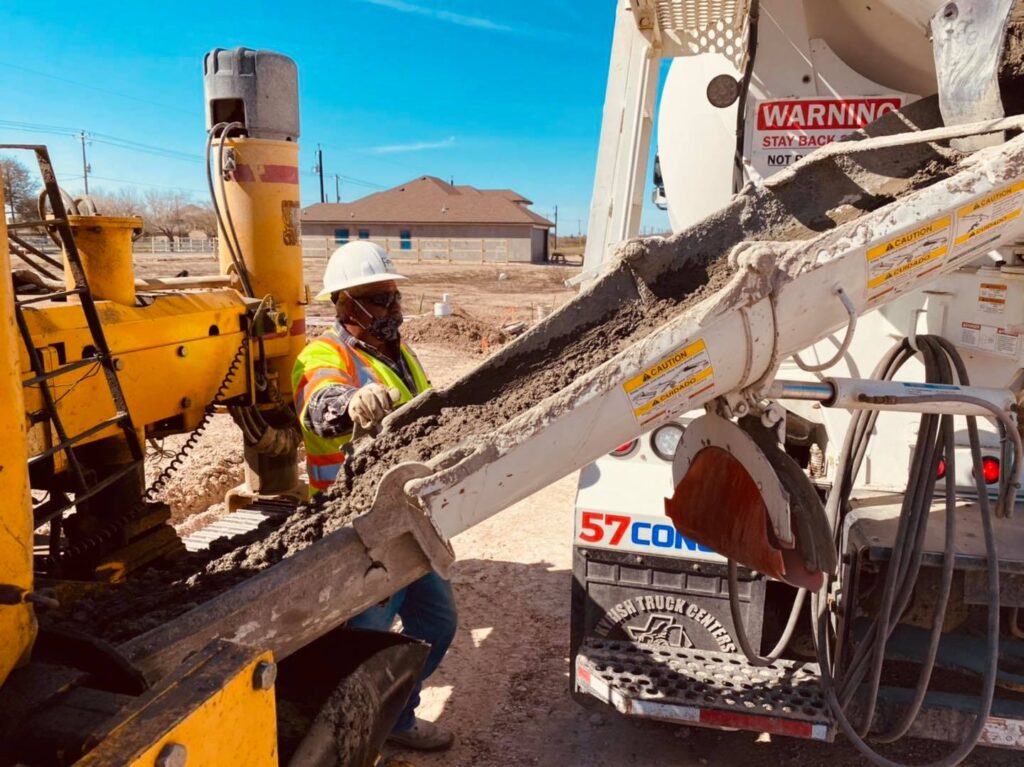
Courtesy of | 57 Concrete
They differ in their reaction to that administration and their approach in dealing with it.
Guerrero, broadly, is somewhat more vocally critical. Vasquez is tactically pragmatic.
Guerrero supported Trump, as did many of his construction industry friends, he says, but he didn’t see workforce raids as part of his agenda and feels deceived. A history buff, Guerrero enjoys documentaries on Adolf Hitler, and says he sees echoes of World War Two-era media manipulation at work today.
“I think we were played,” he said.
Vasquez, who declined to say whether he supported Trump and says he’s neither a Democrat nor a Republican, says the current administration is delivering on what it promised. He’s not surprised by that and he’s not totally opposed to its efforts.
But, Vasquez said, there are blunt underlying facts to the complicated issues facing his industry: America needs construction, construction needs laborers and the construction industry deserves a seat at the table.
“We trust our government,” he said. “And we know that government has to do its job, and we want it to do its job. But we also want it to be respectful to the people who live here, pay taxes and actually have legitimate businesses.”
On Saturday, when Vasquez and Guerrero spoke with the Rio Grande Valley Business Journal, massive protests against ICE raids continued in Minneapolis.
Federal agents shot and killed someone.
Vasquez described his advocacy as something of a tightrope act between pushing for real solutions, while avoiding a nasty stalemate with the federal government.
“The Valley, in some areas, could get violent,” he said. “There’s always the possibility of violence, or protest, or something. And the last thing we want is to be on that side of the conversation. The narrative we’re pushing is to let builders build.”
National attention
The Valley’s construction industry finds itself in the spotlight once again.
CBS wasn’t Guerrero’s only interview with an international outlet last week, and both he and Vasquez have found the ear of congresspeople.
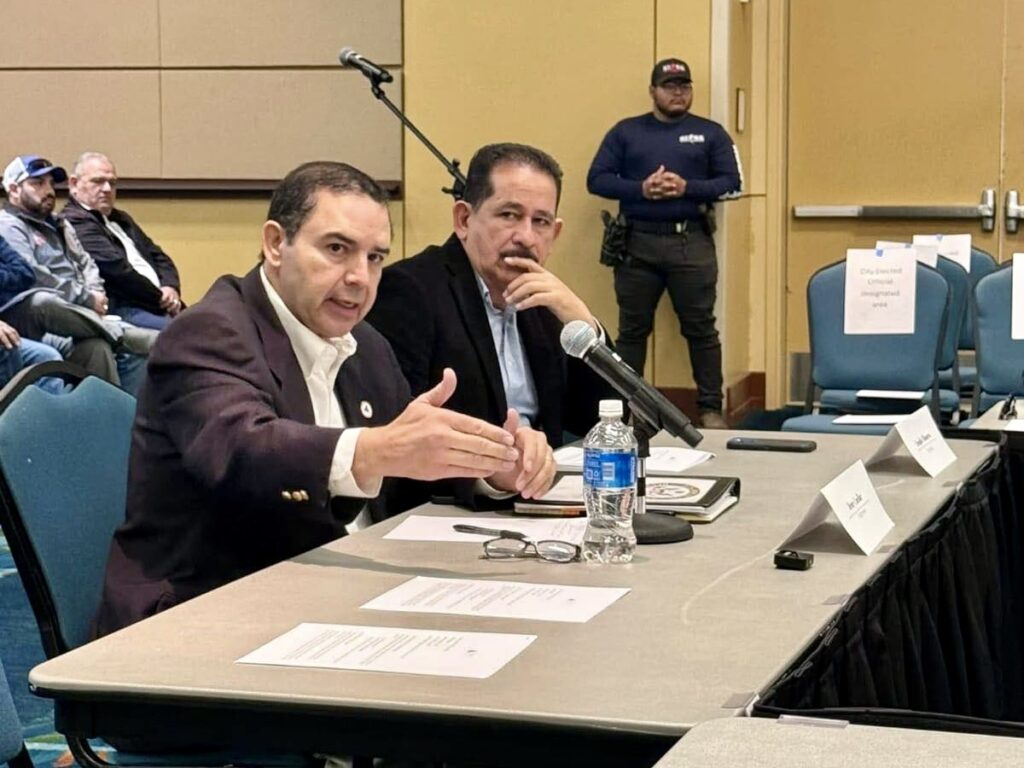
Courtesy of | South Texas Builder Association
Both U.S. Reps. Monica De La Cruz, R-McAllen, and Henry Cuellar, D-Laredo, have said they’ve pushed to meet with top officials in the Trump administration to discuss ICE raids’ impact on the construction industry.
Guerrero says he’s glad people are paying attention, but he can’t help but be skeptical. He thinks politicians have avoided coming up with a workable solution for immigration because it makes for good campaign material.
“I want to know what the agenda is, because right now this seems so extreme it doesn’t make any sense,” he said. “You’re hurting the economy, you’re destroying people’s lives and you’re putting fear into people.”
Vasquez is somewhat more pragmatically optimistic about congressional intervention.
Advocating to Congress, he said, is likely his industry’s best recourse.
“As this administration continues, I don’t see no end in sight. That’s why petitioning members of Congress is important,” he said.

Matt Wilson
Reporter
Matt Wilson is a Hidalgo County–based freelance reporter and contributor to the Rio Grande Valley Business Journal. He previously covered education and general assignment for The Monitor, frequently writing about the dramatic ways business changed during the coronavirus pandemic. Before that he worked as a reporter in rural Central Texas where he covered everything from house fires to school board meetings.
Most Read
- SpaceX’s futuristic city of Starbase finalizes massive 7,100-acre annexation. Here’s what we know.
- 25 Mexican businesses eye McAllen expansion after city pitches U.S. market entry program
- Australian company plans to build a $607M lithium refinery at the Port of Brownsville. It’s a big bet on America’s battery future
- Starbase cancels meeting to consider annexing 444 acres relinquished by Brownsville
- SpaceX reschedules Starship’s first flight around the Earth
Get the latest business news delivered to your inbox every morning for free.
Try 30 Days Free!
Get full access to award-winning journalism covering business, real estate, health care, economic trends, and the people shaping the Rio Grande Valley.
30 Days Free!
$9.95/month
Limited time offer
Subscription renews after your 30 day free trial at $9.95/mo.
Included Benefits
- Unlimited access to all articles
- Daily business news and analysis
- Subscriber-only content and features
Stories That Matter
- Dickey’s Barbecue Pit to open new McAllen location inside Cambria Hotel
- NADBank opens $300M financing pipeline for water, energy projects along the border
- Is SpaceX quietly building a data center at Starbase? Job postings offer clues
- Engineering firm Garver opens $5M Harlingen office, plans up to 50 new jobs
- Mission’s first Small Business Expo puts $25K on the line for local entrepreneurs
- McCoy’s gives $10K, tools to launch Mid-Valley construction academy
- UT Health RGV performs new digestive procedure for first time in the Valley
- TSTC bets on advanced manufacturing to meet RGV’s industrial boom
- Pharr’s cross-border business push earns international recognition
- Brownsville eases drought restrictions after nearly three years as Rio Grande reservoir levels improve