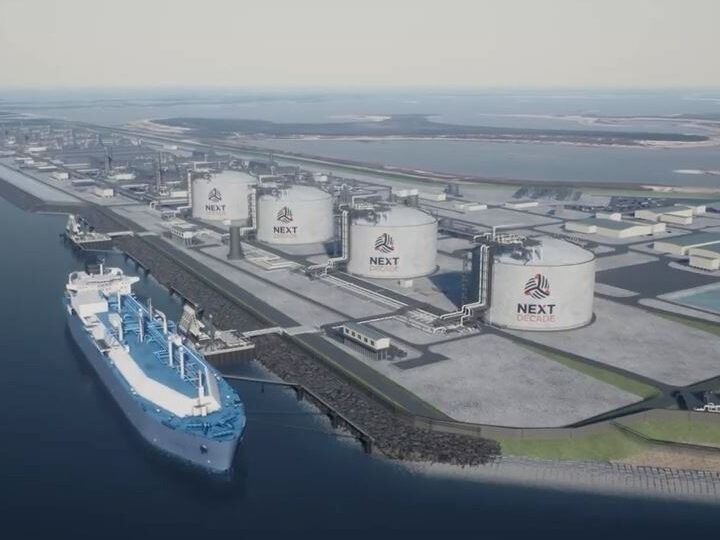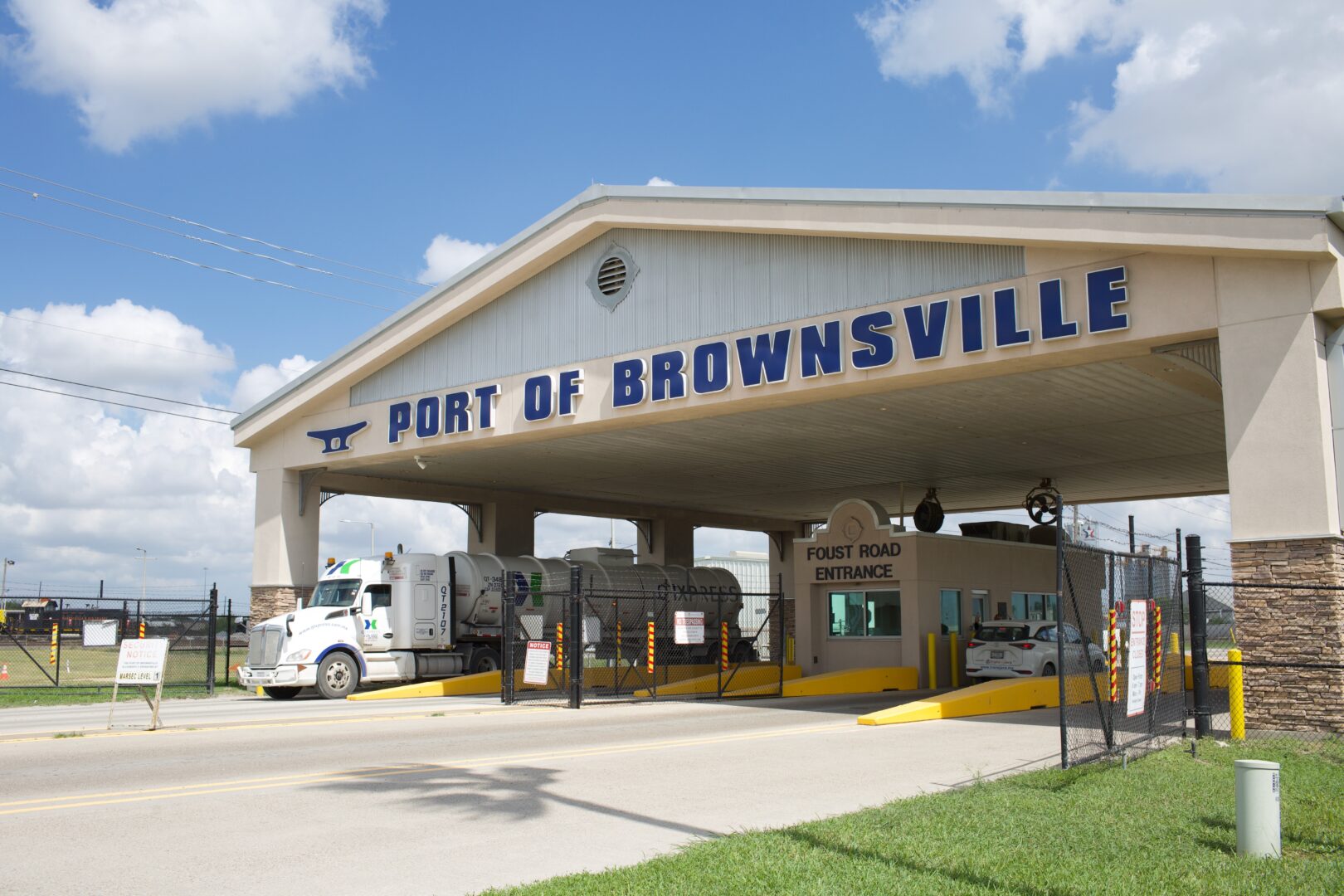
About five years ago, executives at Annova LNG canceled plans for its $3 billion project, which would have exported 6.5 million tonnes per annum from the Port of Brownsville, citing market challenges.
Annova LNG was unsuccessful in securing long-term contracts with buyers, such as overseas utility companies in nations without natural gas shale plays that use the gas for electricity generation. Liquefied natural gas is supercooled and compressed into a liquid for transport in massive ocean vessels.
But the LNG export market has changed: prices have jumped as there is less supply, there’s a new presidential administration in office pushing U.S. energy exports, there are customers without LNG shipments due to facilities in the Middle East damaged from the fighting, and a critical trade route is blocked.
A different market dynamic
Back in March 2021, when Annova LNG canceled its plans, the European benchmark for LNG was trading around the equivalent of $35 per megawatt-hour. That was 50% higher than in March 2020, during the start of the global COVID-19 pandemic. By comparison, LNG was trading at $36 per megawatt-hour in March 2019.
As of March 2026, LNG was trading around $63 per megawatt-hour – up from $36 in March 2025.
The last time there was a spike in LNG prices was at the start of the Russia-Ukraine war – hitting $114 in March 2022 – but that did not lead to a renewed effort to restart stalled projects like Annova LNG.
Under former president Joe Biden, renewable energy was the focus as opposed to fossil fuel projects such as liquified natural gas. In January 2024, Biden paused approvals on LNG export projects to non-Free Trade Agreement countries – a move blocked by the courts less than six months later.
Fast-tracking LNG under Trump
In January 2025, President Donald Trump reversed the Biden-era ban and promoted U.S. energy exports, promising to fast-track projects.
By March 2025, an entrepreneur hoping for a moonshot under Trump’s federal regulators filed documentation seeking to revive the Annova LNG project under the moniker Brownsville America First LNG Terminal.
OA Partners LLC is run by Mark Kekkonen, a Canadian entrepreneur living in Arizona who is an industrial automation engineer by trade. Kekkonen pitched building a 6.95 million tonnes-per-annum LNG export terminal on the 731-acre site at the Port of Brownsville, with six liquefaction trains.
Annova LNG did have Federal Energy Regulatory Commission environmental approvals dating back to 2018, but its regulatory certificate for the project expired in 2024.
Kekkonen attempted to invoke the spirit of Trump’s executive order, which directed the federal agencies to expedite LNG export infrastructure approvals. He suggested that it would include enabling a new company to leverage existing environmental reviews – something Trump did allow in Alaska – attempting to reverse Biden-era regulations.
“My goal was to get the facilities running and fill my tankers with LNG to sell to Japan, Vietnam, and Thailand, across Asia,” Kekkonen said. “But it was very difficult to get financing. It was a moonshot, really.”
That included a key customer contract with Japan’s largest power generator, JERA.
The electric utility in Japan has signed deals with Qatar Energy, Alaska LNG, NextDecade Corp.’s Rio Grande LNG, Commonwealth LNG, Venture Global LNG, and Cheniere for its Sabine Pass project.
In his application, Kekkonen even suggested an equity split for the project with the Carrizo-Comecrude tribe in South Texas, something he’s seen in Canada with Cedar LNG, which is a partnership with the Haisla Nation in British Columbia.
He proposed similar projects to restart Jordan Cove LNG in Oregon and BHP Billiton Cabrillo Port off the coast of California for a total of 17.8 million tonnes per annum across the portfolio. And submitted a $1.8 billion MARAD Title XI loan application to build the LNG tanker fleet.
None of his applications accepted by FERC have reopened those LNG project case dockets.
It’s not immediately clear whether environmental approvals obtained by Annova LNG can be transferred to a new company. FERC officials did not respond to a request for comment on the case.
Impact of LNG supply shortages
When Kekkonen saw the military action in Iran, he was confident there would be an increased need for LNG.
“The customers that Qatar had are going to be screaming bloody murder for LNG,” he said, but he’s bowing out of the industry due to lack of experience and money.
Qatar LNG estimated it would take between three and five years to repair damage from fighting in the region, which had wiped out 17% of its LNG capacity. The company has already declared force majeure on some of its LNG contracts with customers in Italy, Belgium, South Korea, and China – the move cancels those deals due to unforeseen events such as disasters.
Beyond that, the Strait of Hormuz, a critical waterway used by about one-fifth of the world’s oil and LNG supply, has been closed for weeks. The government of India shared that at least 28 vessels carrying liquefied natural gas and liquefied petroleum gas to its shores are stranded outside the Strait of Hormuz.
There are already eight LNG export terminals across the U.S., and export capacity is expected to double by 2031, according to the Energy Information Administration.
If the Annova LNG project were picked back up, it would be a boost to the region, said Ray Perryman, economist and CEO of Perryman Group.
“The development of LNG facilities in the Brownsville area leads to substantial economic benefits for the local area. In addition to the large, though transitory, increase in business activity during the construction phase, ongoing operations involve notable numbers of well-paying jobs,” Perryman said.
The Annova LNG project estimated it would create about 160 permanent jobs and support hundreds of construction jobs.
But it’s unclear whether the market disruption is significant and long enough to prompt the investment in a new LNG export terminal, he said.
“Given the capital investment required for LNG train construction, decisions inevitably depend on market expectations over an extended period of time,” he said, noting many don’t begin construction until long-term customer contracts are in place.
“A short-term uptick in prices would not shift the decision process, as it takes years to bring a facility online,” he said. “However, the current conflict has illustrated market vulnerabilities around the globe and emphasized the need to secure reliable supplies.”

Kristen Mosbrucker-Garza
Reporter
Kristen Mosbrucker-Garza is a versatile multimedia news reporter who lives and works along the Texas-Mexico border in Hidalgo County. Mosbrucker-Garza is a news reporter for the Rio Grande Valley Business Journal. During her career she's worked for the McAllen Monitor, San Antonio Business Journal, The Advocate Newspaper in Louisiana, Phoenix New Times, and public media outlets in Baltimore and Philadelphia.
Most Read
- How much water does SpaceX need to operate near Brownsville? Nearly 20x its current use
- Could apartment-to-condo conversion help make $100K homeownership in the McAllen metro more affordable? One investor says yes.
- SpaceX’s futuristic city of Starbase finalizes massive 7,100-acre annexation. Here’s what we know.
- Cameron County is negotiating a $20M Fluidstack data center donation after Harlingen waffles on the same offer
- Fluidstack breaks ground on $4 billion Cameron County AI data center
Get the latest business news delivered to your inbox every morning for free.
Try 30 Days Free!
Get full access to award-winning journalism covering business, real estate, health care, economic trends, and the people shaping the Rio Grande Valley.
30 Days Free!
$9.95/month
Limited time offer
Subscription renews after your 30 day free trial at $9.95/mo.
Included Benefits
- Unlimited access to all articles
- Daily business news and analysis
- Subscriber-only content and features
Stories That Matter
- These four projects are driving more than $41B in Cameron County investment
- Mission’s first Small Business Expo puts $25K on the line for local entrepreneurs
- Reynosa’s newest technical high school focuses on AI, semiconductors and bionics
- McCoy’s gives $10K, tools to launch Mid-Valley construction academy
- UT Health RGV performs new digestive procedure for first time in the Valley
- TSTC bets on advanced manufacturing to meet RGV’s industrial boom
- Pharr’s cross-border business push earns international recognition
- Brownsville eases drought restrictions after nearly three years as Rio Grande reservoir levels improve
- Texas A&M’s $53.5M McAllen research center will tackle water, food security and Valley health
- STC puts AI to work across 55 courses — from construction sites to car repair