Despite billions of dollars in announced industrial investment and thousands of promised jobs, workers in the Rio Grande Valley continue to earn the lowest wages in Texas, according to newly released state workforce data.
The Texas Workforce Commission’s latest Texas Labor Market Review shows the Lower Rio Grande Valley Workforce Development Area — which includes Hidalgo and Starr counties — had the state’s lowest median annual wage in 2025 at $35,971. The neighboring Cameron County Workforce Development Area ranked second lowest at $36,942. Both trailed the statewide median annual wage of $48,621.
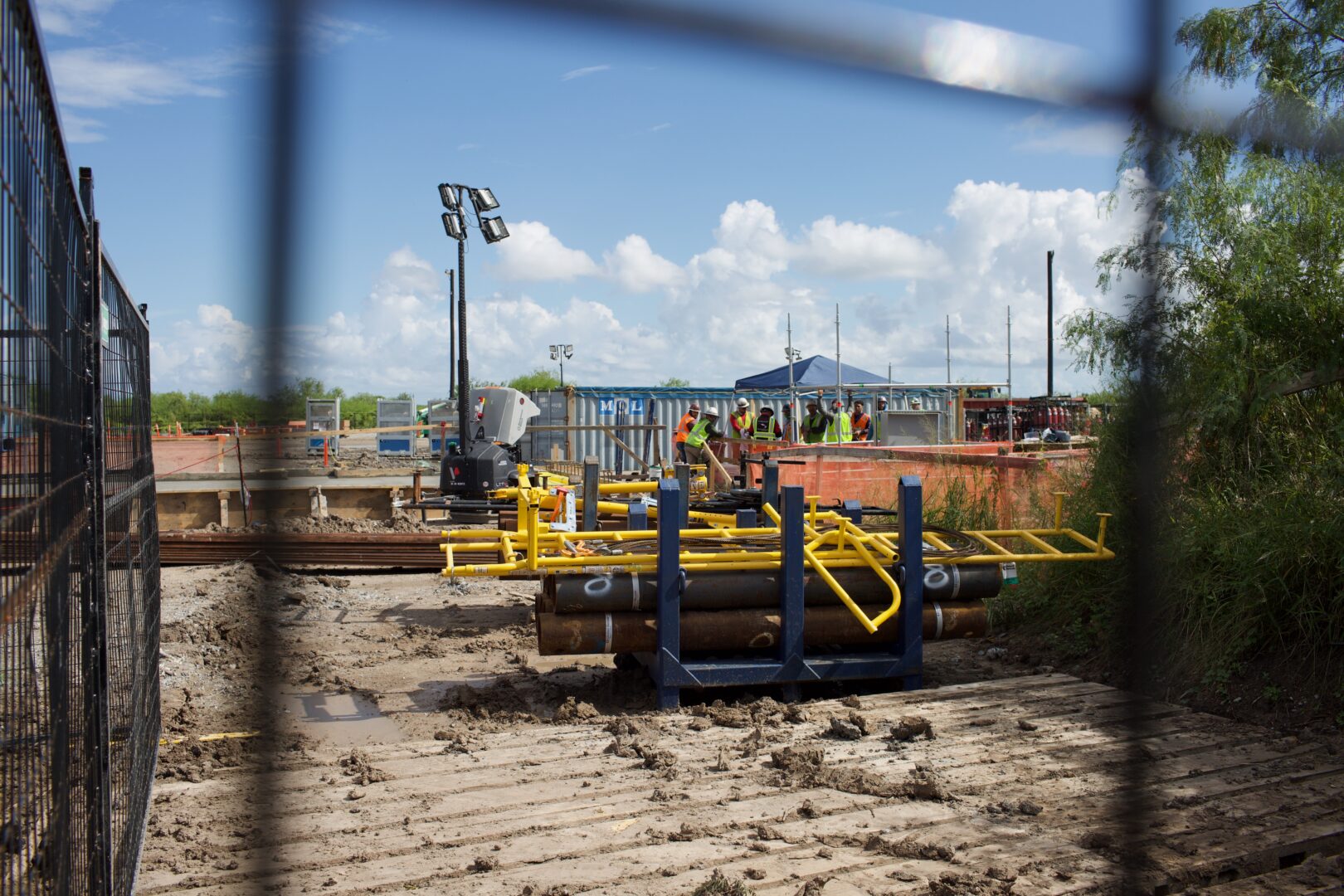
The findings come as the Valley experiences one of its busiest periods for economic development in recent memory, with projects ranging from Saronic Technologies’ planned autonomous shipyard at the Port of Brownsville to Rio Grande LNG, new manufacturing facilities, logistics investments and continued growth in health care and aerospace.
By comparison, the Capital Area Workforce Development Area, which includes Austin, posted the state’s highest median annual wage at $59,784, nearly $24,000 higher than the Lower Rio Grande Valley.
The report notes that the state’s highest wages are concentrated around Texas’ largest metropolitan areas, while the lowest wages are found along the Rio Grande. It also points to the Permian Basin as an example of how high-paying industries such as oil and gas extraction can lift regional earnings above the state average.
The wage data is based on the Texas Occupational Employment and Wage Statistics program, which compiles annual employment and wage information from employers across the state through the U.S. Bureau of Labor Statistics’ Occupational Employment and Wage Statistics survey. The figures reflect 2025 wages and are separate from the monthly employment estimates released by the agency.
The wage figures provide additional context to the Rio Grande Valley’s labor market, where employment has continued to grow but at a slower pace than the rest of Texas.
The new wage data suggests that while employment opportunities continue to grow, the region still faces a longstanding challenge of raising incomes.
The Valley has seen a steady stream of economic development announcements over the past year, including advanced manufacturing, energy, logistics and defense projects that local officials say will create higher-paying careers and diversify the regional economy. Several of those projects are expected to come online over the next several years.
Whether those investments translate into significantly higher regional wages remains to be seen.
The report also found that Dallas County recorded the highest median annual wage among Texas counties with more than 1 million jobs at $54,982, while Harris County followed at $50,320. Loving County, with fewer than 1,000 jobs, posted the state’s highest county median wage at $65,551.

RGV Business Journal Staff
Staff
Most Read
- SpaceX is giving Brownsville $220M for water projects. In exchange, the city gave up zoning control of 444 acres near Starbase
- SpaceX seeks to take zoning control over nearly 450 acres from city of Brownsville as a ‘regional’ water deal takes shape
- Port of Brownsville could soon host Nodule City, a first-of-its-kind commercial deep-sea mining hub
- How much water does SpaceX need to operate near Brownsville? Nearly 20x its current use
- Cameron County is negotiating a $20M Fluidstack data center donation after Harlingen waffles on the same offer
Get the latest business news delivered to your inbox every morning for free.
Try 30 Days Free!
Get full access to award-winning journalism covering business, real estate, health care, economic trends, and the people shaping the Rio Grande Valley.
30 Days Free!
$9.95/month
Limited time offer
Subscription renews after your 30 day free trial at $9.95/mo.
Included Benefits
- Unlimited access to all articles
- Daily business news and analysis
- Subscriber-only content and features
Stories That Matter
- 5 things to know about manufacturing along the South Texas-Mexico border
- Mission’s first Small Business Expo puts $25K on the line for local entrepreneurs
- Reynosa’s newest technical high school focuses on AI, semiconductors and bionics
- McCoy’s gives $10K, tools to launch Mid-Valley construction academy
- UT Health RGV performs new digestive procedure for first time in the Valley
- TSTC bets on advanced manufacturing to meet RGV’s industrial boom
- Pharr’s cross-border business push earns international recognition
- Brownsville eases drought restrictions after nearly three years as Rio Grande reservoir levels improve
- Texas A&M’s $53.5M McAllen research center will tackle water, food security and Valley health
- McAllen’s $204M water investment expects to seek construction bids in 2027